Search “dog imprinting” and you’ll find a lot of people happily convinced their dog has locked onto them like a baby duck fixates on the first thing it sees. The affection behind the idea is real. The word, though, is doing something misleading, and clearing it up actually makes what your dog feels for you more impressive, not less.
True imprinting is a specific biological event. Ducklings, goslings, and some other animals hardwire onto the first moving thing they encounter after hatching, fast, rigid, and permanent. Dogs don’t do that. A puppy learns about the world gradually, taking cues from its mother, its littermates, and the people and animals around it. What we loosely call imprinting in a dog is really the slow formation of a secure attachment: a trusting, dependent bond that usually takes root young but can develop at many points in life. A duckling can’t help imprinting. Your dog, over countless small safe moments, decided you were worth trusting and chose to stay close. That’s the more meaningful version of the story.
“When someone tells me their dog imprinted on them, I gently push back, because the truth is better than the myth,” says Dr. Ravi Mehta. “A duckling is running on autopilot. Your dog built a relationship with you, interaction by interaction, and is using you as a secure base the way a child uses a trusted parent. That’s not instinct firing blindly. That’s trust, and trust you can strengthen or repair.”
Because a bond is built rather than automatic, you have real influence over it. You can deepen it, mend it after a rough start, and earn it even from a wary adult rescue. First, though, it helps to recognize what a bonded dog actually looks like.
Eight real signs your dog has bonded to you
1. They follow you around. If you have a little shadow trailing you from room to room, it likely means your dog trusts you deeply and feels safe near you. It can be mildly inconvenient, but you’re their person, and that clearly feels good to them.
2. They mirror your mood. Dogs are sensitive to their humans’ emotional states and, over time, begin to reflect them. Research has shown that dogs pick up on and are influenced by their owners’ feelings, a kind of emotional syncing that only happens with someone they’re closely bonded to.
3. They listen to you specifically. If you’re the one who’s done the training, you may find your dog responds to you more than to anyone else. That’s a bond effect, and a practical argument for getting the whole household involved in training so your dog learns to respond to everyone, not just their favorite.
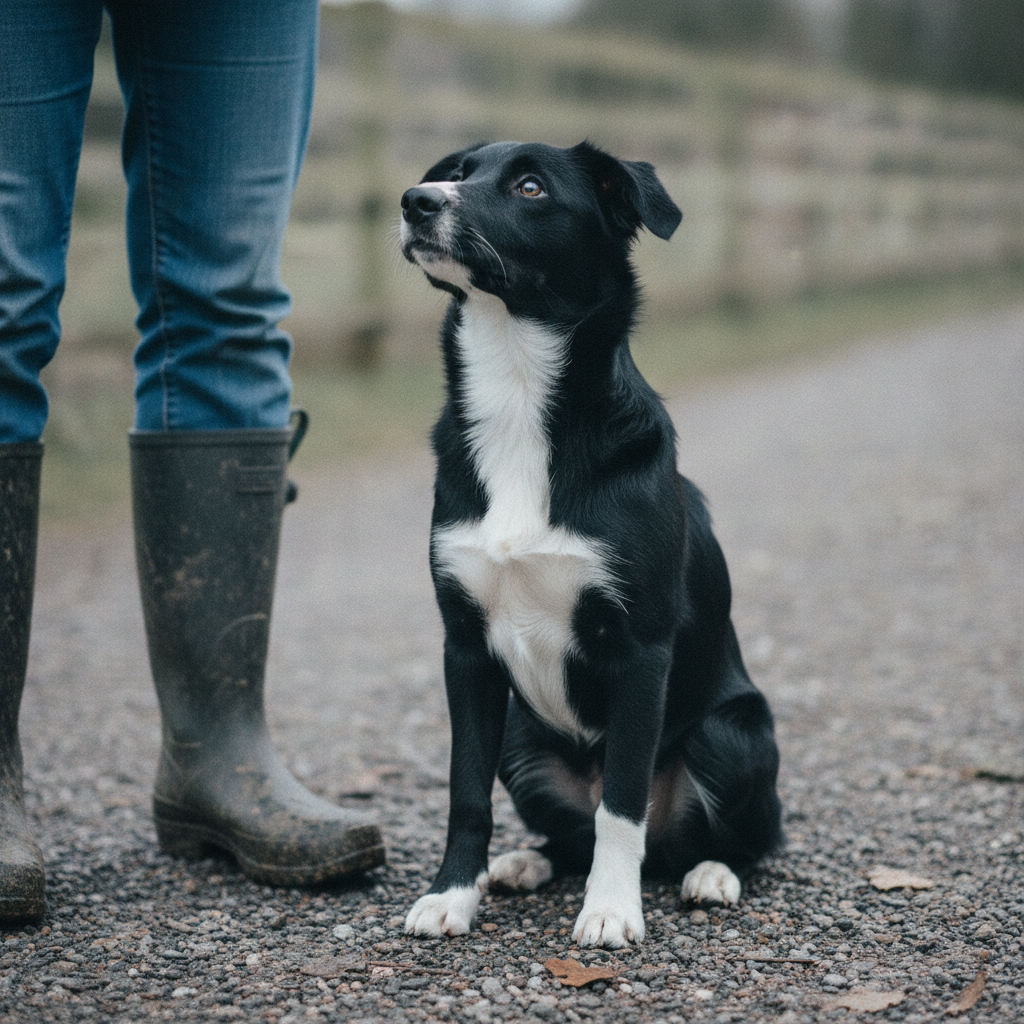
4. They check in with you. A dog who keeps glancing back to locate you, or likes to stay in physical contact by leaning against you, is treating you as home base. That checking-in is a hallmark of secure attachment.
5. They seek you out for comfort and needs. They gravitate toward you because you’re where safety lives, and they come to you when they’re hungry or ready for a walk. Both point to you being their go-to. You’re the one they turn to when something’s up.
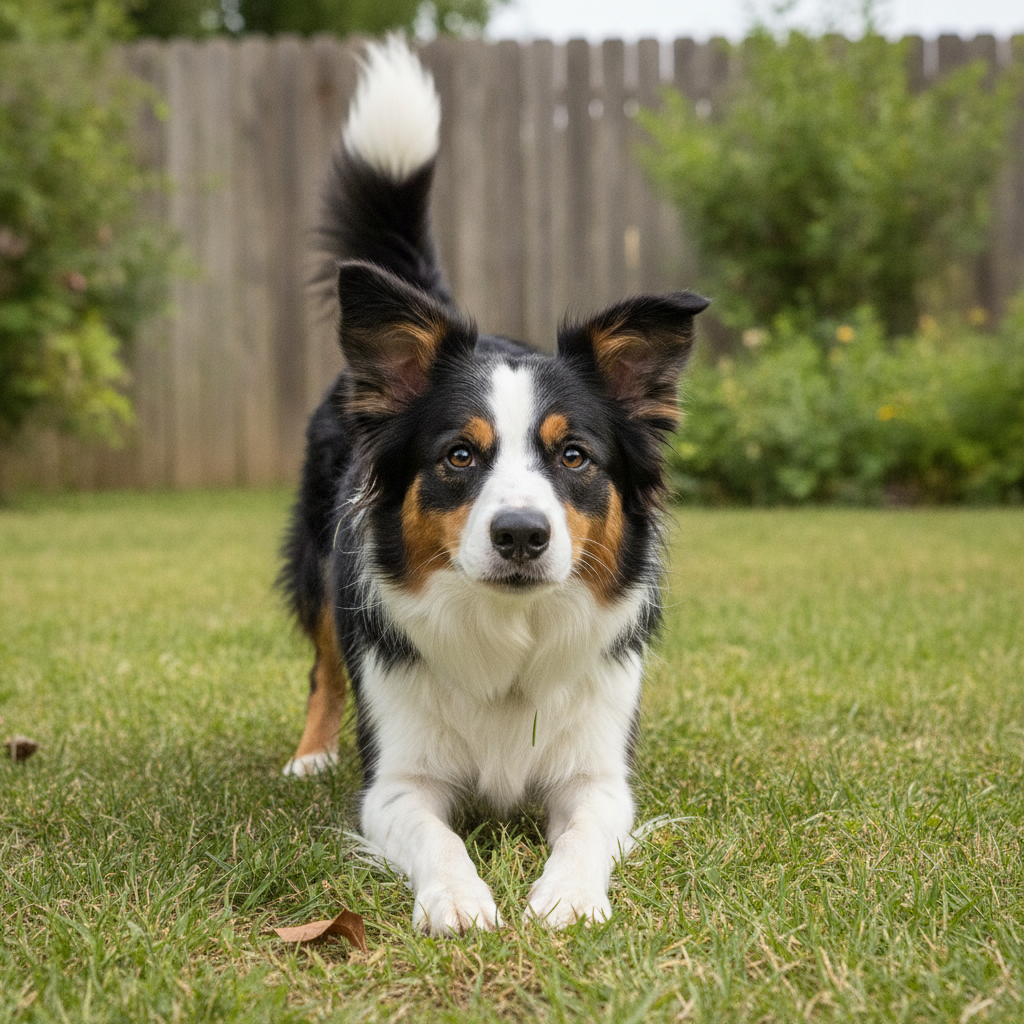
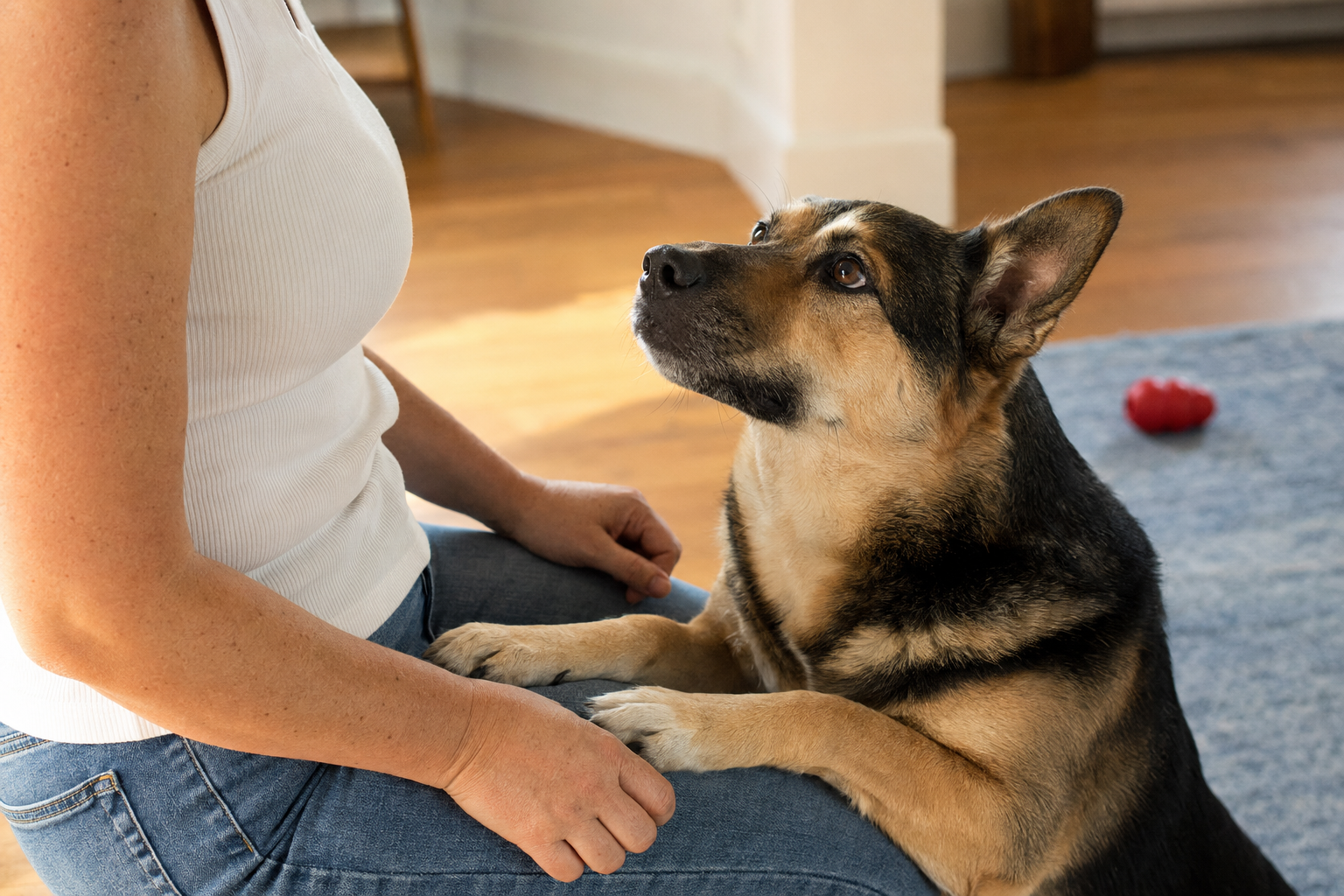
6. They hold eye contact. When your dog gazes softly into your eyes, something measurable is happening: mutual gazing releases oxytocin, the bonding hormone, in both of you. That gaze isn’t idle; it’s a feedback loop that deepens the bond on both ends.
7. They love your scent. If your dog burrows into your laundry or naps on your worn clothes, it’s because you smell like safety. Being surrounded by your scent is comforting, and it’s another way of staying close to you when you’re not there.
8. They read your emotions. Dogs use all their senses to gauge how you’re feeling, and studies show they can recognize human emotions in our facial expressions. A dog who softens toward you when you’re upset is responding to cues a stranger’s dog wouldn’t bother to read.
How to strengthen the bond
Bonding comes down to spending good time together in ways your dog can trust. A few reliable moves:
Establish a routine. Predictability lowers anxiety and gives a dog security. Feed around the same times, and build in daily exercise, at least a solid walk, so your dog knows what to expect from their days.
Lean on positive reinforcement. Most dogs genuinely enjoy learning, and teaching cues and tricks shows your dog you’re a good thing to have around. Reward what you like and never punish, since punishment breeds fear and anxiety, the opposite of what you want attached to your face and voice.
Spend real quality time. Play games that engage their mind and body, tug and fetch are great because they demand close interaction, but a quiet petting session counts too. Not every bonding moment has to be active.
Respect their boundaries. Dogs bond more with people who respect their limits. Give them a spot where they can retreat and relax alone, and don’t force affection, most dogs, despite our instincts, don’t actually enjoy being hugged.
Be patient and consistent. Whether you’re training or just hanging out, steadiness matters. Dogs aren’t perfect, and a bit of patience does a lot to help yours feel secure with you.
What newer research adds
The strongest evidence reframes the whole “imprinting” idea as attachment science. In a widely cited study, researchers found that when dogs and their owners gaze at each other, both experience a rise in oxytocin, the same hormone loop that bonds human parents and infants. Other work shows dogs use their owners as a “secure base,” exploring and problem-solving more confidently when their person is present, exactly the pattern developmental psychologists describe in securely attached children. None of this is imprinting. It’s something richer: a two-way relationship your dog opted into, and one you can keep building for the rest of their life.
References
- Nagasawa, M., et al. “Oxytocin-gaze positive loop and the coevolution of human-dog bonds.” Science, 2015.
- Horn, L., Huber, L., and Range, F. “The importance of the secure base effect for domestic dogs.” PLOS ONE, 2013.
- Albuquerque, N., and Resende, B. “Dogs functionally respond to and use emotional information from human expressions.” Evolutionary Human Sciences, 2022.
- Positive Reinforcement Training — The Humane Society of the United States