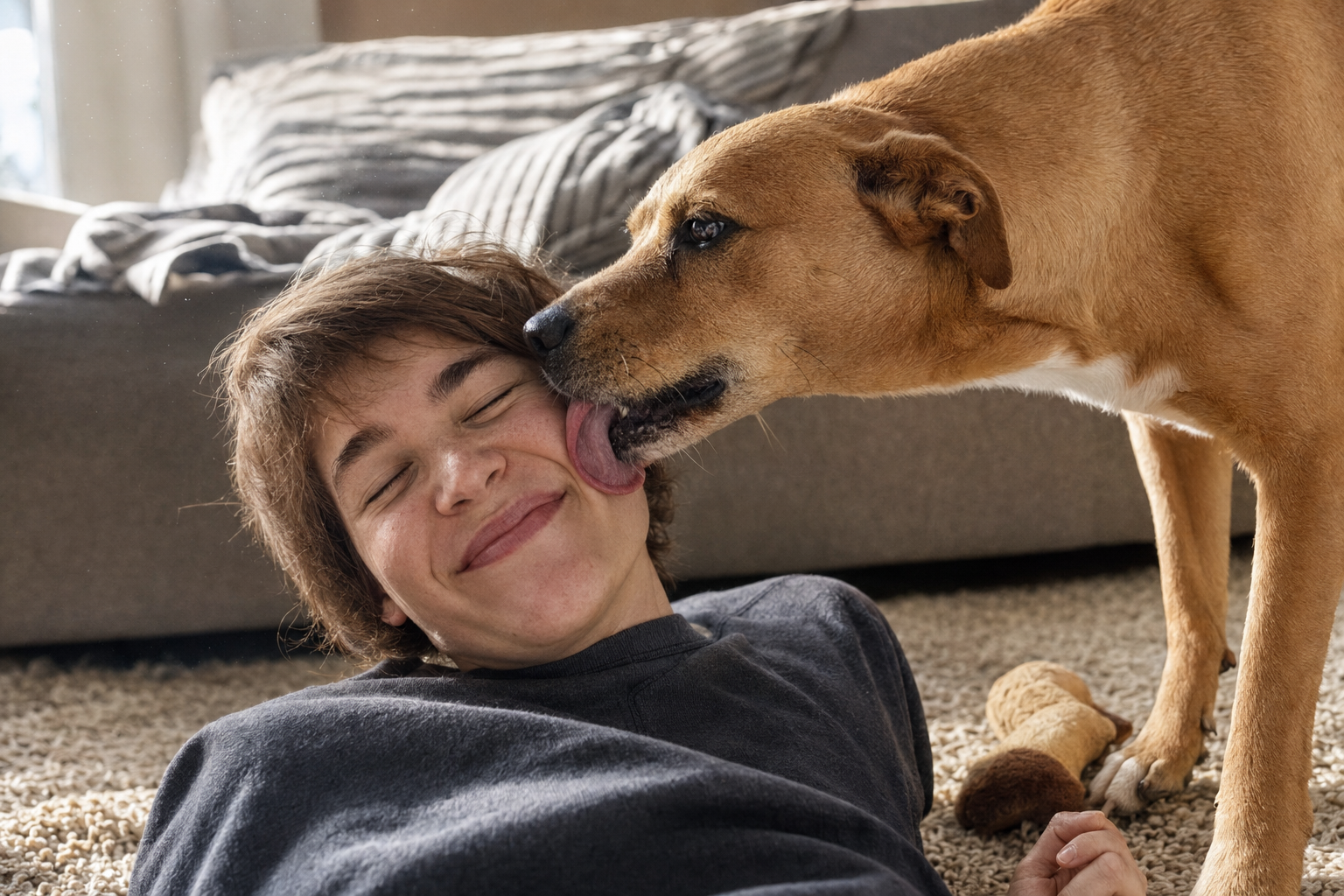
At least once a week, one of my dogs will finish grooming her own back end and then swing around to plant a wet kiss squarely on my mouth. In that moment, “thanks but no thanks” feels like an understatement. It’s the kind of thing that makes you wonder, half-seriously, whether living with a dog is quietly making you sick. So let’s answer it properly, because the honest answer is reassuring, with one non-negotiable asterisk.
The short version: for a healthy person, the risk of catching a bacterial infection from your dog is genuinely low. Veterinary experts who study this are relaxed about it in their own homes, dogs on the bed, licks on the face, the whole thing. But “low” is not “zero,” and the difference between low and lower is almost entirely about your habits, not your dog’s.
The one rule that does most of the work
If you remember nothing else, remember this: wash your hands. After handling your dog, before you eat or cook, and always before anything goes into your body, food, contact lenses, a menstrual cup. That single habit neutralizes most of the small risk that exists. Wiping your dog’s paws with an unscented baby wipe after they come inside is a reasonable add-on, and the same goes for cats after the litter box. It’s unglamorous advice, which is probably why people keep looking for a scarier or more interesting answer. There isn’t one.
With that established, here are the specific situations where a little care pays off.
Untreated cuts, scratches, and bites
This is the scenario that deserves the most respect, because it bypasses your skin’s defenses entirely. Any bite or scratch that breaks the skin should be cleaned and disinfected promptly, since an open wound gives bacteria a direct route in. Cat scratches and bites are their own category of trouble: feline teeth are needle-sharp and can drive bacteria deep with a puncture that looks trivial on the surface. Deep bites, and puncture wounds especially, warrant a call to a doctor rather than a wait-and-see approach. A pet’s mouth and paws carry a normal, everyday bacterial load you simply don’t want introduced beneath your skin.
Waste left where it shouldn’t be
Nobody leaves dog mess on the living room floor, but a backyard that never gets picked up is the same problem on a delay. Waste sitting in the grass is something a person can step in, track inside, or, in the case of some dogs, decide to sample directly. Beyond bacteria, some intestinal parasites are zoonotic, meaning they can pass to people. Cat waste carries a specific one worth naming: Toxoplasma, which poses a real risk in pregnancy, which is why pregnant people are advised to hand off litter-box duty and have cats screened. Pick up promptly, and, you guessed it, wash your hands after.
Paws on the counter, then food on the counter
A dog rearing up to survey the countertop is charming right up until you remember what’s on those paws. Whatever a dog walks through outside can transfer to the surface where you later make dinner, and pet waste can carry E. coli, a leading cause of food-borne illness in people. The math is blunt: contamination plus food is a bad combination. If your dog counter-surfs or your cat treats the counter as a runway, disinfect the surface before you cook on it.
Face licks
Dog kisses are adorable and, let’s be honest, not remotely sanitary, since dogs put things in their mouths that you would never want near your face, which happens to be full of vulnerable openings. Still, the experts are consistent: for a healthy adult with no open facial wounds, the risk from the occasional slobbery kiss is low. If you can’t talk your dog out of expressing affection this way, you don’t need to panic, you need to be more careful if you’re immunosuppressed, pregnant, unwell, or nursing a cut.
Sharing the tub
Giving your dog a bath in your own shower or tub won’t put a healthy person at much risk. Clean the space afterward, if only because it’ll be coated in a layer of gray, sandy residue. Microbiologists who study household germs describe the microbial nature of dogs as fairly harmless, while still recommending you sanitize the surface after. You don’t need to break out bleach every single time unless there’s a known infection or open wound in the picture. Play it safer if you prefer, but routine cleaning is plenty for routine baths.
Who actually needs to worry, and who doesn’t
Here’s the line that matters. For the average healthy household, keep your dog groomed, stay current on their preventive meds, launder the pet bedding often, and wash your hands, and you’re fine. The true crossover of zoonotic disease from dog to person is rare.
The people who should be more cautious are those with weakened immune systems, from illness, medication, pregnancy, or age, who face a modestly higher chance of crossover and should avoid direct contact with waste while watching their pets for signs of illness. Transmission can also run the other direction in specific cases: households dealing with a resistant infection like MRSA sometimes find the bacteria on an otherwise healthy pet, who can then quietly re-infect the humans, which is a real reason to loop your vet in if MRSA is diagnosed at home.
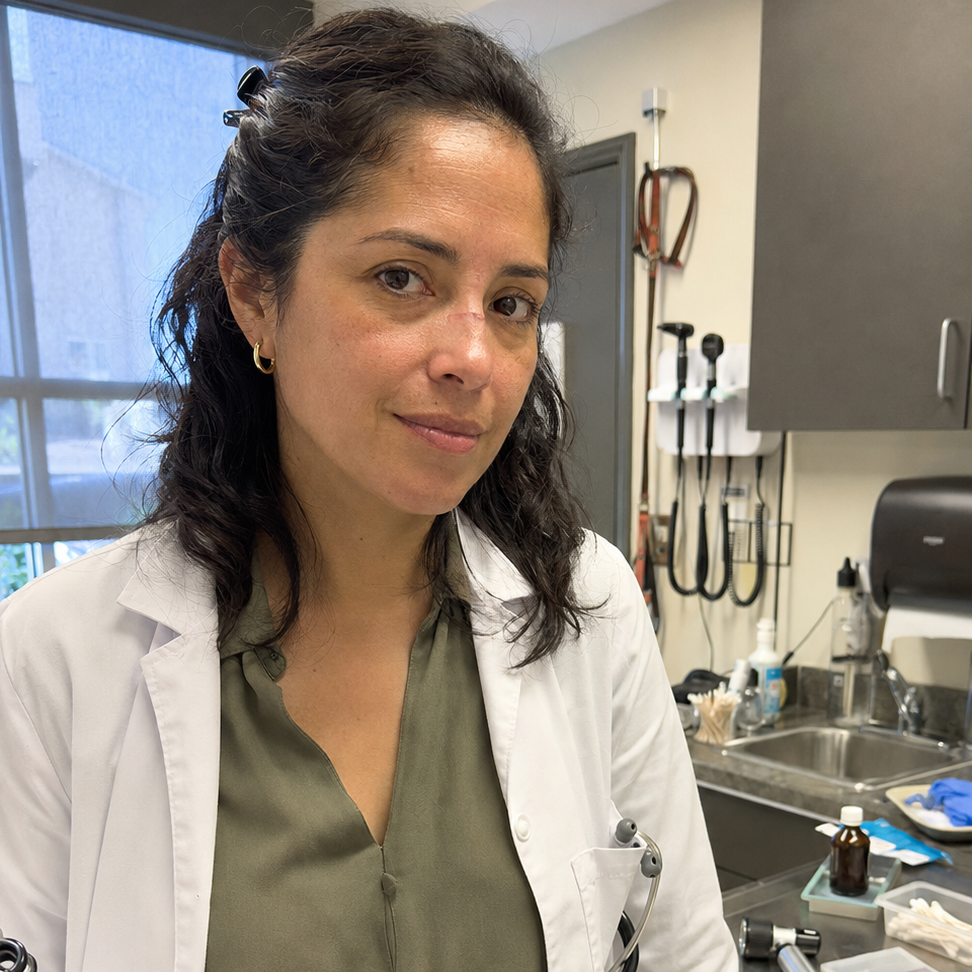
“The question people ask me is whether their dog is dirty, and that’s the wrong frame,” says Dr. Amara Solis. “A healthy dog in a healthy home is a very low risk. What I actually screen for is the person, are they pregnant, on immunosuppressants, recovering from surgery. That’s who I give the extra precautions to, not the dog.”
What newer research adds
The reassurance holds, but one area is getting sharper attention: antibiotic resistance. A 2025 study in the journal Zoonoses and Public Health, led by researchers at Penn State, analyzed 87 nontyphoidal Salmonella strains from household dogs alongside strains from people across 17 states, and found that pet dogs are an under-recognized link in the spread of drug-resistant Salmonella. Every strain carried resistance to drug classes the World Health Organization deems critically important, and several human strains were closely related to dog-associated ones. The researchers point to close contact, face-licking and bed-sharing specifically, as the plausible bridge.
The takeaway is not to fear your dog. It’s that the same boring habits, hand-washing, prompt waste cleanup, and not treating your dog’s mouth as sterile, matter a little more than they used to, because the bacteria that do cross over are getting harder to treat. This is general information rather than medical advice; if you’re immunocompromised or pregnant, ask your own doctor and vet how it applies to you.