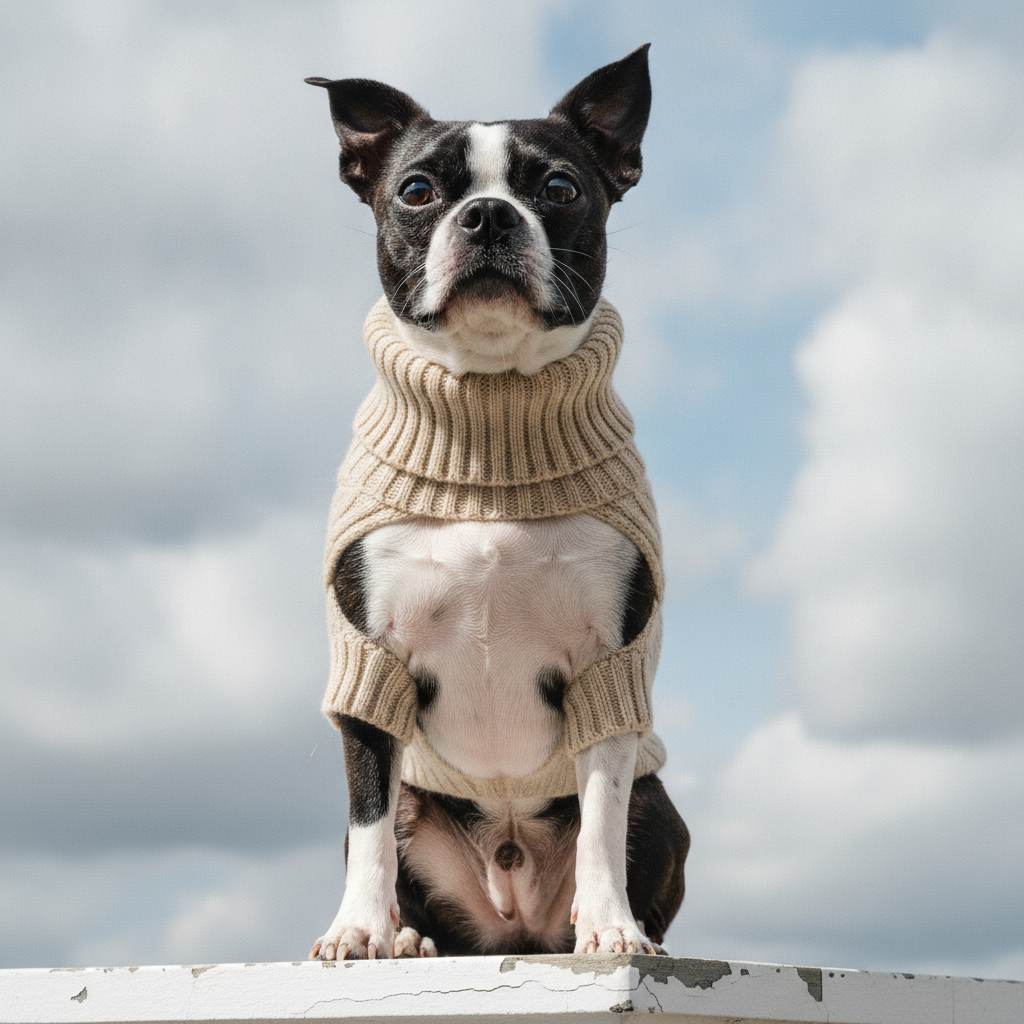
For roughly forever, dog clothing was a novelty category. The product was the joke — the tiny hoodie, the raincoat with a hood the dog would never tolerate — and the construction quality was whatever survived the shipping container. You bought it, your dog wore it for one photo, and it went into a drawer.
Then, sometime around 2020, the category quietly got serious. And a decent chunk of the credit belongs to a New York brand called Little Beast, whose sweaters people keep describing with the same slightly embarrassed sentence: I would wear that myself.
That reaction is the whole strategy. What Little Beast figured out is that the thing standing between dog apparel and being taken seriously wasn’t design. It was fit — and fit is a much harder, less glamorous problem than anyone selling novelty hoodies had bothered to solve.
The two failed businesses that came first
Founder Jisu Kim did not set out to make dog clothes. She started, in the winter of 2018, selling handmade collars and leashes — and it went badly.
Her read on the market wasn’t wrong: there was a real gap for millennial dog people who wanted high-quality, design-led, tasteful things for their dogs and couldn’t find them. She had the background for it, in art. Her husband had the background in online marketing. What they lacked was someone who could actually realize the vision, so she brought in her friend Lys, who she’d worked with at Takashi Murakami’s studio, as a partner. Lys is now Little Beast’s creative director.
The collars and leashes still flopped.
So they pivoted to a curated storefront, stocking the good stuff other people were already making. They ran it for about a year. It ticked along. It didn’t work either.
What Kim actually wanted, and had wanted the whole time, was to make her own things and build something people belonged to. When she floated dog clothing to her team, they were skeptical. They went along with it anyway.
Why the fit problem is the whole ballgame
Ask Kim about the process and she talks about two things: sourcing fabric, and lying awake about fit.
The fabric part sounds simple and isn’t. A dog’s garment sits against skin, gets slept in, dragged through the world, and chewed. Everything gets sourced and tested; the goal is soft and comfortable, because a dog who dislikes the texture of a thing will simply not participate in wearing it. Finding a fabric that clears that bar is, she says, one of the genuine joys of the job.
Fit is where the difficulty actually lives, and it’s the part she describes as still keeping her up at night before a launch. There’s a structural reason for that. Human sizing works because human bodies vary within a fairly narrow set of proportions. Dogs do not. A dachshund and a Frenchie can weigh the same and share nothing else. There is no sizing chart in existence that a Whippet and a Pug can both live inside.
The only way through it is volume of samples on real bodies. Little Beast leans on a community of local dogs whose people let them test prototypes, and everything gets tried on as many different builds as they can get their hands on. That is not a scalable, elegant process. It is just work, and it’s the work almost nobody in the category was doing.
How to get a dog to actually wear clothes
This is the practical part, and Kim’s answer is the one every good trainer would give: introduce the garment as something good, not something that happens to them.
A lot of Little Beast’s own customers, she’s noticed, start by using a piece as a security blanket first — letting the dog sleep on it, sniff it, own it — before it ever goes on a body.
There’s also a difficulty ladder, and most people skip straight to the top of it. Ordered from easiest to hardest:
- Cotton before fleece. Lightweight, breathable, minimal sensation.
- Sweatshirts and pullovers before onesies. A garment that covers the torso is a much smaller ask than one that involves the legs.
- Onesies and full-body pieces last. Legs are the final boss.
Go one rung at a time, and expect the whole thing to take a while. The failure mode here isn’t a dog who hates clothes. It’s a person who put a fleece onesie on a dog who had never worn so much as a bandana and concluded the dog hates clothes.
“The dogs I see refusing to wear anything are almost never dogs with a clothing problem,” says Dr. Nina Kohl. “They’re dogs who had a fleece pulled over their head on day one. Start with something that barely registers, pay them for it, and take it off before they ask you to.”
The supply chain, which she’ll actually talk about
Kim is unusually specific about where things come from, and it tracks with how she shops herself: she buys from small and local businesses because she thinks more care goes into the product.
Little Beast sources fabric and manufactures through small, family-owned factories in Korea and Vietnam, with personal relationships with the teams. The stated direction as the brand scales is toward recycled fabrics and a more sustainable footprint.
Whether that survives growth is the open question for every brand that says it. It is at least a specific claim, with named countries and a named factory type, rather than a vague gesture at “ethical sourcing.”
The collaboration flywheel
The most interesting thing about the Little Beast trajectory is how it got where it is: not through advertising, but by becoming the brand that other fashion brands call when they want to make something for a dog.
It started almost by accident. Kim saw on Instagram that the founder of Wray had bought one of her dog sweaters, and reached out. Both are small New York teams, and the collaboration was easy — Wray’s people had far more fashion experience, and what Kim says she took from them wasn’t technical, it was tonal: a kind of genuineness she wants Little Beast to feel like.
That first collab set a pattern. The brand has since worked with names including Lisa Says Gah and, most visibly, Sandy Liang, on a collection that runs matching pieces across human and dog sizes. It is now stocked at retailers like SSENSE and Moda Operandi, which is not a sentence anyone would have written about a dog apparel company ten years ago.
The flywheel logic is clean: a human fashion brand wants a dog product, doesn’t want to build a dog-apparel supply chain, and calls the company that already solved fit. Every collab drives Little Beast into a new audience, which makes it a more attractive collaborator, which produces the next one.
Molly
There is a dog at the center of this, and her origin story is the least strategic thing about the whole company.
Kim’s now-husband, then-boyfriend, showed her a photo of a dog a colleague was trying to rehome. The plan was to swing by Central Park, say hello, and think about it. Molly turned out to be substantially larger than her photo, and they were not remotely ready for a dog that size.
They took her home the same day. Molly is a Border Collie and Lab mix, seven now, and Kim’s version of events is that Molly chose them.
Her favorite garment is the brand’s Picasso Sweatshirt, which is a bit of a joke in the household — Molly doesn’t get cold, will happily fling herself into snow, and has no functional need for any of it. But the sweatshirt lives in the shoe closet, and it only comes out on weekends when they’re going somewhere. She has worked out what it means. She loves it for the reason it appears, not for the warmth.
Which is a pretty good description of what this entire category actually sells.
What’s new since this was written
Little Beast has essentially completed the transition from dog-clothing brand to the fashion industry’s default pet collaborator. The Sandy Liang collection — puffers, fleeces, cardigans, a leather collar with heart-shaped studs, a dog-sized tote — ran in both human and dog sizing, and the brand’s stockist list now includes the kind of luxury e-commerce sites that stock nobody’s novelty hoodie.
Worth knowing if you’re buying: the brand was founded in 2018 by Jisu and Ryeon Kim, and apparel only launched in 2020, which means much of what you’ll find secondhand is from a very short window. Collab pieces in particular are produced in limited runs and do not come back.
References
- Fashionista. Little Beast is becoming the go-to for cool brands wanting to make dog clothes.
- WWD. Little Beast collaborates with Sandy Liang for dog apparel collection.
- Little Beast. Official site.
- American Veterinary Medical Association. Cold weather animal safety.