


Tom Brady Cloned His Dog for $50,000. Most of Gen Z Says They'd Do It Too.
A cloned pet looks exactly like the one you lost. What you actually pay for, ethicists warn, is a genetic stranger, and a hidden cost paid by lab animals you never meet.
Grief makes people do extraordinary things, but few are as literal as this: paying to have your dead pet’s genetic double delivered to your door. It sounds like science fiction. It is now a service with a price list, a waitlist, and a celebrity clientele.
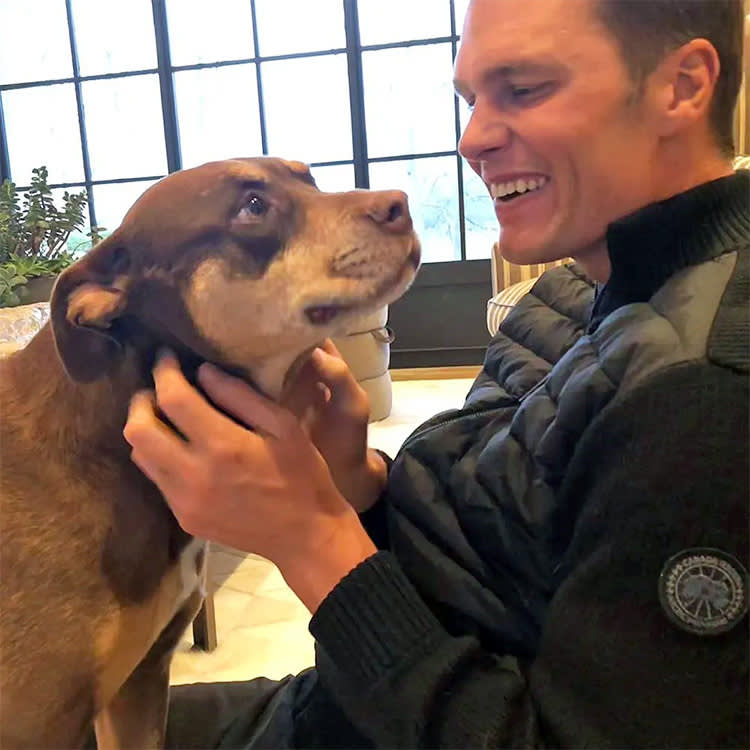
In December 2023, Tom Brady’s family dog, Lua, a Pit Bull mix the former quarterback and Gisele Bündchen called their guardian angel, died. Soon after, a similar-looking Pit Bull puppy named Junie joined the household. In November 2025, Brady confirmed what the resemblance implied: Junie is a clone of Lua, created from a simple blood draw taken while the older dog was still alive.
The reveal doubled as a business announcement. Brady is an investor in Colossal Biosciences, the biotech company best known for its “de-extinction” ambitions around the dire wolf and the dodo, and Colossal had just acquired Viagen Pets and Equine, the company that has quietly cloned pets for the rich and famous for years. The technology that made Junie, in other words, is no longer a curiosity. It is a growth industry, and it forces a real question: when you clone the dog, what exactly are you getting back?
This is not just a celebrity indulgence
It is tempting to file pet cloning under eccentric-billionaire behavior. Barbra Streisand did it. Paris Hilton did it. But the customer base has broadened well past the red carpet, to lawyers, prospectors, and ordinary people who took out loans to afford it.
Kelly Anderson is one of them. She never set out to clone her cat, Chai, and did not even realize cat cloning existed until about three weeks before Chai suddenly fell ill and died. The idea surfaced from an offhand conversation she’d once had with a roommate who worked as a vet tech, the kind of thing you file away as trivia. In her grief, the trivia came back.
Anderson moved fast, contacting Viagen and arranging to harvest and bank Chai’s DNA in the narrow window when it was still possible. She eventually paid $25,000 to bring home Chai’s genetic twin, Belle, a cat she has now lived with for years. To afford it, she took out a loan.
She is far from alone in that devotion. A survey of 1,900 American dog owners and 100 veterinarians found that half of the owners said they would clone their dog if they could, and 10 percent said there was no limit to what they would spend. Younger owners were the most enthusiastic of all: a striking 74 percent of Gen Z respondents said they would pay to clone their dogs.
Demand has pushed prices up, not down. Viagen now charges around $50,000 to clone a dog or a cat, and $80,000 for a horse, with a waitlist for all three. Anderson trains dogs and has spent 15 years fostering newborn kittens, and to her, the five-figure cost was worth it. Her family, she says, was not remotely surprised she’d done it.
How pet cloning actually works
The mechanics are more mundane than the mythology. It starts with a cell culture. A company manager likens the skin-sample collection to having a mole removed, and many clients stop right there, banking the DNA for later. Some do it for peace of mind. Some are betting the price will drop. Storage runs about $1,600 up front plus roughly $150 a year.
To turn that sample into an animal, scientists empty a donor egg of its own DNA and insert a single cell from the pet being cloned. No sperm is involved. The egg begins dividing into an embryo, which is transferred into a surrogate mother, and from there it proceeds like an ordinary pregnancy and birth.
The underlying science is decades old. Dolly the Sheep, generally credited as the first mammal ever cloned, arrived in 1996. The first cloned pet, a cat pointedly named CC for Copy Cat, followed in 2001, and the first cloned dog, Snuppy, was produced by South Korea’s Sooam Biotech in 2005. Even so, the field stays boutique. Only a handful of companies worldwide offer the service, and Viagen says its technology has now successfully cloned 15 species, including a black-footed ferret and a Przewalski’s horse.
The controversy is not subtle
Where there is cloning, there is objection, and most of it comes from animal-welfare groups worried less about the paying customer’s pet than about every other animal the process touches.
Back in 2018, when Streisand’s cloning went viral, PETA president Ingrid Newkirk condemned the practice bluntly. Cloning, she argued, does not actually bring a dog back; it produces a new and different dog who merely shares the original’s physical traits. She also pointed to a high failure rate and to a grim opportunity cost: with millions of adoptable dogs sitting in shelters or dying after being abandoned, cloning, in her framing, only adds to the homeless-animal crisis.
PETA is not the only critic. Lindsay Marshall, a science director at Humane World for Animals, objects on two fronts. Philosophically, she argues that cloning treats animals as commodities rather than individuals. Scientifically, she worries about the lab animals conscripted into the process and invisible to the customer.
For every single clone that succeeds, Marshall argues, a large number of other animals get pulled into the process and gain nothing from it themselves. Those animals, she stresses, are not abstractions. They are dogs and cats living in cages, separated from companions, without beds or toys, and, she believes, just as distressed as anyone’s pet at home would be in the same conditions.
Dog cloning raises specific welfare problems on top of that. Canine IVF requires harvesting immature egg cells from a donor dog, which can only happen at a precise point in her cycle, meaning daily blood draws to catch the timing. Marshall calls the harvesting traumatic. And the surrogate mothers carry, and sometimes lose, pregnancies through a process wholly beyond their understanding. She points to a 2023 study in which 419 egg cells were harvested from 38 female dogs and produced just four puppies, of which only three lived. Even if the odds were a perfect 100 percent, she says, she wouldn’t consider it worth it.
The ASPCA has staked out its own position, calling for a moratorium on the research, promotion, and sale of cloned pets. It cites past reports of anatomical and physiological problems in cloned animals, and notes that because so much of this work happens inside private companies, the consequences are hard to document. During a pause, the group suggests, a multidisciplinary commission could study the industry and build a foundation for real regulation.
Christa Chadwick, the ASPCA’s vice president of shelter services, keeps the focus on the animals already waiting. Thousands of shelter dogs, she notes in a statement, have love to give but get overlooked for their age, size, or breed, even though shelter staff are experts at matching families with the traits they are actually hoping for.
What Viagen says back
Asked about the criticism, Viagen pushes back on several points. The company says it champions adoption, and points out that plenty of the pets whose genetics it stores were shelter adoptions to begin with. Since a lot of those pets are mixed breeds, a manager argues, their owners often can’t find a lookalike or a genetic match anywhere else, which is part of the appeal.
The company also rejects the puppy-mill comparison. Nothing gets cloned on spec, it says; every animal is made to order, and clients sign contracts agreeing to take in whatever litter results, typically one or two puppies. It disputes the high-failure-rate claim as decades out of date, arguing that 20-plus years of learning about these animals’ reproductive systems has improved the technology considerably. And it leans on its oversight record: Viagen says the USDA inspects it and it has passed every time. Public USDA records show inspections in 2017 and 2018 with no compliance issues, and the company says a third-party veterinarian health-checks every animal it produces.
“I understand the impulse completely, because the love is real,” says Dr. Priya Nair, a Pet Times veterinary contributor. “But a clone shares your pet’s genes, not your pet’s history, and personality is built from both. If someone came to me heartbroken and considering this, I’d gently ask what they’re really hoping to get back, because there is a shelter animal a few miles away who can offer them a brand-new version of that same bond.”
What the science can’t clone
Here is the part the marketing tends to soften: even a perfect genetic copy is a different animal. Streisand said it best after cloning her dog Samantha, telling the New York Times that a dog’s appearance can be copied but its soul cannot, and that her clones’ faces still made her think of Samantha and smile even though their personalities were nothing like hers.
Anderson has lived that truth. She knew Belle would differ from Chai, in part because Chai had been very sick and isolated as a kitten and grew up standoffish as a result, from illness, not genetics. Belle, whose first day home included a pumpkin patch, arrived curious and outgoing instead. Yet the echoes surprised her. Belle sometimes curls against her back the same strange way Chai used to, and, like Chai, has shown up to comfort her during hard emotional stretches despite not being a naturally cuddly cat.
Belle now has tens of thousands of followers across Instagram and TikTok, an audience that arrives with equal parts fascination and judgment. Anderson fields plenty of “adopt, don’t shop” criticism and plenty of people who think she should have donated the money instead, though she points out that a loan is not money she could have thrown at anything. Ultimately, she frames her choice the way most clients do: not as vanity, but as an act of love from someone who could not bear the goodbye.
That is the real tension cloning leaves you with. The bond is genuine, the grief is genuine, and the technology genuinely delivers a dog who looks just like the one you lost. What it cannot deliver is the one you lost.
This piece touches on pet loss and grief, which can be painful subjects. If you’re struggling with the death of an animal you loved, support is available, and you don’t have to work through it alone.
References
- TODAY. “Tom Brady Cloned His Dog. Here’s How Much it Cost — and How to Do It Yourself.” today.com
- ASPCA. “Position Statement on Cloning of Companion Animals.” aspca.org
- PETA. “Cloning Pets.” peta.org
- Humane World for Animals. “Animal cloning welfare concerns.” humaneworld.org
Jordan Ellis is a certified professional dog trainer with a decade of experience working with rescue organisations and private clients. They specialise in anxiety, reactivity, and positive reinforcement methods, and review all training and behaviour content at The Pet Times.
Meet our experts ↗Keep reading
 LivingIn a Colorado Divorce, Your Dog Is Legally a Toaster. A Bill to Fix That Just DiedClaire Sutton · 5 min
 LivingCalifornia Tried to Stop Making Unhoused People Choose a Roof or Their Pet. Newsom Said NoMarcus Webb · 5 min
 LivingBroadway Barks Rehomed 2,000 Animals by Hijacking Actors' One Daily BreakNina Vasquez · 4 min
 LivingShipping Your Dog Overseas Can Cost $10,000. The Military Finally Started Paying.James Okafor · 7 min
 LivingYour Dog Dies and Work Gives You Zero Days Off. That's Starting to Change.Jordan Ellis · 5 min
 Living5 Latinx-Owned Pet Brands Worth Your Money Every Month, Not Just OneLeila Torres · 4 min