Walk into most pet stores and the brush that sells best sits right at eye level: a dual-sided tool with stiff pins on one face and soft bristles on the other. It looks sensible. It is also, according to professional groomers, the wrong brush for roughly every dog you will ever own. The pins and the bristles both skate across the top of the coat and barely touch the loose hair underneath, which is exactly the hair you are trying to remove. If you brush and brush and still find fur tumbleweeds drifting across your floor, the problem probably is not your effort. It is your equipment.
Fixing that one thing changes everything else about grooming your dog at home. So let us start with technique, then get you the right tools.
Brush from the skin out, not the top down
The most common mistake, after using the wrong brush, is brushing only the surface. A good pass reaches all the way down to the skin. Pick a consistent starting point every time, the bottom of the back legs is ideal, and work upward, finishing one side before starting the other. Getting to skin level matters most on double-coated dogs, where the whole point is to pull loose undercoat out from beneath the longer guard hairs.
Skip that depth and two things happen. You leave the dead undercoat in place, and you invite mats, which form when open hair cuticles lock together, especially once the coat gets wet. Mats do not start just anywhere, either. They start in the parts of the dog that flex most: the base of the tail, the folds behind the ears, the armpits, and the hocks and pasterns, then creep outward from there. Those are the zones to hit first and check most.
How often is enough (and when it is too much)
Frequency follows coat type. A dry, cottony coat can need a brush every other day; most dogs are fine with a weekly session focused on the mat-prone areas. But more is not automatically better. Over-brush a dog and you generate static, which ironically drives more matting and can disrupt the coat’s natural shed cycle. Long, double-coated dogs need extra sessions during their big twice-a-year “coat blow.” One overlooked culprit: dressing your dog up. Every time you pull a sweater or coat off a single-coated dog, the friction creates static and encourages mats.
The tools that actually work
The right kit is short and specific.
A slicker brush is the workhorse for most breeds. Almost any decent one will do, though many groomers prefer a curved slicker over a flat one, because a flat slicker’s wires tend to straighten out with use, and a straightened or bent brush is effectively useless. Keeping two on hand, one stiffer and one with finer wire, covers most coats. A good option is the Millers Forge slicker brush.
A rake is your undercoat tool. Choose one with the widest spacing and fewest teeth; the tiny cutting edges tucked under each curved tooth catch and lift out loads of dead undercoat a slicker glides right over, and it is nearly impossible to nick your dog with one. For heavy shedders, a well-known version is the FURminator deshedding tool.
A metal comb rounds it out. It teases apart small mats, reaches tight spots like armpits, behind and under the ears, and between the toes, and cleans the loose hair out of your brush.
Done with the right tools, the whole job is fast: proper weekly brushing runs under fifteen minutes for most dogs, and often under five.
Bath time, minus the myths
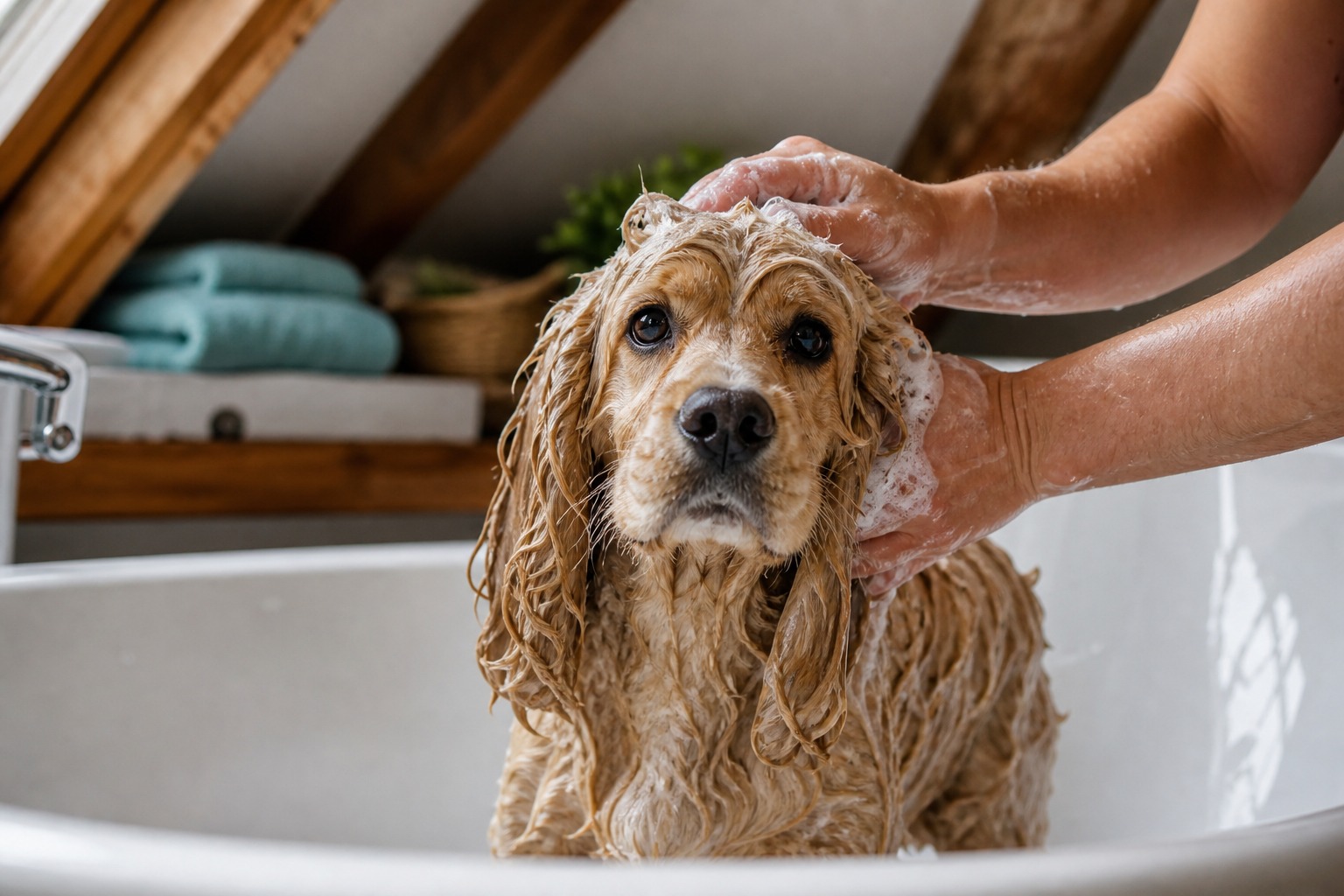
The biggest bathing misconception is that suds equal clean. They do not. Lather is just a visual cue for coverage; what actually cleans is the shampoo’s active ingredients worked against the coat. If a shampoo irritates your dog’s skin, the culprit is usually the sudsing agent (sodium laureth sulfate or chloride), and a handful of brands make sodium-free dog shampoo for exactly that reason.
Two habits make bath day work. First, dilute the shampoo, the industry-average is about sixteen parts water to one of shampoo, because undiluted shampoo is nearly impossible to rinse out completely. Keep the pre-diluted mix in an old bottle. Second, brush the shampoo through the coat rather than just scrubbing the surface; it covers every hair, loosens small tangles, and lifts the loose stuff out. You want only enough suds to show you where you have covered. Rinse thoroughly, then once the dog is dry, brush again and run a comb through to clear any lingering tangles, hitting the spots people miss: under the chin, in the armpits, behind the ears, and down around the tail and hind ankles.
As for conditioner: most dogs do not need it. Conditioner coats the hair with a humectant that attracts moisture, which can help a long-haired dog fight winter static, but it resists rinsing, tends to leave a residue, draws dirt, and can even trigger matting. Skip it unless your groomer recommends it for a specific reason.
Do not shave the double coat
It is tempting to think a summer buzz will keep a fluffy dog cool. It usually does the opposite and can do lasting harm. Shaving a double-coated dog changes the coat: it grows back slowly, often shorter, softer, and sometimes a different color, and in some dogs it triggers clipper alopecia, where the hair simply does not return. The undercoat insulates against heat as much as cold. Brush it out; do not shave it off.
Make your dog actually enjoy this
A dog who tolerates grooming was almost always trained young. Start the day you bring a puppy home, even before there is anything to brush, and have them lie down for sessions, which lets you work thoroughly without “breaking” the coat into split ends (a real concern for coats like Tibetan Terriers, Afghan Hounds, and Shih Tzus). Older dogs who never learned will take longer and may panic at first; patience and short, low-pressure sessions win. A grooming table helps more than you would think, getting a dog even a foot off the ground shifts them into a different headspace, and basic obedience training makes cooperation far easier because the dog understands the routine is safe.
What newer research adds
Grooming science has caught up with what good groomers always practiced. Recent veterinary guidance continues to warn against shaving double coats for the reasons above, and the professional consensus on de-shedding has shifted toward regular undercoat removal with a rake or de-shedding tool over aggressive, frequent full-coat brushing that stresses the skin. If your dog fights the brush, the current behavior advice is also clear: pair grooming with treats and keep sessions short, because a dog who learns grooming is safe is a dog you can actually maintain, which is the whole point.
References
- American Kennel Club. “Should You Shave Your Double-Coated Dog?” www.akc.org
- American Veterinary Medical Association. “Pet Grooming Safety.” www.avma.org
- The Spruce Pets. “How to Choose the Right Dog Brush.” www.thesprucepets.com