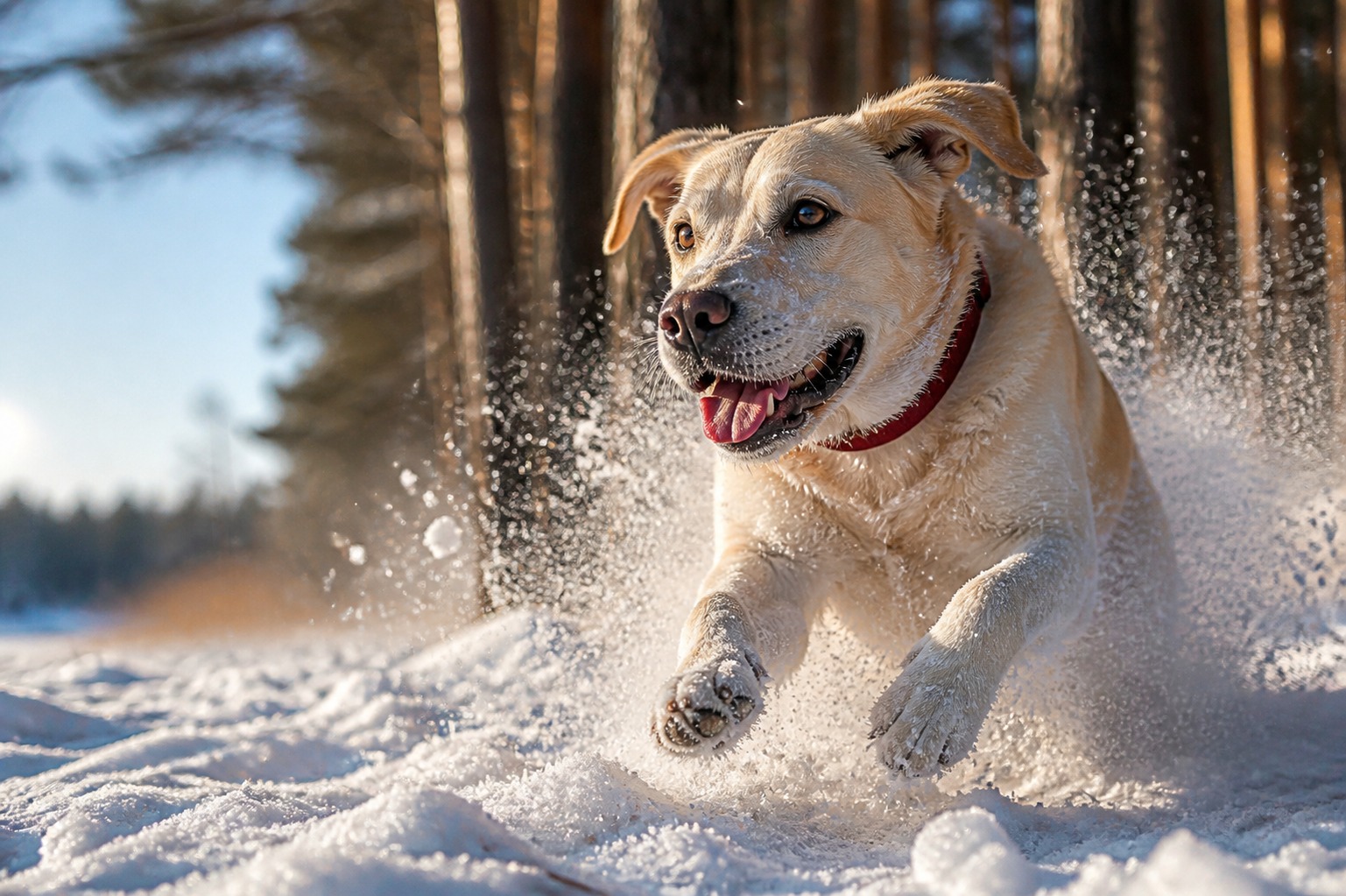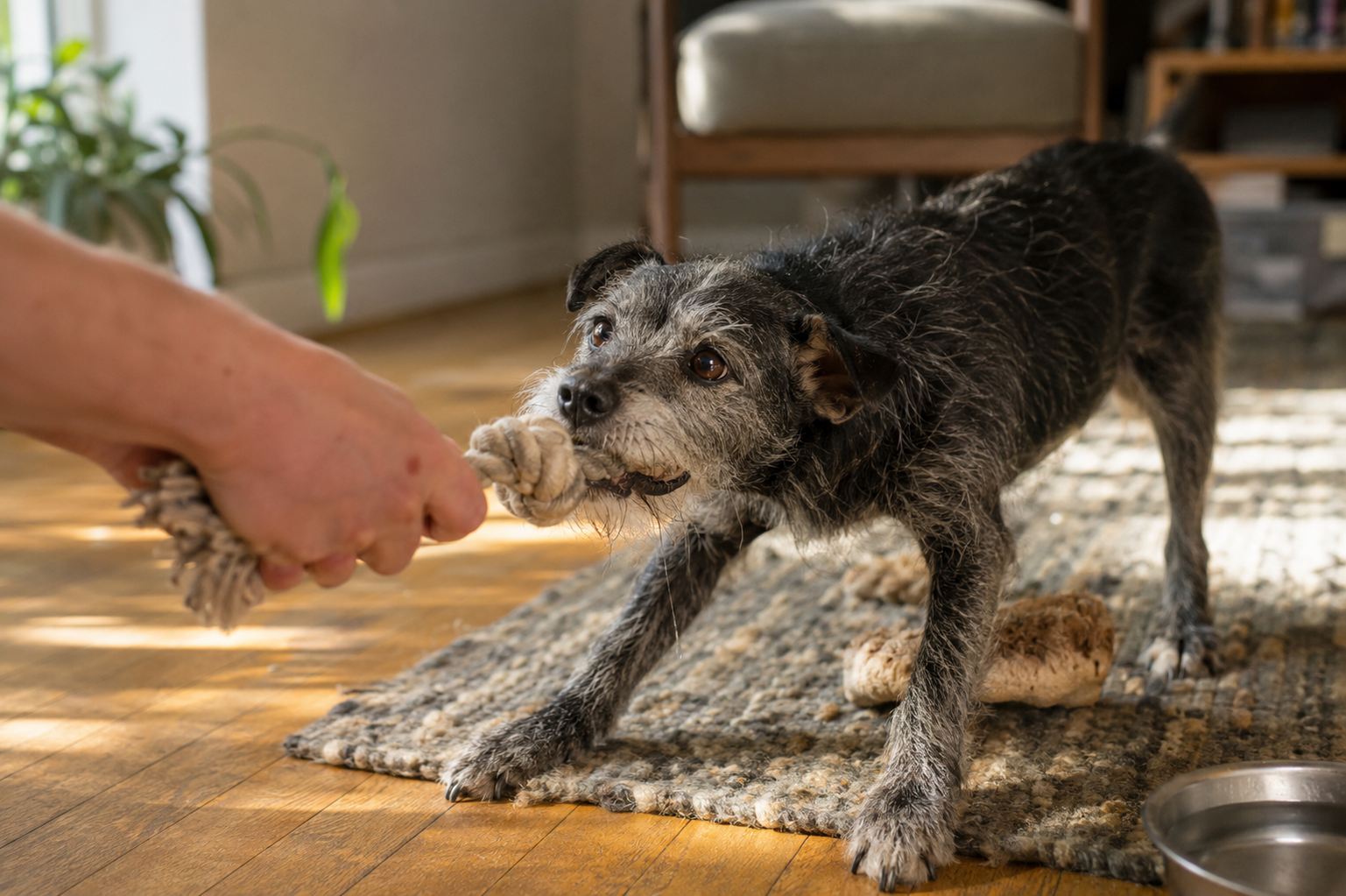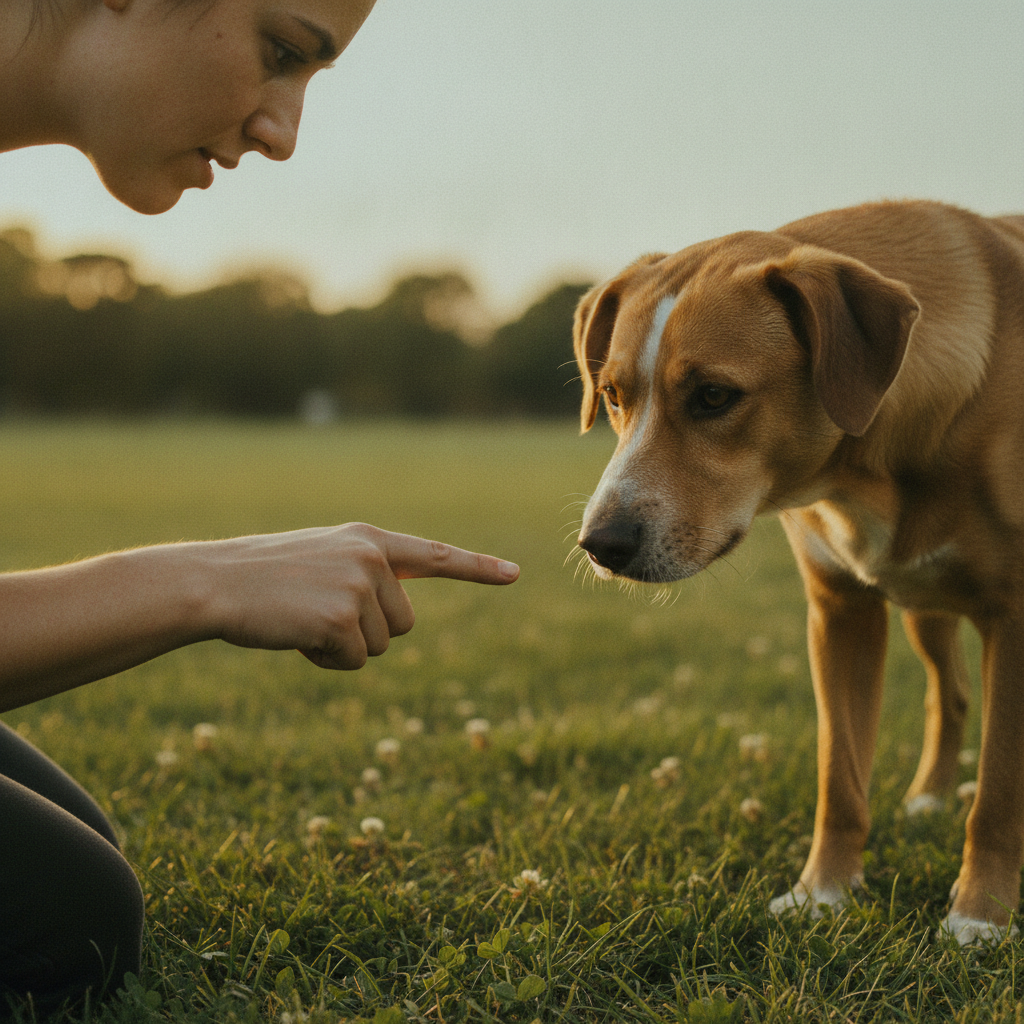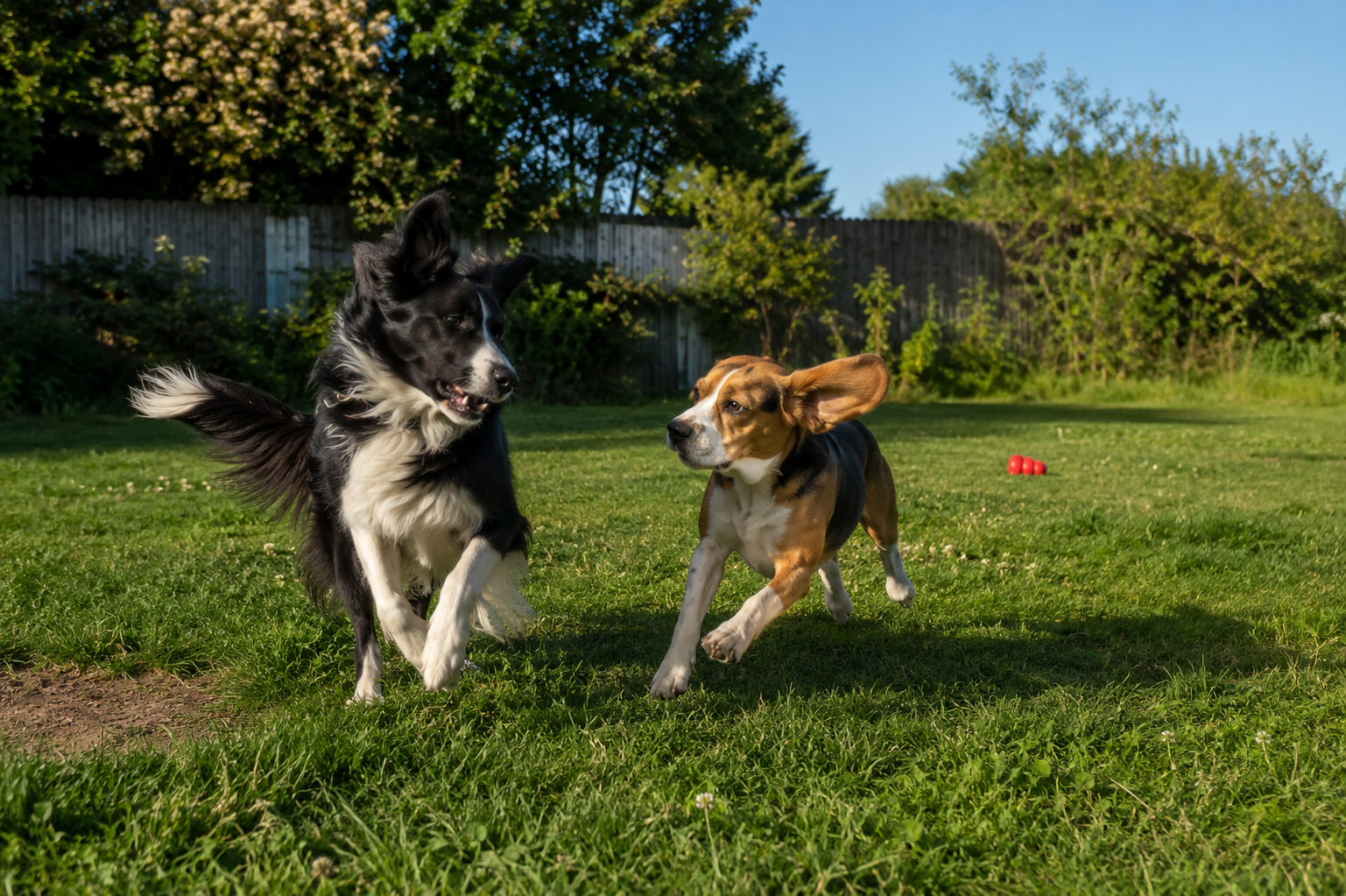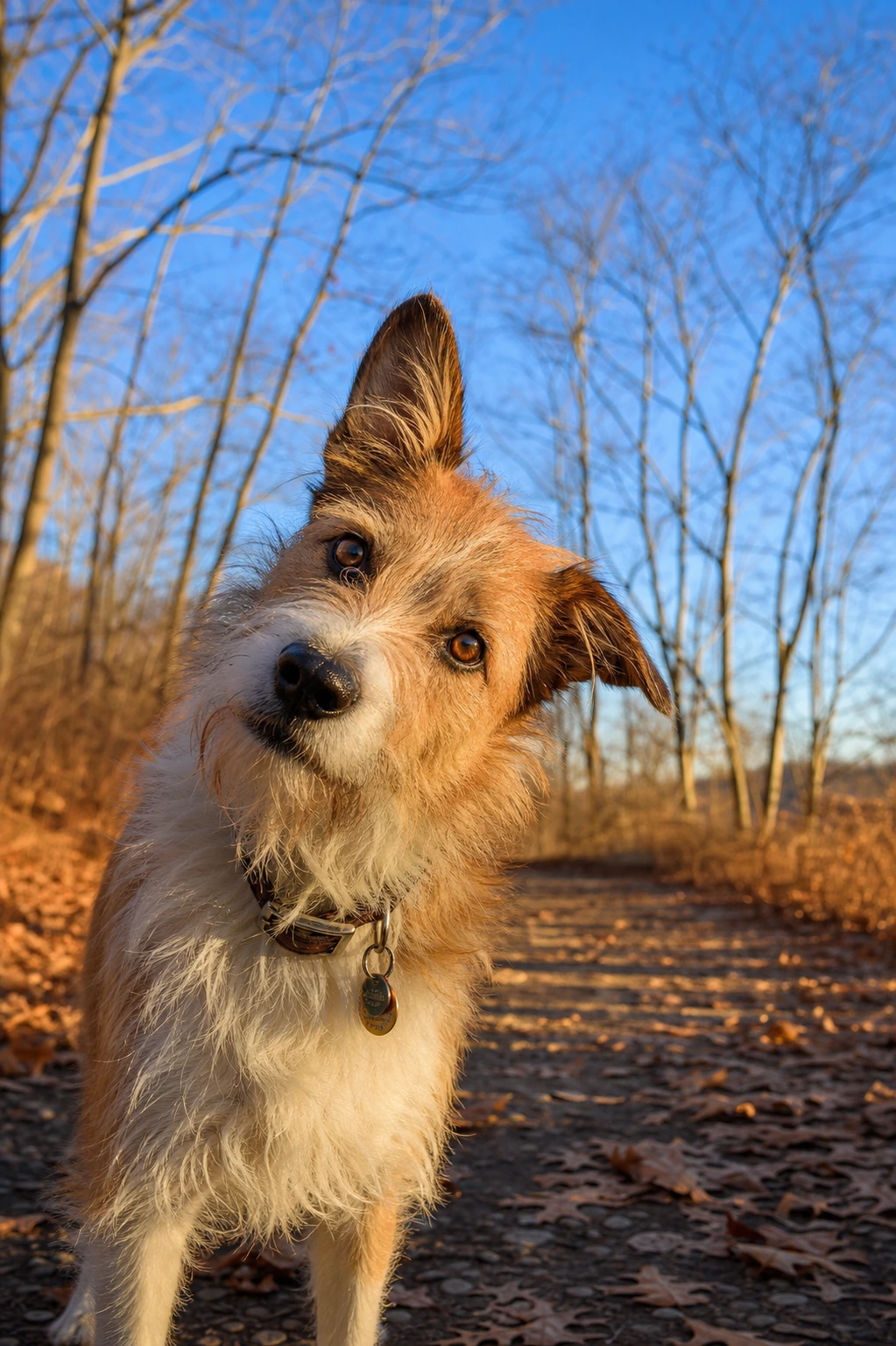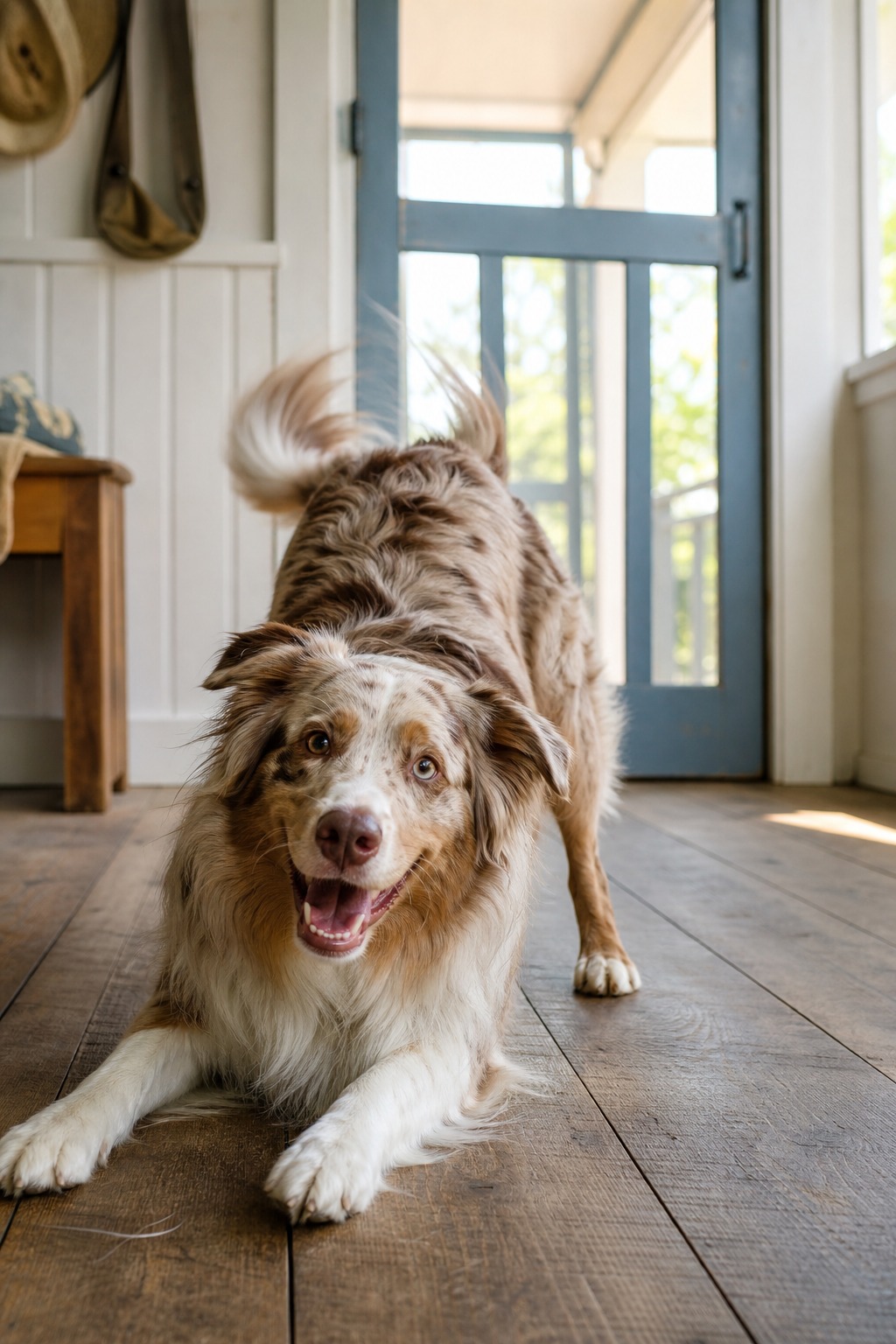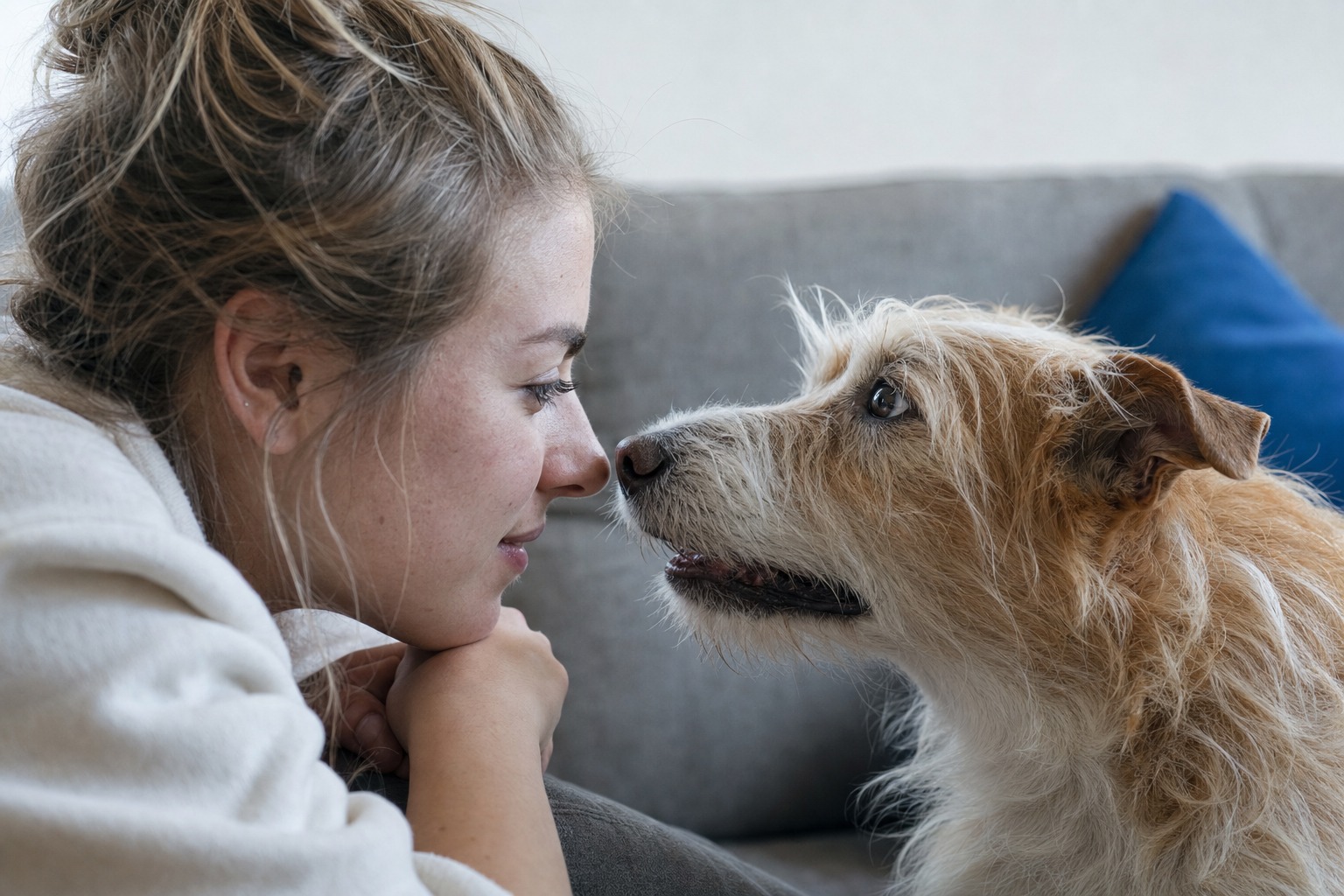
Dogs never stop talking. The problem is that they say it with their whole body, the set of the ears, a tense or loose mouth, the tail, overall posture, and above all the eyes, and we keep trying to read those signals in human. Misread them and you get frustration, missed warnings, and, occasionally, a genuine safety problem, because a dog whose quiet signals go unheard has to get louder.
The single most useful habit is to stop reading one gesture at a time. A yawn can be a stress signal or just a yawn; a lip-lick can mean anxiety or mean dinner smells good. Context decides. Watch what happens right before, during, and after a behavior, and read the whole scene the way you’d read a sentence rather than a single word: posture, face, tail, and environment together.
Picture your dog spotting another dog across the park. A worried dog throws out subtle tells first, licking their lips, glancing away, suddenly very interested in a patch of grass. If we miss those, the dog learns that whispering doesn’t work and starts to shout: a freeze, a hard stare, and then the loud stuff, a bark, a lunge at the end of the lead, a snap. Catching the quiet cues is how you head off the loud ones. Here are five behaviors people get backwards, roughly in order of how much the misread can cost you.
“The mistake I see most isn’t cruelty, it’s mistranslation,” says Marcus Webb. “People punish the exact signals they should be grateful for. Your dog is being polite by warning you. If you teach them that politeness gets them in trouble, they stop being polite.”
1. Growling
This is the one worth getting right first, because misreading it is genuinely risky. Most people hear a growl and file it under “aggression.” In reality, research shows dogs growl to say all kinds of things, as a warning, in play, even as a way of announcing their size.
A growl at home is usually a dog telling you they’re uncomfortable and need more room. That’s a good thing. It’s an honest heads-up that lets you fix the situation before anything escalates. Punish a dog for growling and you don’t remove the discomfort, you just delete the warning label. Next time, the dog may jump straight to the snap or the bite, because you taught them that the polite version gets them scolded. Never treat a growl as the problem. Treat it as information.
2. Tail wagging
Here’s the myth almost everyone holds: wagging tail equals happy dog. It’s more nuanced than that. A wag signals arousal, and arousal runs in both directions. Studies have even found a left-right pattern, with wags biased toward the dog’s right side associated with positive emotion and wags toward the left with negative emotion, a subtle asymmetry most of us would never notice.
What you can read is the quality of the wag. A loose, sweeping, whole-body wag is a friendly one. A high, stiff, fast flag of a tail can mean the opposite: “please stay away.” So before you let a stranger’s kid charge a wagging dog, look at the rest of the body. The tail alone doesn’t tell you enough.
3. Jumping up
An excited jump gets read as bad manners, but it’s usually just untranslated joy. Most dogs jump because they’re overjoyed to see you and haven’t got a calmer greeting in their repertoire. Recent research backs this up: dogs save most of their jumping for people they know, greeting their own humans at the door or on a walk far more than they’d ever bounce on a stranger, and the body language that comes with it, a wagging tail, a lowered posture, ears pulled softly back, reads as friendliness, not defiance.
The fix isn’t punishment, it’s redirection. Give that surge of feeling somewhere to go with a cue like “sit” or “paw,” and an over-the-top greeting becomes a calm little moment of connection instead of a scramble.
4. Pulling on the leash
Leash pulling gets branded as stubbornness or disobedience. Mostly, it’s a dog reacting to a world that’s wildly more interesting than the sidewalk. Walking in a straight human line isn’t natural for them; following their nose is. Pulling is exploration, not defiance.
That reframe matters because it points to the right solution. Research indicates that unaddressed pulling can drag down the quality of a walk and a dog’s wellbeing, and that reward-based methods are the kindest, most reliable route to loosening the leash. Treat the pull as curiosity to be channeled, not a rebellion to be crushed, and walks get better for both ends of the leash.
5. The “guilty look”
You come home, find the trash strewn across the kitchen, and there’s your dog with those ears back, head low, whites of the eyes showing. Case closed, right? Not quite. That hangdog expression is one of the most misread behaviors there is. Careful study suggests the “guilty look” isn’t an admission of guilt at all, it’s a response to you, to your body language, your tone, your posture. Dogs produce that look whether or not they actually did anything wrong; what reliably triggers it is a human acting displeased.
So the guilty face isn’t your dog confessing. It’s your dog reading the room and trying to appease an upset human. Which loops right back to the theme: what looks like one thing to us is usually your dog responding to context, doing its level best to communicate across the species barrier.
Learn the language
Every behavior on this list is communication, even the quirky and inconvenient ones. When you read context instead of snapshots, and treat growls, wags, jumps, pulls, and guilty faces as messages rather than misbehavior, ordinary moments turn into a running conversation. Come at it with curiosity instead of frustration, and you start to hear what your dog has been saying all along. The more you listen, the better the two of you get at understanding each other.
References
- Quaranta, A., Siniscalchi, M., and Vallortigara, G. “Asymmetric tail-wagging responses by dogs to different emotive stimuli.” Current Biology, 2007. cell.com
- Horowitz, A. “Disambiguating the ‘guilty look’: Salient prompts to a familiar dog behaviour.” Behavioural Processes, 2009. sciencedirect.com
- Flint, H. E., et al. “Effect of training for dog appeasement and greeting behavior on canine welfare.” Animals, 2023. mdpi.com