


Never Punish a Dog for Showing Teeth. It's the Warning You Want.
Bared teeth can mean a happy grin, a nervous appeasement, or a real 'back off.' Learn to tell them apart, and understand why silencing the snarl is how you end up with a dog who bites with no warning at all.

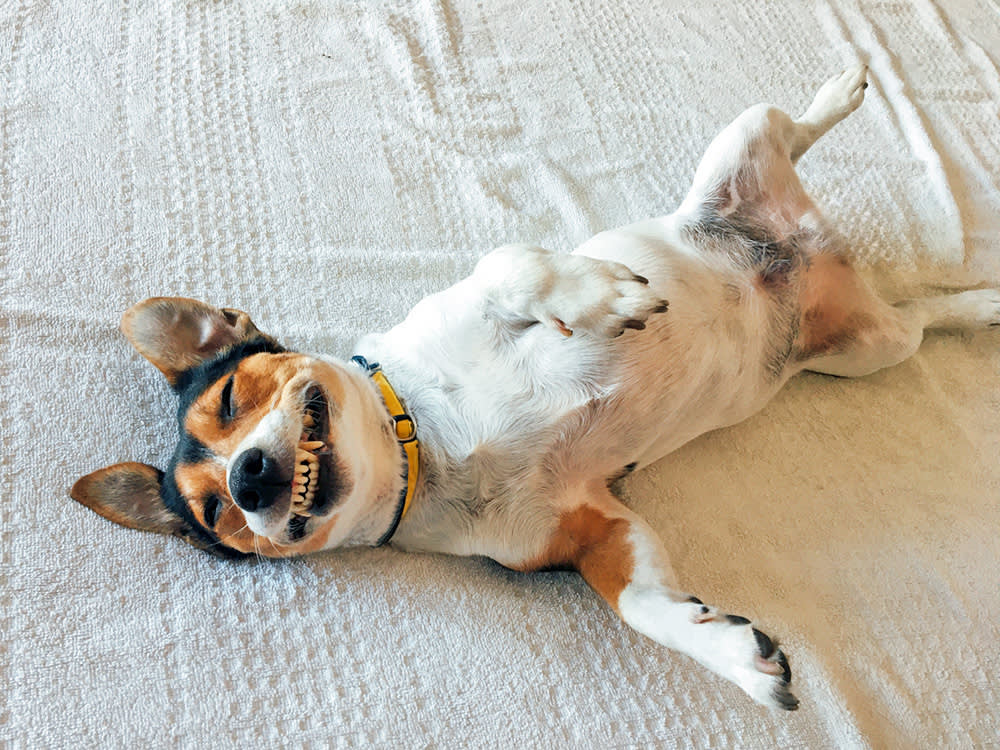
Seeing your dog’s teeth can trigger two completely different reactions in you, and that’s exactly the problem. Sometimes the corners of their mouth lift into what looks like a goofy grin and you smile back. Sometimes those same teeth appear in a hard snarl and your stomach drops. The teeth are the same. The message is not. And the single most important thing to understand about all of it is this: whatever a dog is telling you when they bare their teeth, punishing them for it is how you create a far more dangerous dog.
Let’s start there, because it’s the point most people get backward.
The snarl is a gift, not a crime
A growl or a snarl is your dog telling you, as plainly as they know how, that they’re not okay with what’s happening right now. If you punish that, you don’t fix the feeling underneath. You just teach the dog that warnings get them in trouble, so next time they skip the warning.
This is where the dreaded post-incident line comes from, the one every behaviorist has heard: “there was no warning, he just snapped.” There almost always was a sign. It was the growl and the bared teeth the dog got scolded for weeks or months earlier. A dog who’s been taught that showing discomfort is punished doesn’t stop feeling the discomfort. They just stop announcing it, and go straight to the bite. So before we learn to read teeth, burn this in: the warning is the thing you want to preserve.
Why any of this exists
The grin, oddly enough, may trace back to domestication itself. Researchers including Konrad Lorenz, Raymond Coppinger, and Brian Hare have argued that dogs who could mimic human expressions, including something like a smile, were favored over dogs who couldn’t read and respond to our social cues as well. So a dog’s “smile” isn’t a smile in the human sense. It’s body language and social mimicry that earns them positive attention, a kind of side effect of happiness rather than the same emotion behind our own grins. Some dogs have even learned to flash their teeth on cue as a trained trick, which is genuinely cute in the right context and unsettling in the wrong one.
The six things bared teeth can actually mean
A display of teeth is a context clue, not a verdict. Here are the reasons it happens.
Fear. A frightened dog may show teeth as a defensive signal, usually alongside a lowered body, wide eyes, and pinned-back ears.
Aggression. Here the teeth are a genuine warning, and they come packaged with a stiff posture, a hard stare, growling, and raised hackles. The message is plain: give me room.
Playfulness. Plenty of dogs flash teeth while wrestling or chasing, and it means nothing scary as long as the body stays loose and bouncy. This is common in confident, social dogs having a good time.
Stress or anxiety. Much like a fearful dog, an anxious dog may bare teeth as the pressure builds.
Submissiveness. Some dogs offer what’s called an appeasement grin: lips pulled back, tail wagging, whole body wiggling, all of it saying I mean no harm. It looks alarmingly like a snarl to the untrained eye, but it’s the opposite of aggression.
Pain or discomfort. When teeth appear out of nowhere in a dog who has always been easygoing, particularly in response to a touch or someone leaning in, put injury or illness at the top of the suspect list and book a vet visit.
Submissive grin versus warning grin: the tell
Because the appeasement grin and the aggressive snarl can look so similar, the difference lives in the rest of the body.
A warning grin rides on a stiff, upright, tense posture. The ears may be forward or pinned depending on the dog, the stare is hard, and you’ll often see piloerection, the hair standing up along the back.
A submissive grin comes with a lower, almost crouching posture, a wagging tail, and that loose, wiggly, whole-body softness. The dog is shrinking and appeasing, not squaring up.
The reason this matters so much is that people mix these two up constantly, in both directions, which is exactly why you never judge by the teeth alone. Read the whole picture. And a related caution: a wagging tail doesn’t automatically mean friendly, either. A slow, stiff wag can signal tension, and a fast, frantic wag can signal stress.
When the teeth come out: what to do in the moment
The guiding rule bears repeating: never punish it. Growling and teeth-baring are communication, not misbehavior. A dog punished for the warning may learn to bury it and escalate straight to biting.
Instead, play detective. Figure out what’s making your dog uneasy and, if you can, remove the stressor. Give them space and don’t force the interaction. You’re not ignoring the behavior; you’re addressing the feeling that caused it.
When to call in a professional
If your dog habitually bares teeth in a tense, warning way, especially if it comes with lunging or snapping, get help from a veterinary behaviorist or your vet sooner rather than later. Frequent, intense, unpredictable growling and teeth-baring usually means your dog is wrestling with something bigger: fear, resource guarding, chronic stress, or pain. And if there’s ever a bite, or if the warnings are clearly escalating, that’s the moment to bring in an expert before things get worse, not after.
Can you teach a dog to “smile”?
Sometimes, yes. Dogs who naturally offer submissive grins can learn to show their teeth in a controlled, happy way with positive reinforcement, pairing the natural grin with a cue like “smile” and rewarding it. One important caveat: don’t encourage teeth-showing in a dog who tends to do it when stressed. You want to understand the why behind the behavior before you try to shape it into a trick, or you risk reinforcing anxiety and confusing everyone who meets your dog.
What’s new: humans are unreliable readers, and kids are worse
Here’s the research that should make all of us a little humbler. Studies out of the Canine Science Collaboratory at Arizona State University have found that people are genuinely bad at reading dog body language and emotions, less accurate than we assume even at distinguishing a happy dog from an angry one. And a 2025 study zeroed in on young children with sobering results: about 67 percent of four-year-olds misread aggressive dog faces, with the error rate improving only gradually through age seven. Young kids tend to lock onto the dog’s face and miss the rest of the body, which is precisely the mistake this article warns against.
The practical upshot is twofold. First, don’t over-trust your own read of a strange dog; when a display could be a warning, treat it as one. Second, actively supervise children around dogs and teach them that a dog “smiling” with its teeth is not an invitation. The safest households are the ones that assume they might be misreading the dog, and slow down accordingly.
Bottom line
A dog’s grin, snarl, growl, or wag only makes sense in context, so watch the body, the energy, and the situation, not just the teeth. And whatever the teeth are saying, keep the channel open by never punishing the warning. A dog who trusts that their “I’m uncomfortable” will be heard is a dog who never has to shout it with a bite.
References
- Molnár, Cecília, et al. “Category-dependent contribution of dog facial and bodily cues in human perception of dog emotions.” Applied Animal Behaviour Science, 2024.
- “Look, He’s Smiling! Children’s Misinterpretation of Dogs’ Facial Expressions.” Anthrozoös, 2025.
- Reeder, Jen. “Study Finds People Aren’t Good At Reading Dog Body Language.” Forbes, June 2025.
Common questions
My dog growls and shows teeth. Should I correct it?
No. A growl or a snarl is your dog's most honest way of saying they're uncomfortable before things escalate. Punish it and you don't remove the discomfort, you just remove the warning, which makes a bite more likely, not less. Identify what's bothering your dog and address that instead.
How do I tell a happy grin from an aggressive snarl?
Read the whole body. A submissive or happy grin comes with a loose, wiggly body, a wagging tail, and soft eyes. A warning snarl comes with a stiff posture, hard stare, forward or pinned ears, and often raised hackles.
A dog I don't know is showing teeth. What do I do?
Don't yell, don't punish, and don't reach toward them. Calmly and slowly remove yourself from the situation. When in doubt, assume the display is a warning.
Dr. Kohl is a board-certified veterinary dentist with a particular interest in preventive oral care. She reviews all dental health content at The Pet Times and contributes practical guides on home dental routines, professional cleaning, and oral disease prevention.
Meet our experts ↗Keep reading
 TrainingAlmost Every Dog Has a 'Behavior Problem.' That's the Good News.Dr. Mara Chen · 6 min
 TrainingYour Dog Isn't Being Difficult. They're Begging for a Schedule.Dr. Lena Park · 8 min
 TrainingThe Fake-Kidnapping Dog Trend Punishes the Dog, Not the PranksterDr. Nina Kohl · 5 min
 TrainingYour Dog Isn't Annoyed by the Siren. There's a Wolf Answering It.Dr. Mara Chen · 6 min
 TrainingThe 'Velcro Dog' Is Sweet Until It Isn't. Know the Difference.Dr. Ravi Mehta · 7 min
 TrainingYour Shy Dog Isn't Antisocial. You're Fighting Two Hidden Deadlines.Dr. Mara Chen · 9 min