Medically reviewed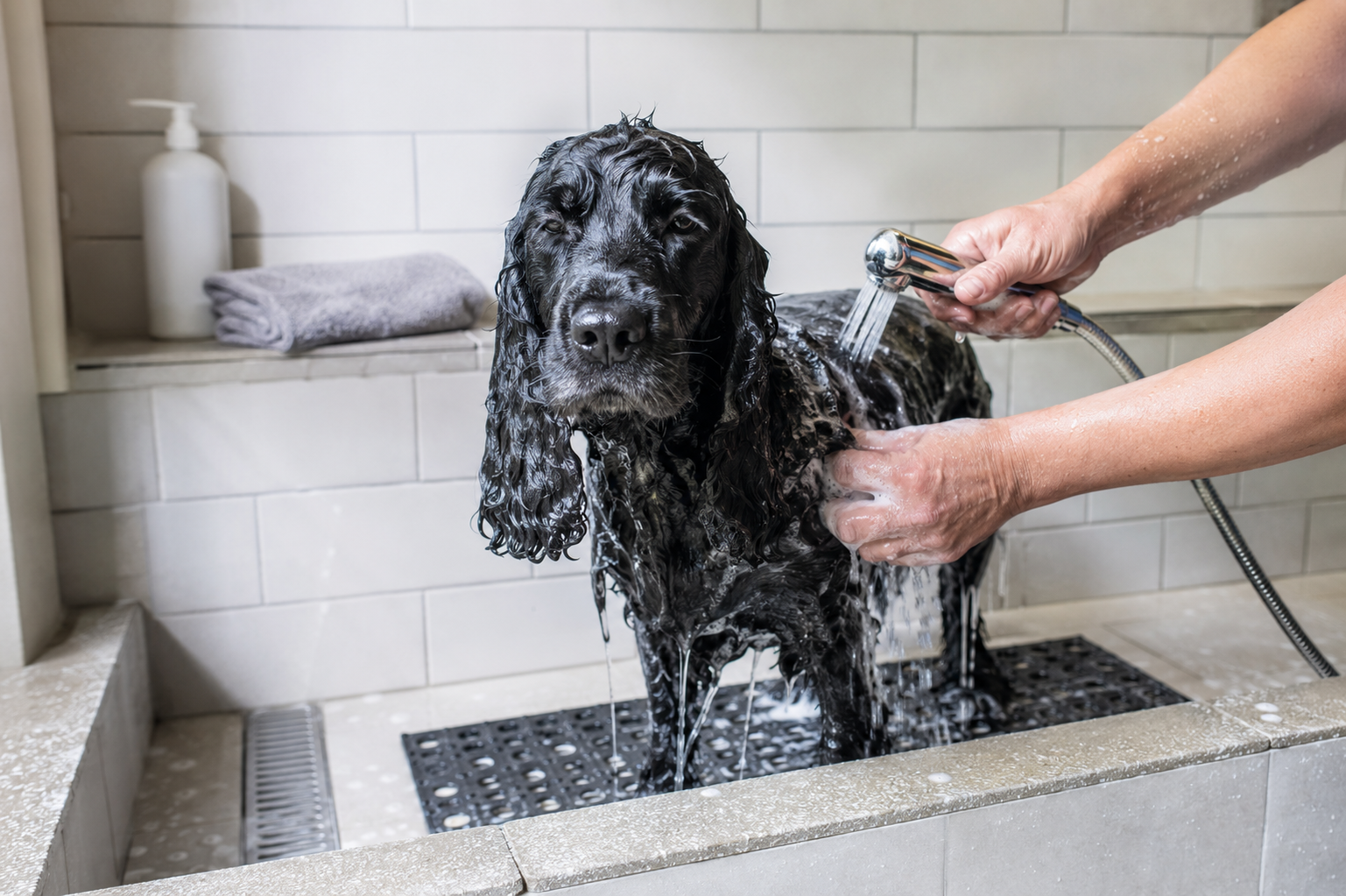
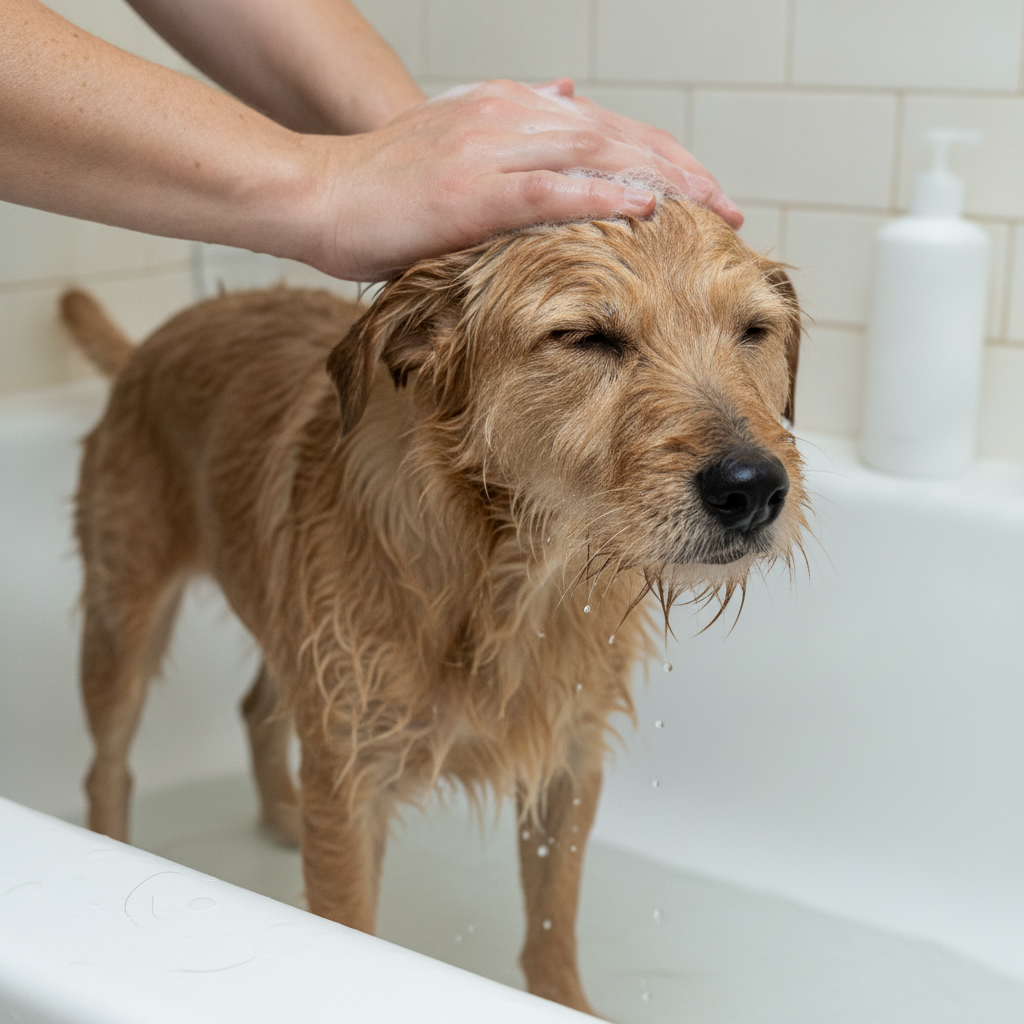
Bath day is miserable for a predictable reason, and it is not your dog. It is the room. Most people bathe a dog in the one place built for bathing a human: a standard bathroom, where you are folded over the edge of a tub, soaking your own clothes, chasing a slippery animal in a space that was never sized for the job. Small dogs get demoted to the kitchen sink, which is somehow worse. The result is a backache, a flooded floor, a long cleanup, and a dog who now dreads the whole ritual.
The fix is not a better technique. It is a better location. A dedicated dog wash station, a spot in your home designed around washing a dog instead of a person, turns bath day into a quick, contained, almost pleasant task. You do not need a renovation budget or a huge house to build one. You need water, a drain, and a handful of smart choices. Here is how to think it through.
First decision: where it goes
Before you fall in love with a fixture, settle on a room, and let your plumbing make the call. The single biggest cost driver in any wash station is how far you have to run water and drainage, so the ideal spot sits close to lines you already have.
A mudroom is the classic answer, since it is already the buffer between a dirty outdoors and a clean house. No mudroom? A laundry room is the next best thing, with water hookups already in the wall. A garage corner works too. And do not overlook outdoors: an exterior wash station gives you the most freedom to get messy and the most room to design something fun, and it doubles neatly as a utility sink for garden tools and muddy boots. Wherever you land, a wash bay can pull double duty, which helps justify the space.
Build it around your specific dog
A station that fits a Chihuahua is the wrong station for a Bernese Mountain Dog, so size the design to the animal you actually have.
For small and medium dogs, the goal is to stop bending over. Raise the basin to roughly waist height so you can work standing upright, which spares your back and knees the punishment of ground-level scrubbing. An elevated tub or a raised utility basin does the trick.
For large dogs and seniors, lifting a heavy or arthritic animal into a raised tub is its own injury waiting to happen. Build a low, accessible walk-in bay instead, essentially a shallow tiled shower the dog can step into on their own. It is gentler on their joints and on your spine.
The parts that make it actually work
A few features separate a real wash station from a sink with ambitions.
Waterproof the surroundings first. Remember that end-of-bath shake, the one that sends water three feet in every direction? A tiled or fully sealed surround is non-negotiable, and it is exactly the detail people underestimate. Skimp here and you are repairing water damage later.
Add a handheld sprayer. This is the tool that ends the wrestling match, letting you rinse the belly, undercarriage, and between the toes without contorting the dog. It doubles as a fast paw-rinse station on muddy days, which may end up being its most-used function.
Go bigger on the drain. A wider drain, around three inches, handles the volume of hair a dog bath produces far better than a standard one, and you will still want a hair catch or filter over it to keep fur out of your plumbing. Clogged pipes are the hidden tax on a wash station built too small.
Then handle the human details. Mount towel hooks or racks within arm’s reach, because you will burn through more towels than you expect and you should never have to walk away from a wet, un-toweled dog. Build in storage for shampoo, conditioner, brushes, and towels so everything lives at the station. And lay down a non-slip surface so neither of you takes a spill on wet tile. If you are going for a fully tiled or plumbed build, loop in a licensed contractor for the waterproofing and drainage, which are the parts most worth getting right.
Do you even need to wash your dog this often?
Worth saying plainly, since it changes how much you invest: most dogs do not need frequent baths. Over-washing can strip the coat’s natural oils and irritate the skin, so many dogs do well with a bath only every several weeks or when they are genuinely dirty. A wash station earns its keep for the dogs who buck that rule, the ones who roll in mud and worse, the double-coated breeds that shed and need real maintenance, and the pups with skin conditions that require medicated baths on a schedule.
A home wash setup quietly solves a problem I see all the time, which is people bathing their dog badly because doing it properly is such a hassle. When the sprayer, the drain, and the height all work with you instead of against you, you rinse more thoroughly, you skip fewer baths that matter, and the dog stops bracing for a fight every time. Comfort for you turns into a cleaner, calmer bath for them.
What’s new for the home dog-wash setup
If you are planning a station now, a few developments are worth folding in. Prefabricated dog wash inserts and freestanding raised dog tubs have become far easier to buy off the shelf than they were a few years ago, so you no longer have to custom-build a basin from scratch; a drop-in unit with a built-in sprayer and ramp can shortcut most of the work. Handheld sprayers designed specifically for pet coats, with wider spray patterns and rubber-tipped nozzles that massage while they rinse, are now common at pet retailers.
On the practical side, the reminder that keeps proving true is to protect your plumbing. Hair is the enemy of a home wash drain, and inline hair-catching drain covers made for pet washing have gotten cheap and effective. Add one from day one rather than after your first slow drain, and the whole setup stays low-maintenance. The point of the station, after all, is to make bath day easy, not to trade a backache for a plumbing bill.