


A Third of Cats Get Absolutely Nothing From Catnip. Check Before You Buy the Cute One.
Catnip response is genetic, and roughly one cat in three simply doesn't have it. Here's how to test your cat in five minutes, what to buy if they're a non-responder, and why the prettiest toys still work on them.

Affiliate disclosure. This article contains affiliate links. We may earn a small commission if you buy through a link, at no extra cost to you. How we handle recommendations.
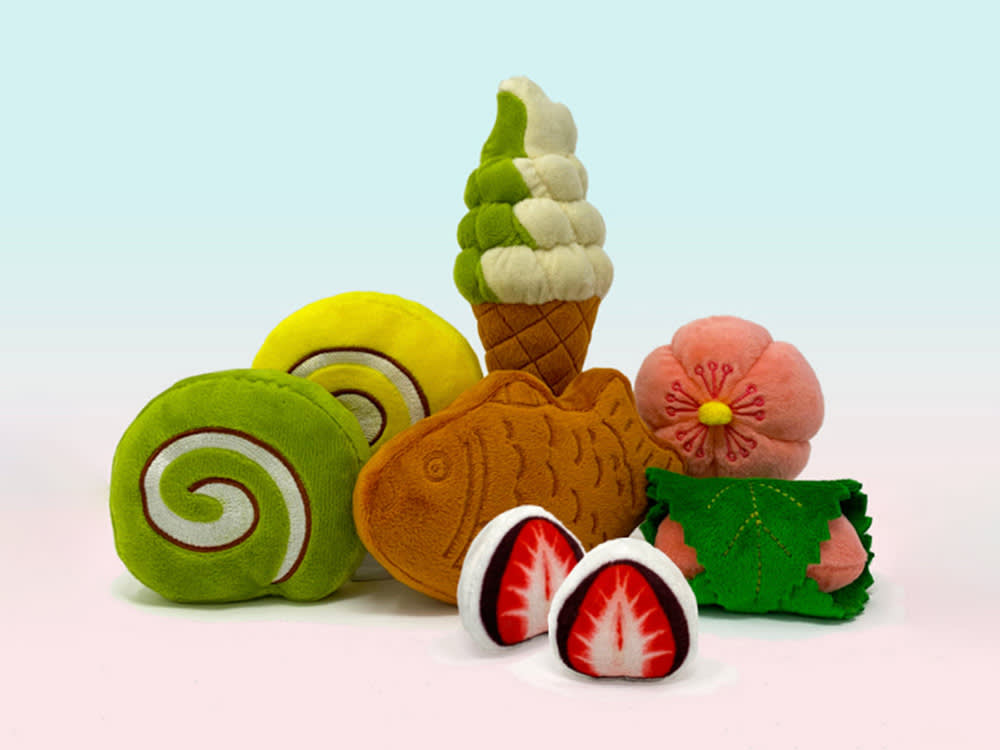
You buy the beautiful toy. A tiny plush taiyaki fish, or a matcha soft-serve cone, stuffed with organic catnip. You present it to your cat with a small flourish.
Your cat looks at it. Your cat looks at you. Your cat leaves.
Before you conclude your cat is broken or the toy is a scam, know this: catnip response is an inherited trait, and roughly one in three cats doesn’t have it. It isn’t a preference. It’s genetics, and no amount of potency or freshness will summon a response from a cat who lacks the wiring.
This is the single most useful thing you can know before spending money on cat toys, and almost nobody selling them mentions it. So: how to find out which cat you have, and what to buy for each.
The five-minute test
Take a pinch of loose, dried catnip. Put it on the floor, on a hard surface you can wipe down. Walk away and watch from across the room without hovering.
A responder will sniff it, then usually lick or chew it, then start rubbing their cheeks and chin in it, then roll, then possibly do a lap of the room at unreasonable speed. The whole episode runs about ten to fifteen minutes, and then they’ll be immune to it for roughly half an hour to two hours no matter how much more you offer.
A non-responder will sniff it and walk away. That’s the entire show.
Two caveats before you file your cat under “dud.”
Kittens under about three months generally don’t respond, whatever their genetics. The trait switches on with maturity, so a kitten’s shrug means nothing. Retest at six months.
Stale catnip fools everyone. The active compound, nepetalactone, is volatile and it degrades. Catnip that’s been sitting in a warm cupboard in a loosely sealed bag for a year is inert, and a toy that’s been on a shelf for two years is a plush object with dust in it. Test with fresh catnip from a sealed container, and store it in the freezer.
If your cat is a non-responder, buy silver vine
This is the part that makes the whole article worth reading, and it comes out of a genuinely good piece of research.
In a 2017 study published in BMC Veterinary Research, Sebastiaan Bol and colleagues tested a hundred-odd cats against four plants: catnip, silver vine (Actinidia polygama, sold in Japan as matatabi), Tatarian honeysuckle, and valerian root.
The headline numbers:
- Roughly two-thirds of cats responded to catnip. The rest, nothing.
- Almost 80% responded to silver vine, a notably higher hit rate.
- And critically: of the cats who did NOT respond to catnip, close to 75% responded to silver vine.
Read that last line again, because it’s the practical one. Your catnip-immune cat is, on the odds, very likely a silver vine cat. They aren’t unable to have this experience. They’ve just been offered the wrong plant.
Silver vine works through different iridoid compounds, including actinidine and a couple of others catnip doesn’t contain, which is why it reaches cats catnip misses. It’s typically sold as chewable sticks (dried vine, which cats gnaw), as a powder made from the galls, or stuffed into toys. The powdered gall form is generally the most potent.
Tatarian honeysuckle and valerian root pick up a further slice of cats. Valerian, be warned, smells appalling to humans.
So the buying rule is straightforward: test catnip, and if your cat is indifferent, buy silver vine before you buy anything else.
Why the pretty toys still work on a catnip-immune cat
Here’s the thing the “does my cat like catnip” question obscures entirely.
A well-made plush toy is not just a catnip delivery device. The good ones are doing three separate jobs, and only one of them depends on your cat’s genetics:
- The herb, which works on two-thirds of cats.
- The crinkle, sewn-in crinkle film or paper, which mimics the sound of small prey moving in dry leaves. Nearly every cat responds to this, and it is entirely genotype-independent.
- The form factor, a toy the size and weight of a rodent, chunky enough to be grabbed with the front paws and rabbit-kicked with the back. That kick is the killing motion, and giving a cat something to perform it on is the single most satisfying thing a toy can offer.
A catnip-immune cat can still get an enormous amount out of a good kicker toy. They’re not playing for the drug. They’re playing for the hunt.
Which reframes what you’re actually shopping for.
What to actually look for in a toy
- A bell or crinkle, not just herb. This is what carries a non-responder.
- Kicker-sized, meaning big enough to hold with the front paws while the back legs work. Tiny toys can’t be kicked.
- No feathers, strings, ribbons, or small glued-on parts. These are the classic ingestion and choking hazards, and string in particular is genuinely dangerous, a swallowed length of string can saw through intestine. If a toy has string, it’s a supervised toy, and it lives in a drawer between sessions.
- Refillable or resealable, if the herb matters to your cat. Sewn-shut toys can’t be recharged and go inert in a year.
- Sturdy seams. A toy that ruptures becomes a pile of fiberfill your cat may eat.
The toys, and what they’re actually for
The Japanese-confectionery-shaped catnip toys that periodically go viral, the taiyaki fish, the sakura mochi, the matcha soft-serve cone, come mostly from Munchiecat, whose wagashi collection is the thing you’ve been seeing on your feed. They are genuinely nice objects: minky plush, US-grown organic catnip, crinkle or bell inside, no feathers or strings, and they’re built at kicker size rather than as decorative miniatures.
Two of them are on Amazon:
- Munchiecat Taiyaki Fish Organic Catnip Toy — around $18. The fish shape is the standout, because it’s long, dense, and the right weight for a rabbit-kick. If you buy one thing from this brand, buy this.
- Munchiecat Sakura Catnip Duo, 2-piece — around $25. Two cherry-blossom pieces. Prettier, smaller, better for a cat who bats rather than wrestles.
The larger sets, including the six-piece wagashi collection with the roll cakes and the matcha cone, and the gift boxes, are sold direct at munchiecat.com, which is where the full range lives. Roughly $35 for the four-piece set.
Worth being honest about the limitation: these are catnip toys, and there’s no silver vine version. If your cat tested as a non-responder, buy them for the crinkle and the kick, which will work fine, and buy your silver vine separately as sticks or powder that you can add to any toy.
That’s the actual buying strategy, and it’s more useful than any single product recommendation: buy the toy for its shape and its crinkle, and buy the herb separately so you can match it to your cat’s genetics and refresh it when it goes stale.
Is catnip safe?
Yes, and there’s no meaningful debate about it. Cats can’t overdose on it in any clinically relevant sense; a cat who eats a large quantity of loose catnip may get an upset stomach and loose stool, and that’s about the worst of it. There’s no dependence, no withdrawal, and no long-term harm.
The genuine hazards in this category are mechanical rather than chemical: string, ribbon, feather quills, and anything small enough to swallow. Those are the things that put a cat in surgery. The herb is not.
Silver vine has the same safety picture. Some cats will chew the sticks enthusiastically, which is fine; supervise if your cat is an aggressive chewer, and swap out sticks that have been gnawed down to a splintery stub.
What’s new since this was written
The silver vine research has kept moving, and interestingly.
A separate line of work found that the catnip response may not be recreational at all. When cats rub their faces in these plants, they transfer iridoid compounds onto their fur, and those compounds have genuine mosquito-repellent activity. The rolling isn’t just a high; it may be a functional behavior that coats the animal in insect repellent. Cats that had rubbed on silver vine leaves were measurably less bothered by mosquitoes.
That reframes the whole thing. What looks like a party trick may be an ancient piece of self-medicating behavior, and it’s another argument for offering it to your cat rather than treating it as a novelty.
More recent work has also examined silver vine responses in feral cat populations, with an eye to using it in humane trapping and management. Which means the plant your cat is currently drooling on is, quietly, a live research subject.
FAQ
How do I know if my cat is a catnip responder? Offer fresh catnip, walk away, and watch. Sniffing, licking, cheek-rubbing, and rolling within a couple of minutes means yes. A sniff and a shrug means no. Retest kittens after six months.
My cat used to love catnip and now ignores it. What happened? Almost always stale catnip, or too-frequent exposure. The active compound degrades; buy fresh and store it in the freezer. Also, cats go temporarily immune for up to a couple of hours after a session.
Is silver vine better than catnip? It works on more cats, roughly 80% versus about two-thirds, and it reaches most cats that catnip misses. For a catnip-responder, either is fine. For a non-responder, silver vine is the answer.
Can my cat have too much catnip? Practically, no. A cat who eats a lot of the loose herb may get an upset stomach. There’s no addiction and no toxicity concern.
Are these toys safe for kittens? The toys, yes, provided there are no strings or feathers. The catnip won’t do anything for a kitten under about three months, so buy for the crinkle and the shape at that age.
References
- Bol, S., et al. “Responsiveness of cats (Felidae) to silver vine (Actinidia polygama), Tatarian honeysuckle (Lonicera tatarica), valerian (Valeriana officinalis) and catnip (Nepeta cataria).” BMC Veterinary Research, 2017. https://bmcvetres.biomedcentral.com/articles/10.1186/s12917-017-0987-6
- Uenoyama, R., et al. “The characteristic response of domestic cats to plant iridoids allows them to gain chemical defense against mosquitoes.” Science Advances, 2021. https://www.science.org/doi/10.1126/sciadv.abd9135
- “Feral Cat Responses to Silver Vine: Implications for Feral Cat Management.” Journal of Chemical Ecology, 2026. https://link.springer.com/article/10.1007/s10886-026-01707-5
- “Catnip.” ASPCA Animal Poison Control Center. https://www.aspca.org/pet-care/animal-poison-control
Sasha Ford is a certified cat behaviour consultant who has worked with shelters, catteries, and private clients across the country. They review all feline behaviour content at The Pet Times, with expertise in multi-cat households, indoor enrichment, and stress-related disorders.
Meet our experts ↗