


Your Cat Hasn't Pooped in Days. Here's the Line Between 'Wait' and 'Vet Now'
A cat can skip a day and be perfectly fine. But there's a point where 'not pooping' stops being a quirk and becomes an emergency, and the difference is easy to miss because cats hide it. A vet-informed guide to the timeline and the red flags.

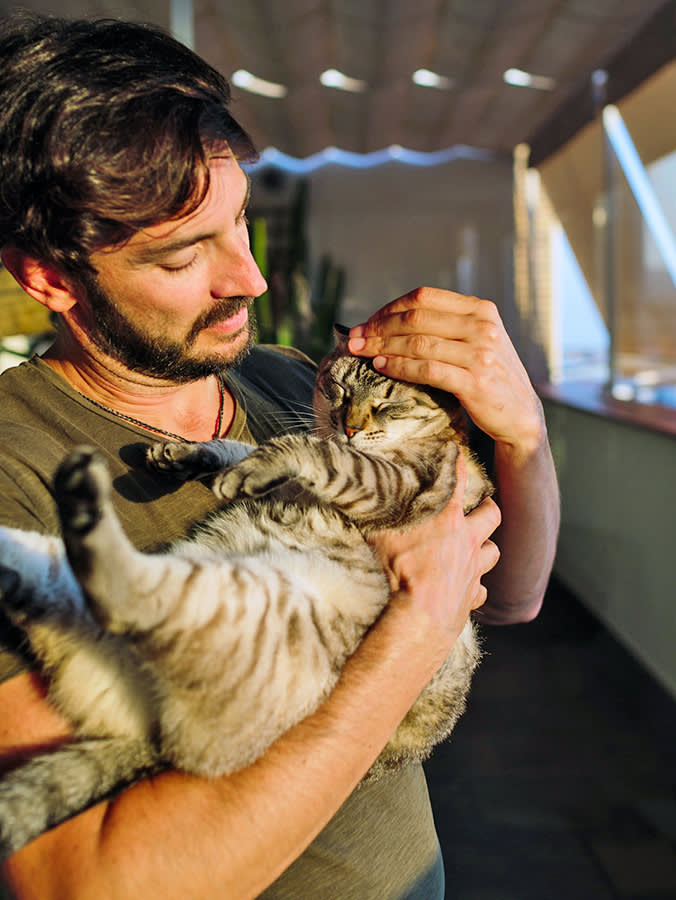
Every cat owner becomes an accidental poop analyst. You scoop the box, so you know your cat’s rhythm better than you know your own. Which is why an empty litter box sets off a very specific kind of dread: is this nothing, or is this something?
Here is the honest answer, and it is the whole point of this article. A cat skipping a day is often nothing. A cat skipping several days, or straining with a red flag or two, can be a real problem that gets worse the longer it waits. The hard part is that cats are experts at looking fine while something is off, so the timeline and the warning signs matter more than your cat’s cheerful demeanor. Let’s draw the line clearly.
The thing that trips people up is that a constipated cat often acts totally normal for a while. They’re eating, they’re on the windowsill, they seem happy, so owners assume there’s time. I’d rather someone call me on day two and hear ‘keep watching’ than call me on day six when we’re already behind.
What normal actually looks like
Most cats defecate one or two times a day. After sharing a home with a cat for a while, you develop a sense of their personal rhythm, and that rhythm is what matters, not some universal number. A cat who reliably goes once every morning and then skips a morning is telling you something a twice-a-day cat’s single skip would not.
Kittens change the math entirely. They are little digestive machines, so a kitten who hasn’t pooped in a day or two is a bigger concern than an adult who hasn’t gone for the same stretch. With kittens, err toward calling sooner.
The timeline: when to wait, when to worry
Think of it in three zones.
Under 24 hours, and your cat seems well. One missed day in an otherwise healthy, eating, normally behaving cat is usually fine to monitor. Cats can be genuinely fussy about their bathroom situation, and a choosy cat may simply be holding out for cleaner litter, a quieter box, or a less chaotic house.
Two to three days. This is the “call your vet’s office” window. You may be told to keep watching, but that is their call to make based on your cat’s health history, not something to guess at. Getting ahead of constipation here is far easier than untangling it later.
A week or more. If your cat hasn’t pooped in seven days, you have waited too long. Even a cat who still seems okay needs to be seen.
At any point in that timeline, certain signs override the clock and mean call now: vomiting, loss of appetite, obvious pain when trying to go, constant unproductive straining, or blood. And one critical caveat: a cat straining repeatedly in the box, especially a male cat, may not be constipated at all but blocked in the urinary tract, which is a life-threatening emergency. When in doubt about which end the trouble is coming from, treat it as urgent.
Why “constipated” can quietly become dangerous
Constipation exists on a spectrum. A constipated cat can still pass stool, just with more difficulty or less often than you’re used to seeing. Once a cat can no longer pass stool at all, that more severe state is called obstipation. And repeated bouts of either can stretch the colon so severely that it loses its ability to squeeze stool through at all, a condition called megacolon. Catching and treating constipation before it becomes chronic is how you keep it from progressing to that point. That is the real reason the timeline matters: this is a problem that compounds.
Why isn’t my cat pooping? The usual suspects
In practice, treating a bout of constipation is often easier than figuring out why it happened, because almost every system in the body can cause it. Vets frequently start with abdominal X-rays and may add blood work, urine testing, thyroid panels, ultrasound, or biopsies. The common causes fall into a few buckets:
- Dehydration. Cats descend from desert animals and are ruthlessly efficient at conserving water. When they run dry, the colon wrings the last moisture out of the stool, leaving it hard and painful to pass. This is one of the most common and most fixable causes.
- Swallowed material. Ingested hair, grit, bits of litter, or small objects can gum up the works. Some of the worst blockages come from bone: a cat’s stomach can dissolve bone into gravel-like fragments that form dry, rough, miserable stool.
- Extra weight. Heavier cats struggle with constipation more than lean ones.
- Intestinal inflammation. We associate inflammatory bowel disease with diarrhea, but inflammation can also slow the gut down, so an IBD cat may poop less than expected.
- Growths. Masses in or around the colon physically obstruct stool and cause straining.
- Pain and arthritis. To poop, a cat has to travel to the box, crouch into position, and push. A cat with arthritis, back pain, belly pain, or sore anal glands may avoid the whole ordeal.
- Spinal or pelvic injury. Even after the pain resolves, nerve damage from a spinal injury, or a narrowed pelvic canal from an old fracture, can impair the machinery of defecation.
- Megacolon. The end-stage loss of colon function described above. Manx cats are especially prone, because the same gene behind their taillessness can affect the lower spinal cord.
- Endocrine disease. Hyperthyroidism, diabetes, and chronic kidney disease all promote constipation by sapping muscle and undermining hydration.
- Medications. Opioid pain relievers, antacids, diuretics, and iron supplements can back a cat up, and anesthesia often pauses bowel movements for a day or two afterward.
- Stress and the litter box itself. An anxious cat, a move, a new housemate, a dirty box, or a scary vacuum can all disrupt the routine. And in long-haired cats, matted fur under the tail can physically block stool, a condition with the wonderful name pseudocoprostasis, literally “fake poop stoppage.”
What treatment usually looks like
Mild constipation is often resolved during a single office visit, sometimes with fluids to rehydrate the cat and soften the stool. From there, your vet may prescribe an oral laxative such as polyethylene glycol (MiraLAX) or lactulose, typically alongside more water intake and, in some cases, a fiber or prescription diet. These medications commonly begin working within a day or two. Severe or repeated constipation can require hospitalization and longer-term management. The through-line is that this is very treatable when caught early and much harder when it has been allowed to build.
What newer research adds
The instinct to “give it a few more days” is exactly what recent veterinary guidance pushes back on. Current advice broadly treats more than 48 hours without a bowel movement as the point to involve your vet rather than keep waiting, and notes that if a prescribed laxative like MiraLAX or lactulose hasn’t produced results within about three days, that is itself a reason to check back in rather than keep dosing at home.
There is also growing recognition that constipation is frequently a symptom, not the whole story. Because chronic kidney disease, arthritis, and dehydration are so common in middle-aged and senior cats, a cat with recurring constipation deserves a look at those underlying drivers, not just repeated stool softeners. Treating the cause, more water, pain control, managing an endocrine condition, is what actually breaks the cycle.
References
- Benjamin, Sarah E., and Kenneth J. Drobatz. “Retrospective evaluation of risk factors and treatment outcome predictors in cats presenting to the emergency room for constipation.” Journal of Feline Medicine and Surgery, vol. 22, no. 2, 2020, pp. 153–160, doi.org/10.1177/1098612X19832663.
- Washabau, R. J., and D. Holt. “Pathogenesis, diagnosis, and therapy of feline idiopathic megacolon.” Veterinary Clinics of North America: Small Animal Practice, vol. 29, no. 2, 1999, pp. 589–603.
- Cornell Feline Health Center. “Feline Constipation.” Cornell University College of Veterinary Medicine, vet.cornell.edu.
This article is for general education and is not a substitute for veterinary care. If your cat is straining, in pain, vomiting, or has not passed stool in more than two days, contact your veterinarian.
Common questions
How long can a cat safely go without pooping?
Most healthy adult cats poop once or twice a day. Skipping a single day, especially if your cat is eating, playing, and acting normal, is usually fine to watch. By 48 to 72 hours you should be calling your vet's office, and if it has been closer to a week you have almost certainly waited too long. Kittens are a different story: a kitten who hasn't gone in a day or two needs attention much sooner.
What are the warning signs that constipation is an emergency?
Call your vet promptly, regardless of how many days it has been, if your cat is vomiting, refusing food, straining hard with nothing to show for it, crying out while trying to go, passing blood, or seems painful in the belly. Repeated straining in the litter box can also look like constipation but be a life-threatening urinary blockage, especially in male cats, which is a same-day emergency.
Can I give my cat a laxative at home?
Only under your vet's direction. Products like polyethylene glycol (MiraLAX) or lactulose are sometimes prescribed and often start working within 24 to 48 hours, but the right dose depends on your cat's weight and health, and the wrong approach can backfire. Never give a human enema to a cat; some contain phosphate that is toxic to them.
Not a substitute for your vet. Our guidance is educational. For urgent symptoms, contact a vet or emergency clinic right away. Editorial standards
Dr. Chen is a small-animal veterinarian who leads health and safety coverage at The Pet Times. She writes and reviews the bulk of our illness, condition, and safety content, translating clinical guidance into clear, practical advice owners can act on at home.
Meet our experts ↗Keep reading
 Health & WellnessYour Cat's Nipples Won't Tell You She's Pregnant. They Might Tell You Something Worse.Dr. Lena Park · 9 min
 Health & WellnessWhy Does My Cat Snore? When It's Adorable and When to Call the VetTom Hadley · 7 min
 Health & WellnessCats Are America's Most Rabid Pet. The Indoor Ones Aren't Exempt.Dr. Ravi Mehta · 8 min
 LivingHe Fostered Six Kittens. Two Died in His Hands. He Kept Fostering.Dr. Amara Solis · 8 min
 Health & WellnessYour Kitten Has Fleas. The Wrong Fix Can Be Deadlier Than the Bugs.Dr. Priya Nair · 8 min
 Health & WellnessA Kitten Sneeze Is Cute Once. Here's the Line It Shouldn't Cross.Dr. Mara Chen · 8 min