Every list of the world’s smartest dog breeds puts the Border Collie at or near the top, and that ranking does something sneaky: it makes “smart” sound like a prize the dog won. It is not a prize. For a Border Collie, intelligence is a job that needs doing, and when there is no job, that same brilliant brain will invent one you did not ask for. Understand that, and you understand both why they are astonishing and why so many end up rehomed.
What we actually mean by a “smart” dog
You cannot hand a dog a test booklet, so canine intelligence is always measured sideways, through behavior. The most common yardstick is how few repetitions a dog needs before a new skill clicks, and Border Collies famously need very few. But repetition speed is only one slice.
Researchers also probe how well a dog reads human gestures and emotions, how they reason through a problem, whether they can resist an impulse, how they navigate space, and how long they will stick with a puzzle that has no solution. A 2022 study out of the University of Helsinki ran hundreds of dogs through a battery called smartDOG, developed by researcher Katriina Tiira, testing exactly these skills. Border Collies stood out for reading social cues, holding back impulses, and cracking spatial puzzles. Notably, they did not dominate every category, which is the first clue that “smartest breed” flattens something more interesting.
Because trainability is easy to see, it gets treated as the whole story. It is not. A dog who learns commands slowly but regulates their own emotions beautifully, stays calm under pressure, and solves novel problems on their own is showing a different, quieter kind of intelligence. Border Collies are dazzling in one column of that ledger. That is worth remembering before you assume the “smart” dog is the easy one.
Chaser, the dog who knew 1,022 things by name
If you want a single animal who made the case for canine genius, it is Chaser, a Border Collie who died peacefully in 2019 at 15. Over three years of daily training, Chaser memorized and held onto the individual names of 1,022 separate objects, documented in a 2011 study. She did not just fetch on cue; follow-up work showed she understood those words as names, correctly pairing random nouns with commands, sometimes on the first try.
Chaser was exceptional, but she was not a fluke of one dog. She was an extreme example of a trait that runs strong in the breed: a memory and a drive to work that, pointed at a task, go remarkably far. That combination is the real Border Collie superpower, and it is also the thing that makes them a handful.
The catch: a working brain needs work
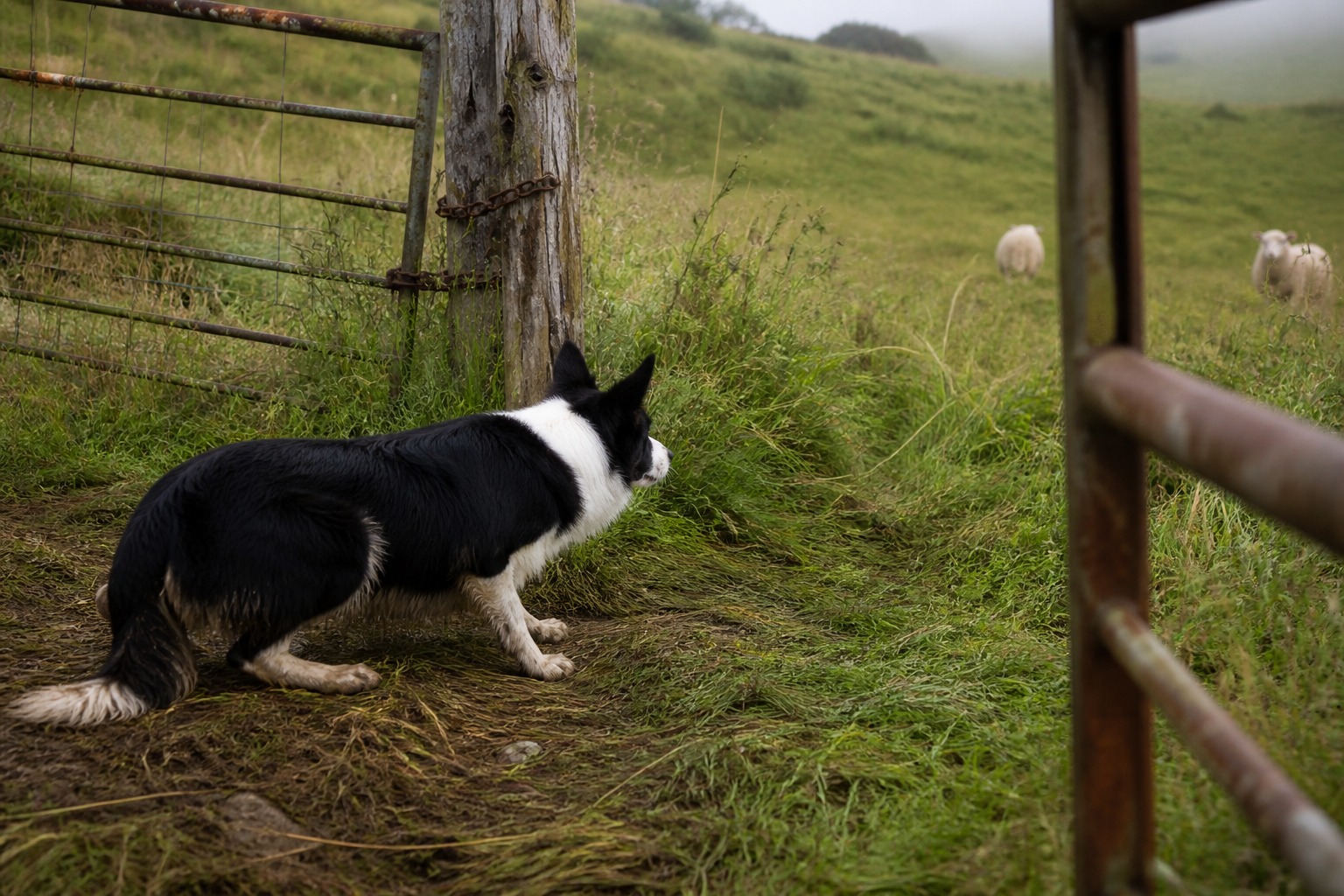
Here is the part the ranking never mentions. Border Collies were shaped over many generations of herding dogs, with the modern breed taking form in the late 1800s; the name itself dates to 1915, and the American Kennel Club recognized the breed in 1995. All that selection was for one thing, useful work on a hillside. A dog built for a job does not switch that instinct off because they now live in an apartment.
Deprived of a real outlet, that drive does not vanish; it leaks out sideways. Under-stimulated Border Collies commonly start chasing cars, or herding whatever moves, other dogs, joggers, and sometimes children, complete with the instinctive nips that herding involves. Others spiral into frantic energy, destructiveness, or obsessive-compulsive loops. None of that is a bad dog. It is a working animal whose paycheck never arrived.
“People fall for the ‘smartest breed’ label and picture an easy, plug-and-play dog,” says Dr. Mara Chen. “What they actually adopt is an athlete with a job description. Meet the need for hard physical exercise and daily mental work, and you get a phenomenal partner. Skip it, and that brain will write its own to-do list, and you will not like the list.”
So the honest checklist before you bring one home is not “am I ready for a smart dog.” It is “can I give this dog a job.” That means real physical exercise, because they were built to cover ground, plus genuine mental work: scent games, trick training, puzzle feeders, a sport like agility or herding trials. And, less obviously, it means teaching them to switch off. A tightly wound working dog needs protected quiet time with nothing to react to, or the engine never idles down.
What newer research adds
The science has moved past “how many words can one prodigy learn” to “who can do this, and why.” Recent work from the Family Dog Project at Eötvös Loránd University in Budapest studied “gifted word learner” dogs, animals who pick up object names naturally through everyday play. The findings reframe the whole conversation. This talent is rare, showing up in only a small group of dogs. Most are Border Collies, but not all, and, tellingly, the vast majority of Border Collies do not have it. The one thing owners said set the gifted dogs apart was that they were more playful.
The gifted dogs are also holding onto what they learn. A 2024 study in the Royal Society’s Biology Letters found these dogs still remembered object labels at least two years after learning them. And a 2025 study in Current Biology showed they can extend a familiar word to brand-new objects that share a function even when they look nothing alike, a flexible, almost humanlike grasp of what a word means. The upshot for the rest of us: raw breed is not destiny. Playfulness, engagement, and the everyday back-and-forth of living closely with a dog seem to be where this kind of intelligence actually grows.
Border Collies earn the reputation. Just retire the fantasy that “smart” means “easy.” The smartest dog in the room is the one who most needs you to give them something worthwhile to do.
References
- Pilley, John W., and Alliston K. Reid. “Border Collie Comprehends Object Names as Verbal Referents.” Behavioural Processes, vol. 86, no. 2, 2011, pp. 184–195. doi.org/10.1016/j.beproc.2010.11.007
- Junttila, Saara, et al. “Breed Differences in Social Cognition, Inhibitory Control, and Spatial Problem-Solving Ability in the Domestic Dog.” Scientific Reports (smartDOG cognitive test battery), 2022. doi.org/10.1038/s41598-022-26991-5
- Dror, Shany, et al. “Dogs with a Vocabulary of Object Labels Retain Them for at Least 2 Years.” Biology Letters, vol. 20, no. 9, 2024. doi.org/10.1098/rsbl.2024.0208
- Dror, Shany, et al. “Dogs Extend Verbal Labels for Functional Classification of Objects.” Current Biology, 2025. doi.org/10.1016/j.cub.2025.08.043