


The Walk Fails at the Neck and the Pavement: Walking Gear Ranked by Safety
Most walk-gear roundups rank by looks. The two things that actually protect your pet are where the leash attaches and what's under their paws. Here's our award-winning gear sorted by what keeps a dog or cat safe, then the style picks worth the splurge.

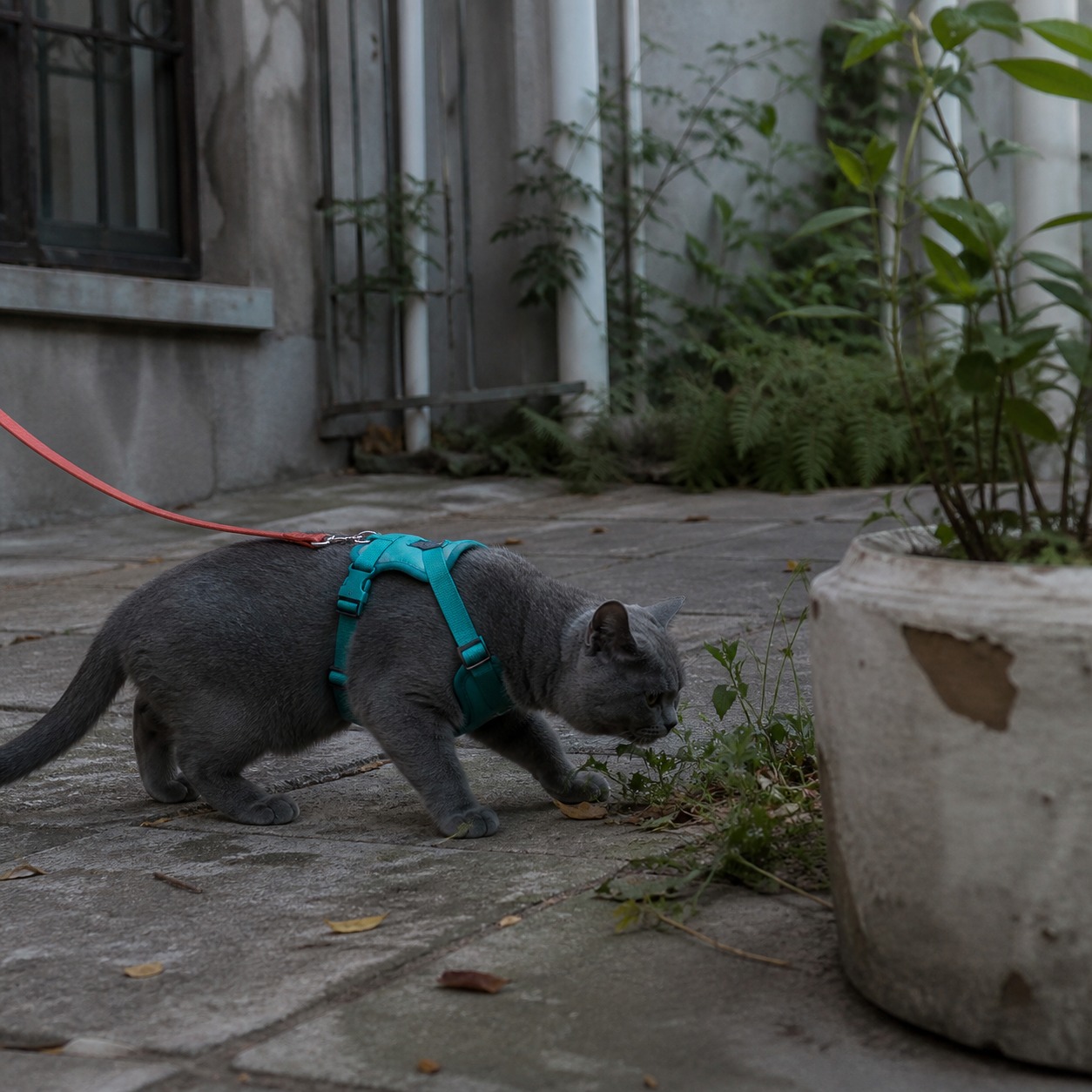
Open any “best walk gear” guide and it reads like a style column: this leash matches that harness, these come in seven colors. The looks are fine, but they bury the two things that actually decide whether a walk is safe. A walk fails in exactly two places. It fails at the neck, where the leash attaches, because the wrong attachment point can choke a dog or strangle a cat. And it fails at the pavement, because hot asphalt and winter road salt burn paw pads that have no protection. Get those two right and everything else, the color, the brand, the matching poop-bag holder, is a tiebreaker.
So we have sorted our award winners by safety first. The gear that protects the neck and the paws comes before the gear that just looks good, and then we get to the style picks that genuinely earn the splurge.
Safety first, part one: where the leash attaches
For cats, this is the single most important sentence on the page: never clip a leash to a cat’s collar.
“A leash on a cat’s neck is dangerous,” says Sara Lim, a Pet Times behavior contributor. “A startled cat can twist backward out of a collar in about a second, and anything that yanks against the windpipe risks choking them when they bolt. Use a real harness that distributes pressure across the chest, and a martingale feature is a bonus because it cinches gently if your cat tries to back out.”
Best cat harness: an escape-proof mesh martingale vest. A breathable, lightweight-yet-heavy-duty mesh vest with a martingale cinch that tightens just enough to stop an escape artist from wriggling free, with the leash load on the chest, not the neck. This is the design that lets a cat walk safely.
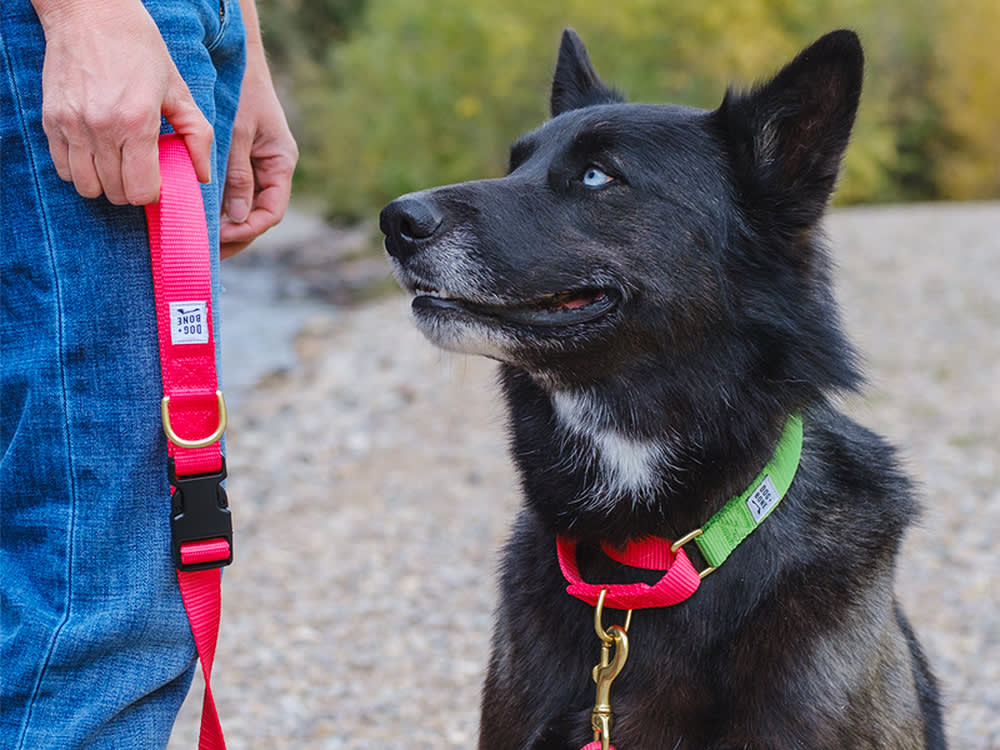
Best martingale dog collar: Dog + Bone Martingale. A “limited-slip” collar with two loops that, fitted correctly, tightens enough to prevent a backed-out escape without choking. It’s nearly inescapable, which is why trainers, vets, and rescues rely on it. I tell dog-walking companies to use a martingale as a backup to whatever device the client uses, in case of equipment failure. Use it as a security layer, not a correction tool.
Best everyday walk kit: Wild One Walk Kit. A back-clip harness paired with a secure under-the-arm fit, soft, stretchy, and adjustable enough to resist chafing through hard play. “A back-clip harness is more practical for everyday walking and sniffing, especially for a shorter dog,” says Sara Lim; “the clip position stops the line from dragging underfoot and lets the walk happen on a nearly slack leash.” The matching waterproof flex-poly leashes shrug off dirt and odor. Wild One also sponsors the rescue of a pet a week through Badass Animal Rescue, funding medical bills and adoption events, a brand fact worth knowing.
Safety first, part two: what’s under the paws
Paw pads are tougher than skin but not invincible, and the two seasonal hazards are heat and salt.
“On walks, you want to avoid anything that damages the pads, extreme heat, extreme cold, and rough terrain,” says Sara Lim. “In summer, do the seven-second test: hold the back of your hand to the pavement for seven seconds, and if you can’t, neither can your dog. In winter, the enemy is road salt, which causes chemical burns.”
Best dog boots: WagWellies. Waterproof, ultra-protective boots with open-vented slits that make them easy to pull on, built for the city salt that causes chemical burns and the summer asphalt that scorches tender toes. The most footwear-resistant dog may still object, but their pads will thank you.
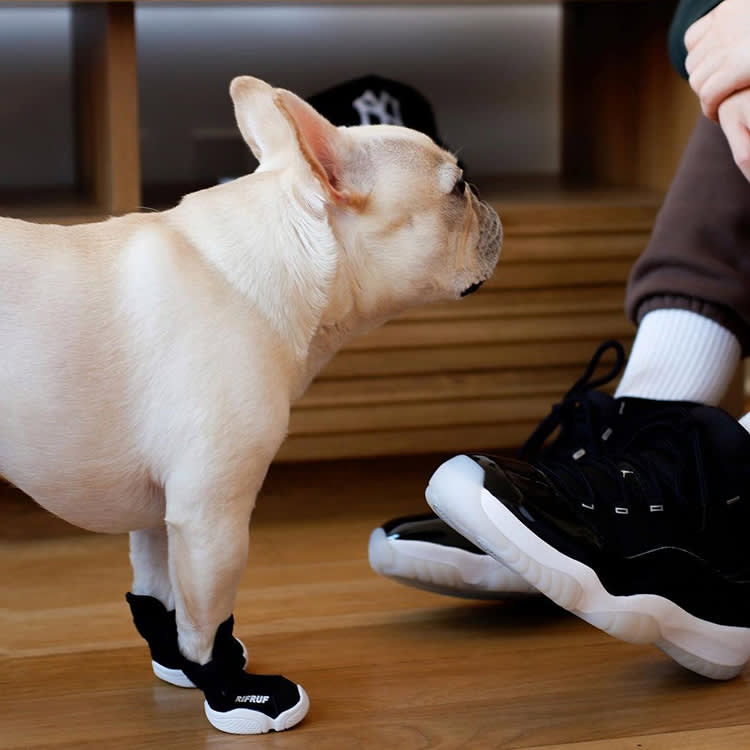
Best dog sneakers: RIFRUF Caesar 1. Engineered from the same materials as performance running shoes, this lightweight, reliable sneaker protects against bacteria, debris, hot pavement, and de-icing chemicals while staying genuinely comfortable, a year-round option for dogs who tolerate a closed shoe better than a boot.
Then the leashes and pouches that make the walk work
Best hands-free leash: Found My Animal rope leash. Long enough to wear around the waist, leaving your hands free for water or treats, hand-crafted to be extremely durable, in a deep bench of colorways. A hands-free leash only works if the dog already heels well. If they pull on a standard leash, they’ll pull on this one. Found My Animal directs part of every sale to rescue, having supported 70-plus organizations.
Best treat pouch: Maxbone Ease Pouch. Training treats should be “pea-sized and portable,” and they need a home that isn’t your pocket lining. This pouch keeps your cards, keys, and phone in enclosed slots, separate from the snacks, worn as a sling or belt. The large fits a small wallet, phone, keys, and poop bags.
Best poop bag holder: Wild One Carrier. A buttery-soft shell with an elastic strap that clips to any leash and a twist-top that reloads eco-friendly bags in seconds. If you’re already in the Wild One kit, it completes the monochrome look.
And the style picks worth the splurge
Once the neck and the paws are handled, this is where personality comes in.
Best luxe leash: Boo Oh Lumi Leash. From Seattle-based industrial designer Jay Sae Jung Oh, whose “sculptural castaways” furniture earned a Best in Show at Design Miami and an Architectural Digest feature. “I didn’t want the pet products to get thrown away easily; I wanted people to use them for a long time,” she says. The Lumi pairs warm hues with rich black leather, modern-classic and built to last.
Best sustainable walk kit: Wanderruff Kona. A leash, collar, and harness made from recycled water bottles, shipped in eco-friendly packaging, with the leash in two widths and durable, easy-clean materials. The brand takes part in the 1% for the Planet pledge and is donating to the Pacific Parklands Foundation this year.
Best cat collar: a breakaway leather collar. For an indoor cat, a genuinely classy natural-leather collar with a quick-release breakaway clasp (essential safety hardware) and a removable brass bell to track their whereabouts. Keep it for indoors; this one is for style, not the leash.
The short version
Rank your walk gear the way safety actually works: the attachment point first (a harness for cats, never a neck leash; a martingale as a backup for slip-prone dogs), then paw protection (the seven-second pavement test in summer, salt protection in winter), then the leashes and pouches that make the routine smooth, and only then the leash that looks like a chic belt. Buy the safety pieces like they matter, because on a bad day they are the difference between a walk and an injury.
References
- American Veterinary Medical Association. “Hot Weather Safety for Pets.” avma.org.
- ASPCA. “Cold Weather Safety Tips.” aspca.org.
- The Humane Society of the United States. “Keep Your Pets Safe in Hot Weather (Pavement Temperature).” humanesociety.org.
- International Cat Care. “Walking Your Cat Safely with a Harness.” icatcare.org.
Common questions
Should I clip my cat's leash to a collar or a harness?
A harness, always, and never a collar. Clipping a leash to a cat's collar is genuinely dangerous: a spooked cat can twist free in a second, and a hard pull against the windpipe can choke them. A well-fitted vest harness keeps the load on the chest and shoulders instead; a martingale-style closure is a bonus, snugging up gently if your cat tries to reverse out.
How do I know if the pavement is too hot for my dog's paws?
Use the seven-second test: press the back of your hand flat to the pavement for seven seconds. If you can't hold it there comfortably, it's too hot for paws and can cause burns. Asphalt can run dramatically hotter than the air. Walk early or late in summer, stick to grass, or use dog boots. In winter, the hazard flips to road salt, which causes chemical burns and irritation, so boots or a paw balm and a rinse after walks help.
What's a martingale collar and who needs one?
A martingale, or limited-slip collar, has two loops so it tightens just enough to stay on without choking when fitted correctly. It's nearly impossible to back out of, which makes it a smart safety backup for dogs who slip standard collars, especially nervous or narrow-headed dogs. Many trainers recommend it as a secondary attachment alongside a harness in case of equipment failure.
Do dogs really need boots or shoes?
Many do, situationally. Boots protect paws from hot asphalt, winter road salt, ice, and rough or rocky terrain, all of which can damage paw pads. Not every dog needs them every day, but for extreme heat or cold, long hikes, or salted city sidewalks, they prevent real injuries. Expect a comical first-time strut while your dog adjusts.
Jordan Ellis is a certified professional dog trainer with a decade of experience working with rescue organisations and private clients. They specialise in anxiety, reactivity, and positive reinforcement methods, and review all training and behaviour content at The Pet Times.
Meet our experts ↗Keep reading
 Product PicksWarmth, Safety, or Just Style? The Pet Coats Worth It, Sorted by What They DoSasha Ford · 11 min
 Product Picks7 Pieces of Dog Gear That Won't Wreck Your Living RoomSara Lim · 6 min
 Product PicksThe Escape-Proof Collar Shelters Swear By Comes From a Town of 400Nina Vasquez · 5 min
 Product PicksDog Shoes Don't Fail Because They're Ugly. They Fail Because They Fall Off.Sasha Ford · 5 min
 Product PicksBuild Your Pet's Barbie Look Without Buying 33 Pink ThingsSara Lim · 5 min
 Product PicksTikTok Sold You the Demo, Not the Dog. 7 Gadgets That Survive Real Life.Sasha Ford · 8 min