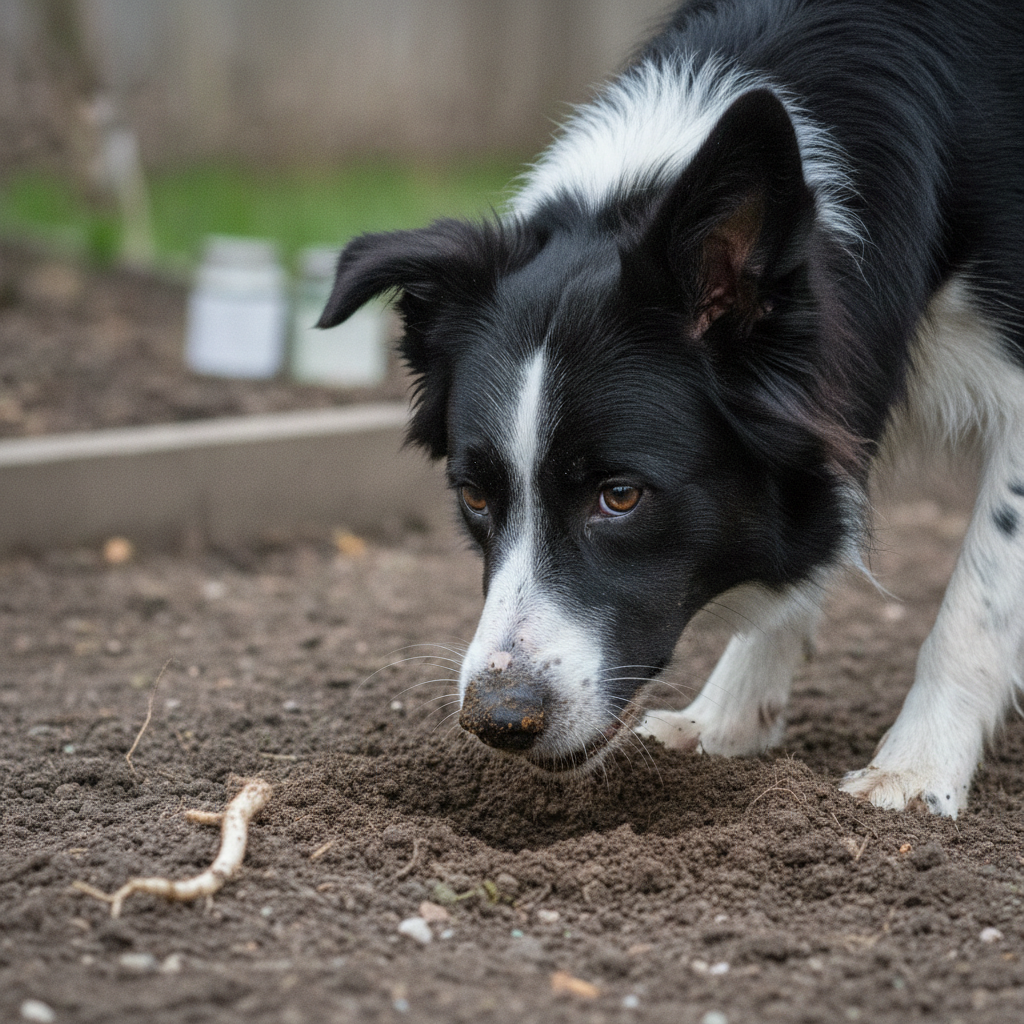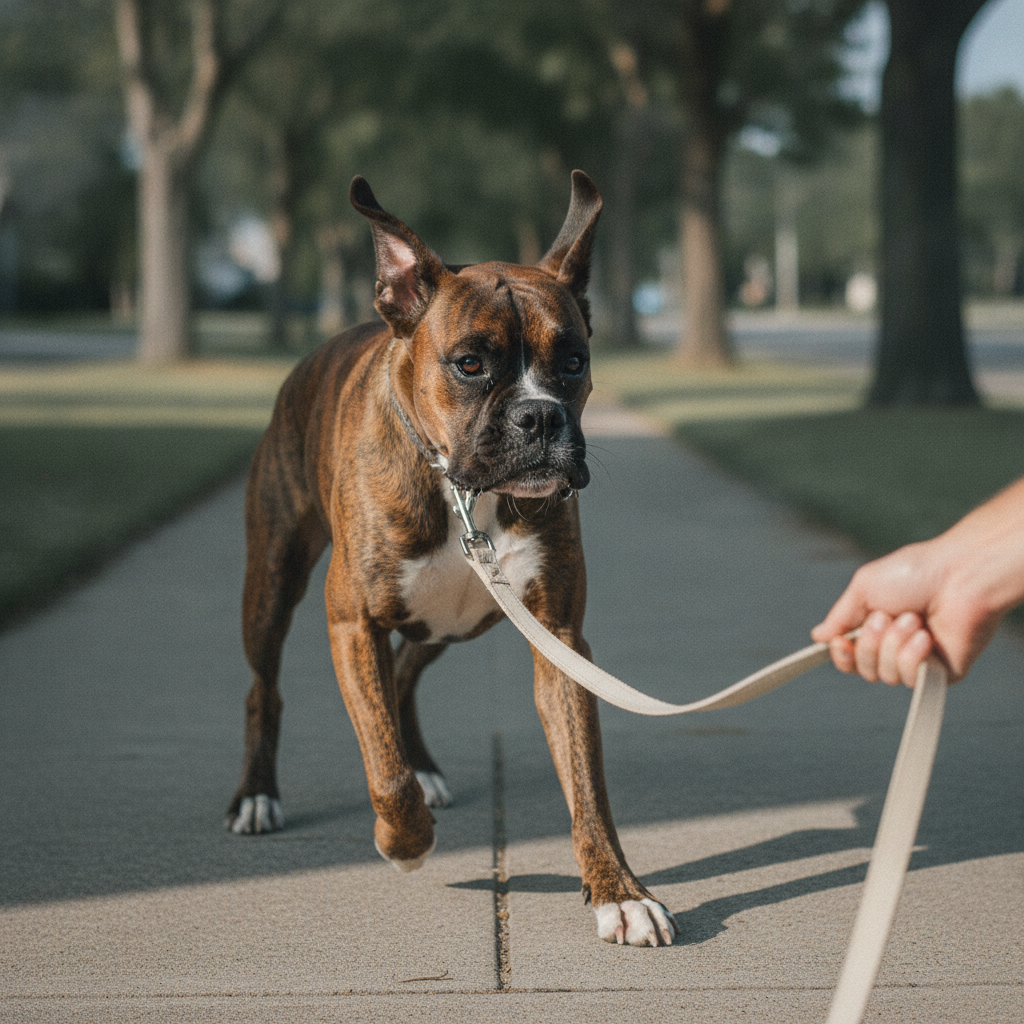

Your dog plants themselves in front of you and barks. Then barks again. There is no mail carrier, no squirrel, no obvious emergency, just your dog, looking dead at you, demanding something. The instinct in that moment is to shush, to react, to make the noise stop. Here is the more useful way to see it: that bark is a sentence, your dog is talking to you, and at some point, you taught them that this is how the conversation works.
That reframe changes everything about the fix. If barking is a nuisance to be suppressed, you fight it. If barking is communication, you answer it and then, crucially, teach a quieter way to say the same thing. The second approach is the one that actually works, and it is the one behaviorists keep pointing people toward.
First, rule out what the bark might really mean
Before you decide your dog is barking “just for attention,” rule out the alternatives, because attention-seeking is often the last box to check, not the first.
Most demand barking is a request. Your dog cannot open the pantry, let themselves into the yard, or refill their own water bowl, so they escalate to the one tool that reliably summons the tall creature with thumbs: their voice. It is the canine equivalent of asking someone to reach the top shelf for you. If your dog does a lot of this, the answer is not less barking, it is a clearer channel: teach them a specific action for a specific need. Sitting by the door, ringing a hanging bell, or bringing you a toy for playtime all get the message across faster, and much more quietly, than a bark ever will.
Boredom is the next suspect. A dog with too much unspent energy and no better outlet will get mouthy, sometimes literally. If nobody has taught them another way to say “I need something to do,” barking fills the vacuum.
Only after those are ruled out do you land on genuine attention-seeking. And this one is worth being honest about, because it is usually a habit we built. Dogs learn fast that barking produces a response, and here is the catch that trips up almost everyone: any response counts. Eye contact, talking, even scolding, all of it can read as “it worked” to a dog. Reinforce it a few times and you have a barker.
The real debate: ignore it, or engage?
This is where good trainers genuinely disagree, and it is worth understanding the split so you can choose deliberately.
One camp says give the barking no reaction at all: no eye contact, no words, no touch, and build a long-term plan that teaches an alternative behavior, like going to a bed or sitting, then loading that alternative with praise and treats until it becomes the default. The logic is clean: if attention is the reward, remove the reward.
The other camp is wary of pure ignoring, and for a concrete reason. If you have ever tried to wait out a determined barker, you know it can go on a very long time, and a dog left to bark until exhausted has not learned to be calm. They have learned that this is a marathon. The next day, the marathon simply restarts. So this camp favors engaging in the short term, standing up, following the dog to see if they lead you toward a real need, meeting it if there is one, while still building the same long-term “here is a better behavior” plan.
“Both approaches share the same endgame, teaching the dog a clearer way to ask, and that’s what people miss when they argue about it,” says Dr. Amara Solis. “Pure ignoring only works if you can truly give zero response, which almost no one can sustain, and even then it can turn into a shouting match your dog always has more stamina for. I’d rather we answer the question, then teach a quieter question.”
If you go the engaging route, the move is to stand up and see how, or whether, your dog tries to guide you. Do they grab a toy? Head for the door? That is your data. Meet the legitimate need, and if the barking keeps going after the need is met, redirect them, a puzzle, a chew, or a few minutes of calm downtime, a short crate break if they are crate-trained, or some quiet time in another room with something to do.
The one thing not to do
Do not punish the barking, and steer clear of shock or spray “bark collars.” The reasoning is straightforward: barking is your dog attempting to communicate, and if you suppress the communication without addressing what is behind it, you have not solved the problem, you have gagged the messenger and left the message unread. Punishment-based tools also carry real fallout risk, adding fear or anxiety on top of the original issue, which is why the trend across modern behavior professionals is firmly away from them. You want your dog talking to you more clearly, not learning that talking is dangerous.
Build the routine that lowers the volume
A predictable schedule does a lot of quiet work here. Set times for walks, meals, and play give a dog fewer reasons to demand-bark, because their needs are being met before they have to ask loudly. This is especially true for dogs fresh out of a shelter, who may arrive genuinely dysregulated and not even sure what they want yet. The goal is not rigid clockwork, though; leave room for novelty, a new sniff route, a surprise game, so life is predictable without being so monotonous it breeds boredom of its own.
Teach a “settle” as your anchor behavior. Cue your dog to a mat or bed and reward staying there, building duration slowly, a treat for every few seconds at first, then longer stretches over the following weeks, until a calm down-stay is genuinely more rewarding than the excitement was. Over time, settle becomes the thing your dog reaches for instead of barking.
When barking is a red flag, not a habit
Short, sporadic barking is just a dog being a dog. But barking that is constant, goes on for long stretches, or shows up suddenly in a dog who never did it before deserves a closer look. The first stop for a sudden change is your veterinarian, to rule out pain or an underlying medical problem the dog cannot tell you about any other way. If the dog is well fed, well exercised, and getting real play but still cannot stop, or if a professional trainer is warranted, that is the moment to bring one in.
The through-line is simple. Your dog is not making noise at you for no reason. They are telling you something with the only broadcast tool they have. Answer it, then teach them an easier way to be heard, and the barking gets quieter on its own.