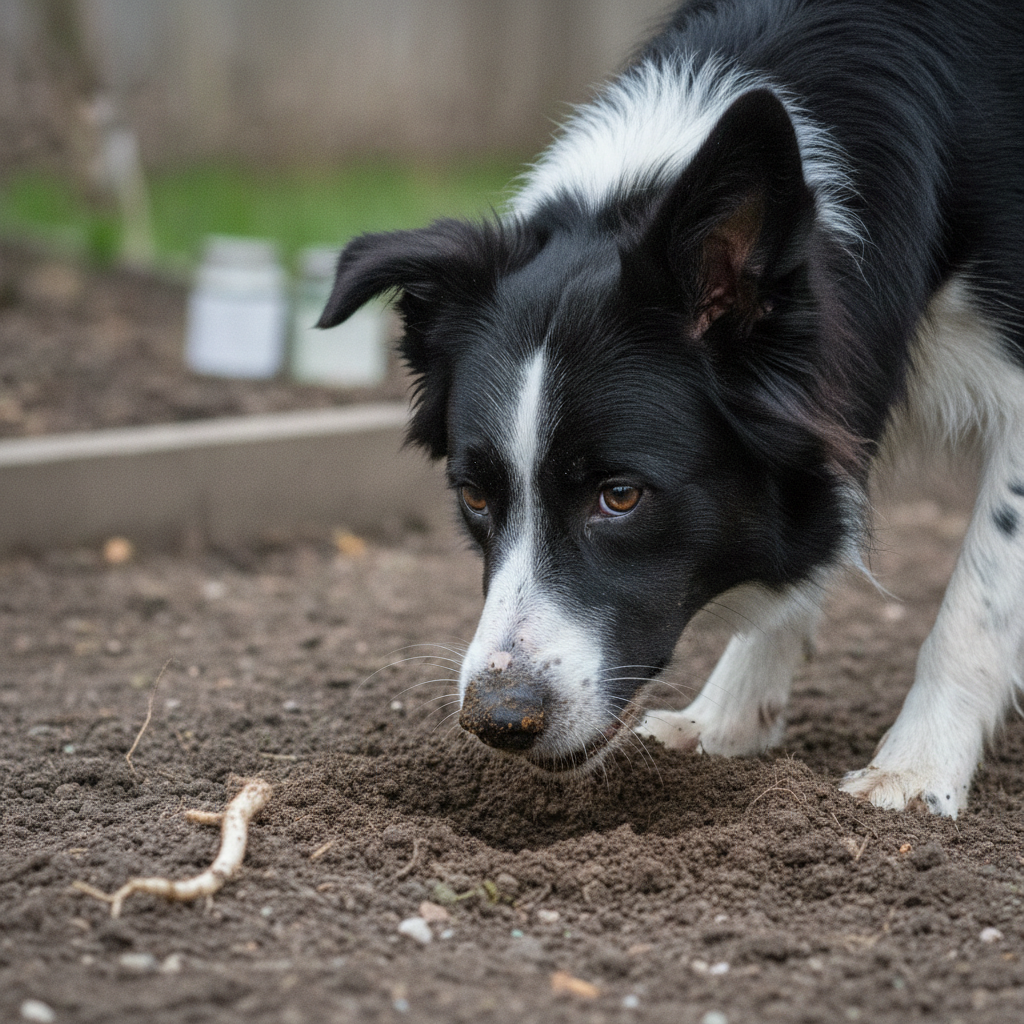
Dogs eat things they shouldn’t. That is the baseline, and most of the time it is nothing. But dirt is a strange one, because it sits right on the line between a habit and a symptom, and the two look identical from the back door.
Here is the split worth holding onto. Most dirt-eating is a behavior. But the first thing your vet will check is not your dog’s schedule, it is their blood, and that is because the most common medical cause of geophagia is anemia. Get that ruled out, and everything else on this list becomes a manageable training problem.
Start with the blood
Anemia means a low red blood cell count, and the iron deficiency that can accompany it is the most commonly cited medical reason a dog starts eating dirt. It is the reason vets take this seriously instead of laughing it off, and it is the reason “just add a supplement” is the wrong first move: if your dog is anemic, you need to know why they are anemic, and iron in the bowl will not tell you.
Alongside that, a vet looking at a persistent dirt-eater is thinking about:
Poor nutrient absorption. A gut that is not absorbing properly can leave a dog nutritionally short even on good food, and that can drive them toward soil.
Gastrointestinal upset. Some dogs eat dirt the way some dogs eat grass, apparently to settle a sour stomach or provoke vomiting. Even when it works in the moment, doing it repeatedly makes things worse, not better.
Liver disease and other systemic problems. Less common, but part of why an unexplained new habit deserves a workup rather than a shrug.
Diet adequacy. Check that the food carries an AAFCO statement of nutritional adequacy for your dog’s life stage, and check that the amount is actually right. Underfeeding is a real and under-considered cause of scavenging.
“Owners come in embarrassed, as if they are wasting my time with a dog who likes dirt,” says Dr. Mara Chen. “They are not. It takes one blood draw to rule out the thing that actually matters, and I would much rather do that than have someone spend three months on enrichment while a dog is quietly anemic.”
The soil is the second problem
This is the part that gets underplayed, and it deserves its own section, because the dirt is not just a symptom. It is a vector.
Soil is where the infective stages of several parasites survive. Hookworms and whipworms shed eggs into the ground, and hookworm larvae can penetrate skin as well as being swallowed. Giardia can be picked up from contaminated ground and water. A dog who systematically eats dirt is doing the single most efficient thing possible to acquire all of them.
And it runs in a loop. Heavy parasite burdens cause blood loss, nutrient loss, cramping, and intestinal discomfort, all of which are themselves associated with pica. A dog can eat dirt because they are anemic, become more parasitized because they are eating dirt, and become more anemic because they are parasitized.
Which is why the practical package for a dirt-eater is: a fecal test, and year-round parasite prevention. Not seasonal. Year-round.
Hookworms in particular are worth respecting for a second reason: they are zoonotic. Human hookworm infection from contaminated soil is a real, documented thing, most often as cutaneous larva migrans. If your dog is eating dirt in your yard and your children play in that yard, the parasite control is not just for the dog.
And then, the mechanical damage
Even without parasites, volume causes problems.
- Stomach upset, which is the mild end
- Constipation, from a gut packed with indigestible material
- Intestinal blockage, which is the surgical end
- Abrasions to the gastrointestinal tract, from the rocks, grit, and sticks that come with the dirt
A little dirt is unlikely to hurt a healthy dog. A dog who is going out and eating dirt as an activity is a different case, and the danger scales with volume.
When it really is just behavior
Once medicine is clear, you are usually looking at one of three things.
Puppy exploration. Puppies put everything in their mouths, and dirt is right there. For a young dog with no other signs, this is often nothing more than developmental, and it fades with management and time.
Boredom. An under-exercised, under-stimulated dog with a yard and nothing to do will invent a job. Digging and eating dirt is a perfectly reasonable job if no better one is on offer.
Anxiety. Dirt-eating can be a stress-displacement behavior, and it sometimes tracks with separation-related distress. The tell is timing: if it happens mostly when you are leaving, when you are out, or after something stressful, you are looking at anxiety, not appetite. Keep a simple log of when it happens, how long it lasts, and what preceded it. That log is worth a great deal to a vet or a trainer.
Stopping it
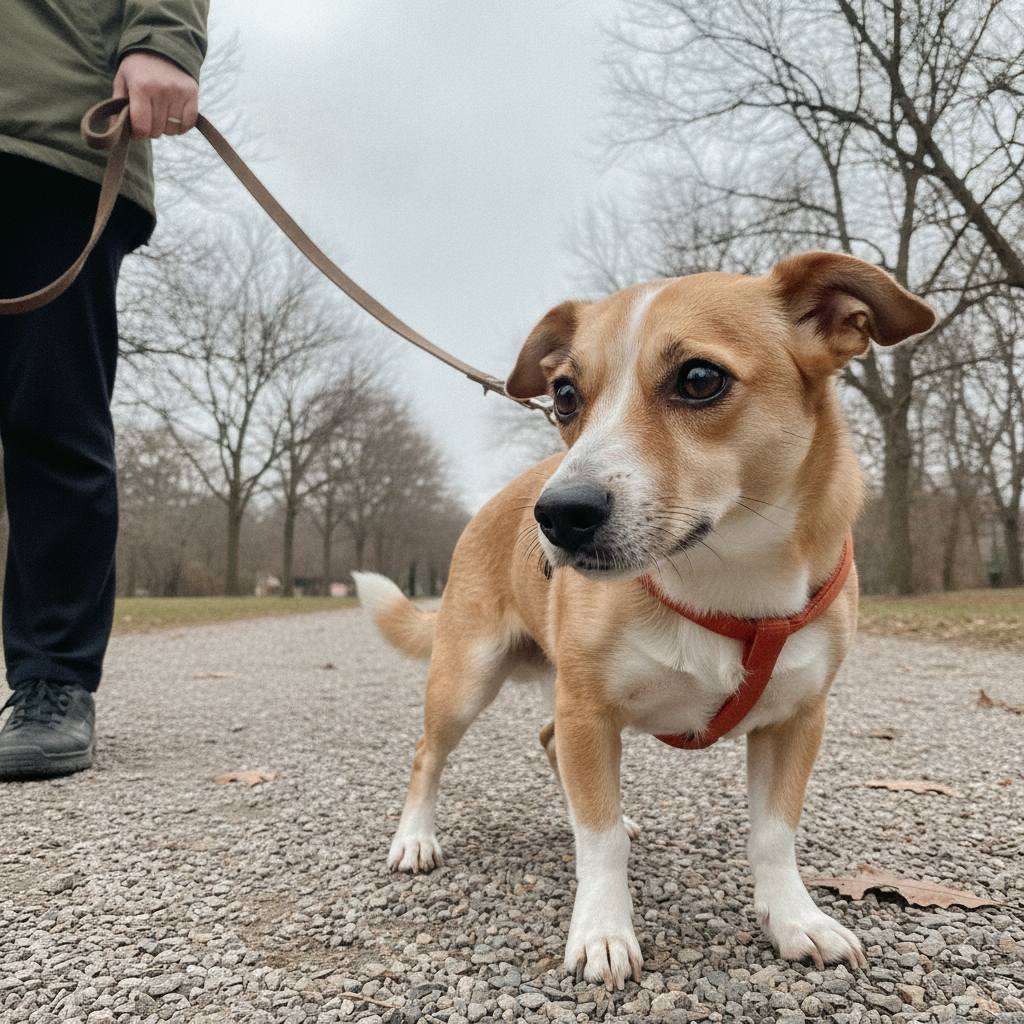
1. Break the location habit. There is almost always a specific patch. Block it, cover it, fence it, or leash your dog every time they go out so they cannot get back to it. Habits are built on repetition, and the fastest way to weaken one is to make the rehearsal impossible.
2. Build a recall that beats the dirt. Practice recall in easy, boring parts of the yard first, and pay it generously with food, praise, or a toy. Then use it before your dog reaches the patch, not after they have started. A recall you only deploy at the crime scene is a recall that will lose.
3. Consider a basket muzzle for outdoor time. This is the fastest physical prevention available. A well-fitted basket muzzle lets a dog pant, drink, and take treats through it, so it is not the cruelty it looks like, but it does need a slow, positive introduction so the dog is happy in it. Never leave a muzzled dog outside unsupervised, and treat it as a bridge while training and treatment do the real work.
4. Change the yard. Cover or landscape over the target zone, and add reasons to be somewhere else: toys, a dig pit that is allowed, a sandbox that is for digging.
5. Give the outing a purpose. The most effective single change is often making yard time an activity rather than a vacancy. Throw a ball for two minutes the moment you go out. Play “find it” by scattering food in the grass and cueing your dog to sniff it out. Sniffing is deeply satisfying to a dog and it directly occupies the mouth and nose that were going to find the dirt anyway.
6. Feed enough, of the right thing. Confirm the AAFCO statement, confirm the portion, and take the diet question to your vet rather than to a supplement aisle.
When to go to the vet
Book an appointment if the dirt-eating is frequent rather than occasional, if it appeared suddenly in an adult dog, or if it comes with any of: vomiting, diarrhea, weight loss, lethargy, pale gums, a poor coat, or straining to pass stool. Pale gums plus dirt-eating is an anemia picture until proven otherwise, and it should not wait.
What newer research adds
Two things have sharpened up in recent years, and both point in the same direction.
The first is that pica in dogs is increasingly linked to gastrointestinal disease and behavioral disorder rather than to a mystical mineral craving. Work on foreign-body ingestion has found associations with underlying behavioural problems, which supports treating a persistent dirt-eater as a dog with something wrong rather than a dog with a quirk.
The second is the parasite side. Veterinary parasitology guidance has moved firmly toward year-round broad-spectrum prevention and at least annual fecal testing for all dogs, and more frequent testing for dogs with high-risk behaviors. Eating soil is precisely that behavior. If your dog has a dirt habit and is only on seasonal prevention, that gap is doing real work against you.
So the order is: blood, stool, food, then boredom. Most dogs land on boredom. But you check the blood first, because that is the one that costs you if you get it wrong.
References
- Hookworms in Small Animals — Merck Veterinary Manual
- CAPC Guidelines: General Guidelines for Dogs and Cats — Companion Animal Parasite Council
- Hookworm FAQs — U.S. Centers for Disease Control and Prevention
- Link between foreign body ingestion and behavioural disorder in dogs — Journal of Veterinary Behavior
- Anemia in Animals — Merck Veterinary Manual
- Grass-eating patterns in the domestic dog, Canis familiaris — Veterinary Medicine