


How to Say Sorry to Your Dog (Put the Tearful Hug Away)
Stepped on a tail, snapped after a long day? The instinct to grab your dog and smother them with apologies backfires. Here's what dogs actually register as 'sorry,' and how to rebuild trust the way they understand it.

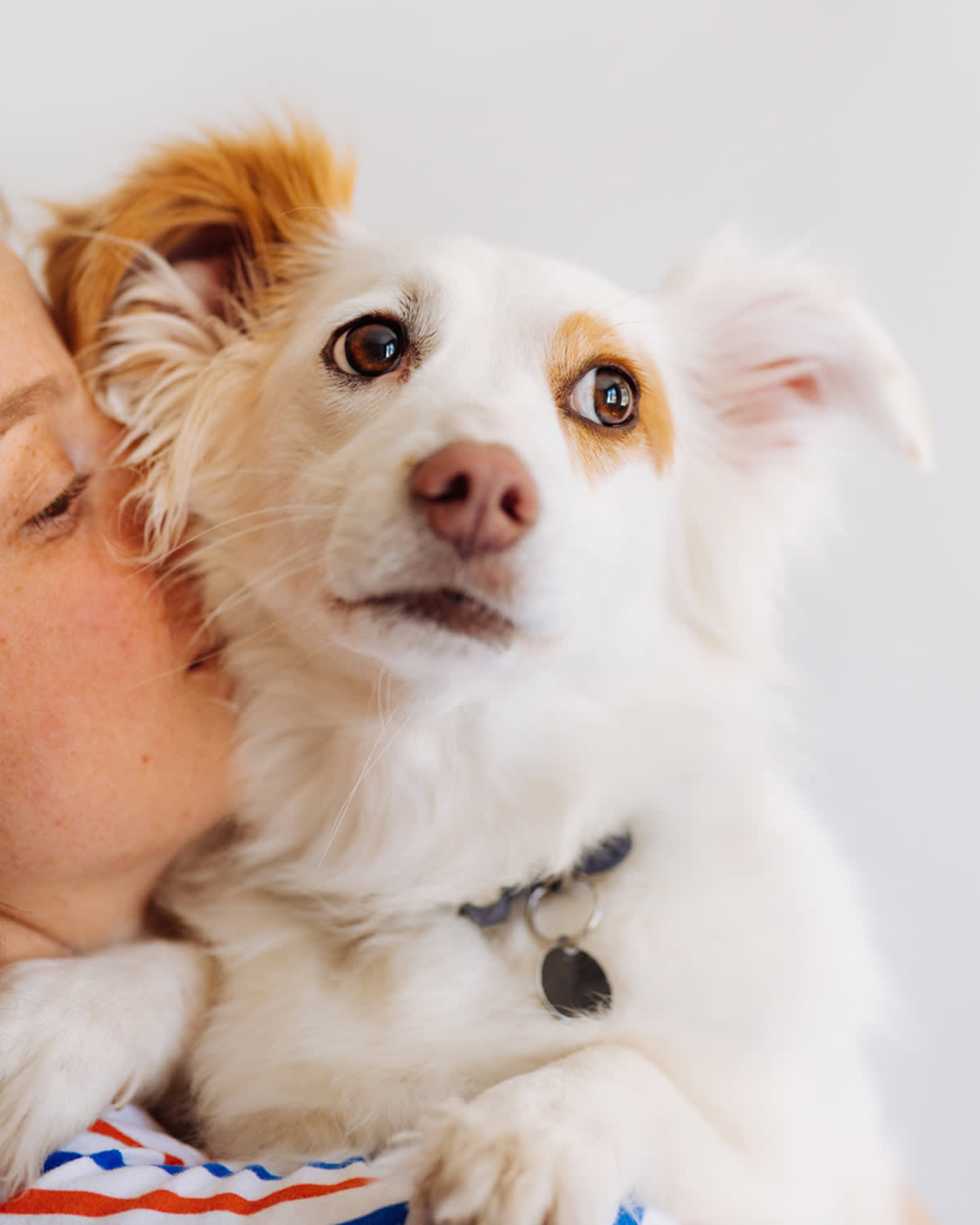
You trod on a paw, or the day got the better of you and you barked at the dog instead of the person who deserved it. Now your dog is giving you a look that lands somewhere between confused and crushed, and every cell in your body wants to drop to your knees, wrap them in a hug, and apologize until you both feel better. Do not do that. The hug is the single most common way well-meaning owners make a moment worse.
The reason is simple once you know it: your dog does not understand “I’m sorry.” What they understand is whether you are safe or scary right now, and a tearful human looming in for a desperate embrace reads as more scary, not less. The good news is that the apology dogs actually accept is completely within your control. It just looks nothing like the one we give each other.
What your dog is actually tracking
Dogs are brilliant at reading us. They pick up on our facial expressions, our tone, and even shifts in our scent. What they are not doing is running your behavior through a moral filter and deciding whether you have properly atoned. They do not carry guilt or grudges the way we imagine. What they carry is a running assessment of one question: is my person predictable and safe, or have they suddenly become a threat?
When you yell or make a sharp, sudden move, a dog’s world briefly tilts. The person who is supposed to be their safe harbor just turned into a source of danger. But here is the part that should reassure you: dogs recover from that the moment you go back to being your calm, familiar, kind self. They cannot forgive a concept they do not have, but they can absolutely register “the scary thing has passed and my person is normal again.” That, functionally, is the apology.
Owners come to me convinced they’ve traumatized their dog because they raised their voice once, and almost always the dog is fine within minutes of the person calming down. Dogs are not keeping score. They are asking, moment to moment, whether you’re a threat. So the most effective apology is boring on purpose: get quiet, get predictable, and let the dog watch you become safe again. The drama we bring to apologizing is for us, not for them, and to a dog it just looks like the scary behavior isn’t over yet.
Timing beats sincerity
An apology only works if it lands close to the mistake. Wait an hour and your dog has no idea what the sudden fuss is about; the connection between the misstep and your remorse is long gone. Say sorry right after you have startled or bumped them, and the message is one they can actually use: that the harsh word or the accidental knock was a blip, not the new normal.
This is also why the frantic version fails. When you flood a dog with high-pitched, panicked apology noises right after you have upset them, you are pairing an already tense moment with more intensity. Plenty of owners have watched their dog grow more unsettled under a stream of “sorry, sorry, sorry,” not less. The dog is not being ungrateful. You are still being a lot, and “a lot” is exactly what they need a break from.
The apology that actually works
Think of a real dog apology as a sequence of calm, not a gesture of love. Run it in this order.
Stop and settle yourself first. End whatever tense thing was happening and dial your own energy all the way down. You can send a dog several reassuring signals just by softening: turn your head or body slightly to the side rather than facing them head-on, ease your posture lower, use a slow blink and a soft gaze, even yawn. To a dog, those are the opposite of threatening.
Hand them the choice. As badly as you want to close the distance, let your dog decide whether to come to you. Give them room and give them time. A dog who approaches on their own is a dog who has decided you are safe again, and that decision has to be theirs.
Keep it low-key when they do come. If your dog chooses to close the gap, stay soft and relaxed, with a gentle voice and loose body. You can pair the moment with something good, a treat or a bit of play, but only if the dog offers to engage first. Do not use food to lure a wary dog in; wait for them to opt in.
Reintroduce touch slowly. Only reach for your dog once you have sat quietly together for a bit and they have chosen to be near you. Try a few seconds of gentle contact and watch what happens. If they lean in, wonderful. If they shift away, respect it and give them space again. Your dog cannot tell the difference between the times you hurt them on purpose and the times it was an accident, so let every touch be an offer they can decline.
One hard rule through all of it: do not stand over your dog and stare. Looming and locking eyes is threatening to a dog, especially one who is already uneasy. Give them the physical and emotional room to come back to you.
Not every “wrong” needs the same apology
You do not owe your dog the full protocol every time. Match the response to the offense. A minor letdown, like arriving at their favorite park to find it closed, calls for nothing more than some chatting and attention. A small physical mishap, like clipping them as you step past, warrants getting down to their level and, if they are up for it, a gentle scratch where they like it best. Save the full calm-and-space sequence for the real ruptures: the times you truly scared them, snapped at them, or scolded them hard.
How to know you’re forgiven
Every dog has their own baseline, so the sign that the apology worked is simply your dog acting like your dog again. If they were tense and are now relaxed, if the ears and tail have gone back to their normal carriage, if they get up and go about their business, you are back on solid ground. Sometimes that takes minutes. Sometimes, after a genuinely frightening moment, it takes days, and it often tracks your own state, because a dog who can smell that you are still stressed will stay a little on edge themselves. Rebuilding trust is not a single grand gesture; it is a stack of small, consistent, predictable interactions that add back up to safe.
What newer research adds
There is now real evidence for the thing owners find hardest to believe: your dog can literally smell your stress, and it changes how they feel. In a 2024 study, dogs exposed to the odor of a stressed person made more pessimistic choices on a behavioral test than dogs exposed to a relaxed person’s scent. Translated to your living room, that means your frantic, tearful apology is not just visually alarming to your dog, it is chemically alarming too. Calming your own body down is not a nicety; it is part of the message.
Researchers have also long noted that dogs lick their mouths and look away in response to human emotional signals, behaviors we tend to misread as guilt but which are really appeasement, a dog trying to defuse tension. Put those two findings together and the modern advice is clear: the kindest, most effective apology you can offer a dog is to become calm and predictable yourself, then let them come to you when they are ready.
References
- Parr-Cortes, Z., et al. “The Odour of an Unfamiliar Stressed or Relaxed Person Affects Dogs’ Responses to a Cognitive Bias Test.” Scientific Reports, vol. 14, no. 1, 2024. https://www.nature.com/articles/s41598-024-66147-1
- Albuquerque, N., et al. “Mouth-licking by Dogs as a Response to Emotional Stimuli.” Behavioural Processes, vol. 146, 2017, pp. 42-45. https://www.sciencedirect.com/science/article/abs/pii/S0376635717303236
- Huber, A., et al. “Investigating Emotional Contagion in Dogs to Emotional Sounds of Humans and Conspecifics.” Animal Cognition, 2017. https://pubmed.ncbi.nlm.nih.gov/28688076/
- American Veterinary Society of Animal Behavior. “Position Statement on Positive Reinforcement Training.” https://avsab.org/resources/position-statements/
Dr. Solis is a board-certified veterinary dermatologist with over twelve years of clinical experience. She advises on skin conditions, allergies, and grooming practices that affect coat and skin health. All dermatology and allergy content at The Pet Times is reviewed by her team before publication.
Meet our experts ↗Keep reading
 TrainingYour Dog Takes Their Bad Days to BedDr. Mara Chen · 7 min
 TrainingYour Dog Isn't Being Rude. He's Cornered.Dr. Amara Solis · 8 min
 TrainingThe Fake-Kidnapping Dog Trend Punishes the Dog, Not the PranksterDr. Nina Kohl · 5 min
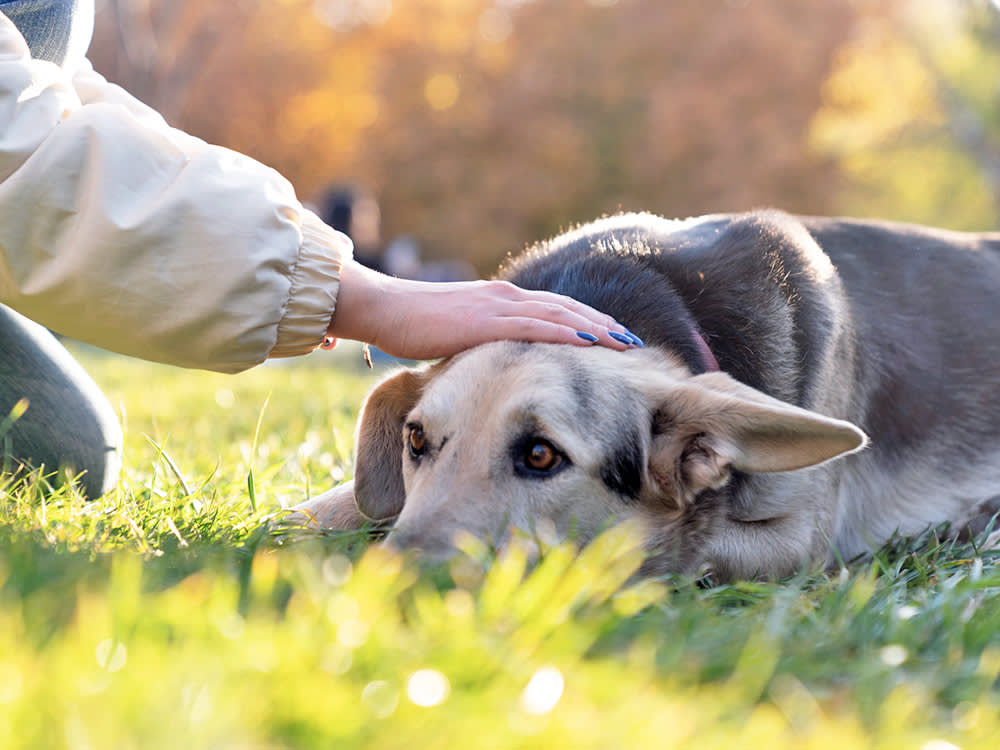 TrainingYour Dog Growls When You Pet Them. Don't Punish It, Read It.Dr. Mara Chen · 7 min
 TrainingYour Chihuahua Isn't Needy. You're Holding a Companion Dog That Fits in a Purse.Dr. Mara Chen · 6 min
 TrainingAlmost Every Dog Has a 'Behavior Problem.' That's the Good News.Dr. Mara Chen · 6 min