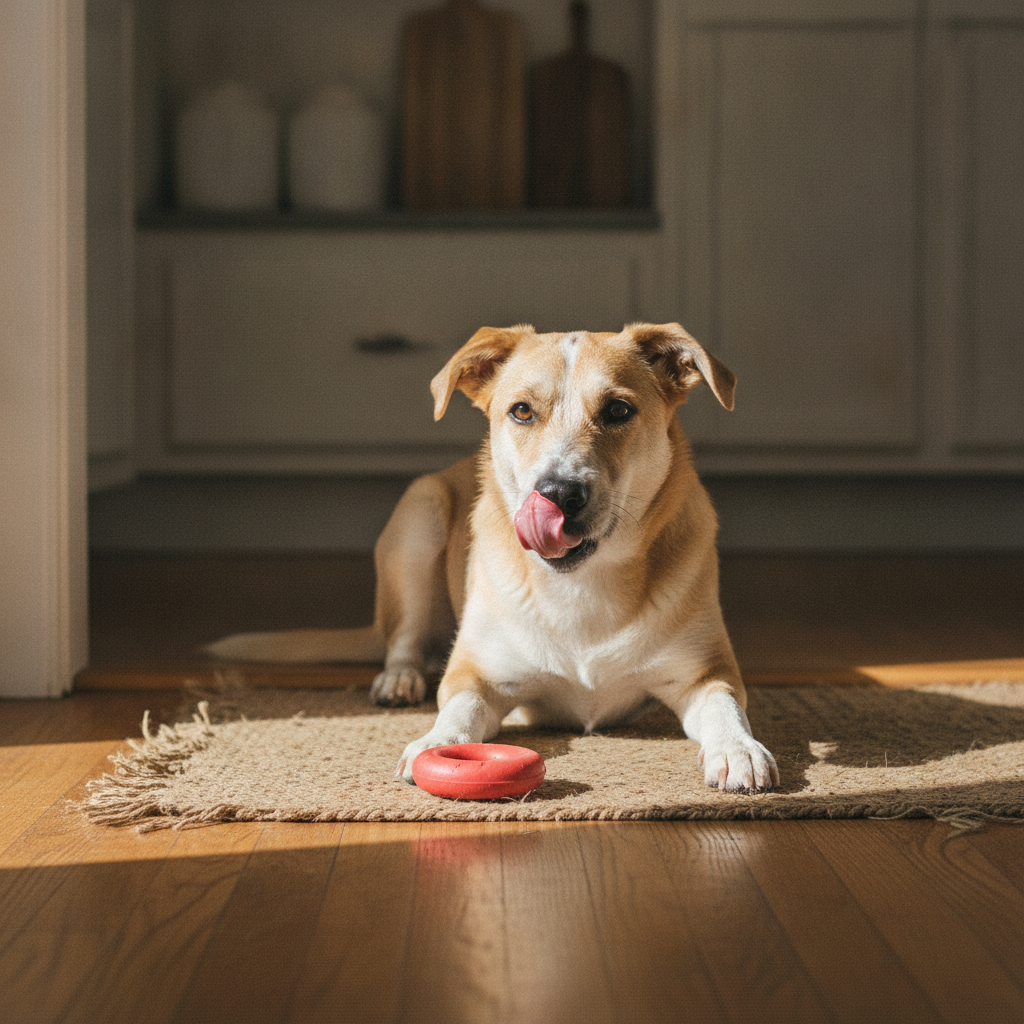
A reader wrote in about a six-month-old whippet mix who had flipped almost overnight, from a quiet, sweet pup into what she called a hellion. He barks at her, seemingly for attention. He barks at other dogs, especially at the dog park. He nips during play. Her question was the one we hear most: is he trying to dominate me?
Short answer: no. Dominance genuinely exists among dogs, but it drives far less of their behavior than decades of pop training advice would have you believe. What is actually happening is simpler and much more fixable. A dog who was never taught how to greet, play, and ask for attention politely will invent his own approach, and a young dog’s homemade manners tend to look rude and pushy. He isn’t plotting. He’s improvising.
“When a six-month-old starts barking and mouthing, owners almost always read it as a challenge to their authority,” says Dr. Nina Kohl. “It’s the opposite. That dog is overwhelmed and out of tools, and he’s asking you, in the only way he’s got, to show him what to do instead.”
What’s really going on at six months
Six months puts your puppy squarely in adolescence, and the adolescent brain is a strange place. Impulse control is thin, boundaries exist to be tested, and the parts of the brain that would normally apply the brakes are still under construction. It can feel like the sweet dog you raised has been swapped for a wild one.
That impression is not just parental exhaustion talking. A 2020 study in the journal Biology Letters found that dogs really do go through a teenage phase: around eight months, they became measurably less responsive to their own caregiver’s cues, while still listening to a stranger, a pattern strikingly close to human teens. The takeaway is reassuring. Your dog isn’t broken and isn’t defiant on principle. He is passing through a developmental window that will close.
Here’s the good news buried in the chaos: an adolescent brain is also a sponge. Every situation and experience is soaking in. That makes this the single best time to load your dog up with good habits rather than to go to war with him over the bad ones. Confrontation, which is the easy reflex when a behavior baffles us, mostly teaches a young dog that you are unpredictable. Setting him up to make good choices teaches him what actually works.
Sign up for a real class
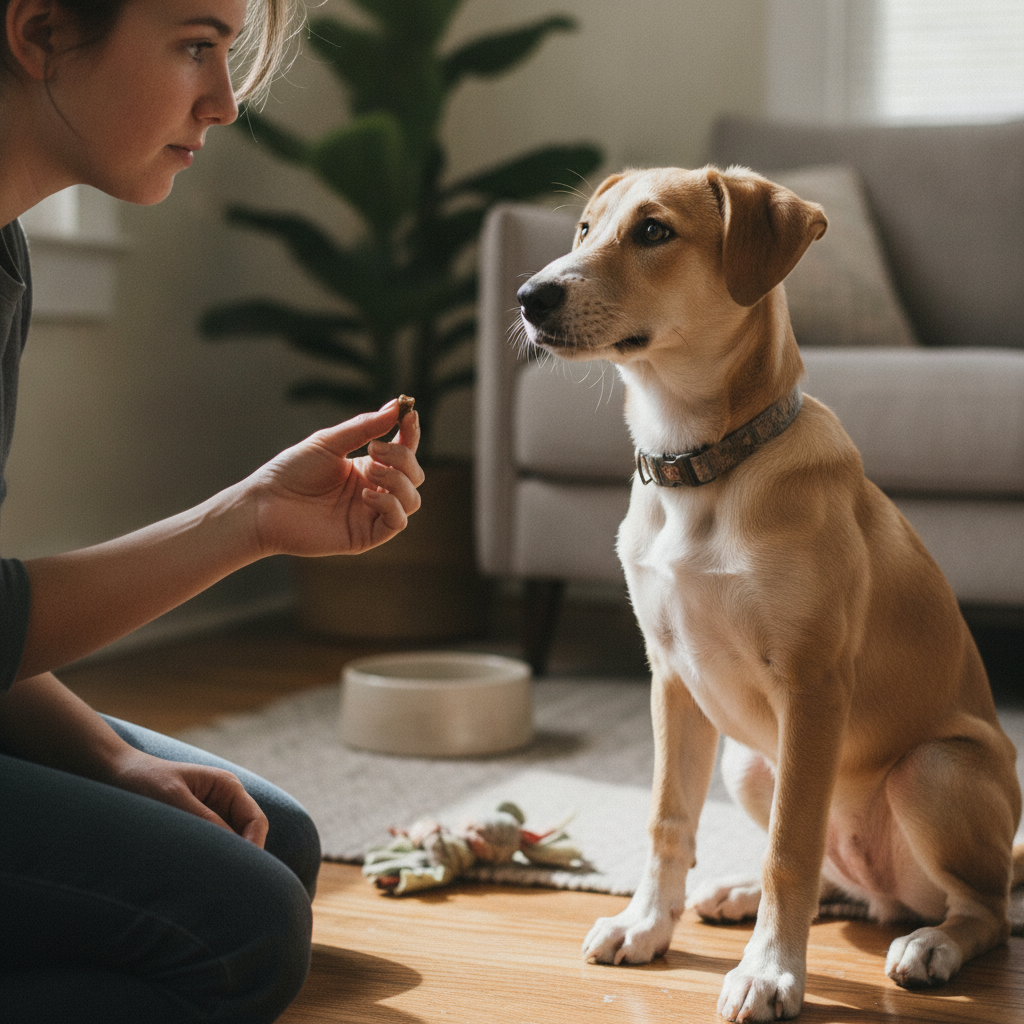
The fastest way to teach polite greetings and appropriate play is a structured puppy manners and socialization class. Two things happen there at once. You learn to read and communicate with your dog, and your dog learns, from other dogs, how to play without being a jerk about it. Both matter, and neither happens reliably on a living-room floor.
Build a recall you can actually use
A good class will teach a reliable recall, and recall is your escape hatch. When your pup is winding up toward trouble, a solid “come” lets you redirect that energy onto a toy or a training treat before the bad choice happens. You are teaching him that leaving the fun to check in with you pays off. If he blows you off, quietly walk him out of the room for a brief time-out until he settles, then let him rejoin. If he ramps right back up, repeat it. The lesson lands quickly: the right choice is what keeps the party going.
Reward the closed mouth
Nipping responds to the same logic. Your attention and the game itself are the paychecks, and teeth on skin ends the shift. The instant teeth touch skin, either stand up and step out of the room briefly, or pass his leash to a second person while you play so they can lead him away the moment he uses his mouth. Keeping teeth to himself is what buys him more play. Dogs are excellent economists once you make the exchange rate clear.
Read the dog park before you trust it
Some dogs love the dog park. Plenty find it flooding and overwhelming, and a stressed dog barks. Watch your pup’s body language and figure out which bark you’re hearing: the “come play with me” bark of an over-aroused social dog, or the “please back off” bark of a dog who wants more space. Until you can tell the difference and address it, take the dog park off the menu. Every trip where he rehearses the unwanted behavior makes that behavior stickier. Practice cements whatever gets practiced, good or bad.
Choose the trainer carefully
Pick a class built entirely on positive reinforcement. Dogs trained this way end up more tolerant, more self-controlled, and more predictable, not less. Positive methods work the dog’s brain without force: they reward the behavior you want, build reassuring routines and predictability, teach replacement behaviors that crowd out the problem ones, and lower the frustration and anger that fuel a lot of “bad” behavior in the first place. Because you’re shaping choices rather than punishing them, you never spend down the trust your dog has in you, which is exactly what harsher, dominance-and-pack-leader methods risk.
And to be clear, positive does not mean permissive. Discipline still exists here. It just looks like a verbal interrupter, a short time-out, or calmly ignoring a behavior to steer your dog toward a better option, rather than shutting him down through fear or force.
What newer research adds
The old “your dog is testing your dominance” story has aged badly. Modern behavior science keeps landing in the same place: most pushy adolescent behavior is a mix of normal brain development and missing skills, not a status contest. The 2020 adolescence findings are part of a larger shift toward treating the teenage months as a predictable, survivable stage.
There’s a sobering, practical reason this matters. Adolescence, roughly six months to two years, is when many dogs get surrendered to shelters, precisely because owners misread normal teenage behavior as a dog who “turned bad.” Knowing this phase is temporary, and coachable, is often what keeps a good dog in his home. Ride it out with structure and rewards, and the sweet pup comes back, this time with manners.
References
- Asher, L., et al. “Teenage dogs? Evidence for adolescent-phase conflict behaviour and an association between attachment to humans and pubertal timing in the domestic dog.” Biology Letters, vol. 16, no. 5, 2020. Royal Society Publishing
- American Veterinary Society of Animal Behavior. “Position Statement on the Use of Dominance Theory in Behavior Modification of Animals.” AVSAB