


Match the Tool to the Pull: A Humane Guide to No-Pull Collars (10 Picks)
The right no-pull tool depends on how hard your dog pulls and how they're built, not on what's trending. Here's a decision guide for martingales, head halters, and harnesses, plus 10 trainer-approved picks and why shock collars are off the table.

Affiliate disclosure. This article contains affiliate links. We may earn a small commission if you buy through a link, at no extra cost to you. How we handle recommendations.
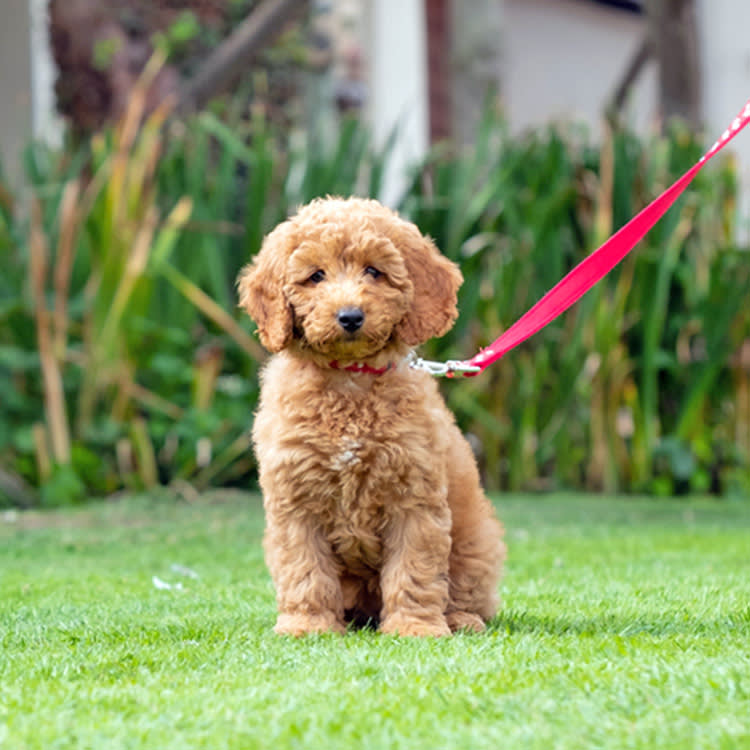
The phrase “training collar” sends most people straight to a shock collar, and that is the wrong turn. The collar that actually helps your dog learn is not the one that punishes them; it is the one matched to how hard they pull and how they are built. So instead of a ranked pile of products, start with a decision: figure out which tool fits your dog, then pick the best version of that tool. That order is what gets you a calmer walk instead of a frustrated dog and a returned package.
First, the one category we rule out. We do not recommend e-collars (shock and vibration) or prong collars. A 2020 study in PLOS ONE comparing reward-based and aversive-based training found dogs trained with aversive methods displayed more stress-related behaviors during training and a more pessimistic emotional outlook afterward, and that the more aversive stimulation a dog received, the worse the effect on welfare. You can teach loose-leash walking without that cost. Everything below pairs with positive reinforcement.
There is no single best collar, because there is no single dog. I ask two questions: how hard does this dog pull, and what is their build, a flat face, a deep chest, a delicate neck? The honest answer points to the right tool almost every time. The mistake is buying the tool you saw online and forcing your dog into it.
The decision guide: which tool for which dog
Read this before you shop. It saves most people a wrong purchase.
If your dog pulls mildly, a martingale collar is often all you need. The limited-slip design gently tightens when your dog surges and releases when they ease off, discouraging the lunge without choking. It is the simplest, lowest-fuss tool here.
If your dog is a hard puller, a martingale can over-tighten and strain the neck. Move to a front-clip harness, which redirects forward momentum to the side and takes all pressure off the throat, or to a head halter used with a soft hand. The front-clip harness is the most forgiving place to start.
If your dog has a delicate or short neck, a flat face, or a collapsing-trachea risk, avoid neck pressure entirely and go to a harness. Brachycephalic breeds (Pugs, Bulldogs, Frenchies) and toy breeds belong here.
If your dog ignores collars and harnesses entirely, a head halter gives you the most steering control, but it demands technique: introduce it slowly with treats, and never yank, since a hard sideways pull on the head can injure the neck. Learn to use it before you rely on it.
One rule across all of them: these are training and walking tools, not all-day wear. Off-leash, switch to a flat collar with ID, because head halters and harnesses lack a tag ring and a loose training tool can snag.
Martingale collars: for mild pullers
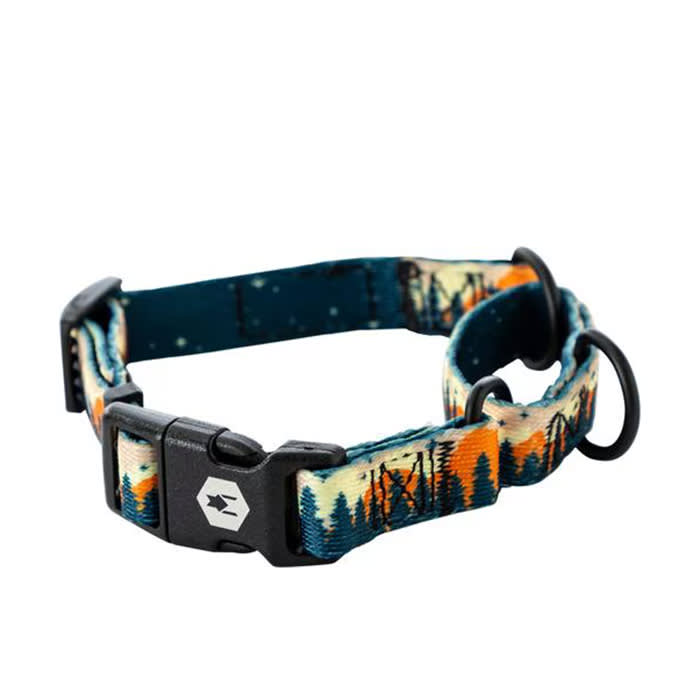
Wolfgang Heavy Duty Overland with Quick Release
Durable, sold in small through large, and rated to withstand 800 pounds of pull, with a quick-release buckle for fast removal and plenty of prints. Shopper reviews read like a checklist of collar virtues met. The trade-off: the D-ring is plastic, and some report fraying within a year of heavy use. Best for a moderate puller who needs style and a quick release. Rating: 4.5 of 5.
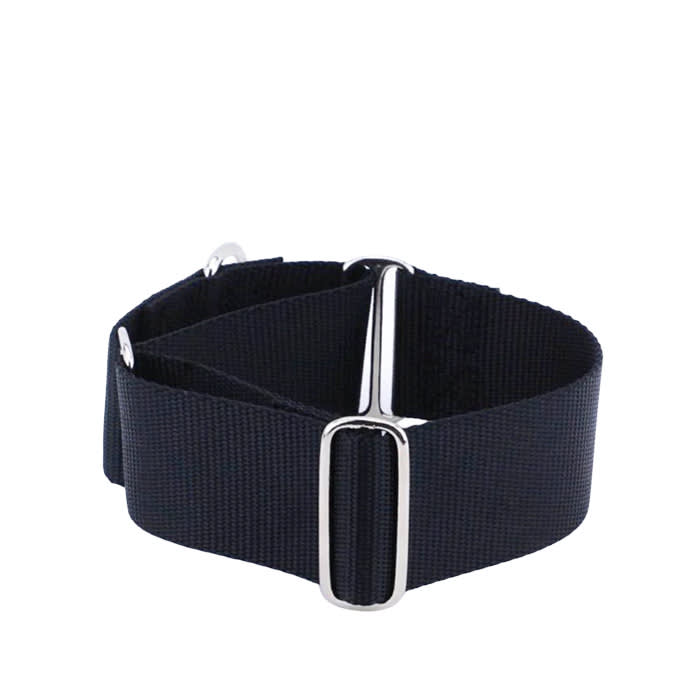
2 Hounds Design 2” Nylon Martingale
The extra-wide two-inch band (standard collars are about an inch) spreads force across a large dog’s neck instead of concentrating it, with a sturdy metal D-ring across four sizes. Not for small dogs, who will be swamped by the width. Best for a big, mild-to-moderate puller whose owner wants metal hardware. Rating: 4.5 of 5.
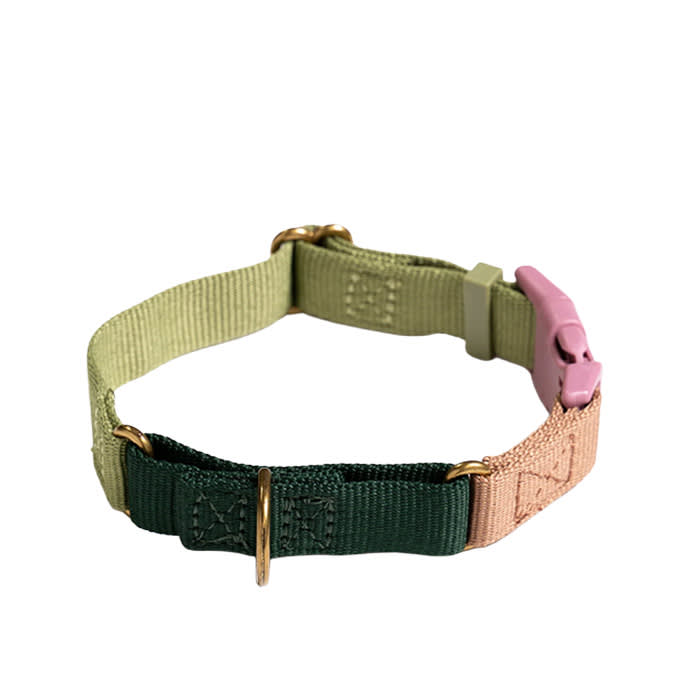
Awoo Marty Collar
A slim three-quarter-inch martingale in seven colors and four sizes, with solid brass hardware and a quick-release buckle, narrow enough not to overwhelm a small frame. Some report the hardware can discolor the webbing. Best for a small dog who pulls gently. Rating: 4.5 of 5.
Head halters: maximum steering, for the dog who needs it
Remember the technique rule: gentle hands only.
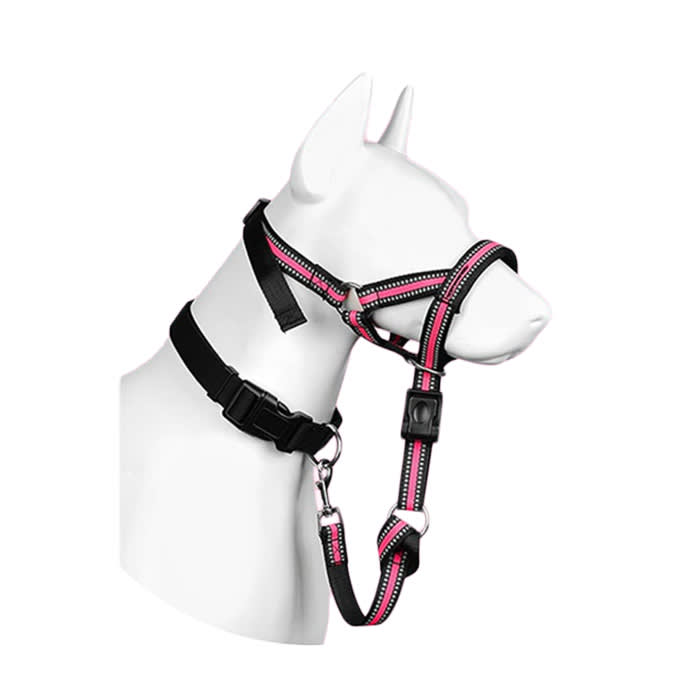
BARKLESS Soft Dog Head Collar
An Amazon’s Choice halter with a padded muzzle loop and a secure snout buckle, reflective stitching, and front control, in three sizes and five colors. As with every head halter, the concern is not cruelty but mechanics: sudden head pressure can strain the snout and neck.
Not for short-snout breeds. Best for a strong, otherwise hard-to-manage puller whose owner will learn the technique. Rating: 4 of 5.
A halter assumes a neck engineered for lateral pressure, and dogs simply don’t have one — wrench the head sideways hard enough and you can injure them. A head halter is a steering wheel, not a brake. If you find yourself yanking it, the dog is not ready for it yet, go back to rewards and a front-clip harness.
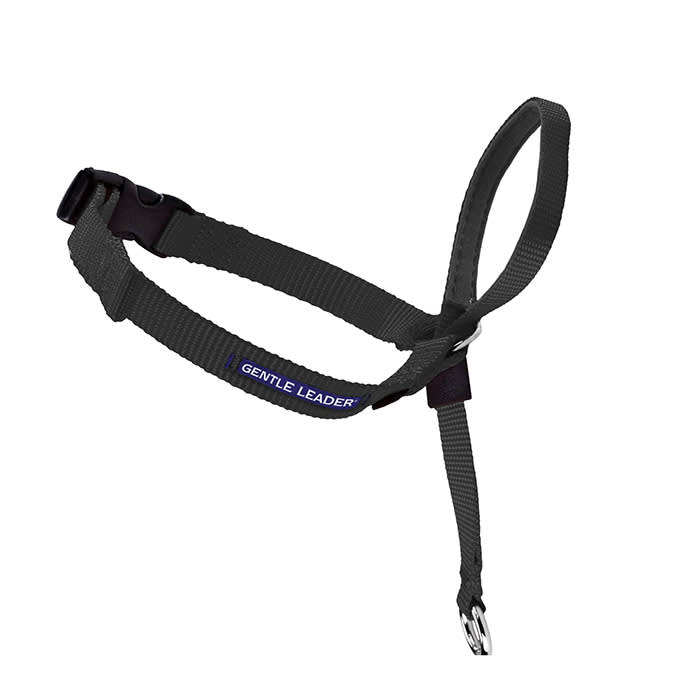
PetSafe Gentle Leader Headcollar
Slim but effective, with a padded nose loop more comfortable than many rivals and a quick-release neck strap, in three sizes and nine colors. More than 70,000 Amazon reviews make it the top-selling head collar. A few report snout rubbing or missing nose padding on arrival. Best for guiding a large, powerful dog. Rating: 4 of 5.
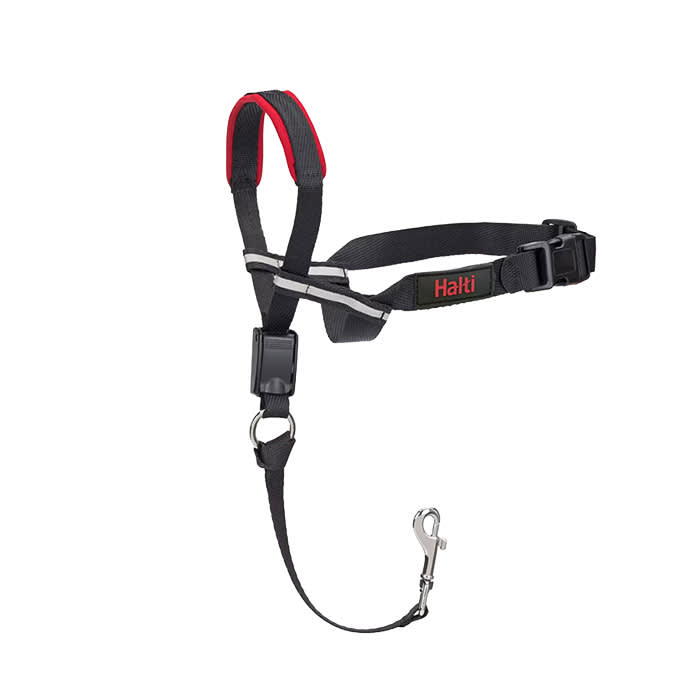
Halti OptiFit
A favorite for tiny dogs, with an adjustable padded nose loop that fits everyone from Dachshunds to Boston Terriers, plus a responsive under-chin design and a snout safety link. Some say the neck strap will not cinch small enough for the very smallest dogs. Best for a small or short-muzzled dog who needs head steering. Rating: 4 of 5.
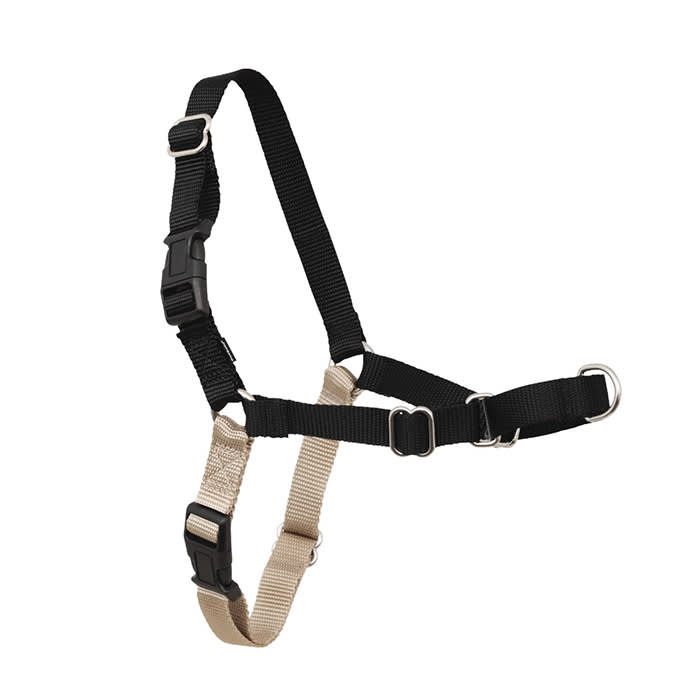
PetSafe Easy Walk Harness
A front-clip harness with a gently tightening martingale loop on the chest, delivering a behavior-curbing squeeze on a non-sensitive area instead of the throat. Adjustable across eight sizes and ten colors, and Amazon’s top-selling halter harness. Some say it runs big and a determined dog can back out, so fit it snugly. Best for the largest share of pullers, and the right first buy if you are unsure. Rating: 4 of 5.
One shopper with a 24-pound Pug mix — a determined puller and a serial harness escape artist nobody in the family would volunteer to walk — called this the last resort that finally worked.
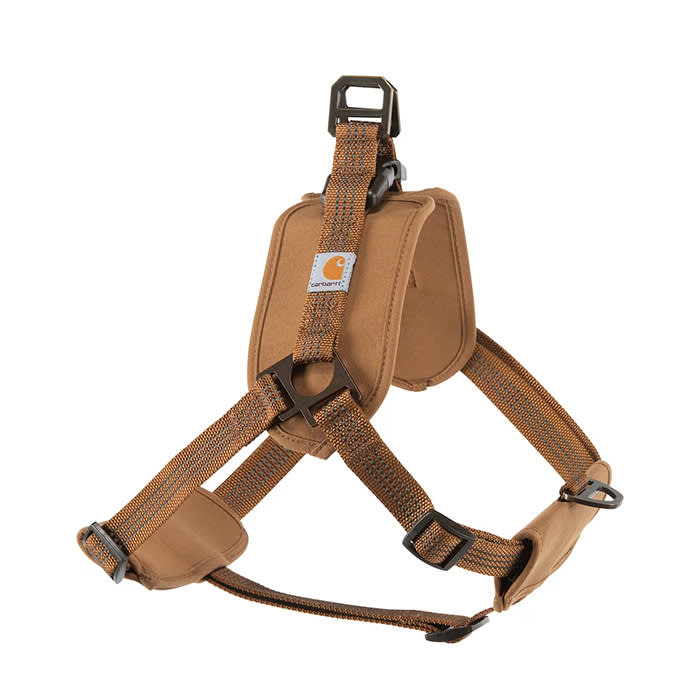
Carhartt Training Dog Harness
Heavy-duty canvas built to take force and rough terrain, with back and chest padding and three-way adjustable straps in four sizes, good for sidewalks and trails alike. Only one color, and some report a slightly awkward fit. Best for a large, strong dog who needs a near-indestructible harness. Rating: 4 of 5.
A shopper with a 100-pound Rottweiler reported the smoothest walk of the dog’s life on the first outing with it.
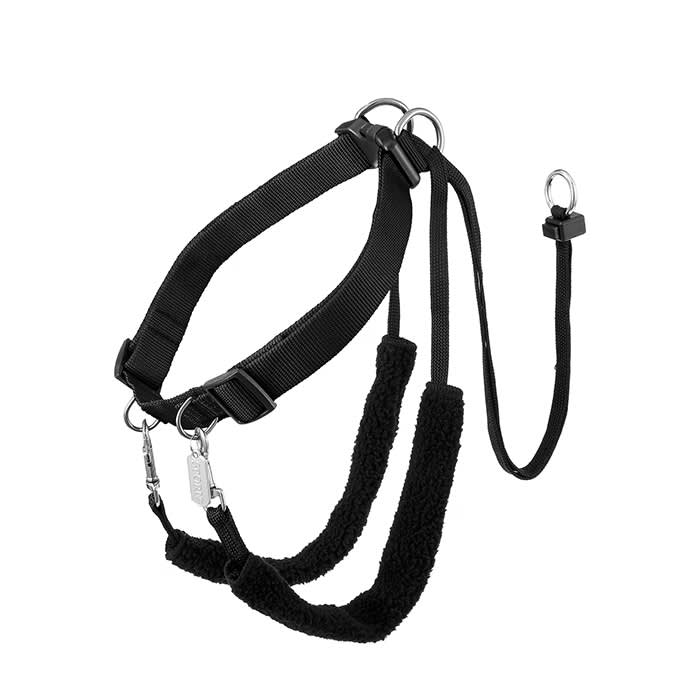
Sporn Original No-Pull Training Halter
A lightweight halter with plush underarm straps that curb pulling without chafing and adjustable straps that give with your dog’s natural movement, in four sizes and three colors. Some report it runs small. Best for a little dog who needs gentle, low-bulk control. Rating: 4 of 5.
What we changed from the usual nine-collar list
We trimmed to ten clearly purpose-sorted picks and led with the decision, because a list that hands you nine products without telling you which is for your dog is how people end up with a head halter on a Pug. Buy the tool your dog’s pull and build call for, fit it correctly, pair it with rewards, and the walk gets better fast, no shocks required.
References
- China, L., Mills, D.S., and Cooper, J.J. “Does training method matter? Evidence for the negative impact of aversive-based methods on companion dog welfare.” PLOS ONE, 2020. https://journals.plos.org/plosone/article?id=10.1371/journal.pone.0225023
- American Veterinary Society of Animal Behavior. “Position Statement on Humane Dog Training.” https://avsab.org/wp-content/uploads/2021/08/AVSAB-Humane-Dog-Training-Position-Statement-2021.pdf
- American Kennel Club. “How to Stop Your Dog From Pulling on the Leash.” https://www.akc.org/expert-advice/training/how-to-stop-a-dog-from-pulling/
- VCA Animal Hospitals. “Tracheal Collapse in Dogs.” https://vcahospitals.com/know-your-pet/tracheal-collapse-in-dogs
Common questions
Are shock collars and prong collars ever the right choice?
We don't recommend them. A 2020 PLOS ONE study found dogs trained with aversive methods showed more stress behaviors and a more pessimistic outlook than dogs trained with rewards, and that the more aversive stimuli used, the worse the welfare effect. Humane no-pull tools paired with positive reinforcement get you there without the fallout of fear and anxiety.
What size training collar does my dog need?
On any collar, you should be able to slip two fingers comfortably between the band and your dog's neck. If you have to squeeze them in, size up; if there's extra room, size down. Head halters and harnesses also need their nose loop or chest straps fitted, so follow each maker's measuring guide.
Which no-pull tool is safest for a hard puller?
For a strong puller, skip the martingale, which can tighten too much, and choose a well-fitted front-clip harness or a head halter used gently. Never jerk a head halter, since a hard sideways pull can injure the neck. A front-clip harness is the most forgiving starting point for most heavy pullers.
Do I leave a head halter or harness on all day?
No. These are walking and training tools, not everyday collars. Off the leash, switch back to a flat collar with ID tags, since head halters and most harnesses have no tag ring, and a training tool left on unsupervised can snag and tighten.
Dr. Kohl is a board-certified veterinary dentist with a particular interest in preventive oral care. She reviews all dental health content at The Pet Times and contributes practical guides on home dental routines, professional cleaning, and oral disease prevention.
Meet our experts ↗Keep reading
 Product PicksMy Dog Destroys Every Travel Bowl. This Squeeze Bottle Finally Won.Jordan Ellis · 5 min
 Product PicksWhy Every Cool Dog's Leash Suddenly Looks the SameLeila Torres · 5 min
 Product PicksThe Matching Dog-and-Owner Set That Doesn't Make You Rebuy Your Whole ClosetJordan Ellis · 3 min
 Product PicksThe Handmade Collar Built for Dogs Who Destroy Everything ElseSasha Ford · 4 min
 Product PicksThis Vegan Dog Leash Doubles as a BangleLeila Torres · 5 min
 Product PicksHow to Buy a Dog Raincoat That Actually Keeps Your Dog DryJordan Ellis · 7 min