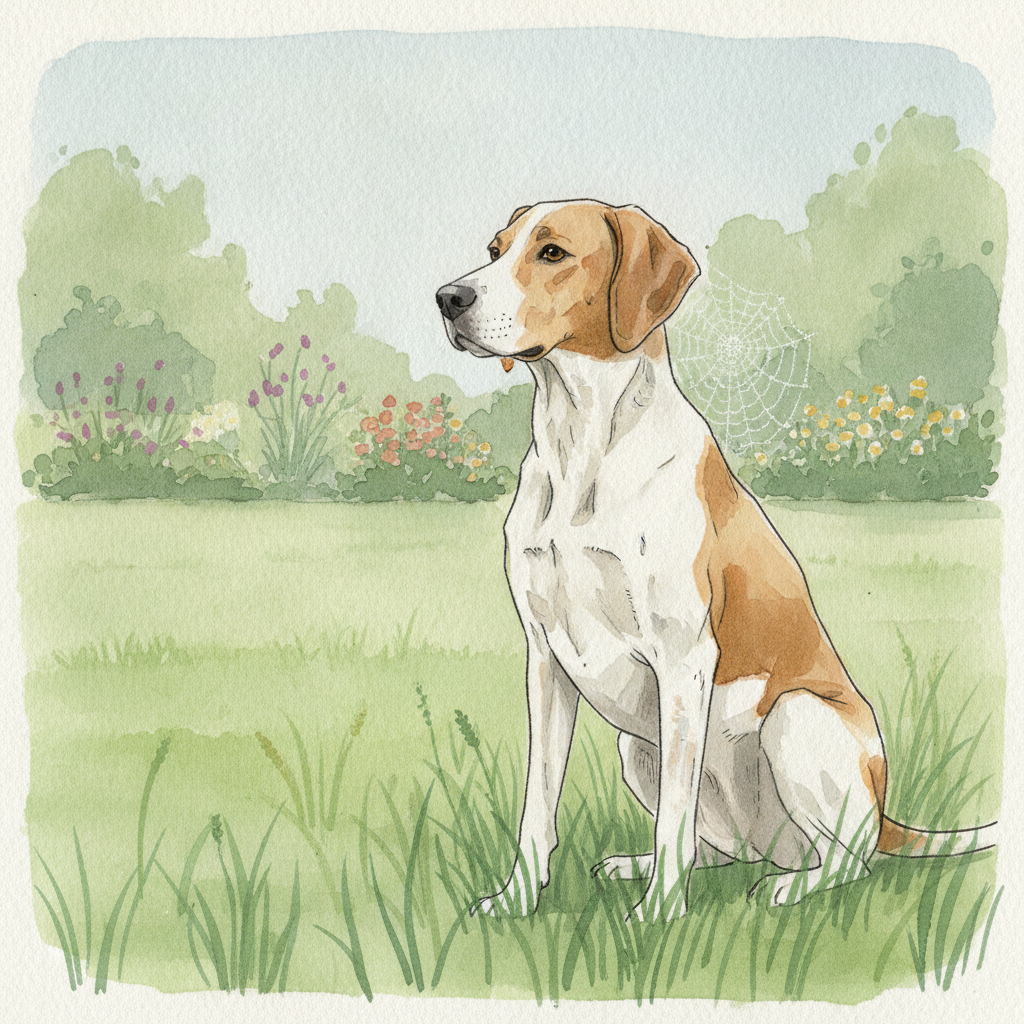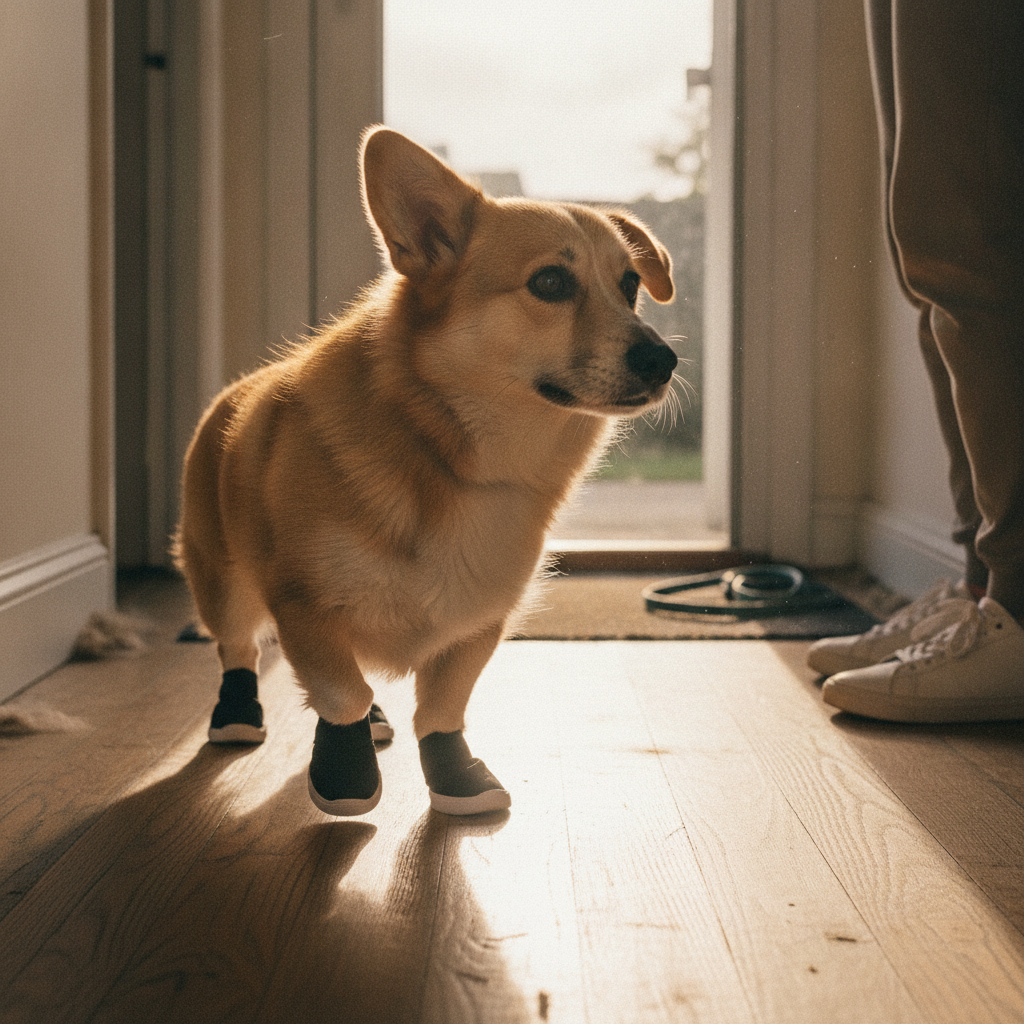
Your dog’s day probably looks like naps, snuggles, and more naps, punctuated by a walk. The walk feels like the exercise box, checked. And a walk is genuinely good: it burns calories, keeps a dog from going sedentary, and settles the mind. But here is what a walk is not. It is not a complete workout, any more than a human is “fit” because they stroll to the mailbox.
A real fitness plan, for a person or a dog, has parts. A warm-up to prime the body. Cardio to build endurance and burn energy. Strength and mobility work to keep muscles and joints strong. And a cool-down to bring everything back to baseline. Most dogs get exactly one of those four, the cardio-ish middle, and nothing else. That gap is where stiffness, weak cores, and injuries creep in as dogs age.
So let’s build the whole thing. The good news is that most of it happens on your existing walk or on your living room floor, and the strength work is disguised as tricks your dog will love.
Before anything: clear it with your vet
Do not ramp up a sedentary dog’s activity without a physical first. A checkup lets your vet catch a preexisting issue, arthritis being the big one, that a sudden jump in exercise could inflame. You would not run a marathon after a decade on the couch, and you do not want to hand your dog that same shock. The rule for the entire plan is to increase load slowly. More dogs get hurt from too much too fast than from too little.
“Owners tend to think about their dog’s weight and forget about their dog’s structure,” says Dr. Ravi Mehta. “A daily walk manages the waistline, but it does almost nothing for core strength, balance, or joint range of motion, and those are what let a dog stay mobile into their senior years. Ten minutes of stretch-and-balance work a few times a week is some of the highest-value exercise you can give, and it is the part almost everyone skips.”
The warm-up and the walk, done right
Turn the walk you already take into structured cardio.
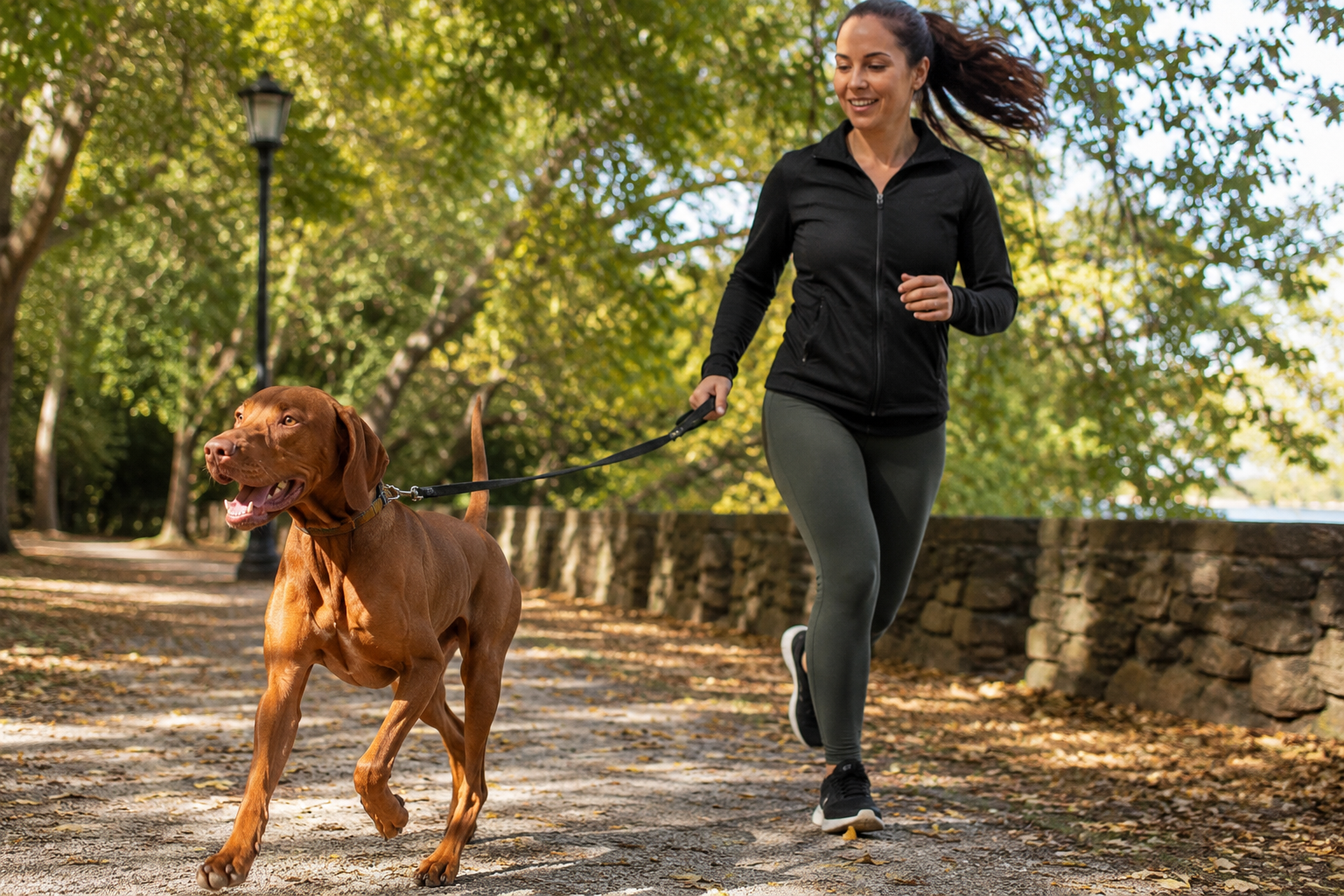
Warm up first. Spend the first ten minutes at an easy, ambling pace to let your dog’s muscles loosen and their body get ready to work, exactly as you would ease into a run rather than sprinting cold.
Then build the walk itself. If your dog is not used to regular walks, start with short outings of about ten minutes and add distance gradually until a brisk 30-minute walk is comfortable. A brisk pace is the target for the main stretch, because that is where the cardiovascular benefit lives, not a stop-and-sniff meander.
Then cool down. Save the last ten minutes for a slow, easy walk home. This lets the heart rate come down gradually and cuts the muscle stiffness that follows harder effort. Skipping the cool-down is a small thing that adds up to a sorer dog.
The missing piece: strength and mobility
This is the part almost no one does, and it is where the tricks come in. Each of these doubles as a conditioning exercise, working flexibility, balance, or strength while feeling like a game. Teach them slowly, reward generously, and never push a joint past comfort.
Treat-stretches. Lure your dog’s nose toward one hip and then the other so the spine bends to follow the treat. It is a simple, safe way to work spinal flexibility and range of motion. Hold each curve a few seconds, keep it gentle, and do both sides evenly.
Play bows. The natural stretch dogs offer when they want to play is also a beautiful full front-body stretch. Lure the head down and slightly back toward the chest so the elbows drop to the floor while the rear stays up, mark it with a “yes” or a click, and reward. Once it is reliable, put it on a cue like “bow” or “curtsy.”
Paws up. Teach your dog to place both front paws on a stable, low object, a sturdy step, ottoman, or box. Lure the treat up and forward so the front feet come up. This works balance and gives the rear legs, neck, and back a genuine stretch as the dog holds the position. Stability of the object matters, so pick something that will not tip.
Spins. Guide your dog in a full circle following a treat above their head, and practice both directions so the spine flexes evenly each way. It is a fun, low-impact way to keep the back supple. Add a “spin” or directional cue once they are following smoothly.
High five. Ask for a sit, hold a treat in a closed fist, and reward the moment your dog paws at your hand. Beyond being charming, it stretches the shoulder and works the upper body. Fade the treat lure over time so the dog offers the paw on cue.
Fold two or three of these into your day a few times a week, and you have added the strength-and-mobility layer that a walk alone can never provide.
What newer research adds
The case for treating exercise as a real health intervention keeps getting stronger, and the numbers are sobering. Recent surveys estimate that well over half of dogs in the United States are overweight or obese, with a large share firmly in the obese range. Carrying extra weight is not just a cosmetic issue; it loads the joints, worsens arthritis, and shortens lifespan, which is why a structured plan that manages weight and builds supporting muscle matters more than ever.
The field of canine sports medicine and rehabilitation has also grown up around exactly this idea. Certified canine fitness and rehab professionals now build conditioning programs for ordinary pet dogs, not just canine athletes, using the same principles above: warm up, load gradually, train balance and core strength, and cool down. If your dog is a senior, is recovering from an injury, or is a breed prone to joint problems, it is worth asking your vet for a referral to a certified canine rehabilitation practitioner. The at-home stretches here are a genuinely good foundation, and a pro can tailor the rest.
References
- Association for Pet Obesity Prevention. “2024 State of U.S. Pet Obesity Report.” https://www.petobesityprevention.org/
- American Kennel Club. “AKC FIT DOG Program.” https://www.akc.org/sports/title-recognition-program/akc-fit-dog/
- Frye, C. W., et al. “Physical rehabilitation and conditioning for dogs.” Veterinary Clinics of North America: Small Animal Practice, review literature.
- American College of Veterinary Sports Medicine and Rehabilitation. “Finding a Specialist.” https://vsmr.org/