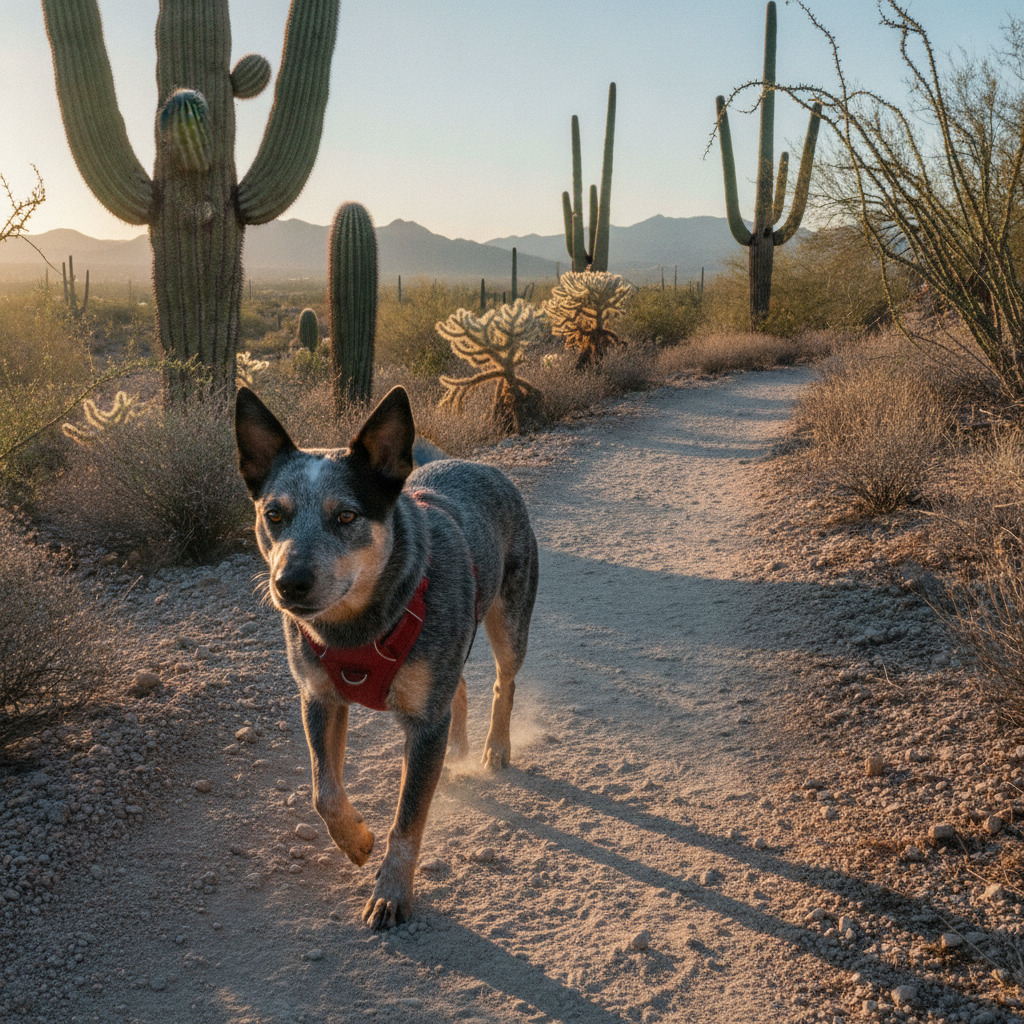
Jo Firestone has written for The Tonight Show, acted in High Maintenance, Shrill, and Search Party, and taught stand-up to senior citizens on camera for a Peacock special. She also lost a negotiation to a dog.
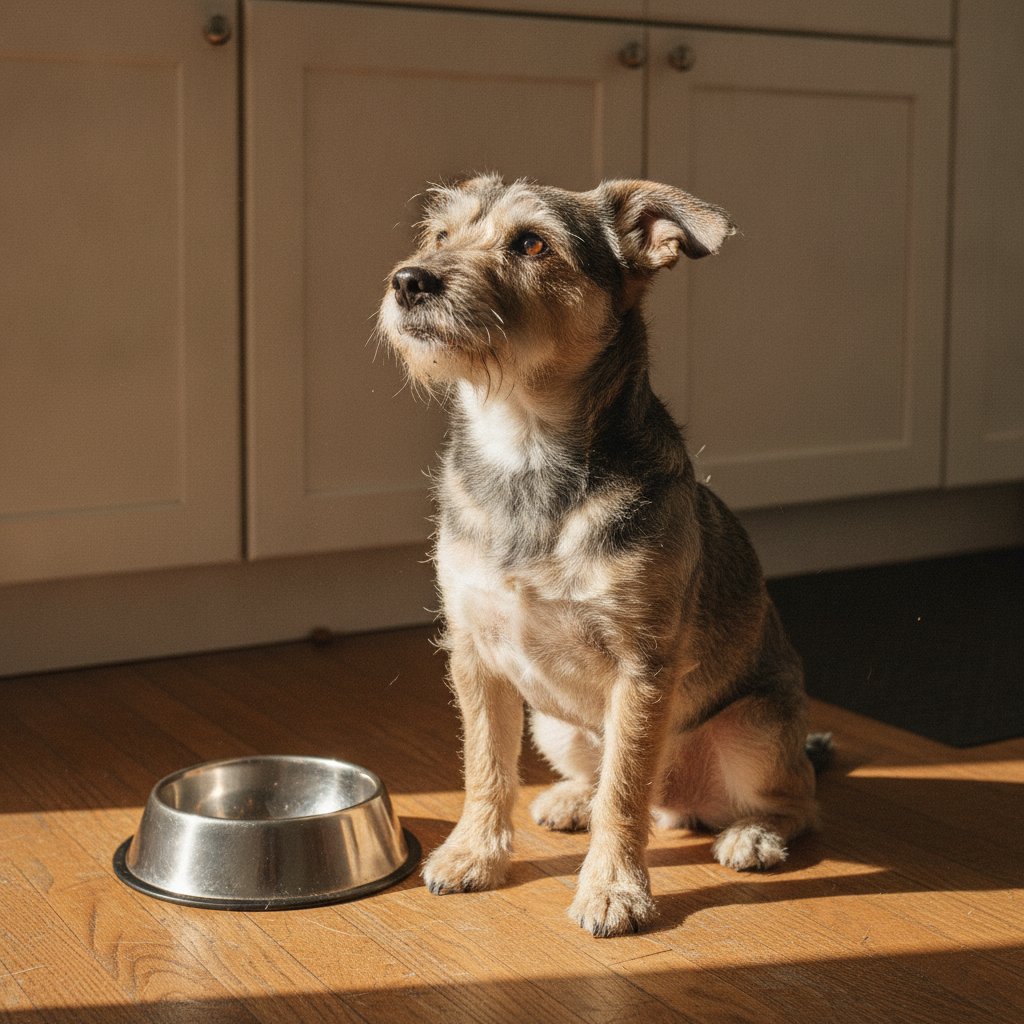
Dinner in her house used to be at 7 p.m. Loaf, the rescue she and comedian Mike DiCenzo adopted from Sean Casey Animal Rescue in Brooklyn in October 2019, is now fed at 3:30. He did not demand this. He got excited a little earlier one day, and then a little earlier than that, and the humans, being reasonable people who did not want to watch a dog vibrate for four hours, met him where he was. Half an hour at a time, for months, until 7 p.m. became 3:30 p.m.
She is embarrassed to admit it. She should not be. It is the single most instructive thing a dog will ever do to you, and almost every household has a version of it running right now.
Dogs do not tell time. They read the room.
A dog has no clock, but they have something more useful for this purpose: a very good sense of what reliably comes before what. Their internal rhythms entrain to the routines you repeat, and their bodies start preparing for food, walks, and your arrival home before any of it happens. This is why a dog who is fed at the same time daily starts orbiting the kitchen ahead of the bowl, and why the dog who has never once been fed at 3:30 does not.
The important part is what happens when they act on that anticipation. If a dog gets restless at 6:30 and you feed at 6:30 because the restlessness is annoying, you have not caved on one evening. You have taught a rule: restlessness moves dinner. The dog was not being manipulative. They were doing what every learning animal does, which is repeat what works.
Do it enough times and you get 3:30.
“People describe this as their dog training them, and they’re right, but it’s not sinister,” says Dr. Nina Kohl. “Your dog is running a very simple experiment every day, and you are the variable. If nudging you earlier works once, it will get tried again.”
The rest of the routine is the same story
Look at how Firestone describes a normal day and you can read the whole contract.
Loaf wakes her up. They walk. He plays with his toys, eats, drinks. They relax. He decides he wants more play, and they play more. Sometimes there is a bone. He naps. He barks at nothing. He sleeps again, then licks her hand, and a couple of hours later they are back outside. Four walks a day, because there is no yard, which she notes is probably good for both of them. Then, after the last walk of the night, he tears around the apartment like a lunatic and she spends ten minutes trying to teach him to catch a tennis ball in his mouth, at which point they mutually agree to go to bed.
The most surprising part of dog parenthood, in her telling, is how much of your conversation becomes about a dog’s bowels.
Every line of that is a negotiated settlement. He wakes her, so mornings start when he says. He decides he wants more play, and gets it. The high-intensity ten minutes before bed exists because he has energy to burn at 11 p.m. and someone has to burn it. None of this is bad. A dog with no yard needs four walks and needs to be tired. But it is worth seeing clearly: the dog proposed all of it, and the humans ratified it.
Where the rules actually cost you
Two places.
When the routine is not sustainable. A 3:30 dinner is harmless right up until someone’s work schedule changes and the dog is now escalating from restlessness to barking at 3:15. Firestone is lucky Loaf is a homebody. Plenty of routines that felt cute in the negotiating phase turn into a dog who cannot be left alone past a certain hour without a meltdown.
When the dog generalizes the rule. The lesson “escalating gets results” does not stay in the food bowl. It shows up at the door, at the treat cabinet, on the couch, and eventually at the barking-at-nothing hour, which is when most people start googling.
Loaf, for the record, does not travel and does not come to shows, because he barks at strangers. Holiday trips with him have been, in Firestone’s account, scarring for everyone involved. That is also a rule, learned somewhere, and it is one that is much harder to renegotiate than dinnertime.
How to take the schedule back
You do not need to be a hardliner. You need to change what gets rewarded.
- Feed on a clock, not on a cue. Pick a time. Feed at that time whether the dog is calm, restless, or performing an opera.
- Only pour when the dog is boring. If the bowl goes down while the dog is bouncing, bouncing is the price of dinner. Wait for four feet on the floor and a pause, then pour. It takes about a week.
- Give the anticipation somewhere to go. The half hour before dinner is when a food-motivated dog is at peak brainpower. Feed part of the meal out of a snuffle mat or a puzzle toy, or spend five minutes on training with it. You are not withholding, you are converting.
- Move the schedule in one direction only. If you want dinner back at 6, shift it fifteen minutes later per week, not all at once, and hold the line at each stop.
- Notice what else they moved. Wake-up time, walk length, couch privileges, the exact spot on the bed. Once you can see the negotiation, you can decide which terms you actually want to keep.
Most of them, honestly, you will keep. A dog who wakes you up, wants four walks, and insists on ten minutes of tennis-ball chaos before bed is not running your life into the ground. But you should know that you agreed to it, and that you can renegotiate the parts that stopped working.
References
- Fugazza, C., et al. “Word learning and vocabulary in family dogs.” Applied Animal Behaviour Science, 2022. https://www.sciencedirect.com/journal/applied-animal-behaviour-science
- Mistlberger, R.E. “Food-anticipatory circadian rhythms: concepts and methods.” European Journal of Neuroscience, 2009. https://pubmed.ncbi.nlm.nih.gov/19614743/
- American Veterinary Society of Animal Behavior. “Position Statement on Positive Veterinary Care.” https://avsab.org/resources/position-statements/