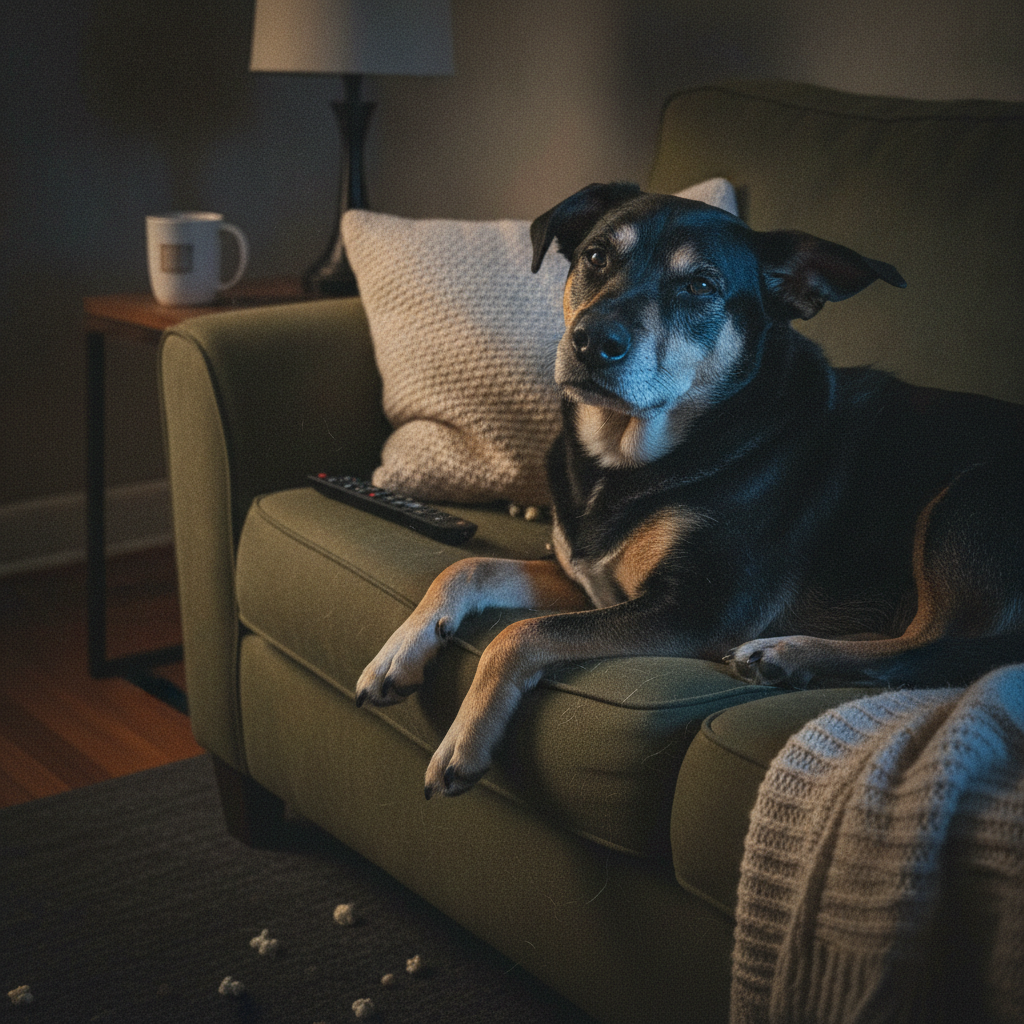
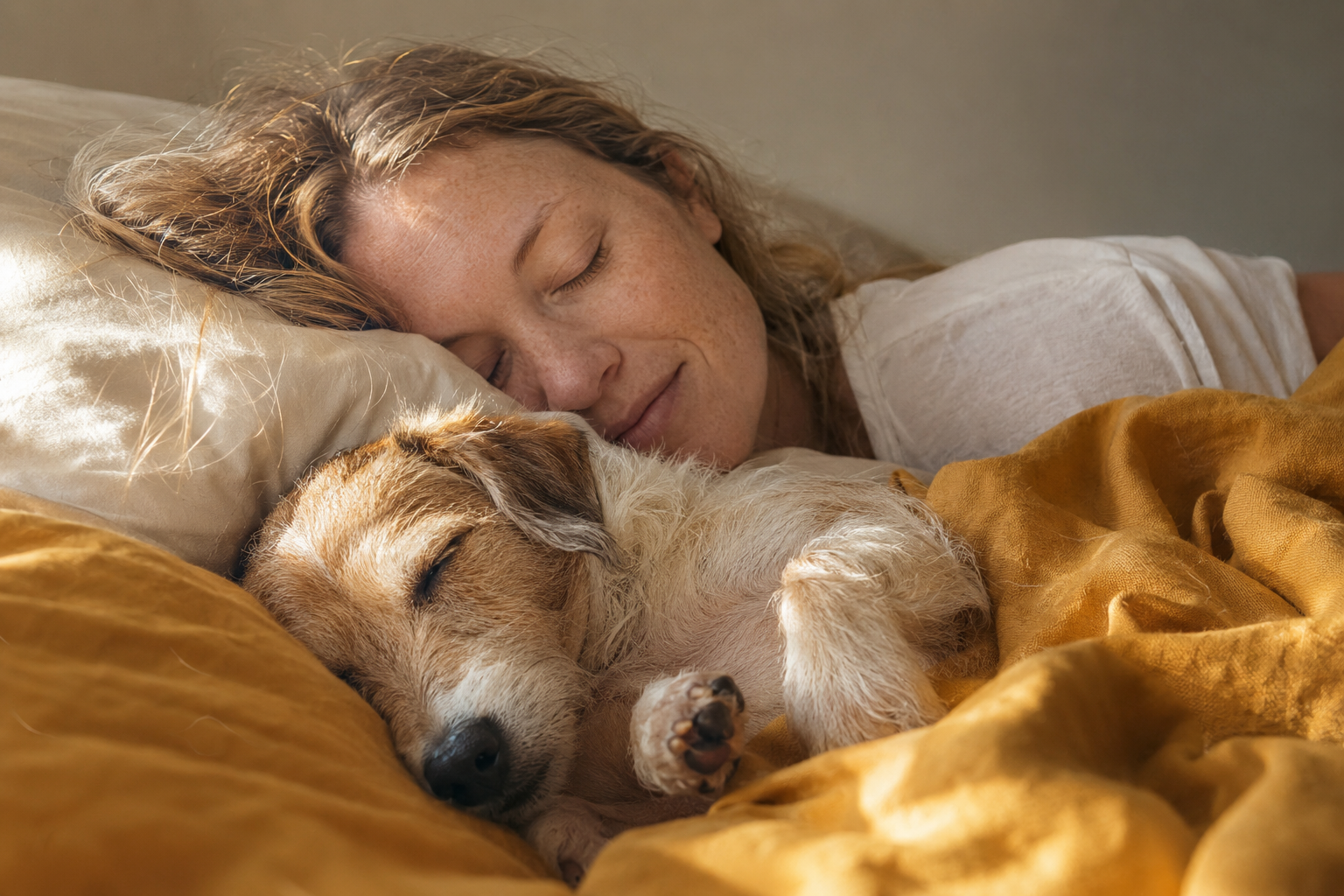
You catch your dog mid-nap, paws paddling the air, a muffled little woof escaping, and you can’t help wondering what’s playing on the screen behind those flickering eyelids. Here’s the answer that will make your day: experts think it’s probably you.
That’s not a greeting-card sentiment. It follows from what we actually know about how dogs sleep, and it’s a more satisfying answer than “we can’t know,” which is where a lot of write-ups stop. Let’s walk through why the science points at you specifically.
Dogs sleep a lot like we do
There’s no great mystery to canine sleep architecture; it rhymes with ours. Dogs move through Rapid Eye Movement (REM) sleep, the same phase linked to vivid dreaming in humans, and the electrical activity recorded in a dreaming dog’s brain lines up closely with the patterns seen in dreaming people. That overlap is the foundation for everything else: if the machinery matches, the experience probably does too.
And you don’t need a sleep lab to see it. You can read the stages with your own eyes. As a dog drifts down into sleep, their breathing first settles into a slow, even rhythm. Then, roughly 20 minutes in for an average-sized dog, the first dream phase begins, and the signs flip: breathing goes shallow and irregular, odd muscle twitches ripple through the body, and if you watch closely, you’ll catch the eyes darting beneath closed lids. Those darting eyes are the giveaway. In people, waking someone during that exact phase almost always catches them mid-dream, which is why it’s such a reliable tell that a dog is deep in a dream of their own.
So what’s on the screen?
Here’s where honesty matters. Because dogs can’t narrate their nights, what a dog actually remembers or replays is beyond proof, and any claim about the content of animal dreams is, at bottom, informed speculation. (Famously, the closest science has come is the sign-language gorillas Koko and Michael, said to have gestured about their own dreams, and even that is contested.)
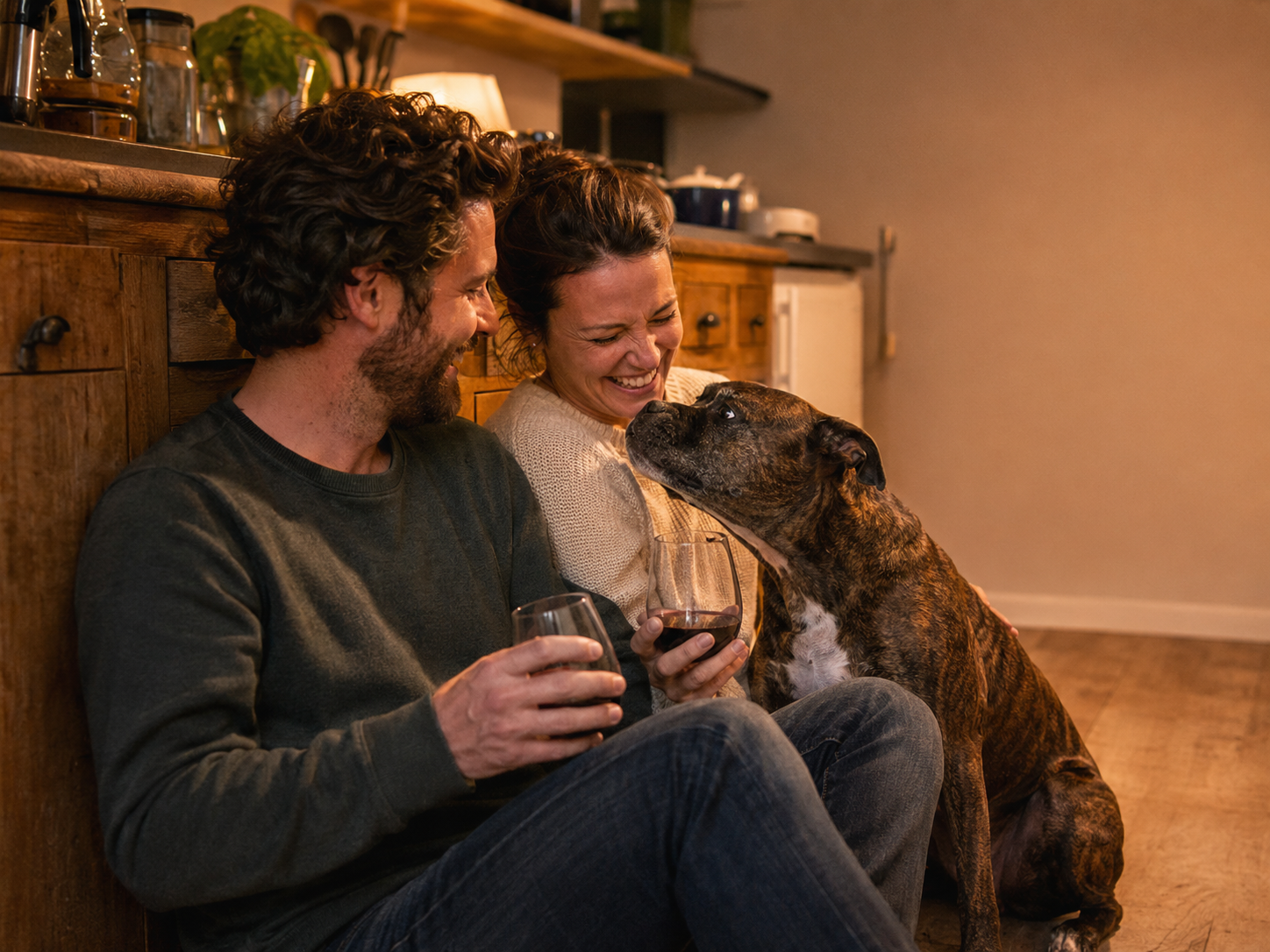
But informed speculation isn’t nothing. The reasoning goes like this. Humans dream about what occupies us during the day, rendered more vividly and less logically than waking life. There’s little reason to think dogs work differently. Research suggests dogs most likely dream about their familiar activities, the stuff of an ordinary dog day. And what fills an ordinary dog day more than their person? Dogs are intensely attached to the humans they live with, so the odds are good that you, your face, your scent, the daily business of pleasing you or pestering you, are exactly the material their dreams are built from.
The mechanics may differ in the details. Small animals like mice run through their sleep stages much faster, so they probably have shorter, more frequent dreams, and a dog’s dream tempo may not match yours precisely. But the raw ingredients are almost surely drawn from real life, which for your dog means you’re a leading character.
“People love the idea that their dog dreams about them, and the nice part is that it’s genuinely the most likely explanation, not just a sweet story. Dogs dream about what they care about, and for most dogs, the thing they care about most is walking around the house,” says Dr. Ravi Mehta.
What to do with a dreaming dog
Mostly, enjoy it. A dreaming dog is a healthy, comfortable dog doing something completely normal. The one piece of practical advice is about waking them. If a dream tips into a whimper or a growl and you’re tempted to intervene, resist the urge to touch. A dog jolted out of REM can react defensively before they’re fully awake, not out of aggression but pure disorientation. Let the dream finish, or call their name softly from a step away. Then go back to admiring those twitching, sleepy paws, now that you know whose face is likely behind them.
What newer research adds
The core picture here has held up well. The evidence that dogs experience REM sleep and dream-like brain activity remains solid, and it’s part of a broader shift in animal science toward taking non-human minds and inner experience seriously rather than dismissing them. Researchers today are far more comfortable saying dogs almost certainly dream than they were a couple of decades ago.
What hasn’t changed, and probably can’t without a dog learning to narrate its own dreams, is our ability to confirm the exact content. So the “your dog dreams about you” conclusion stays where it belongs: a well-reasoned, evidence-consistent inference rather than a proven fact. It’s the safest bet going, but it’s still a bet, and any source claiming certainty about what your dog dreamed last night is overselling it.