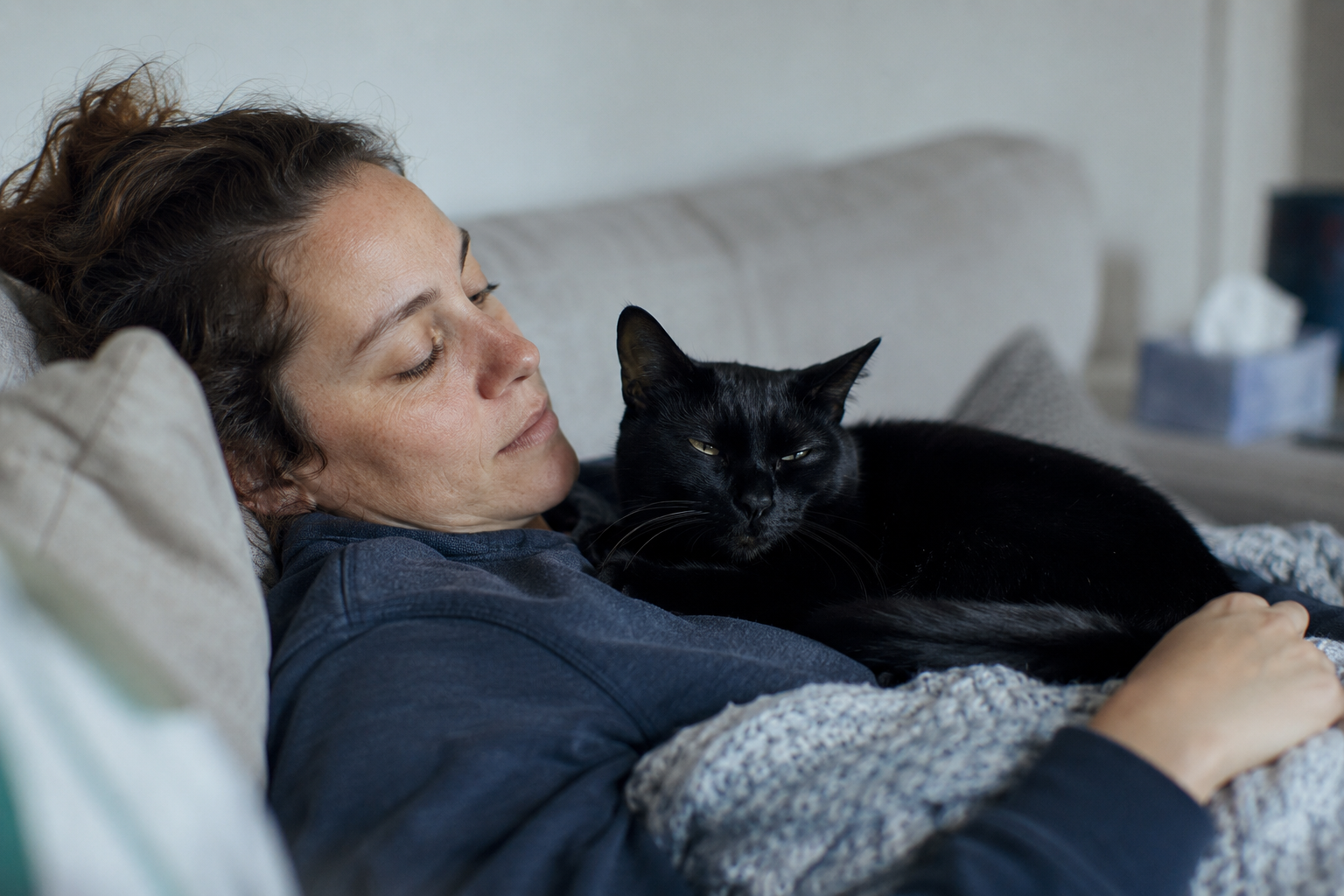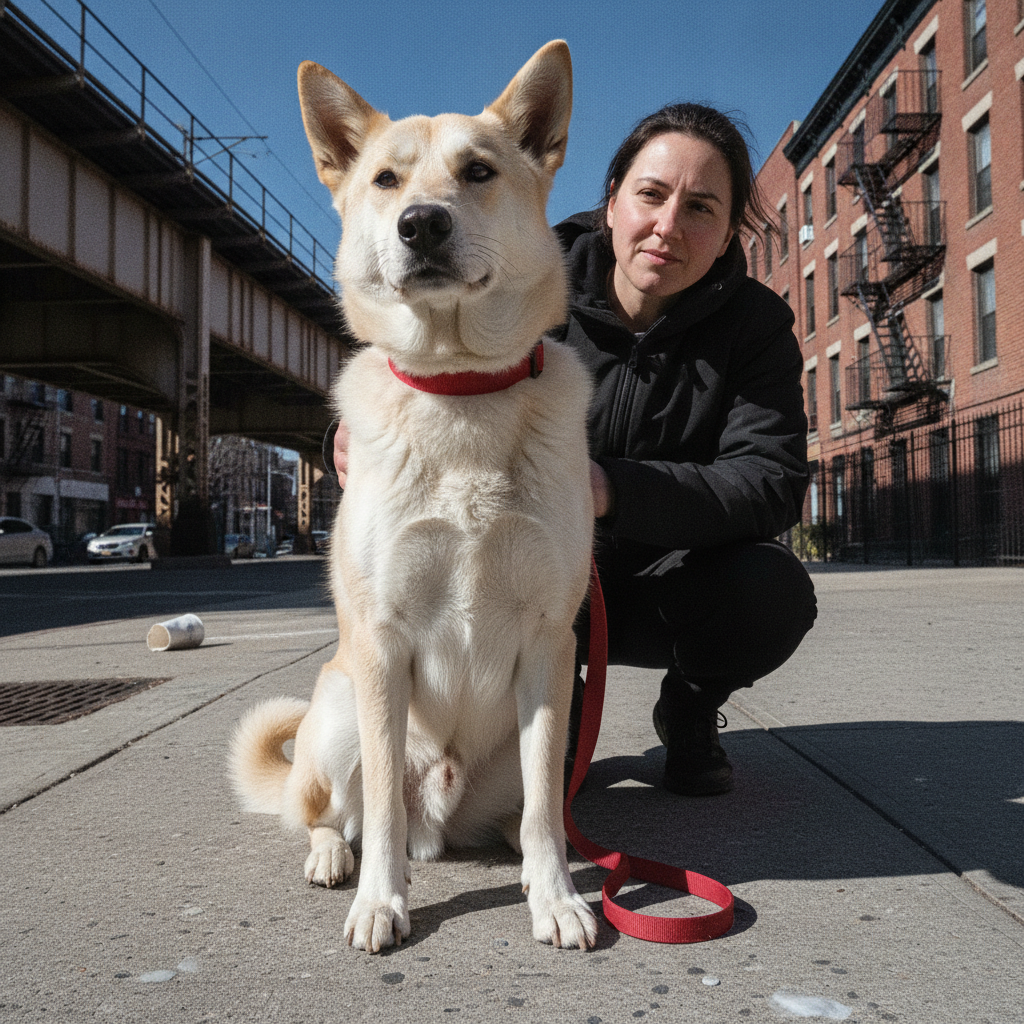
Walk any shelter’s kennel row and you can predict, with depressing accuracy, which dogs will still be there in six months. It is almost never the dogs with the worst behavior. It is the big ones. The seven-year-olds. The ones on twice-daily medication. The ones whose intake card says “pit mix” because someone glanced at a blocky head and wrote it down.
None of that is a description of a bad dog. It is a description of the checkboxes people filter by before they ever meet one. The dogs who wait longest are not failing the system. They are getting caught in it.
What waiting actually costs a dog
This matters because time in a kennel is not neutral storage. Shelter staff have a name for what happens: kennel deterioration. A dog who arrived stable starts spinning in the run. Stops eating. Stops making eye contact. Presses into the back corner and shakes when the door opens.
Krista Almqvist, executive director of Badass Animal Rescue in New York City, has watched it happen to dogs pulled from partner shelters in the South, describing the worst cases as completely shut down. Savahna Borrego, who sits on the fundraising committee at Verde Valley Humane Society, calls the pattern something close to depression: anxious in the kennel, spinning, refusing food.
Verde Valley does more than most to hold it off. Volunteers walk every dog daily. Staff run treat-based enrichment. Dogs get outings. And it is still stressful, because a kennel is a kennel. Most shelters in the country cannot even offer that much.
“A kennel does not just fail to help a dog. It actively takes something from them, week by week,” says Dr. Mara Chen. “The dog who comes out after eight months is not the dog who went in, and that is the part adopters never see on the profile page.”
Badass Animal Rescue met the extreme version of this in 2017, at a partner shelter in Vidalia, Georgia: a dog who had lived most of her life in an outdoor kennel facility. Six years. They named her Annie Hall, placed her with a foster who had the patience and the stubbornness the case demanded, and eleven months later that foster adopted her. It is a happy ending built on someone absorbing six years of damage.
And Annie Hall was one of the lucky ones. Roughly 597,000 shelter animals were euthanized nationally in 2025, about 320,000 of them dogs, according to Shelter Animals Count data reported through the ASPCA. That number is falling, which is real progress. It is still the backdrop against which every long stay happens.
Filter one: size
Here is the cleanest evidence that the problem is us and not the dogs. In 2025, adoptions of small dogs rose 6 percent. Adoptions of medium dogs fell 3 percent. Adoptions of large dogs fell 9 percent. Large dogs also spend the most days between intake and adoption of any size group.
Nothing about a 70-pound dog makes her harder to live with than a 15-pound dog. What makes her harder to adopt is a rental market. Angie Cooper, president of 4 Paws Sake PA, has watched a family lose a dog they wanted because their landlord would not allow the breed on the property. That is not a dog problem, and no amount of training fixes it.
Filter two: age
Senior dogs are adopted at roughly a 25 percent rate. Younger dogs and puppies go home at about 60 percent, per ASPCA figures. A dog crosses some invisible line around seven years old and the applications stop, even though older dogs are typically house-trained, done growing, done chewing, and clear about who they are.
Filter three: a medical label
Johnny is a Husky, and he has outlasted nearly every other dog on the 4 Paws Sake PA roster for one reason: he has a seizure condition. His medication has to go in twice daily, at tight and specific times. Cooper is blunt that the clock, not the illness, is what scares people off.
That is worth sitting with, because “seizure dog” sounds like a crisis and functionally means a pill at 8 a.m. and a pill at 8 p.m. Plenty of people already do that for themselves. The label scares adopters far more than the routine would.
Filter four: the breed on the card
Bully-type dogs are massively overrepresented in shelters and rescues, and the reason is a myth that will not die: that pit bulls are inherently dangerous. The cost of that myth is not abstract. When Cooper posted about Rosie, a long-stay pit bull at 4 Paws Sake PA, an anti-pit-bull group flooded the post with invented claims about her being violent. She had to take the post down, because every comment she removed was replaced by another.
A dog lost her shot at a home because strangers on the internet lied about her.
The other quiet filters
Some dogs cannot share a house with another animal. Borrego points out that most people walking into Verde Valley already own a pet, which quietly rules out every solo-only dog on the row before the visit even starts. Other dogs come with leash reactivity, which is entirely trainable and which most adopters do not want to sign up for.
Stack those on top of size, age, medication, and breed label, and the picture is complete: the longest-staying dogs are not the ones with the deepest problems. They are the ones with the most checkboxes ticked.
Why foster beats kennel, and what it costs the rescue
Foster-based rescues see far less of this damage, for the obvious reason. A dog in a foster home is in a home: fed, medicated, walked, trained, and touched. Almqvist’s point is straightforward, that a foster dog gets everything a dog needs physically, medically, and behaviorally, and a kenneled dog does not.
But long fosters are not free. Every extra month is another month of preventatives, and preventatives cost money. Routine needs surface over time, dental work among them. Badass also pays for behavioral training when a dog needs it. A rescue absorbing a two-year foster is absorbing two years of that bill, quietly, while the dog waits for someone to click on her.
There is an emotional cost too. Almqvist estimates that roughly half the time, the foster parent of a long-stay dog ends up adopting the dog. That is a lovely outcome and a structural problem, because it takes a foster home out of circulation.
Kathryn Allen has chosen the harder road. She has fostered Rosie through 4 Paws Sake PA for three years. Rosie, by Allen’s account, is treated like a princess. Allen still will not adopt her, because there is always another dog in a kennel, and adopting closes the door on that dog. Rosie is her fourteenth foster; the one before Rosie stayed two years. Allen’s reasoning is simple: when Rosie goes home, another dog gets to live in a house instead of a run.
The thing that actually works: getting the dog seen
Every filter above is a visibility problem in disguise. The dog is fine. She is simply invisible to the 40 people in her zip code who scroll past her.
Which is why the single most effective new tool in rescue is not a training protocol. It is a phone. Borrego posted a TikTok about Cleveland, a three-legged bully-breed dog who had been at Verde Valley for 685 days. The video was viewed nearly 25,000 times, brought in applications from across the country, and Cleveland got adopted.
Six hundred and eighty-five days of local invisibility, undone by one video that escaped the zip code.
What you can do, ranked by how much it helps
- Adopt the dog who has been there longest. Ask the question directly at the front desk. Borrego’s read, after years of watching them, is that the long-stay dogs usually turn out to be the best dogs in the building, and they have the most love saved up.
- Foster, and hold the line. A foster home is the single fastest way to stop kennel deterioration. Fostering a long-stay dog is worth more than fostering an easy one.
- Walk dogs. It sounds small. Verde Valley’s volunteers walking every dog every day is a large part of why their dogs hold together. Nearly every shelter in the country takes volunteer walkers.
- Share the post. Cleveland got out because a video traveled. Sharing costs you nothing and is not nothing.
- Widen your own filter by one line. One size class. One year of age. One medication. That is the entire ask.
What’s new since this was written
The national numbers have started moving in the right direction, and they moved unevenly. Shelter Animals Count’s 2025 data shows euthanasia down again, roughly 7 percent for dogs, with about 2 million dogs adopted over the year. Median time from intake to adoption also came down across government shelters, municipal-contract shelters, and private shelters.
The gap did not close, though. It widened where it always does. Small-dog adoptions rose while large-dog adoptions fell 9 percent, and large dogs still sit in care longer than any other size. Five years of data now point the same direction: the big dogs wait.
If you have been meaning to widen your search, that is the number to look at. The dogs stuck in the system are not stuck because something is wrong with them. They are stuck because they are large, and a lot of people never scroll that far.
References
- U.S. Animal Shelter Statistics — ASPCA
- 2025 Annual Data Report — Shelter Animals Count
- Shelter Animals Count Releases 2025 Annual Data Report, Marking 10 Years of National Sheltering Data — ASPCA
- How Organization Type Shapes Shelter Trends in 2025 — Shelter Animals Count