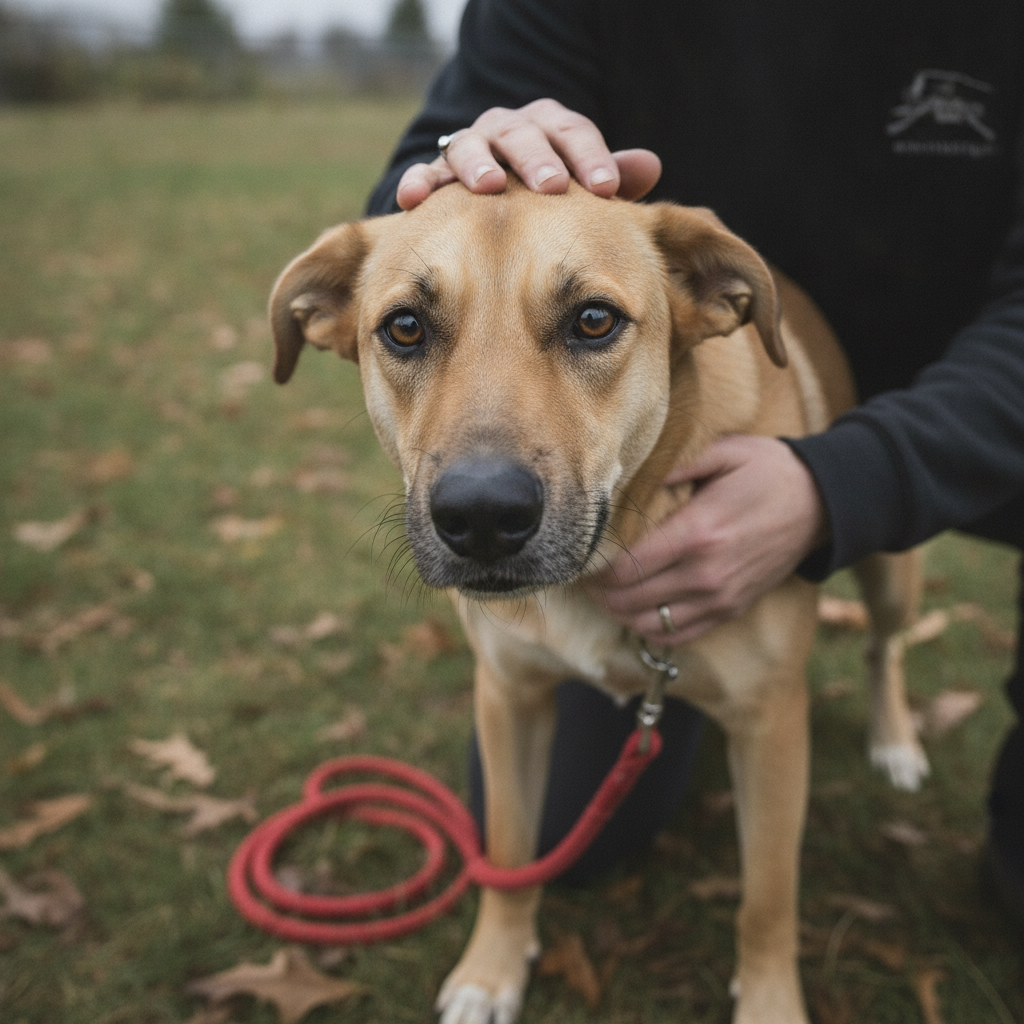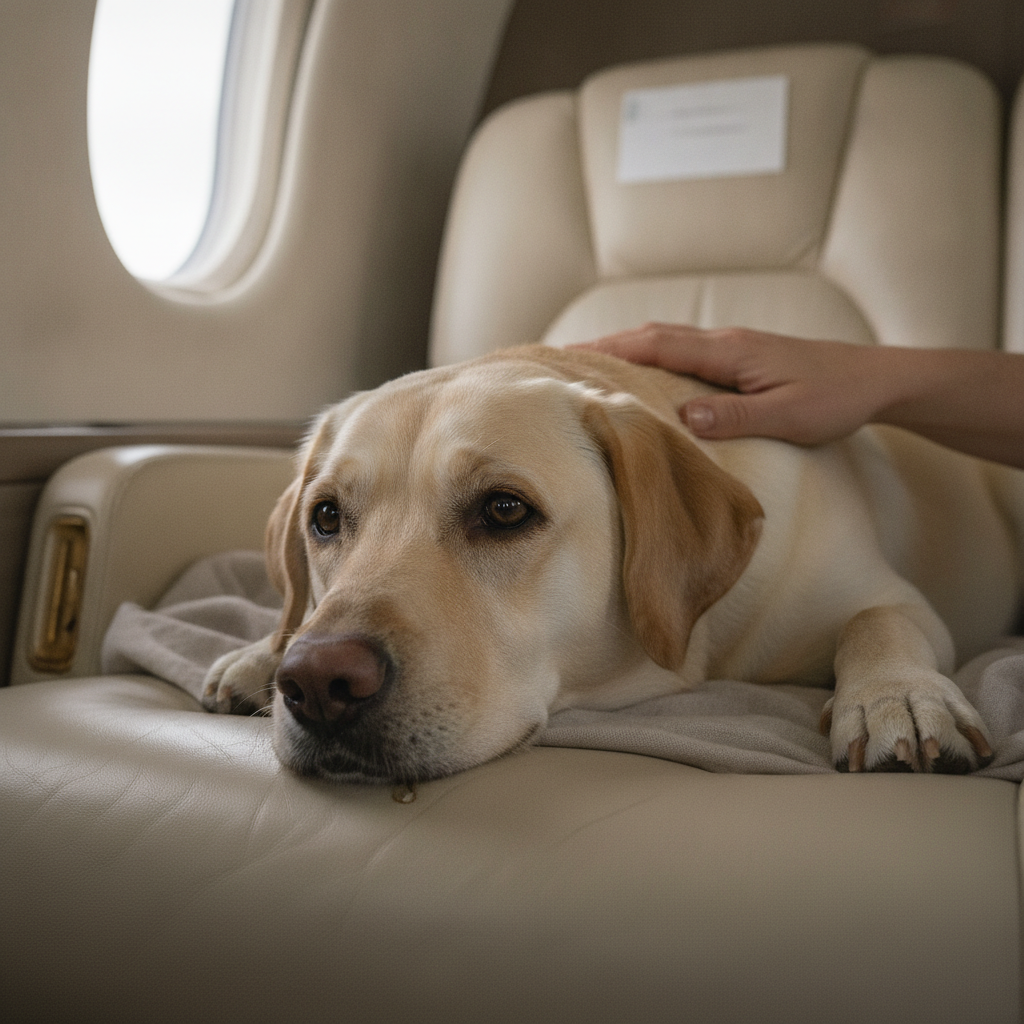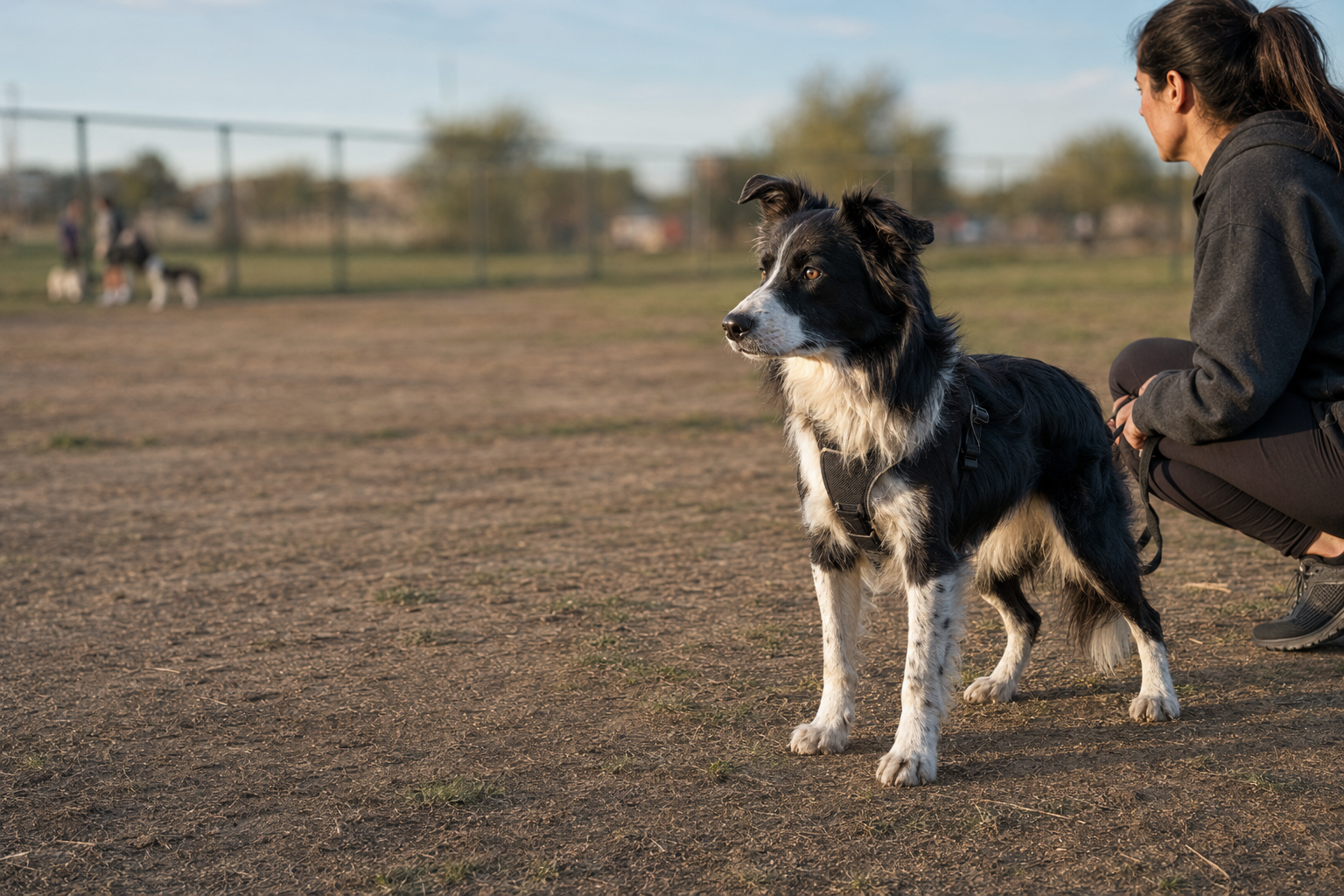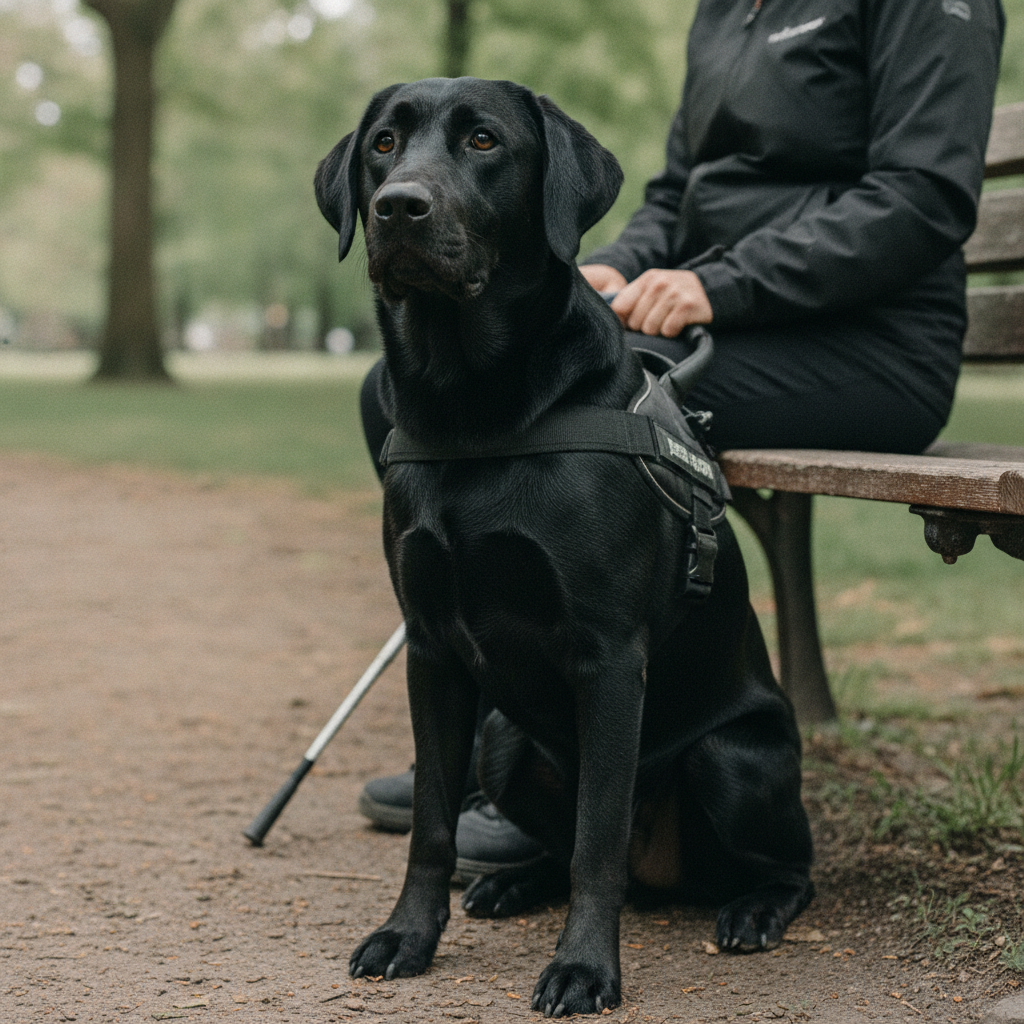
Picture a dog lying quietly under a restaurant table, and a dog making the rounds of a hospital ward collecting ear scratches. Both are “working.” Both might be wearing a vest. But legally, practically, and in terms of what you are allowed to do around them, they could not be more different, and most people have the distinction exactly backwards. They reach for the calm dog under the table (the one they must not touch) and hesitate around the friendly ward dog (the one that is there to be touched).
Sorting this out is not pedantry. Getting it wrong means distracting a dog whose job might be to catch a medical crisis, or misunderstanding what a business can and cannot ask. So here is the clean line: a service dog is trained to do a specific task for one person with a disability. A therapy dog offers general comfort to many people. Everything else follows from that one difference.
What a service dog actually is
Under the Americans with Disabilities Act, a service dog is one trained to perform specific tasks for a person with a disability. The law treats these dogs less like pets and more like medical equipment, no different in principle from a wheelchair or an insulin pump. That framing sounds cold, but it is the key to understanding their rights.
The tasks are concrete and trained. Common examples include:
- Guiding a person who cannot see
- Signaling a person who cannot hear
- Sensing an oncoming seizure and keeping the person safe through it
- Nudging a person to take medication on schedule
- Bracing or pulling a wheelchair
- Grounding a person with PTSD during a panic episode
Years ago, most people pictured only guide dogs for the blind or hearing dogs for the deaf. The range is far wider now. Service dogs assist people with mental illnesses, autism, seizure disorders, diabetes, and other conditions that affect a major life function. A person may be matched with a professionally trained dog, or may train their own dog to meet their specific needs, both are legitimate paths.
“The single most useful thing a member of the public can understand is that a service dog is not off duty just because it looks relaxed,” says Dr. Mara Chen. “That calm is the job. When the dog is settled and watching its person, it may be monitoring for a change most people would never notice. A friendly ‘hi puppy’ can pull it off that task at the worst possible moment.”
What a therapy dog is instead
Therapy dogs have a completely different assignment. Rather than serving one person with trained tasks, they offer psychological or physical comfort to many different people across many different settings. They tend to have steady temperaments and genuinely social personalities, because the job is, essentially, to be lovingly available.
You will find them volunteering in places like:
- Hospitals
- Schools
- Nursing homes
- Daycares
- Group homes
- Rehabilitation centers
The comfort they offer is real and often measurable, but it is general, not a task performed for a single handler.
The differences that actually matter to you
Because the two look alike, and neither is required to wear identification, and many breeds do both jobs, the practical distinctions are worth knowing.
You can pet one, not the other. Do not pet a service dog, it is working, and distraction can pull it off a task that matters. Therapy dogs are usually meant to be touched, especially where they are volunteering. When in doubt with either, ask the handler.
The law protects them differently. The ADA lets service dogs accompany their person into most public places, including restaurants and stores, even where local health codes would otherwise ban animals. When a service dog enters, staff are limited to two questions: whether the dog is a service animal needed for a disability, and what task it has been trained to do. They cannot probe the disability itself or demand paperwork. Therapy dogs get no such public-access right, because they are not trained for one person’s disability, though their status may grant them entry to specific facilities, like schools, that otherwise bar pets.
Assigned to one, or shared by many. Service dogs work for an individual on trained, disability-related tasks. Therapy dogs spread more general comfort across many people.
Certification is murky for both. Federal law sets no mandatory certification or training program for service dogs, likely because their tasks vary so widely, though many go through extensive individualized training and can be formally registered. Therapy dogs are not federally required to be certified either, but many are, because many schools and hospitals will not host an uncertified dog, citing liability. Two of the better-known certification programs come from the Alliance of Therapy Dogs and Pet Partners.
So, could your dog be a therapy dog?
If your dog is a natural people-lover, you may be wondering. Most therapy-dog certification programs start from a few baseline requirements: the dog should be at least a year old, have a calm disposition that welcomes attention from strangers, and stay attentive to its handler. Dogs that clear that bar can move into a program, which varies in its evaluation and training steps.
The path looks different depending on where you live. One therapist in Cincinnati certified her Portuguese Water Dog so he could join her at her practice, working through a program that involved a skills-and-obedience assessment plus two evaluations at a nursing home. As she described it, the evaluators mainly needed to confirm he would not bark, jump, or spook at wheelchairs. When he is at work, he also carries liability insurance, because facilities that host therapy dogs may require certain certifications or coverage. The lesson: research the specific requirements for your area and the places you hope to visit before you start.
And where do emotional support animals fit?
There is a third category people fold into this, incorrectly. An emotional support animal, or ESA, is a pet that supports its owner simply through its presence. It is not trained to perform tasks, which is why its legal footing differs from a service dog’s. Under the Fair Housing Act, ESAs can live in no-pets housing. They used to fly free in the cabin, too, but that changed: since January 2021, after a wave of incidents involving people claiming everything from llamas to peacocks as support animals, airlines generally reserve free, unconfined cabin travel for service dogs, including psychiatric service dogs trained to help people with conditions like severe anxiety.
What’s new since this was written
The gray zone around fake service dogs has hardened into law in much of the country. A large and growing number of states now make it a punishable offense to misrepresent a pet as a service animal, typically a misdemeanor with fines. The federal two-question rule has not changed, businesses still cannot demand papers, but the state penalties are aimed at the people who exploit that trust with a bought-online vest.
For handlers of genuine service dogs, that shift is mostly good news, since fraud is what fuels suspicion of the real teams. The practical guidance for everyone else is unchanged: a vest proves nothing, the law limits what a business may ask, and the safest default around any dog you think might be working is to leave it to its job.
References
- U.S. Department of Justice, Civil Rights Division. “ADA Requirements: Service Animals.” ADA.gov, updated 2020.
- U.S. Department of Transportation. Final rule on Traveling by Air with Service Animals, effective 2021.
- Alliance of Therapy Dogs. “Difference Between a Therapy Dog and a Service Dog.”
- Pet Partners. Therapy Animal Program standards.