Living with a dog is one of life’s great joys, and also, some days, an exercise in pure frustration. We all carry a picture of the dog we want: attentive, well-mannered, doing the things a “good dog” does. Then reality shows up jumping on the guests, and a lot of loving owners find themselves exasperated, especially when the embarrassing stuff happens in public. If that is you, take a breath. It is incredibly common, it is nothing to be ashamed of, and the fix probably is not more discipline. It is a different question.
Because here is the core problem: most of us approach our dogs’ behavior backward. We fixate on what we do not want, the jumping, the leash-pulling, the barking, the digging, and we try to shut it down, usually by scolding. But “how do I make my dog stop doing that?” is the wrong question, and it quietly sabotages the whole project.
Why punishment works against you
Scolding or punishing a dog for an unwanted behavior is both ineffective and, often, actively damaging. It generates fear and anxiety without ever touching the reason behind the behavior, which is frequently fear, anxiety, or plain confusion about what you actually want. Worse, punishment can backfire: your dog may pin the bad feeling on you instead of on the thing they did, which erodes exactly the trust you need to train at all.
This is not just philosophy anymore, the research backs it. A 2020 study out of the University of Porto compared companion dogs trained with aversive methods (leash jerks, yelling, other punishments) against dogs trained with rewards. The aversively trained dogs showed more stress behaviors and higher cortisol during sessions, and, tested afterward in a neutral setting, they were measurably more pessimistic, quicker to expect a bad outcome in an ambiguous situation. In other words, punishment-heavy training does not just fail to fix the behavior. It can push a dog toward a more anxious, glass-half-empty way of moving through the world. That is the opposite of what you are after.
Ask the better question
The reframe is simple to say and genuinely transformative to practice: stop training away what you hate, and start naming what you want. Instead of focusing on the negative, focus on the goal, and reward it.
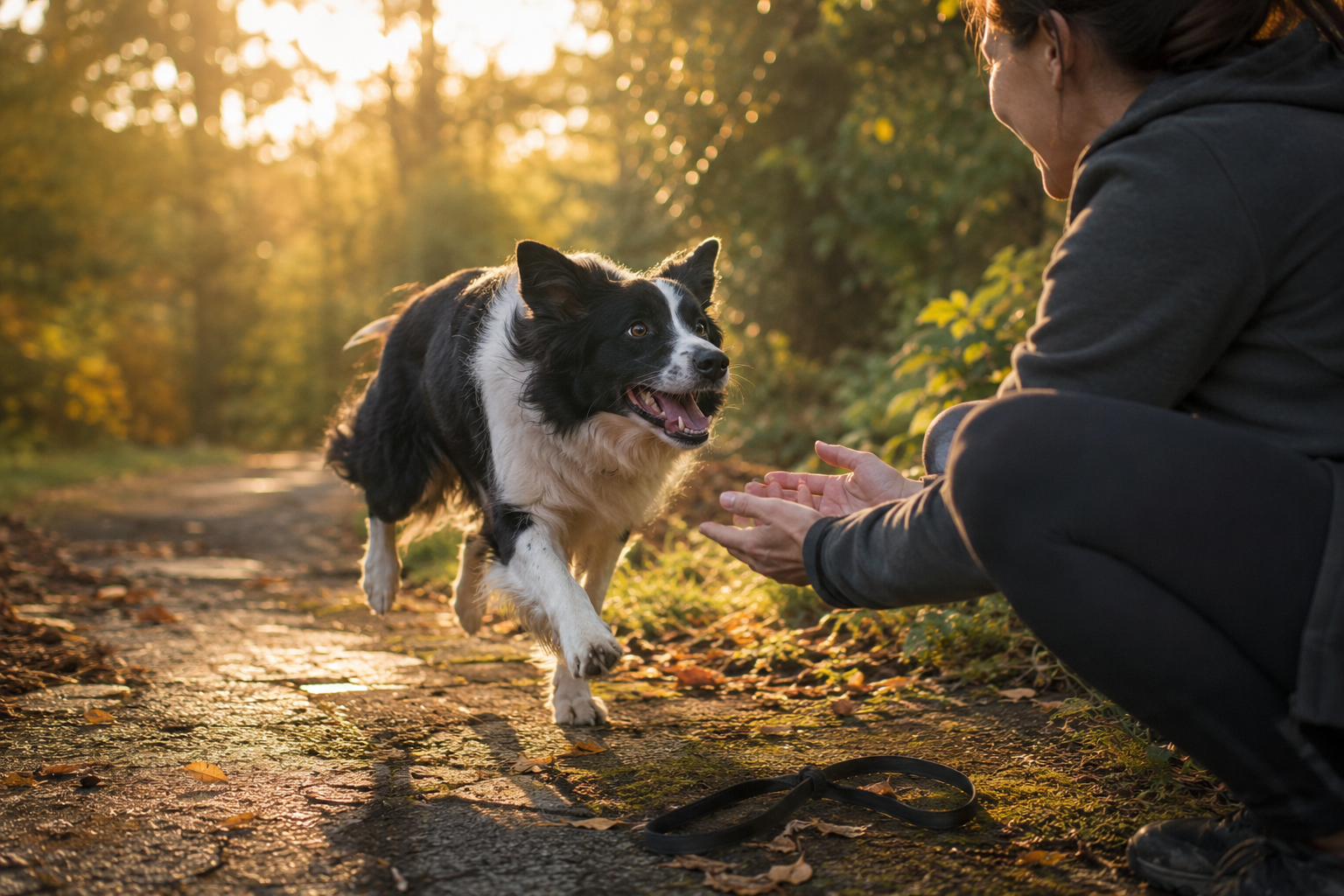
To do that, you have to understand what is driving the behavior in the first place. Usually there is a trigger, and if you can spot it, you can redirect the energy into something you do want, before the unwanted behavior even happens. Say your dog barks at other dogs. Rather than waiting for the bark and then scolding, you teach your dog to sit and stay quietly at a distance the moment another dog appears, before the barking starts, and you reward that calm with treats, praise, and attention. The timing is everything: you are catching and paying for the behavior you want in the window before the old habit fires.
A lot of this is a mental shift on your end. Once it clicks, your frustration eases, and that alone strengthens your bond. So the next time you feel the irritation rising, pause and ask what you would prefer your dog to be doing in that moment. A couple of examples of the swap in action:
- Old framing: “I need my dog to quit jumping on visitors.” New framing: “My dog should sit at the door to greet people.”
- Old framing: “I’m annoyed my dog keeps stealing food off the counter while I cook.” New framing: “My dog should settle on their mat while I’m in the kitchen.”
Same situations. Completely different training plan, because now you have a behavior to teach and reward instead of a behavior to police.
“The single most useful shift I can get an owner to make is from ‘no’ to ‘do this instead,’” says Dr. Lena Park. “A dog can’t learn ‘stop existing near the counter.’ It can absolutely learn ‘go to your mat, that’s where good things happen.’ Give the behavior a positive replacement and a clear payoff, and you’ve turned a battle into a routine.”
Remember: you are raising a toddler
Here is the frame that makes all of this stick. Progress is not linear, and setbacks are a normal part of training, not a sign you are failing. Training is not a single event you complete; it is an ongoing process of learning together, and like any skill, it takes time and patience before new behaviors become automatic.
It helps enormously to remember what you are actually working with. However clever your dog is at tricks or agility, their thinking lands somewhere around a human toddler’s, in the rough range of ages two to five. That is not an insult, it is a design spec. It tells you to set your dog up for success the way you would a toddler, rather than expecting adult self-control and then feeling betrayed when you do not get it.
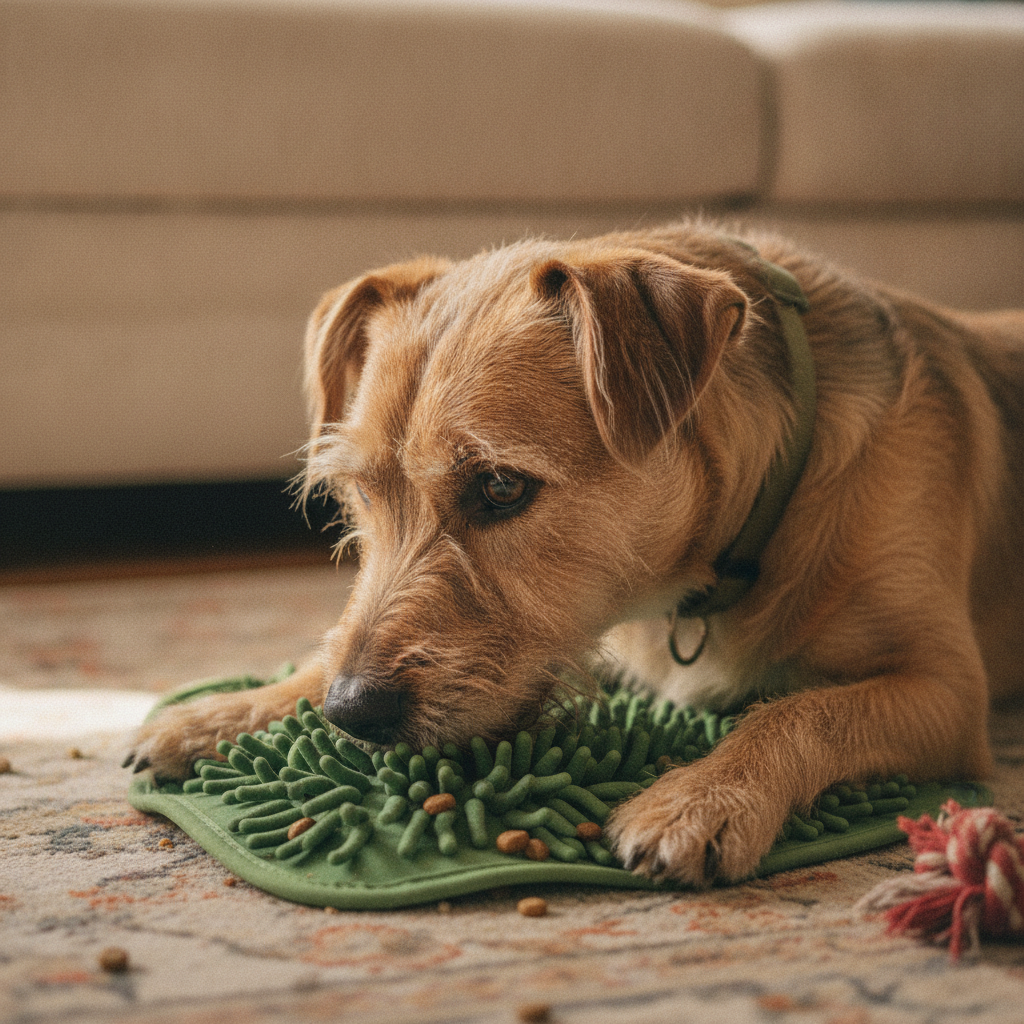
Would you turn a three-year-old loose at a dinner party and expect flawless manners? Of course not. So at that same party, give your dog the tools to succeed: maybe they are on a leash while the guests arrive, or tethered near you on a dog bed with a stuffed Kong to keep them happily occupied. Would you leave a toddler alone in the kitchen with a chocolate cake at arm’s reach? No. So do not leave the roast or the good snacks within paw’s reach either. You are there to manage the environment and to reward your dog for staying in their spot.
That is really the whole method: arrange the world so the right choice is the easy choice, then pay generously when your dog makes it. Focus on the positives, learn your dog’s motivations and triggers, and stay patient with a process that is genuinely a process. Do that, and you are not just curbing bad habits, you are building a deeper, more trusting relationship with your dog, which was the point all along.
References
- Vieira de Castro, A. C., et al. “Does Training Method Matter? Evidence for the Negative Impact of Aversive-Based Methods on Companion Dog Welfare.” PLOS ONE, vol. 15, no. 12, 2020, e0225023.
- American Veterinary Society of Animal Behavior. “Position Statement on the Use of Punishment for Behavior Modification in Animals.” avsab.org
- Ziv, G. “The Effects of Using Aversive Training Methods in Dogs: A Review.” Journal of Veterinary Behavior, vol. 19, 2017, pp. 50–60.