We like to think dogs are grateful for our attention. We spot one on the sidewalk, light up, and reach out, sure that we are about to make their whole day. And sometimes we are. But a lot of the petting we hand out is really for us, not the dog, a way to soothe our own nerves or fill an awkward silence with our hands. The dog just happens to be there.
The good news is that becoming the kind of person dogs actually seek out is not complicated. It comes down to one habit: let the dog run the conversation.
Why dogs tolerate so much
Here is something worth sitting with. Dogs come equipped with the hardware to end any unwanted interaction instantly, and most of the time they choose not to. A stranger crowds them, grabs their face, thumps their skull, and the dog simply endures it. If a stranger did that to us, we would flinch, step back, maybe file a complaint. Dogs mostly forgive.
That patience is a gift, not a green light. Just because a dog puts up with clumsy handling does not mean they enjoy it, and reading their tolerance as delight is how a lot of people end up on the wrong end of a warning snap. The whole point of petting well is to stop trading on that patience and start earning genuine enthusiasm instead.
The greeting is not the petting
When a dog trots up to you, wagging, it is easy to read that as an invitation to dive in with both hands. It is not. Think of it as a handshake, the opening of a possible relationship, and nothing more yet. Dogs reading each other go through a sequence, a sniff, an approach, a wait to see what the other does, and you can borrow it.
So when you meet a dog for the first time, do less. Ask the owner, then hold still and let the dog make the next move. Turn a little sideways so you are not squaring up and looming. Keep your hands low. If the dog comes in and does more than a quick sniff, offer a gentle scratch on the chest or the side of the shoulder. If the dog sniffs and drifts off, that was the whole answer, and it was a polite no.
Different dogs need different amounts of runway. Some breeds like to investigate you at length before they commit. Some will sniff you thoroughly and then tolerate a pet without ever really wanting one. Watch the individual in front of you rather than assuming every wag means “yes, please, everywhere.”
Read the body, not the face
We are wired to look at faces, so we scan a dog’s face for a smile and misread what we see. A panting dog can look like they are grinning when they are actually stressed. A wrinkled brow can read as a scowl when it is really curiosity. Faces are the hardest part of a dog to interpret, and even experienced people get fooled.
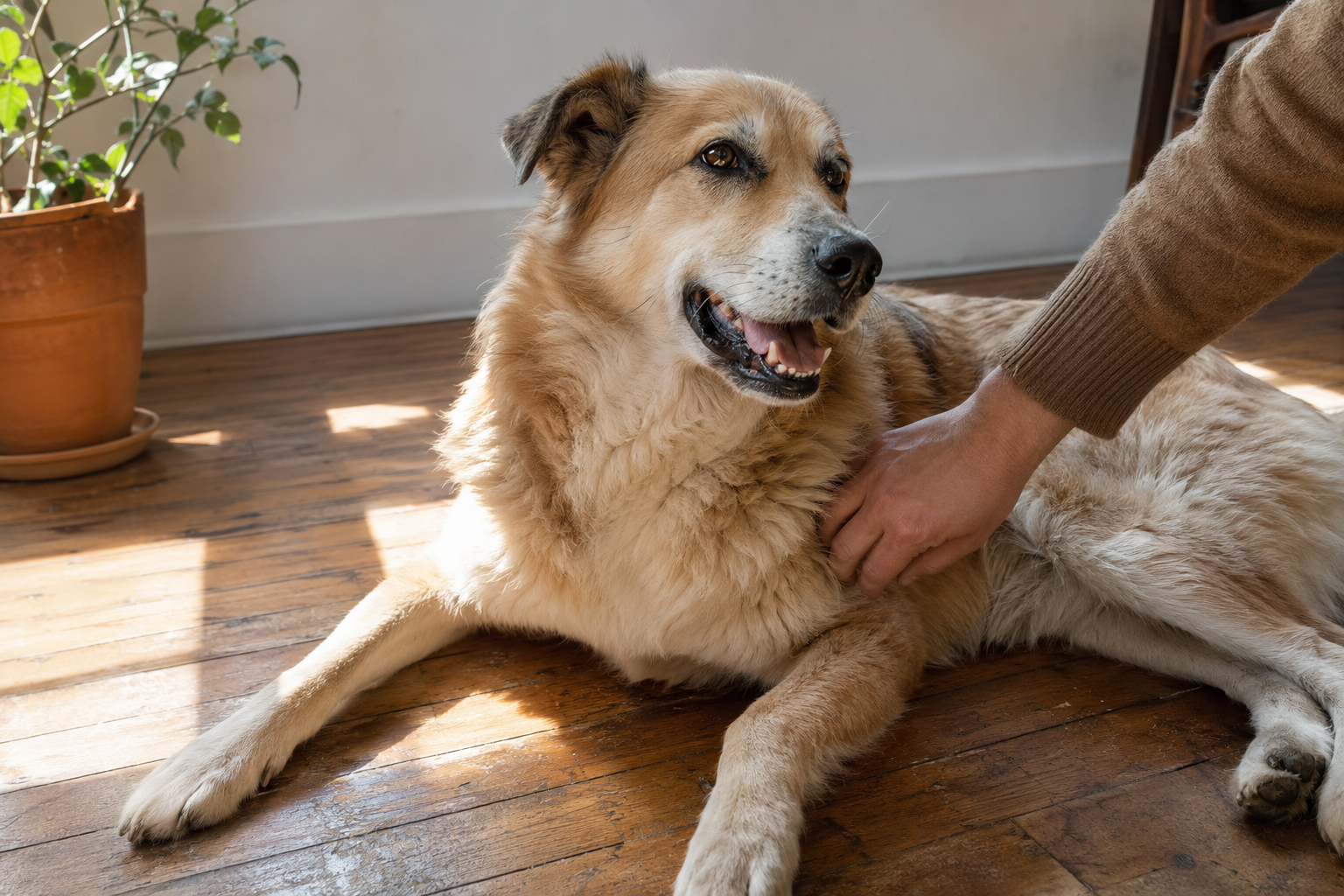
The body is more honest. A dog who is comfortable looks loose all over: an easy open-mouthed pant, a soft wag that swings side to side rather than ticking tensely in one spot, a wiggly rear end, hackles flat. A dog who wants you to stop tends to go tight. That stiffness radiates in a predictable path, beginning at the crown and traveling back along the spine to the tail tip, so look for a hard-set head, a rigid body, ears pinned back, a fixed stare that will not sweep the room, or a mouth clamped tight with the tongue darting out in quick flicks. That flick is a calming signal, a small announcement of unease. A tucked tail and raised fur along the back are the louder versions of the same message. And the loudest, the one nobody should ever punish a dog for using, is a growl.
The consent test
Here is the single technique that upgrades everyone’s petting overnight, and it is used by trainers and shelters precisely because it prevents bites: pet for about three seconds, then take your hands off and wait.
Now watch. A dog who wants more will tell you plainly. They will nudge your hand, duck their head back under it, paw at you, or lean their weight into you. That is consent, freely given, and you can carry on. A dog who moves away, holds still, turns their head, or suddenly finds something fascinating across the yard is opting out, and the respectful move is to believe them the first time. Non-consensual petting is not just rude; it is how a stressed dog gets pushed toward a bite they tried to avoid.
Where dogs actually like to be touched
Once a dog has said yes, aim for the spots most dogs genuinely enjoy and steer clear of the ones that make them brace.
Good territory: the chest, the shoulders, the side of the neck, and under the jaw. The base of the tail is a favorite scratch for a lot of dogs. So is the area behind the ears, where two muscles anchor the skull to the neck and stay chronically a little tense because of how dogs carry their heads at an angle. Slow, full-length strokes along the spine, paired with calm and quiet energy, tend to land well. Many dogs also melt for a soft massage with the fingertips, sliding along the direction the fur grows rather than against it, which is roughly what a mother dog does when she cleans her puppies: gentle, unhurried, with the grain.
Territory to avoid, at least early on: the top of the head, which so many people go for first and which plenty of dogs dislike being reached over for. Skip the whiskers and the delicate area around the eyes; nothing there is fun for a dog. Feet are sensitive too, though many dogs are ticklish in a pleasant way on the hair between the pads, and there is a pressure point in the soft webbing between the toes. If a dog yanks a paw back fast, let them have it.
Two spots deserve special caution. Ears are wildly individual; some dogs adore having them handled and others are protective of them, so test gently and back off if you get a flinch. And the belly is the great misunderstanding. When a dog you barely know drops and rolls over, exposing their stomach, that is often not an invitation but appeasement, a nervous “please don’t hurt me.” That is exactly the wrong moment to dive in for a belly rub. Give them space and let them come back to you. Once a real relationship is built, plenty of dogs will flop over and clearly solicit a tummy scratch, and then it is one of the great pleasures on offer. The trick is telling the confident flop from the frightened one, and when in doubt, wait.
A few finer points
Personality and history matter more than breed, but tendencies exist. Some retrievers seem to want contact constantly, which is part of why they make such good comfort dogs, while many terriers are more self-possessed and would rather be near you than on you. A dog’s past can override all of it: dogs who have never had reason to distrust hands often love being touched, while dogs who have been over-handled can turn hand-shy, and some high-energy dogs use touch to settle while others find it winds them up like a shot of espresso.
Puppies are their own case. Their nervous systems overload fast, so keep sessions short and deliberate, watch what the pup actually likes, and stop before they tip into the nippy, overstimulated zone where the baby teeth come out. Sometimes the best thing you can do with a puppy is simply sit and read aloud nearby, teaching them that being with you is calm and good.
And notice your own habits. A lot of us pet frantically while our attention is somewhere else, using the dog as a fidget toy during a conversation. Dogs feel the difference. The best petting is unhurried, attentive, and, above all, a two-way exchange, which brings us back to the only rule that really matters.
The whole thing in one line
Let the dog lead. Ask with your body, check for consent, and stop when they are done, not when you are. Do that, and you stop being one more stranger who takes and start being the person the dog walks across the room to find.
References
- ASPCA. Dog bite prevention. https://www.aspca.org/pet-care/dog-care/dog-bite-prevention
- Preventive Vet. How to ask your dog if they want to be petted. https://www.preventivevet.com/dogs/does-your-dog-want-to-be-petted
- Seattle Humane. Dog bite prevention. https://www.seattlehumane.org/2025/04/05/dog-bite-prevention/