Ask what makes dog training work and you’ll get a hundred answers about method: which cue, which treat, which app, which six-week class. All of that matters. But none of it works without the one ingredient nobody puts on the box, because it doesn’t sound impressive and you can’t buy it. It’s patience. Not the grit-your-teeth, wait-it-out kind, but the active skill of meeting your dog where they are and letting progress take the time it takes.
Here’s the reframe worth holding onto: patience isn’t doing nothing. It’s the thing that lets every other tool actually land.
Training is a long game, not a course you finish
The most common mistake is expecting a finish line. Training a dog is closer to a lifelong practice than a project with a due date, there’s always a new skill to build or an old one to sharpen. It doesn’t get “completed” in an eight-week class, and it certainly doesn’t get handled in a one-day seminar. Real change, especially for a dog working through something hard like reactivity, plays out over a long stretch of consistent practice.
When people start working with their dog, whether the goal is calm house manners, comfort around strangers, or a walk that doesn’t detonate at the sight of another dog, the single most useful mental adjustment is to think in weeks and months, not days and hours. That one shift takes an enormous amount of pressure off both of you.
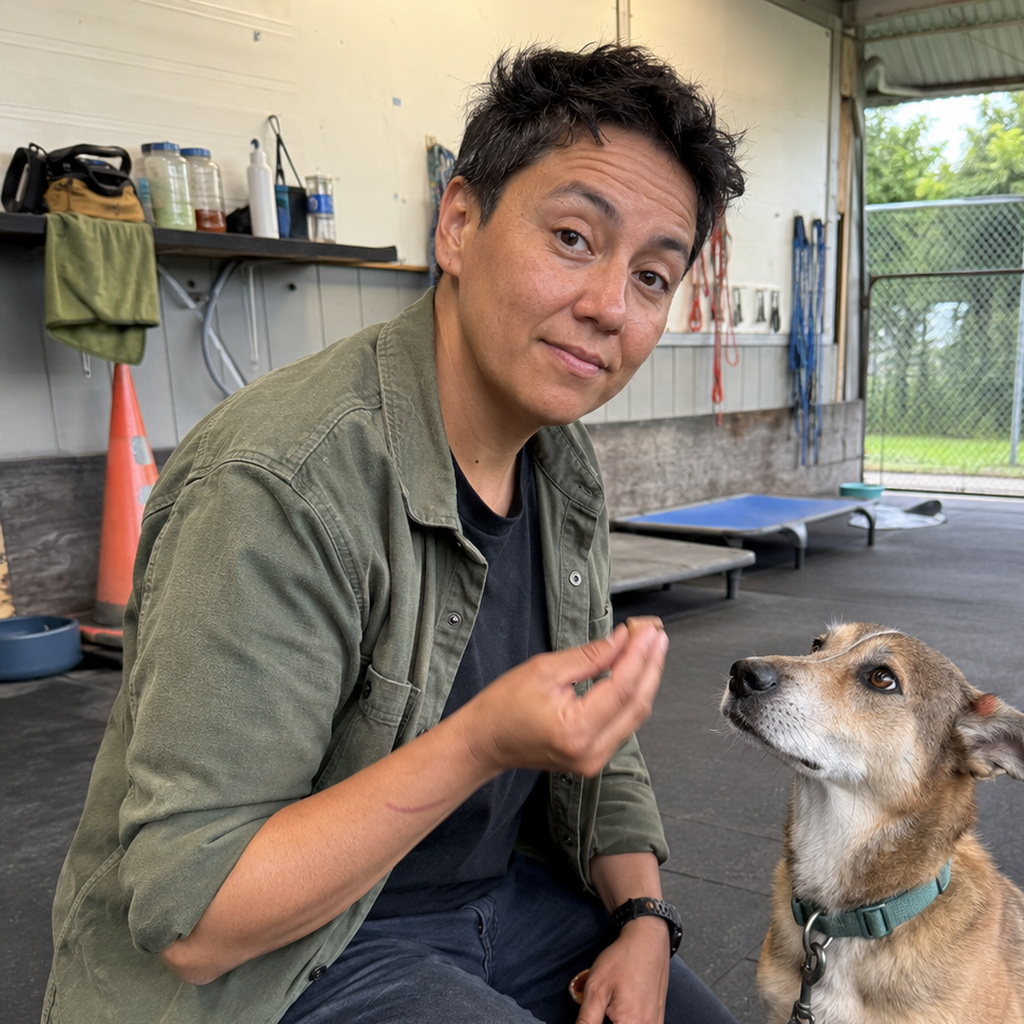
“When a client tells me their dog ‘should have this by now,’ I ask, by whose schedule?” says Jordan Ellis. “The dog didn’t agree to your timeline. Patience isn’t lowering the bar, it’s refusing to punish a dog for not learning at a speed they never signed up for. The people who go slow almost always get there faster.”
Setbacks aren’t failure. They’re the shape of the work.
Progress is real, but it is almost never a straight line. Expect it to be jagged. You’ll be doing beautifully with a dog who’s nervous around other dogs, and then an off-leash dog comes barreling out of nowhere and undoes a week of work in ten seconds. Or your dog is finally taking treats from a person they’ve grown to trust when a car alarm blares and, just like that, they’re wary of that person all over again. Or nothing dramatic happens at all, your dog is simply tired or a little under the weather, and their performance dips for reasons you can’t pin down.
None of that means you’re failing. It means you’re training a living animal, and living animals have off days. Accepting that the graph will zigzag, and that your dog may regress for reasons obvious or invisible, is itself a form of patience, and it keeps you from quitting right before the next breakthrough.
Sometimes the answer is to change the plan
Patience also means staying flexible. With a reactive dog, one individual might do best learning to “watch” you or execute a smooth U-turn away from a trigger, while another does better when the scary thing becomes their signal to grab a tug toy or bolt after a treat for fun, so the sight that used to upset them starts to predict something good. It often takes trial and error to find the version that clicks, and that process can be genuinely tiring.
Even your rewards may need rethinking. Switching up reinforcement can be powerful, yet some dogs crave the predictability of the same reward in a tough moment. Not every strategy fits every dog. Being willing to abandon a method that isn’t working and start fresh with another, even when it’s the right call, takes patience, because starting over feels like losing ground when it’s really finding the road.
Most “behavior problems” are feelings, not gaps in training
This is the part that reframes everything. So much of the difficult stuff, the window barking, the growling at a passing stranger, the explosion at another dog on the sidewalk, isn’t happening because the dog lacks training. It’s happening because the dog is afraid or over-aroused. The behavior is a symptom of how they feel.
Training is part of the fix, but the real target is the emotion underneath, and you can’t change how a dog feels overnight. Intuitively we know this about ourselves, feelings don’t flip on command, and remembering it about our dogs makes patience come more naturally. You’re not waiting for a dog to memorize a trick. You’re giving a nervous animal time to feel safe, which is a slower and more generous thing.
Be patient with yourself, too
Changing a dog’s behavior is emotionally draining, hands-on work, and you will make mistakes and feel bad about them. Offer yourself the same patience you’re extending to your dog. Let the satisfaction come from the effort and the process, not from a perfect result on any given day, because the daily work is what compounds into real progress over the long haul. Most improvement is incremental; the occasional big leap is worth celebrating, but the quiet, steady gains are the ones that add up.
Your dog deserves your patience while they learn to navigate a confusing human world. And after a long day of trying, so do you.