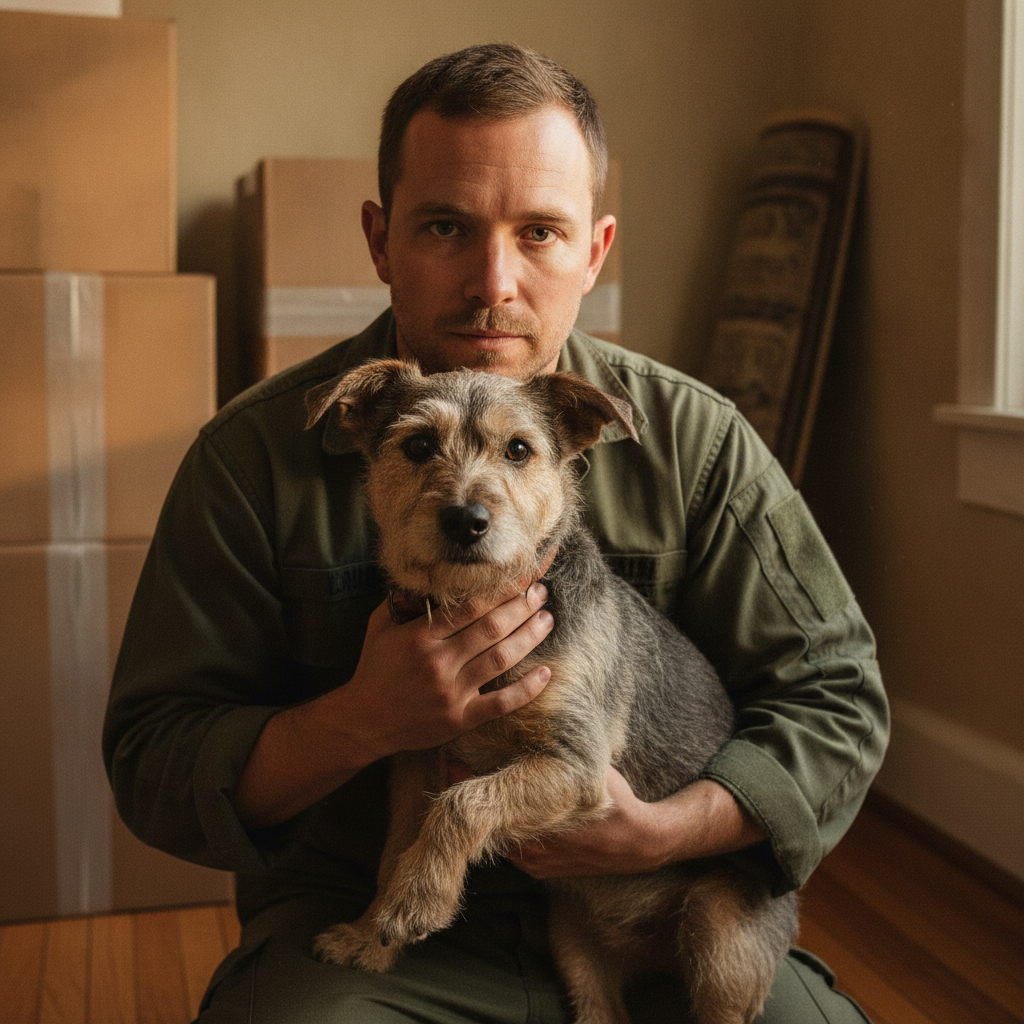
Ask a military family what the hardest part of an overseas move is, and a surprising number of them will not say the housing, or the schools, or the language. They will say the dog.
Everyone knows the shorthand version of military life: you move a lot, sometimes on short notice, and the whole household goes with you. What civilians rarely see is the line item that has quietly broken families for decades. Shipping one pet overseas runs somewhere between $3,000 and $10,000 each way, per animal. Not the crate. Not the paperwork. The flight.
For most of the last twenty years, the military’s answer to that number was: that’s yours.
Why it is so expensive, and so fragile
An overseas permanent change of station is not a matter of buying the right crate and getting the vet forms stamped. It is a maze, and the maze has a habit of closing on the animal.
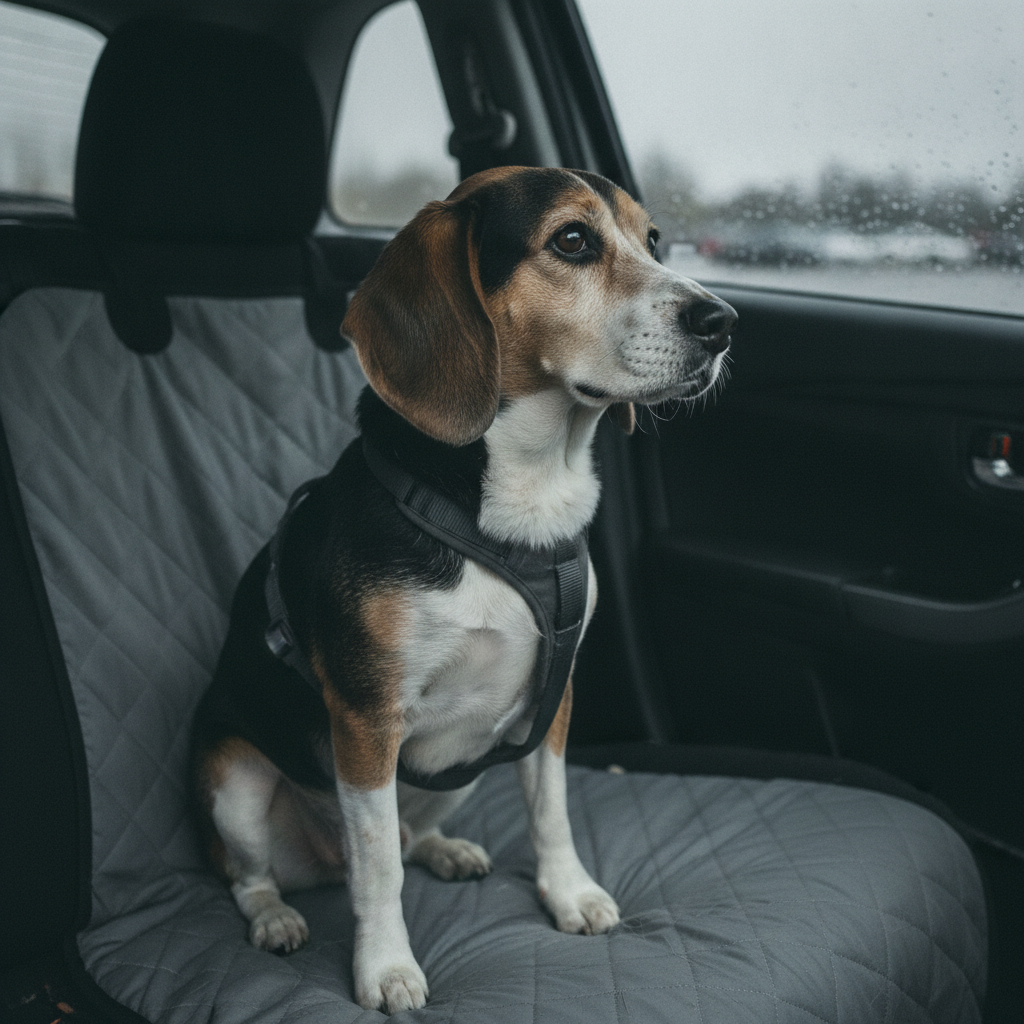
Cargo holds are limited and seasonally embargoed. Airlines refuse certain breeds and certain temperatures. Destination countries impose quarantine windows and import rules that vary wildly. Flights get rebooked. And the whole thing has to land inside the narrow window that orders allow, which is often measured in weeks.
The result, over and over, is families arriving at a new duty station without their animals, then spending months and thousands of dollars trying to close the gap. Sometimes it does not close. Pets get rehomed, boarded indefinitely, or left with relatives who did not sign up for a two-year commitment.
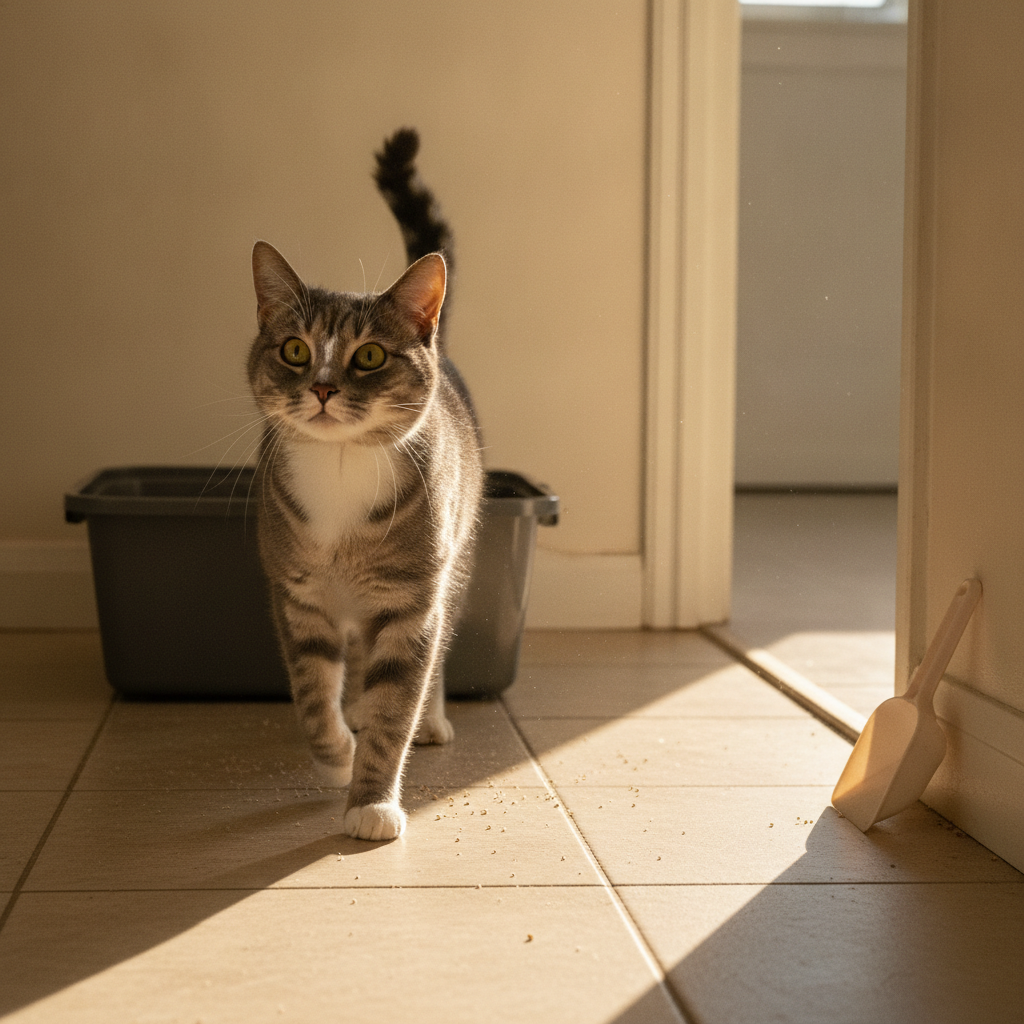
The stories are grim in a very specific way. A Marine Corps family, evacuated on an emergency basis out of Uzbekistan, was separated from their kittens; the animals had to be left with a trusted friend. It took a year, several flights, and thousands of dollars before the family was whole again.
Where the advocacy came from
Leave No Paws Behind USA exists because someone lived this.
Founder Liz Hensel, a Marine Corps veteran and spouse, ran into the wall herself when her family relocated to Iwakuni with her service dog, Prince. As she connected with other families, the same shape kept appearing: enormous cost, brutal timelines, and a persistent, grinding uncertainty about whether the animal would make the trip at all, or make it back.
The organization does three things. It issues grants against transportation costs, which is the part that keeps animals with their families right now. It provides resources for navigating airlines, which is the part that keeps families from being defeated by a booking system. And it does political advocacy, working with senators to get pet transportation built into the military’s overseas move budget rather than treated as a personal indulgence.
That third thing is the one that finally moved.
What actually changed
The policy shift most military families still do not know about landed quietly, and it is worth spelling out precisely.
The Department of Defense now reimburses pet transportation costs tied to a permanent change of station. The authority applies to service members with PCS orders issued on or after January 1, 2024, and covers the relocation of one household pet, defined as a cat or a dog owned for personal companionship.
The caps are:
- $550 for a move within the continental United States.
- $2,000 for an overseas relocation.
Covered expenses include the transportation itself and destination-country quarantine fees, which are a real and frequently overlooked cost.
The rules have kept loosening since:
- Effective February 21, 2025, service members who cannot bring a pet to the new duty station may be reimbursed for transporting the animal to an alternate location instead. This is the provision for the family whose dogs have to stay with a parent in another state while housing gets sorted, which is exactly the situation that leaves animals stranded for months.
- As of March 1, 2026, service members may use a non-U.S. flag air carrier for an overseas pet move when no American carrier is able or willing to fly the animal. This sounds bureaucratic. It is not. The U.S.-carrier requirement was, for years, the single most common reason an overseas pet move simply could not be booked.
- In April 2026, the Joint Travel Regulations were clarified so that dependents traveling separately from the service member can claim pet travel fees. Families do not always move as one body, and until this year the rules pretended they did.
The gap that is still there
Read those numbers next to the real ones and the arithmetic is not subtle.
A $2,000 overseas cap against a $3,000-to-$10,000 bill closes somewhere between a fifth and two-thirds of the cost, and only for one animal. A family with a dog and a cat is still paying full freight on the second one. A family with two large dogs, the animals least likely to fit in a cabin and most likely to be embargoed by heat rules, is still looking at four figures out of pocket on top of everything else a move costs.
So the policy is a real win and an incomplete one. It moved pet transport from “your problem entirely” to “partly ours,” which is the hardest step in any benefits fight and the one that took years of families telling their stories to anyone who would listen. It has not yet moved to “covered.”
That is the gap organizations like Leave No Paws Behind are still funding, one grant at a time.
“The families I worry about aren’t the ones asking whether the move is worth it,” says Dr. Lena Park. “They’re the ones doing the math at the kitchen table and quietly deciding the dog can’t come. That decision is a cost too, and it doesn’t show up on any voucher.”
What to do if you have orders
If an overseas PCS is coming, the practical sequence is:
- Check your orders date. Pet reimbursement applies to PCS orders issued on or after January 1, 2024. If yours qualify, file for it.
- Start the veterinary timeline immediately. Rabies titers, microchip standards, and import windows are the constraint, not the flight. Many countries require blood work months in advance, and a missed window means a quarantine you are paying for.
- Book the animal before you book yourself. Cargo capacity, not passenger capacity, is the bottleneck, and summer heat embargoes routinely close it entirely.
- Ask about the alternate-location reimbursement if the pet cannot travel with you. It exists now. It did not before 2025.
- Apply for a grant if the gap is real. Leave No Paws Behind USA issues transportation grants specifically for this, and the point of them is to keep the animal with the family rather than in someone else’s spare room for two years.
Military families have been absorbing this cost silently for a very long time, on the theory that a pet is a luxury and a deployment is a duty. The policy is finally catching up to what those families already knew, which is that the dog is not the luxury. The dog is often the only stable thing in the house.
References
- Defense Travel Management Office, “DoD Approves Pet Expenses Reimbursement Due to PCS.” https://www.travel.dod.mil/About/News/Article/Article/3434474/dod-approves-pet-expenses-reimbursement-due-to-pcs/
- Defense Travel Management Office, “New Reimbursement Available for Pet Transportation Costs.” https://www.travel.dod.mil/About/News/Article/Article/4116298/new-reimbursement-available-for-pet-transportation-costs/
- U.S. Department of Defense, “Department of Defense Approves Policy to Reimburse Pet Expenses Due to a Permanent Change of Station.” https://www.war.gov/News/Releases/Release/Article/3434402/department-of-defense-approves-policy-to-reimburse-pet-expenses-due-to-a-perman/
- Per Diem, Travel and Transportation Allowance Committee, “Transportation of a Pet to or from an Alternate Location or a Designated Place,” MAP 47-24(R). https://media.defense.gov/2025/Feb/28/2003653455/-1/-1/0/UTD_for_MAP_47-24(R)_Transportation_of_a_Pet_to_or_from_an_Alternate_Location_or_a_Desginated_Place.PDF
- Leave No Paws Behind USA. https://leavenopawsbehindusa.org/