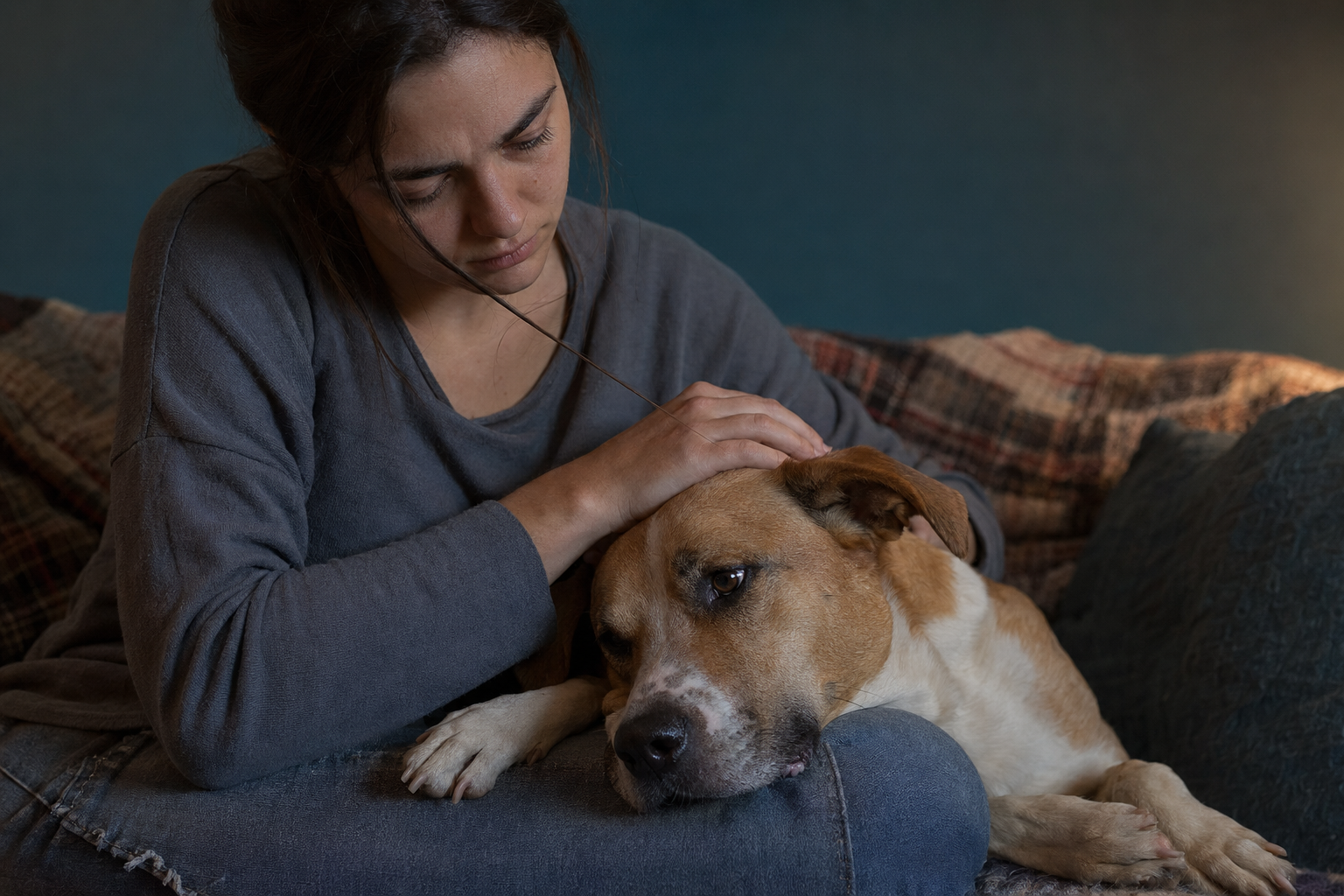

For years, the bird flu advice for pet owners was simple and a little smug: keep your cat indoors and your hunter can’t catch it. That advice is now out of date, and the way it became out of date is the most important thing to understand about H5N1 today. The likeliest route into your living room is no longer a sick sparrow in the yard. It is the bowl on your kitchen floor.
Across late 2024 and into 2025, multiple strictly indoor cats in Oregon, Washington, and California were diagnosed with H5N1 after eating contaminated raw or freeze-dried pet food. In one Oregon case, genome sequencing matched the virus recovered from the cat exactly to the virus in the raw turkey food it had eaten. The cat never went outside. The bird came to it, pre-packaged and frozen. That single fact rewrites the whole risk calculation, so this article starts there rather than with the old “keep them in” headline.
To be clear up front: the overall odds that your individual pet gets bird flu remain low, and there is still no documented case of a pet passing H5N1 to a person. This is about removing the one risk you actually control.
Why the food bowl became the danger
H5N1 spreads when an animal eats or has sustained close contact with infected birds. Raw pet food made from poultry can carry the live virus straight from an infected flock into the bag, and the two processing methods marketed as “gentle,” freezing and freeze-drying, do not reliably kill it. Heat does. That is the entire mechanism behind the indoor-cat cases.
Cats are hit far harder than dogs by this virus. In cats, H5N1 infections are frequently fatal, and they tend to involve frightening neurologic signs. Dogs appear more resistant; documented canine cases have often been mild or even symptom-free, which is reassuring for your dog but creates its own problem, because a dog that feels fine could still be shedding virus. Both species deserve the same precaution around food even though the stakes differ.
“The pattern we kept seeing was an indoor cat with no bird exposure at all, and the only common thread was a raw poultry diet,” says Dr. Nina Kohl. “When the virus in the cat is an exact genetic match to the virus in the food, you stop arguing about coincidence. The bowl is the exposure.”
This is a genuine shift from the original guidance, which leaned almost entirely on keeping cats away from wild birds. That advice is still good. It is just no longer sufficient.
What actually protects your pet now
Think in two layers: the food, then the environment.
Rethink raw poultry, at least for now. This is the single highest-yield change. Raw and freeze-dried chicken, turkey, and duck products carry the clearest documented risk. Cooking destroys the virus, so a cooked, canned, or kibble diet sidesteps the problem entirely. If raw is important to you, watch FDA recall notices and your state department of agriculture’s alerts closely, and skip poultry-based raw products during active recalls. Raw milk is on the watch list too, since cats have died after drinking H5N1-contaminated raw milk.
Keep cats indoors and supervise dogs outside. The old advice still holds for the outdoor route. Indoor cats hunt fewer birds and rodents, full stop. For dogs, avoid walking near places where wild birds congregate, especially around bird feeders, ponds, and waterfowl droppings, and never let your dog mouth or carry a bird, alive or dead.
Separate pets from poultry. If you keep backyard chickens or live near a flock, treat that boundary seriously. Change clothes and wash up after handling birds, and don’t let pets into the coop or run.
Don’t free-feed scavenged or unknown meat. No raw eggs, no uncooked poultry scraps, no “found” carcasses.
The symptoms worth a same-day vet call
Because infection rates are low, the research on exactly how H5N1 presents in pets is still thin, but the reported signs are consistent enough to act on. Watch for fever, lethargy, loss of appetite, difficulty breathing, coughing, runny nose, and conjunctivitis, meaning red eyes, squinty or sealed-shut eyes, or thick greenish-yellow discharge.
In cats specifically, the neurologic signs are the alarm bell. One of the infected Nebraska cats walked in circles and developed severe tremors before it died. Disorientation, circling, tremors, seizures, or a sudden loss of awareness of surroundings in a cat, particularly one on a raw diet, is an emergency.
If your pet shows any of these after a possible exposure, get to the vet the same day, and say the words “bird flu” when you call. That lets the clinic take protective steps and test appropriately, rather than treating it as a routine respiratory bug.
What this means for people
The human risk remains low, and the reassurance here is real: there has never been a documented case of a person catching H5N1 from a cat or dog, and there has been no person-to-person spread of this strain. Pets are considered comparatively inefficient hosts, meaning that even when they get sick, they don’t pass the virus on the way birds do.
Where caution is warranted is around the same contaminated food and around sick birds, not around your pet’s companionship. Wash your hands after handling raw pet food, store it away from your own kitchen surfaces, and if you work with poultry, use gloves and eye protection and learn the human symptoms (fever, cough, sore throat, shortness of breath, pink eye, body aches). Public-health agencies continue to flag the spillover of H5N1 into mammals as something to monitor closely, which is exactly why the food precaution is worth taking even while your personal odds stay low.
The bottom line has flipped in a useful way. You used to be told to manage your pet’s behavior outdoors. The more powerful lever now sits in your pantry, and it is one you fully control.
References
- “Cat deaths linked to bird flu-contaminated raw pet food, sparking voluntary recall.” American Veterinary Medical Association, 2025, avma.org/news/cat-deaths-linked-bird-flu-contaminated-raw-pet-food-sparking-voluntary-recall.
- “FDA Notifies Pet Owners That Tests Show H5N1 Contamination in Certain Lots of RAWR Raw Cat Food Chicken Eats.” U.S. Food and Drug Administration, 2025, fda.gov/animal-veterinary/cvm-updates/fda-notifies-pet-owners-tests-show-h5n1-contamination-certain-lots-rawr-raw-cat-food-chicken-eats.
- “Highly Pathogenic Avian Influenza (HPAI) in Companion Animals.” American Veterinary Medical Association, avma.org/resources-tools/animal-health-and-welfare/animal-health/avian-influenza/avian-influenza-companion-animals.
- “Highly Pathogenic Avian Influenza A(H5N1) Virus Infections in Humans.” Centers for Disease Control and Prevention, cdc.gov/bird-flu.