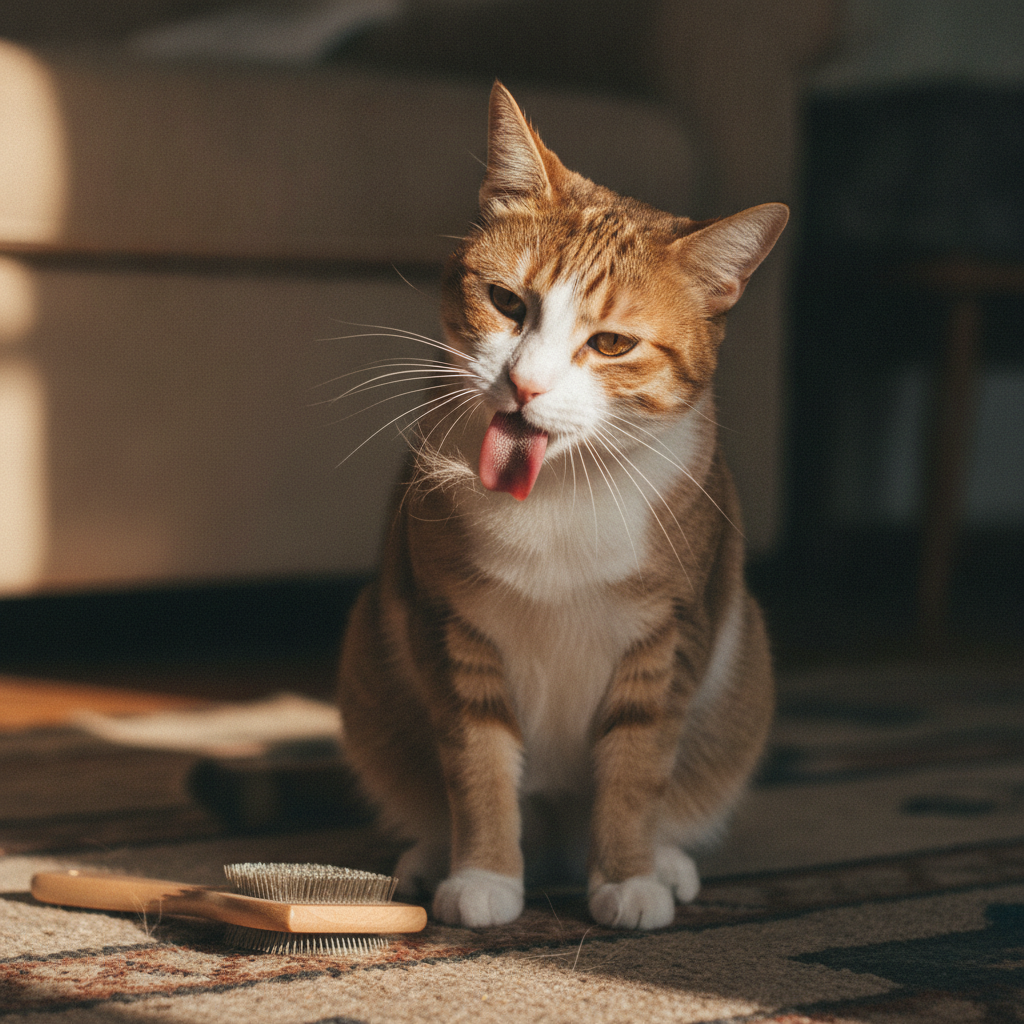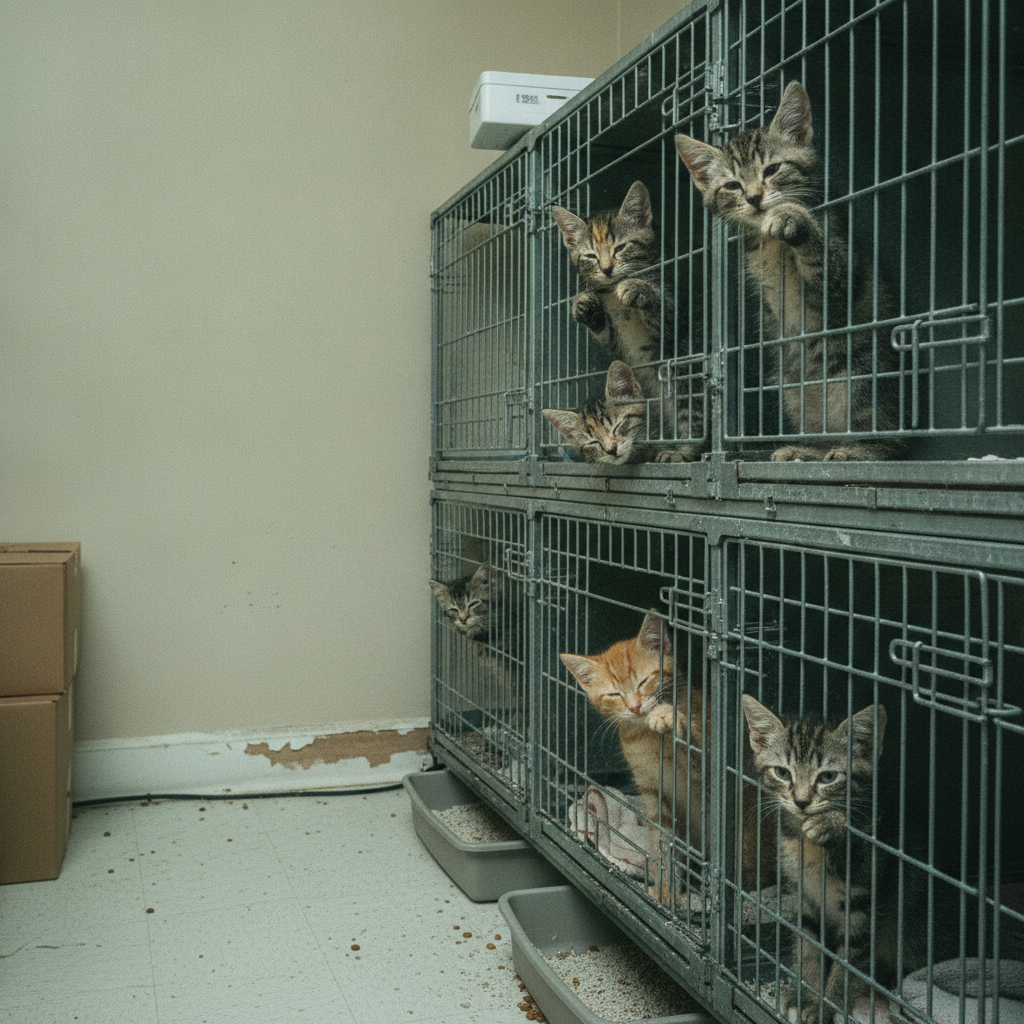
Say the words “kitten season” to a normal person and they picture something delightful. Say them to anyone who works in cat rescue and watch their face.
Kitten season is the annual flood, the months when litters arrive faster than any shelter system can absorb them, and it has always stretched rescue groups past what their time, money, and people can bear. What has changed is that it no longer appears to be a season at all.
The instinct is to blame the weather. It is a good instinct and the evidence does not really support it, and the people doing the work will tell you the actual answer is far more boring and far more fixable: the price of a spay.
What the season used to be
Cats breed on daylight. Feline estrus is triggered by lengthening days, which is why litters have traditionally arrived from spring through early fall, when the climate is kinder and food is easier to find. That much is well established biology, not folklore.
So the standard shape of the year has been a spring surge, a summer peak, and a fall taper, with a winter breather in which rescues catch up, clean out, and brace.
The rescuers say the breather is gone.
What it looks like now
The clearest signal is not anecdotal at all. It is an institution failing.
Animal Care Centers of NYC, the largest shelter in the city, reached a point where it had to close intake to cats entirely, a step rescue workers in the city describe as unprecedented. A public shelter turning cats away is not a bad month. It is a system announcing that it has run out of physical space, and that the volume arriving at the door exceeds anything the network was built to absorb.
The timing has moved too. Rescue groups report pulling pregnant cats as early as January, and at least one New York organization found, on reviewing its own 2023 intake, something that should be impossible in a genuinely seasonal system: a nearly flat distribution across the calendar, with February numbers matching some of the warm months.
January pregnancies. February matching May. That is not a season. That is a permanent condition.
The climate theory, and why the people doing the work don’t lead with it
It is a tidy story. Milder winters, a longer effective window of warmth and light, cats breeding ahead of schedule.
It may well be a factor, and rescuers are open to it. But it is not the thing they name first, and the research does not currently support leaning on it. We know estrus is photoperiod-driven, and that is solid. We do not have good evidence tying warmer winters to earlier feline breeding.
More to the point, there is a far more immediate explanation sitting in plain sight, and unlike the climate, it is one that could be fixed inside a year if anybody chose to.
The real bottleneck: nobody can afford to fix their cat
Ask the people running low-cost clinics what has changed and they do not talk about the weather. They talk about the price of a spay.
Families are being quoted north of a thousand dollars to have a kitten fixed, a figure that would have been unthinkable not long ago. Consider what a number like that does inside a household choosing between rent and a surgery that delivers no visible benefit to a cat who currently seems perfectly fine.
The data backs the anecdote. Since 2019, the cost of pet services in the United States, veterinary care and grooming, has climbed roughly 42 percent. Pet food, over the same period, is up about 22 percent. Meanwhile the supply side has not recovered: high-quality, high-volume spay/neuter, the clinic model that made cheap sterilization possible at scale, has not returned to its pre-pandemic national output. Rescues report booking surgeries three months out, because there are not enough veterinarians to do them.
Price up. Wait times up. Capacity down.
That is not a weather pattern. That is a market failure, and the kittens are what it produces.
“Every year somebody tells me this is a climate story, and every year the thing actually rationing my clinic is a waiting list for a surgery that used to cost eighty dollars,” says Dr. Amara Solis. “Cats have been breeding on daylight for ten thousand years. The variable that changed is us.”
The thing nobody wants to say about the families
There is a version of this story where the villain is the irresponsible owner, and the people running community clinics hate that version, because it is not what they see.
What they see is the opposite. The families turning up at low-cost clinics love their animals, and they are there precisely because they are trying to do the right thing and cannot afford the front door. Being unable to access basic care is what puts people into impossible situations: overwhelmed, over-populated, and eventually unable to keep an animal they desperately wanted to keep.
That is the actual mechanism. Not neglect. A person who loves a cat, cannot get her fixed, has six cats within eighteen months, cannot feed them, and surrenders them to a shelter that has already closed intake.
Shoveling against the tide
The situation outdoors is worse, and it is where the volume originates.
Trap-neuter-return works, and the volunteers doing it are relentless, and they are still barely denting the population. Unsterilized cats keep producing litters on the street, in an environment where kitten survival is poor and suffering is high.
And the arithmetic they are up against is genuinely demoralizing. Spaying ten outdoor cats accomplishes very little if a shop three blocks away is still selling unfixed kittens over the counter. The pipeline refills from the top faster than volunteers can drain it from the bottom, and no amount of individual heroism closes that gap.
What actually moves the number
The uncomfortable conclusion of all of this is that kitten season is not a cat problem. It is an access problem, and the interventions that work are the ones that put cheap surgery within reach of ordinary people.
Get your own cat fixed, and do it early. Cats can get pregnant far younger than most people assume, well before they look like adults. Waiting for “when she’s older” is how accidental litters happen.
Use, and fund, the low-cost clinics. They are the entire pressure valve. Many are running at capacity with waiting lists.
Support TNR, and understand its limit. It is necessary and it is not sufficient on its own.
Foster during the surge. Shelters do not fail for lack of goodwill. They fail for lack of physical space, and a foster is space.
Push on the policy end. The reason a spay costs a grand is not that any individual vet is greedy. It is a workforce shortage colliding with a collapse in the subsidized-clinic model, and both of those are things that budgets and legislatures can move.
What newer data adds
There is one genuinely hopeful number, and it deserves to be reported honestly rather than used as reassurance.
Shelter Animals Count found that U.S. shelters took in about 2.8 million cats and dogs in the first half of 2025, a 4 percent decrease from the same period in 2024. Intake is coming down.
But look at the composition. Only about 23 percent of cats entering shelters arrive already spayed or neutered. Roughly three quarters of the cats coming through the door were never fixed. That single figure is the whole argument in this article, expressed as a statistic: the animals arriving in the system are, overwhelmingly, animals nobody was able to get sterilized.
So the trend is improving and the underlying mechanism has not been repaired. A 4 percent dip against a backdrop where three in four incoming cats are intact is not a system that has recovered. It is a system that got a slightly quieter year.
The rescuers are not wrong to be tired. They are being asked to solve, with foster homes and volunteer trapping, a problem whose actual cause is that a routine surgery now costs more than a month’s groceries.
References
- Shelter Animals Count. “2025 Mid-Year Report.” Shelter Animals Count, 2025.
- ASPCA. “Shelter Animals Count Releases 2025 Annual Data Report.” ASPCA Press Releases.
- Faya, M., Carranza, A., Priotto, M., et al. “Domestic queens under natural temperate photoperiod do not manifest seasonal anestrus.” Animal Reproduction Science, vol. 129, no. 1–2, 2011, pp. 78–81.
- U.S. Bureau of Labor Statistics, Consumer Price Index: veterinary services and pet food, 2019–2025.
- ASPCA. “ASPCA Expands Nationwide Efforts to Increase Access to Spay/Neuter and Support Shelters.” ASPCA.
- Kreisler, R.E., Spindel, M.E., Rishniw, M. “Surveillance of Practices for High-Quality, High-Volume Spay-Neuter.” Journal of Shelter Medicine and Community Animal Health, 2022.