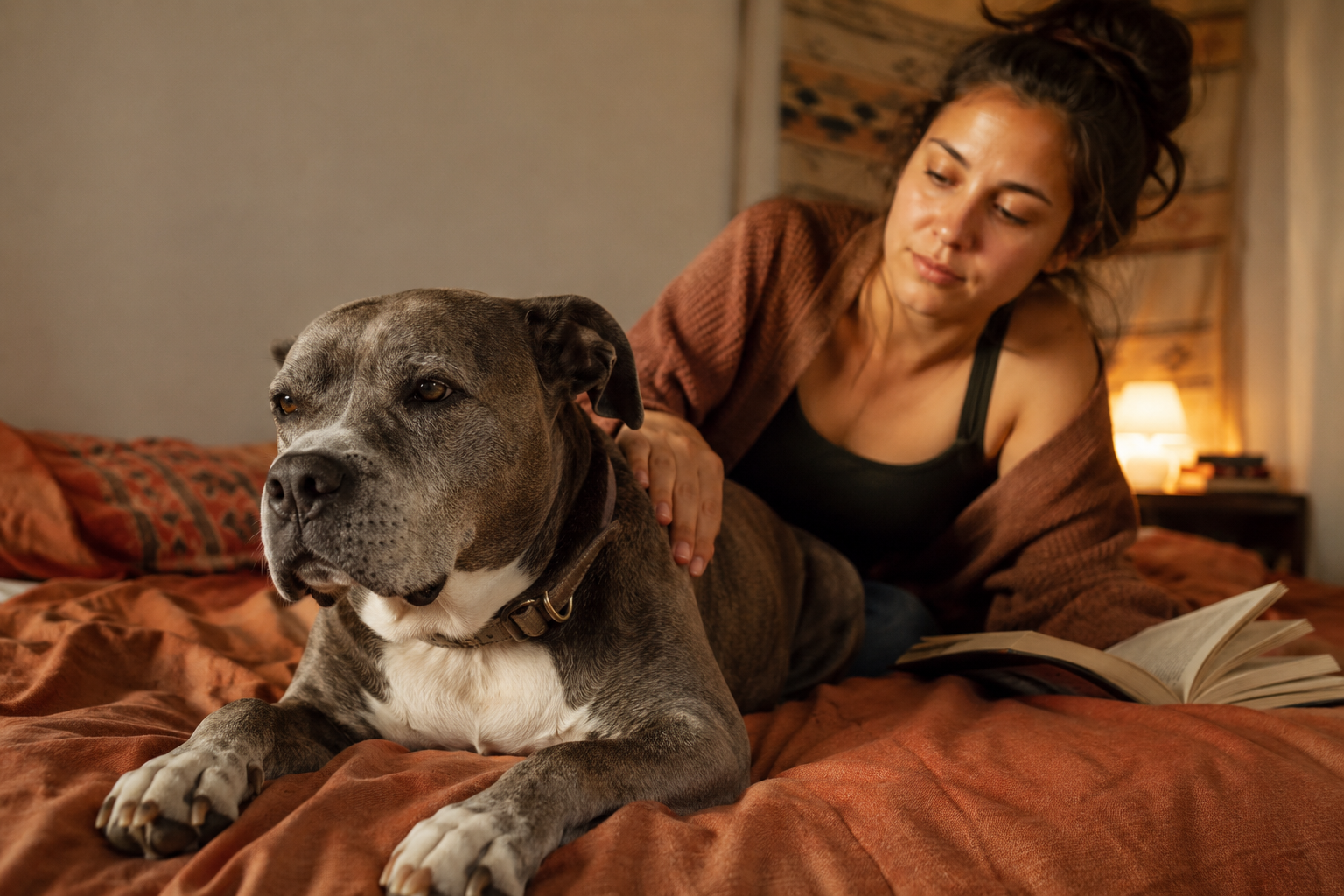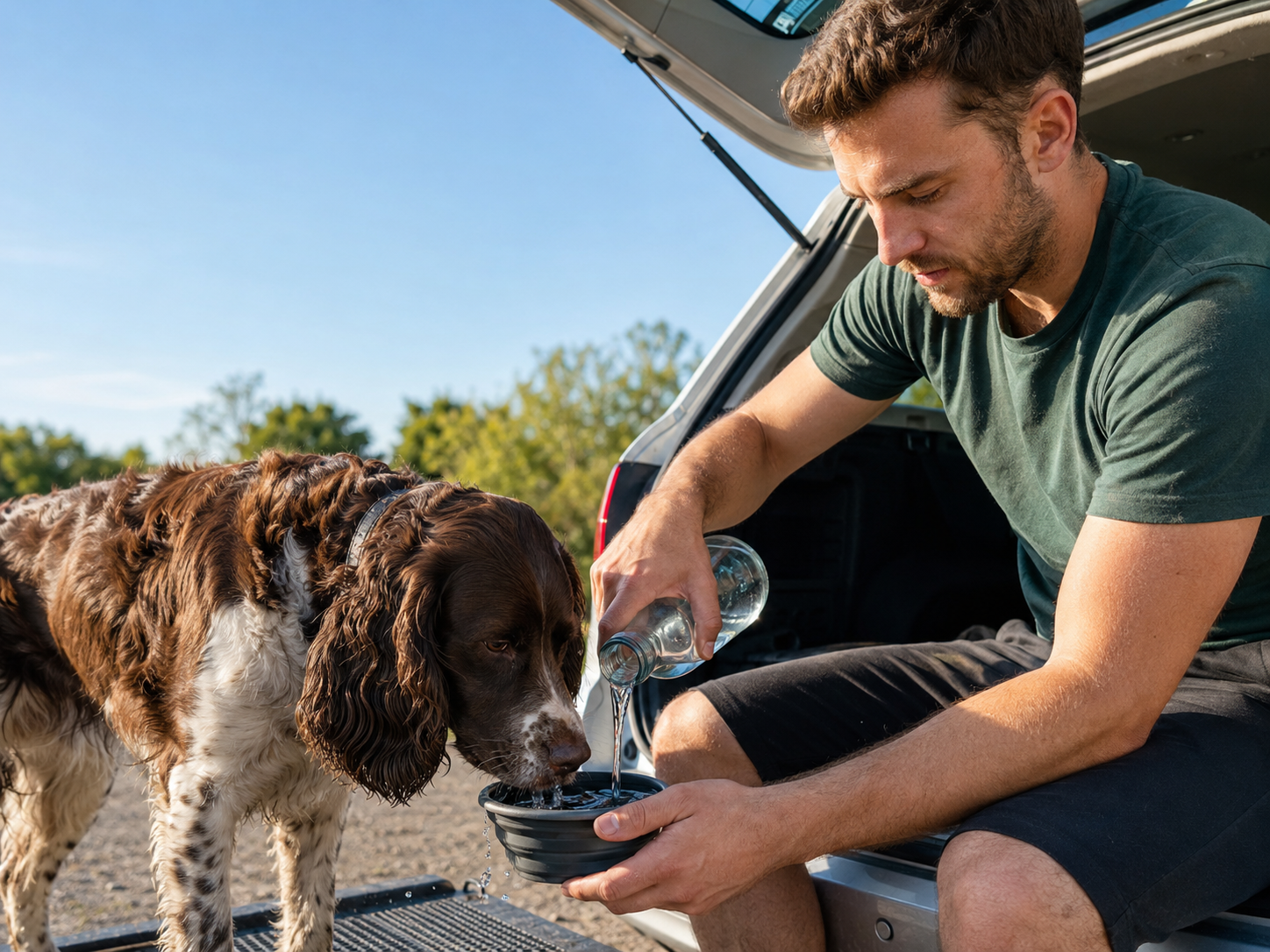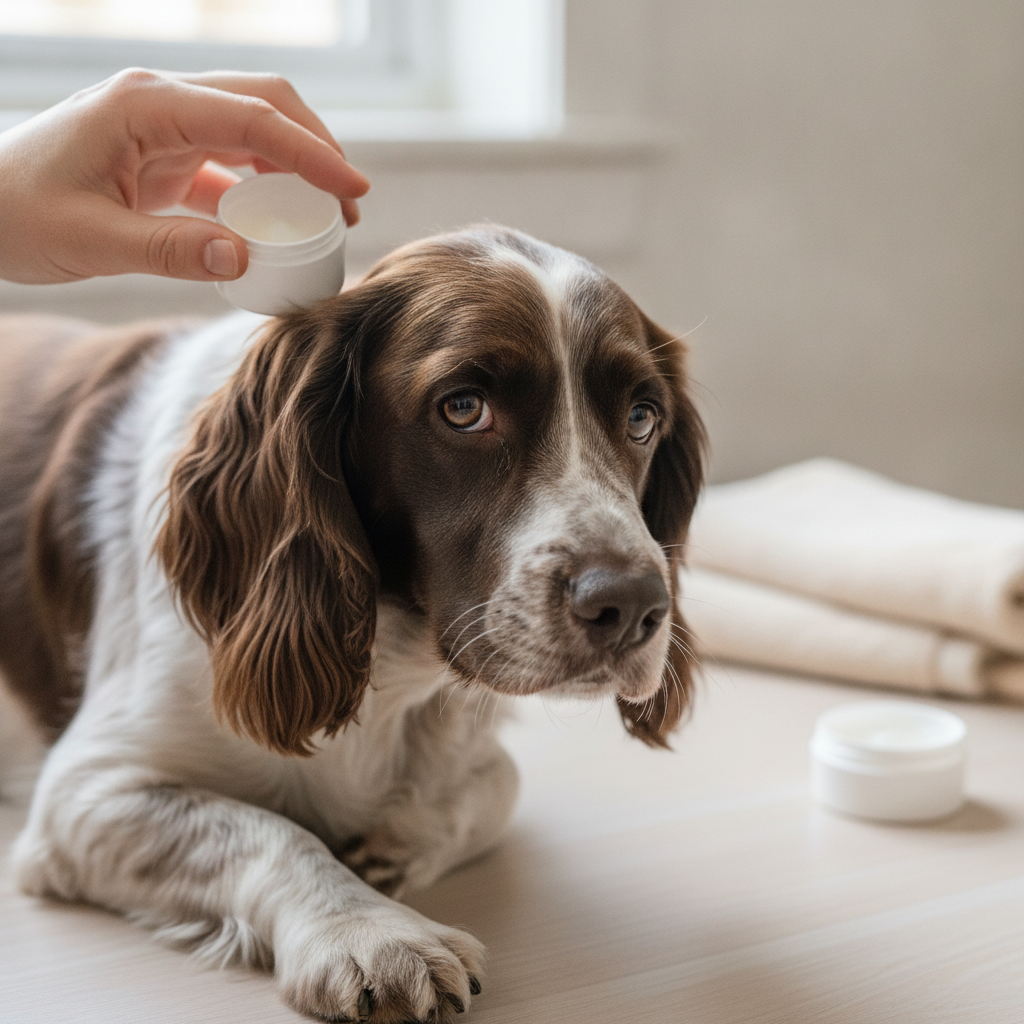
Search “home remedies for dog hot spots” and you will get a buffet: aloe, coconut oil, apple cider vinegar, tea bags, oatmeal, essential oils, a dozen creams. Most of it is noise. The truth about hot spots is almost disappointingly simple. A small number of unglamorous steps genuinely help, a lot of popular remedies do nothing or actively slow healing, and there is a clear line past which no home remedy is the right call. Let me walk you through all three.
First, though, one rule that sits above everything else: because so many other skin problems can masquerade as a hot spot, and because there is always an underlying cause, it is worth having your vet confirm what you are actually looking at before you treat it. A fresh, small, early hot spot is reasonable to try at home. Anything more than that is a vet visit.
What you are dealing with
A hot spot, or acute moist dermatitis, is a wound your dog builds themselves. Something sets off an itch or a pain, an allergy, a flea bite, a minor infection, a sore joint, and your dog starts licking and chewing at the spot to relieve it. That self-trauma strips the fur and leaves skin that is red, moist, raw, and sometimes scabbed. The moisture and damage make it itchier still, so the licking continues, and the raw skin is wide open to a secondary bacterial infection. Warm, humid weather and thick-coated breeds make the whole thing more likely.
Understanding that cycle tells you exactly what treatment has to accomplish: relieve the underlying itch or pain, repair and dry the damaged skin, and physically stop the licking long enough for it to heal.
The three things that genuinely work
Everything effective comes back to these.
Clean and dry the area. This is the foundation. Gently trim or clip the fur around the spot so air can reach it and matted, damp hair isn’t sealing in moisture. Clean the skin with cool water. A cold compress, like a damp towel held against it, soothes the area and helps bring down swelling, inflammation, and itch. The goal at every step is dry, because a moist hot spot cannot heal.
Block the licking. The single most useful tool in your house is the cone. It is not glamorous, but if your dog cannot reach the spot, the skin finally gets a chance to dry and close. Modern e-collars come in softer, less medieval styles, so find one that fits and that your dog cannot sneak around. A recovery shirt or bootie can work for some locations too. Without this step, the best cleaning routine in the world just gets undone an hour later.
Treat the reason it started. A hot spot that heals and comes right back means the underlying itch was never addressed. Keep flea prevention going all twelve months, get allergies properly managed with your vet, and check for a sore spot your dog is fixating on. Skip this and you will be treating hot spots forever.
The remedy-by-remedy verdict
Here is where the popular list separates into “worth trying early” and “skip it.”
Aloe vera gel — cautiously worth it, early only. Pure aloe can be soothing and may have some antimicrobial and wound-healing properties, though the research is still thin and products vary a lot. Test it on healthy skin first, keep your dog from licking it (it can cause stomach upset if ingested), and never use it on broken or bleeding skin.
Chamomile tea compress — fine for mild irritation. Cooled chamomile tea bags or brewed-and-cooled tea dabbed on the skin can be mildly soothing thanks to its anti-inflammatory reputation. Make sure it is fully cool and keep it off open wounds.
Calendula cream — only at the very first sign. Made from pot marigold, calendula has a long traditional use for minor skin irritation and is best at the earliest, pre-moisture stage. Once the area is wet, stop; hot spots need to dry out. Check the ingredients for anything toxic to dogs and avoid alcohol-based versions, which sting.
Hydrocortisone cream and antibiotic ointment — skip, unless your vet says otherwise. These are the two most common mistakes. Steroid creams like hydrocortisone can help but only under veterinary supervision, because of the side effects if your dog licks them off. Greasy antibacterial ointments are worse for a different reason: they keep the skin moist, which is the opposite of what a hot spot needs.
Epsom salt soaks — not for hot spots. Epsom salts draw out moisture and can help a swollen paw you can soak, but they do not reduce itch or heal a hot spot, so they are the wrong tool here.
Support healing from the inside
Diet won’t cure an active hot spot, but it supports the skin, especially for dogs prone to chronic, itchy conditions. Omega-3 fatty acid supplements (fish oil) support skin and coat health and help calm the inflammation that drives the itch in the first place. Dog-specific probiotics support the gut and skin microbiome and may help fend off secondary infection; use a formula made for dogs, not the human kind. For a dog with confirmed food allergies, a full diet change may be part of the long-term plan, which is a conversation to have with your vet.
When home care is over
Trying a remedy is fine. Waiting too long is not. See your vet promptly if the hot spot is painful, if there is discharge, a bad smell, or spreading redness, if your dog seems off in any broader way (lethargy, not eating, vomiting, diarrhea, trouble breathing), or if the spot simply is not improving after a couple of days of home care. Deeper or infected hot spots usually need prescription medication to clear, and to treat whatever started them.
A few final safety habits: always patch-test any remedy on healthy skin first and stop at the first sign of irritation, never apply anything to open wounds, avoid alcohol-based and petroleum-based products, and treat the underlying itch, not just the patch, so it does not come straight back.
“Owners always want the magic cream, and I get it,” says Dr. Mara Chen. “But hot spots heal on three boring things: keep it clean, keep it dry, and stop the licking. If I could put one item in every dog owner’s cabinet for this, it wouldn’t be a lotion. It would be a well-fitted cone.”
References
- Hot Spots (Pyotraumatic Dermatitis) — Cornell University College of Veterinary Medicine
- Acute Moist Dermatitis in Dogs — Merck Veterinary Manual
- Omega-3 fatty acids in canine skin disease — peer-reviewed overview
This article covers a skin condition and is general guidance, not a diagnosis. If your dog has a painful, spreading, or infected hot spot, please see your veterinarian.