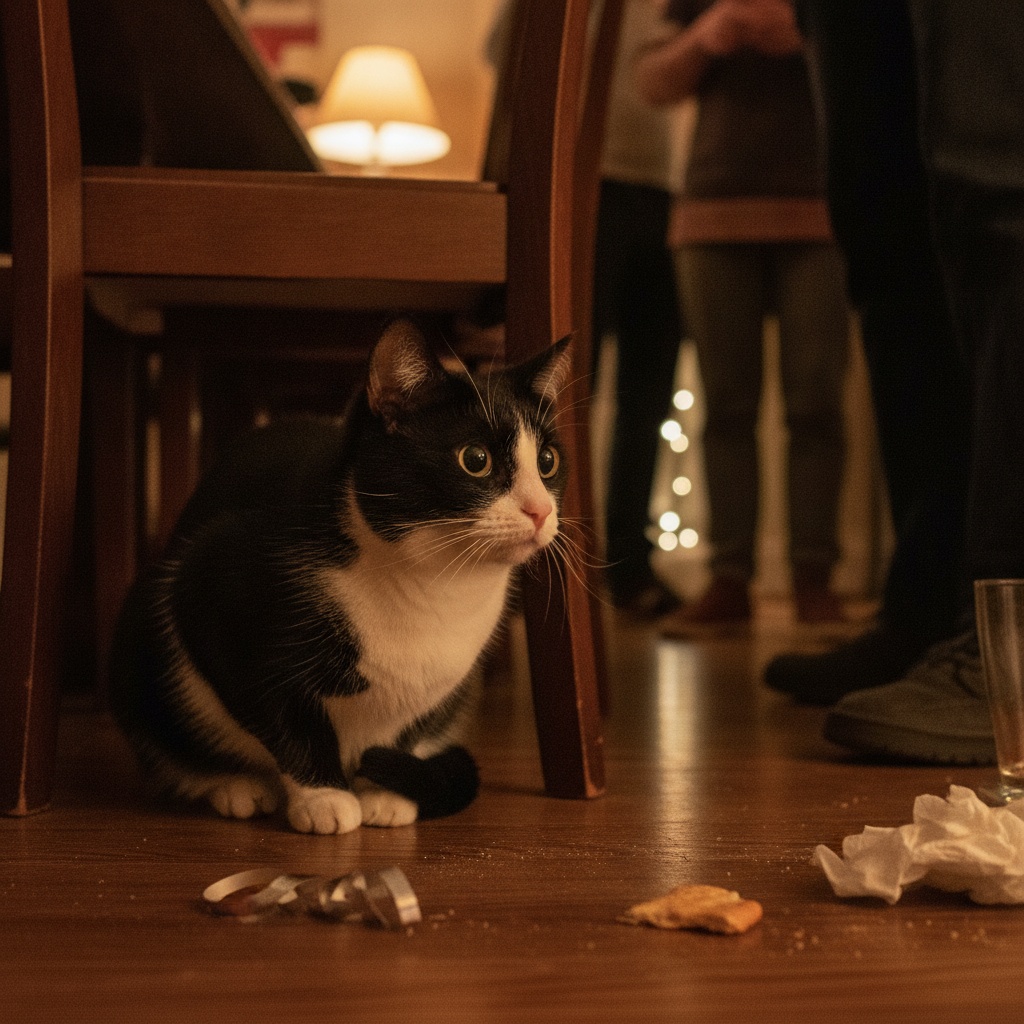
The apartment is clean, or at least presentable. The bottles are cold. Guests are twenty minutes out.
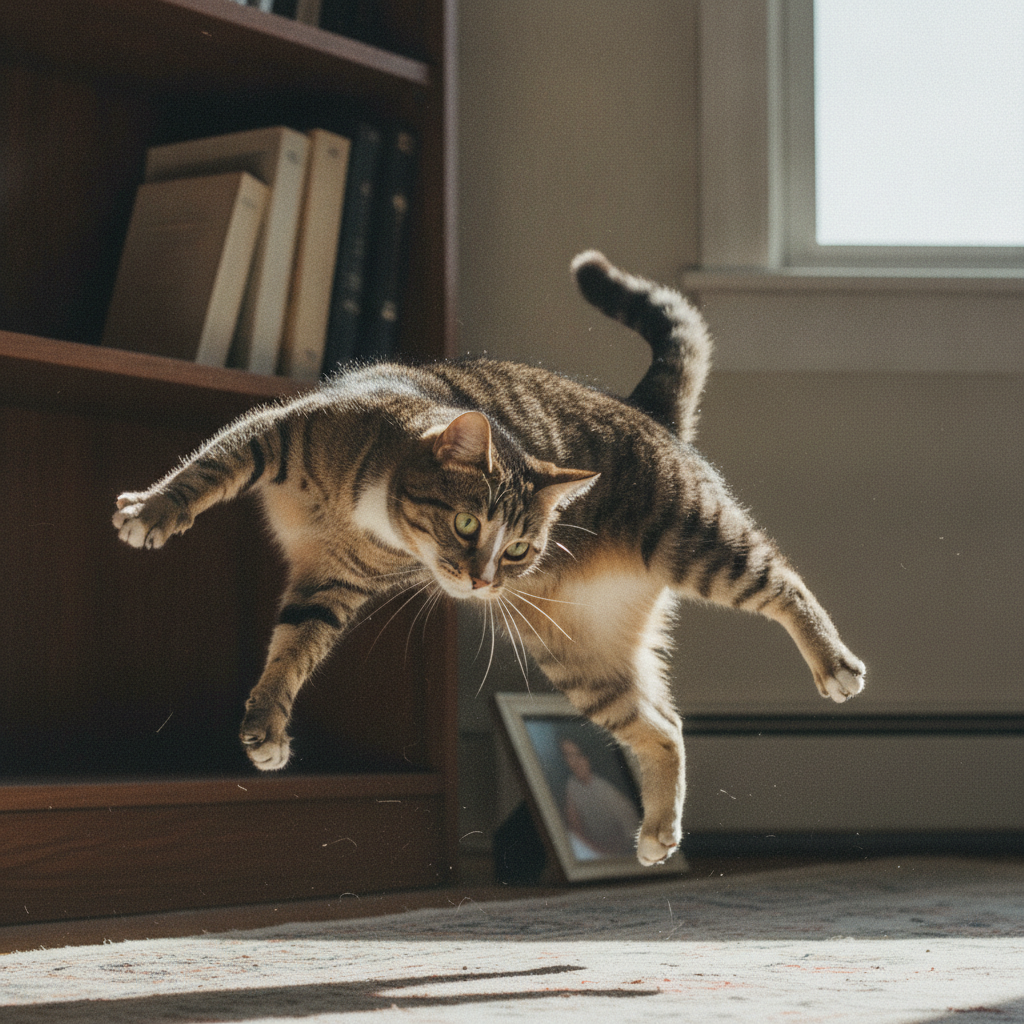
And the cat has been chasing a piece of ribbon around the living room all afternoon with no idea what’s about to happen to their evening.
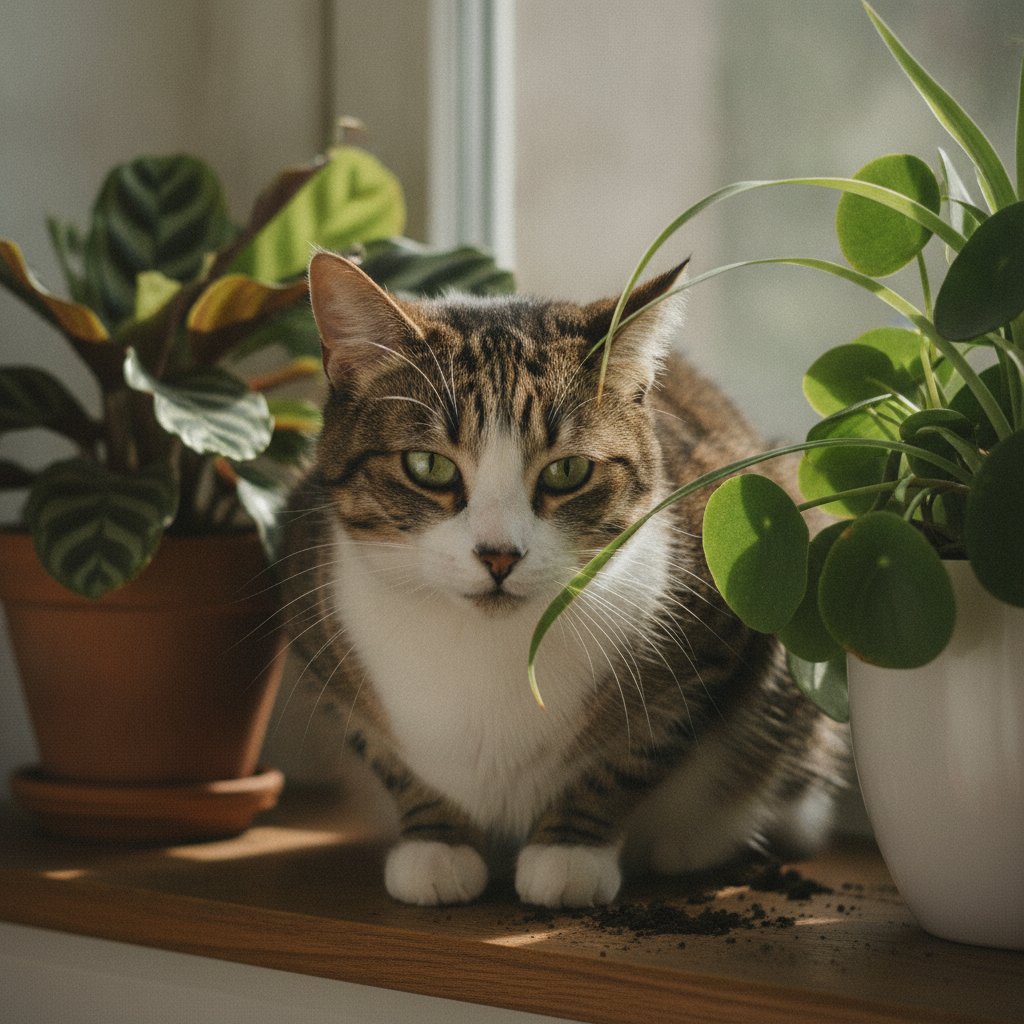
Most party advice for cat owners fixates on the emotional stuff: will your cat be scared, will they hide, will they be okay. Here’s the reframe. A cat who hides under the bed all night is not the problem. That cat has solved the problem. They found their safe spot, they used it, and they’ll come out at 2 a.m. to eat and judge you.
The cat you actually need to worry about is the one who slipped past the ankles of a guest holding a bottle of wine in each hand.
So the order of operations is this: door first, food second, room third, everything else after.
1. The door is the emergency
An open front door with a stream of people moving through it, none of whom are thinking about your cat, is the single highest-risk thing that will happen in your home all year. Even a cat who has never shown the slightest interest in the outdoors will investigate a door that has been propped open for ten minutes.
Tell every guest, at the door, as the first thing you say. Not in the group chat, where nobody read it. At the door, out loud: there’s a cat, please close the door behind you.
Then back it up with structure:
- If your cat is a known door-darter, put them in a closed room until everyone has arrived. Not as a punishment, as logistics. Let them out once the door has stopped opening.
- Put a sign on the outside of the door. “Cat inside — please close the door behind you.” It feels excessive. It works, because it catches the guest who arrived while you were in the kitchen.
- Watch the leaving, too. Everyone remembers to be careful on the way in. Nobody is careful at midnight when six people are departing at once, half of them saying goodbye in the doorway.
- Make sure your cat is microchipped and the chip is registered to your current phone number. This is the one thing that turns a catastrophe into an inconvenience, and an astonishing number of registered chips point at a phone number from three moves ago.
“The cat under the bed is a cat who has coped,” says Dr. Amara Solis. “I don’t lose sleep over that one. The one I see in the clinic after a party is the indoor cat who got out at 11 p.m. and spent three days under a car.”
2. The food is genuinely dangerous, not just messy
Party food is an unusual event in a cat’s life: a lot of unattended, high-value, human food, at nose height, with people who think it’s charming to slip the cat a taste.
The list of things that are actually harmful:
- Chocolate. Toxic to cats as well as dogs.
- Grapes and raisins. Associated with kidney injury.
- Onions and garlic, which are in far more party food than you’d expect: dips, hummus, guacamole, most crackers, anything with a seasoning blend. They damage red blood cells.
- Alcohol. Small amounts cause serious harm in a small body, and a cat licking a spilled drink is not a hypothetical.
- Macadamia nuts and nuts generally, plus the salt and fat that come with them.
- Cocktail garnishes, which is a category people never think about. Lilies are lethal to cats, and lily-containing bouquets show up as party decor constantly. So do citrus peels, and so do the little plastic swords.
- Xylitol/birch sugar, in sugar-free gum, mints, and some baked goods.
The practical version:
Keep food covered and sealed until it’s being served. Then serve onto plates rather than leaving open platters unattended. And tell your guests, explicitly, not to feed the cat. Someone will want to, and they will think you are being uptight, and they will be wrong.
Also secure the trash. After the party, the bin contains chicken bones, foil, skewers, string from a roast, and the greasy paper it was wrapped on. String and ribbon in particular are one of the most dangerous things a cat can swallow, because linear foreign bodies can saw through intestine and require emergency surgery.
Which brings us to the decorations.
3. The decorations that need to go
The party aesthetic and the cat-safe home are not always the same home.
- Ribbon, tinsel, and curling string. Cats swallow them, and it can be fatal. This is the highest-risk decoration you can hang.
- Balloons, which pop, and cats eat the fragments.
- Lilies, again, because it bears repeating: any part of a true lily can cause fatal kidney failure in cats, including the pollen. If someone brings a bouquet, check it at the door.
- Candles, especially at tail height.
- Toothpicks and skewers.
None of this means a joyless room. It means putting the ribbon on the gift and not on the floor.
4. Build the safe room, and make it real
Every cat should have a place they can go that is theirs, party or not. On a party night it becomes essential.
A proper safe room has all their resources, not just a door:
- A litter box
- Food and water
- A comfortable bed
- A few toys
- Somewhere high, if your cat is a climber
Then tell your guests it’s off limits. A sign works here too. The point is that the cat doesn’t have to choose between hiding and having a litter box.
And if you want to do it properly: cut a cat flap into that door. Then the door can stay shut, and the choice about whether to socialise stays with the cat, which is the whole point.
5. Let them opt out, and mean it
Your friends will want to meet the cat. Your cat did not agree to this.
If your cat is hiding, hissing, flattening their ears, puffing up, or has gone rigid and wide-eyed, that’s a no, and it’s a clear one. Trying to produce them for an audience is how someone goes home with a scratch and your cat learns that guests mean being grabbed.
The rule that works: the cat approaches people, people don’t approach the cat. If they come out, guests can offer a hand and let the cat decide. If they don’t come out, they don’t come out, and that is a completely successful evening from the cat’s point of view.
For the cat who does want to be involved, and some genuinely do, the risk shifts to overstimulation: a lot of people, a lot of noise, a lot of hands. Watch for the tail flick and the skin ripple, and give them an exit before they need to make one with their claws.
6. Allergies, honestly
Tell people there’s a cat, before they RSVP. Some guests have serious allergies and need to make a real decision, and “oh, I didn’t think to mention it” is not a kind thing to do to someone’s evening.
Anyone who’s allergic and coming anyway will appreciate knowing where the cat’s room is and being able to keep their distance.
The night before, and the day after
Before: Play with your cat hard, that afternoon. A cat who has hunted, caught, and eaten is a cat who wants to sleep, and a sleeping cat in a quiet room is exactly what you want at 9 p.m. Get the litter box scooped so it’s clean before the door closes on it.
During: Check on them once an hour. Don’t drag them out. Just look.
After: Sweep before you go to bed, not in the morning. The floor is where the ribbon, the toothpicks, the chicken bones, and the spilled drinks are, and the cat has the run of the house all night with nobody watching.
Bottom line
The cat under the sofa is fine. That’s not stress management failing, that’s stress management working.
Put your energy where the actual risk is. Tell every guest to shut the door. Keep the food sealed and the ribbon binned. Give your cat a real room with a real litter box in it. Then go and enjoy your own party, which is presumably the point.
FAQs
Should I lock my cat in a room during a party? Give them a room, don’t lock them in it unless they’re a known door-darter and guests are still arriving. The ideal is a room with all their resources that they can enter and leave at will, ideally through a cat flap in a closed door.
What party foods are dangerous for cats? Chocolate, grapes and raisins, onions and garlic (present in most dips and seasoned snacks), alcohol, nuts, and anything with xylitol. Also watch for string, ribbon, skewers, and bones in the trash.
Are lilies really that dangerous to cats? Yes. Every part of a true lily, including the pollen, can cause fatal kidney failure in cats. Check any bouquet a guest brings before it comes inside.
My cat hid all night. Did I do something wrong? No. A cat who uses their safe space is a cat whose safe space worked. That’s a successful outcome, not a failure.
What’s the single most important thing? Nobody props the front door open, and everyone closes it behind them. The escape risk is the biggest real danger of the night.
References
- “Household Hazards for Cats.” Cornell Feline Health Center, Cornell University College of Veterinary Medicine. https://www.vet.cornell.edu/departments-centers-and-institutes/cornell-feline-health-center/health-information/feline-health-topics/household-hazards
- “Toxic and Non-Toxic Plants: Lilies.” ASPCA Animal Poison Control Center. https://www.aspca.org/pet-care/animal-poison-control/toxic-and-non-toxic-plants
- “Gastrointestinal Foreign Bodies in Small Animals.” MSD Veterinary Manual. https://www.msdvetmanual.com/digestive-system/diseases-of-the-stomach-and-intestines-in-small-animals/gastrointestinal-foreign-bodies-in-small-animals
- Ellis, Sarah L. H., et al. “AAFP and ISFM Feline Environmental Needs Guidelines.” Journal of Feline Medicine and Surgery, vol. 15, no. 3, 2013, pp. 219–230. https://doi.org/10.1177/1098612X13477537
- “Microchipping of Animals.” American Veterinary Medical Association. https://www.avma.org/resources-tools/animal-health-welfare/microchipping-animals