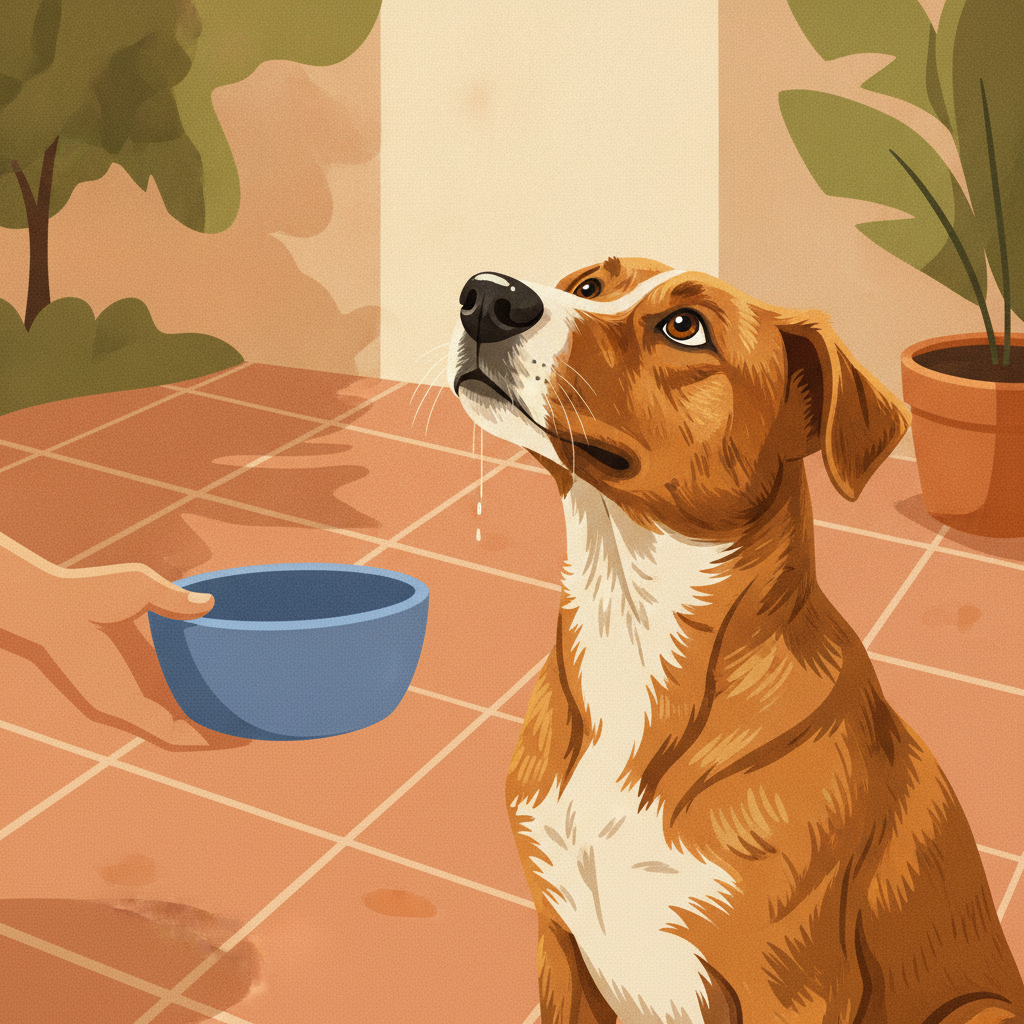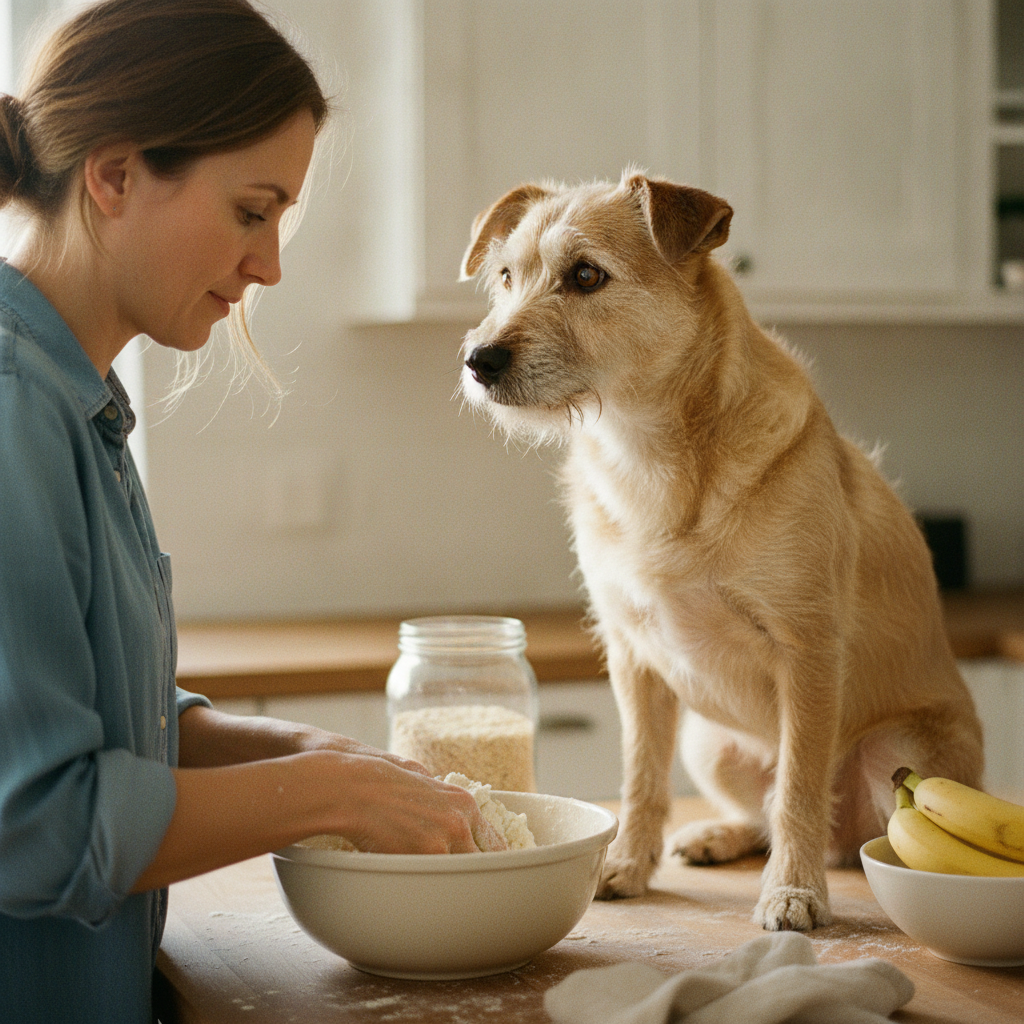
Walk down the treat aisle and do the math sometime. A small bag of “limited ingredient” biscuits can run more than a nice lunch, and half the time the first ingredient is a filler your dog does not need. The frustrating part is that the good version, the one with a label you can actually read, is three things already sitting in your kitchen: a couple of overripe bananas, some oats, and a spoon of peanut butter. Twenty minutes and you have a jar of treats that costs pennies and beats anything shrink-wrapped.
So this is not really a recipe story. The baking is the easy part. What actually matters with homemade treats is the stuff the back of the store-bought bag never explains: how much your dog should get, which dogs should not get them at all, and the one common ingredient that turns a wholesome snack into an emergency. Get those right and you never have to trust a marketing claim again.
Why banana and oats actually earn their spot
Plenty of “human food for dogs” lists are padding. This one is not. Bananas genuinely pull their weight, bringing potassium, magnesium, and fiber, plus vitamins B6 and C, which help your dog metabolize protein and mop up cell damage. Oats earn their place too, delivering fiber and a slow, steady kind of energy rather than a sugar spike, which is part of why they show up so often in sensitive-stomach diets.
Peanut butter is the flavor hook that makes a dog come running, and it adds protein and healthy fat. Ground flaxseed, the optional add-in, brings omega-3s for skin and coat plus a little more fiber.
The honest caveat is that you can absolutely overdo any of it. Bananas are sugary and oats are carb-dense, so “healthy” does not mean “unlimited.” That is exactly why a measured, homemade treat beats free-pouring biscuits from a bag: you know precisely what went in and how big each piece is.
The one ingredient that can kill your dog
Read your peanut butter label before it goes anywhere near this dough. Some “no sugar added” and “reduced sugar” spreads are sweetened with xylitol, a sugar substitute that is deeply toxic to dogs. Even small amounts can cause a dog’s blood sugar to crash and can trigger liver failure, and it works fast.
“The single most important step in any homemade dog treat isn’t the baking, it’s turning the peanut butter jar around and reading the ingredients,” says Dr. Priya Nair. “If you see xylitol or ‘birch sugar,’ that jar is for you, not your dog. Pick a plain, unsalted peanut butter and you’ve removed the only real danger in the whole recipe.”
Use a natural, unsalted peanut butter with nothing on the ingredient line but peanuts (and maybe salt you can skip). That one habit is the difference between a treat and a trip to the emergency vet.
The portion math nobody prints on the bag
Here is the rule the treat companies would rather you not internalize, because it caps how much you buy: treats should make up no more than about 10 percent of your dog’s daily calories. The other 90 percent needs to be a complete, balanced diet. Homemade goodies are still extras, no matter how wholesome the ingredients sound.
In practice that means a Chihuahua might get one small bite and a Labrador a few, not a handful each because they are “just bananas and oats.” Make the treats small on purpose. Little pieces let you reward more often without blowing past that ceiling, which is better for training and for your dog’s waistline.
And some dogs should sit this out entirely. If your dog has diabetes, pancreatitis or a history of it, or a weight problem, the sugar and fat here are not trivial, so check with your vet before baking. When in doubt, ask.
Easy Banana and Oat Dog Treats
Makes roughly a jar of small treats. Scale the pieces to your dog’s size.
You’ll need
- 2 ripe bananas (potassium, fiber, and vitamins B6 and C)
- 2 cups rolled oats (fiber and steady energy)
- ¼ cup natural, unsalted, xylitol-free peanut butter (protein and healthy fat)
- Optional: 1 tablespoon ground flaxseed (omega-3s and extra fiber)
Make them
- Heat the oven to 350°F (175°C) and line a baking sheet with parchment.
- Make the dough. Mash the bananas smooth in a bowl. Mix in the peanut butter. Pulse the oats in a food processor down to a coarse flour, then work them in until the dough comes together. Add the flaxseed now if you are using it.
- Shape. Scoop small amounts and shape into balls or press into little discs. Wet your hands if the dough gets sticky.
- Bake 15 to 20 minutes, until they firm up and take on a light golden color.
- Cool completely before serving.
Storage. Sealed in an airtight container, they keep about a week on the counter or two weeks refrigerated. They also freeze well for up to three months, so a double batch is worth it.
Smart swaps if your pantry is different
The recipe is forgiving, which is the whole point. No food processor? Use quick oats and skip the grinding; the texture is a little rougher but dogs do not file complaints. Peanut allergy in the house? A xylitol-free, unsweetened sunflower seed butter works. Want them a touch firmer for a heavy chewer? Bake a few minutes longer and let them dry out fully at room temperature before you jar them.
None of this is fussy, and that is the argument. Once you have baked a batch, the treat aisle stops looking like a convenience and starts looking like what it is.
References
- U.S. Food and Drug Administration. “Paws Off Xylitol; It’s Dangerous for Dogs.” https://www.fda.gov/consumers/consumer-updates/paws-xylitol-its-dangerous-dogs
- American Kennel Club. “Can Dogs Eat Bananas?” https://www.akc.org/expert-advice/nutrition/can-dogs-eat-bananas/
- American Kennel Club. “Can Dogs Eat Oatmeal?” https://www.akc.org/expert-advice/nutrition/can-dogs-eat-oatmeal/