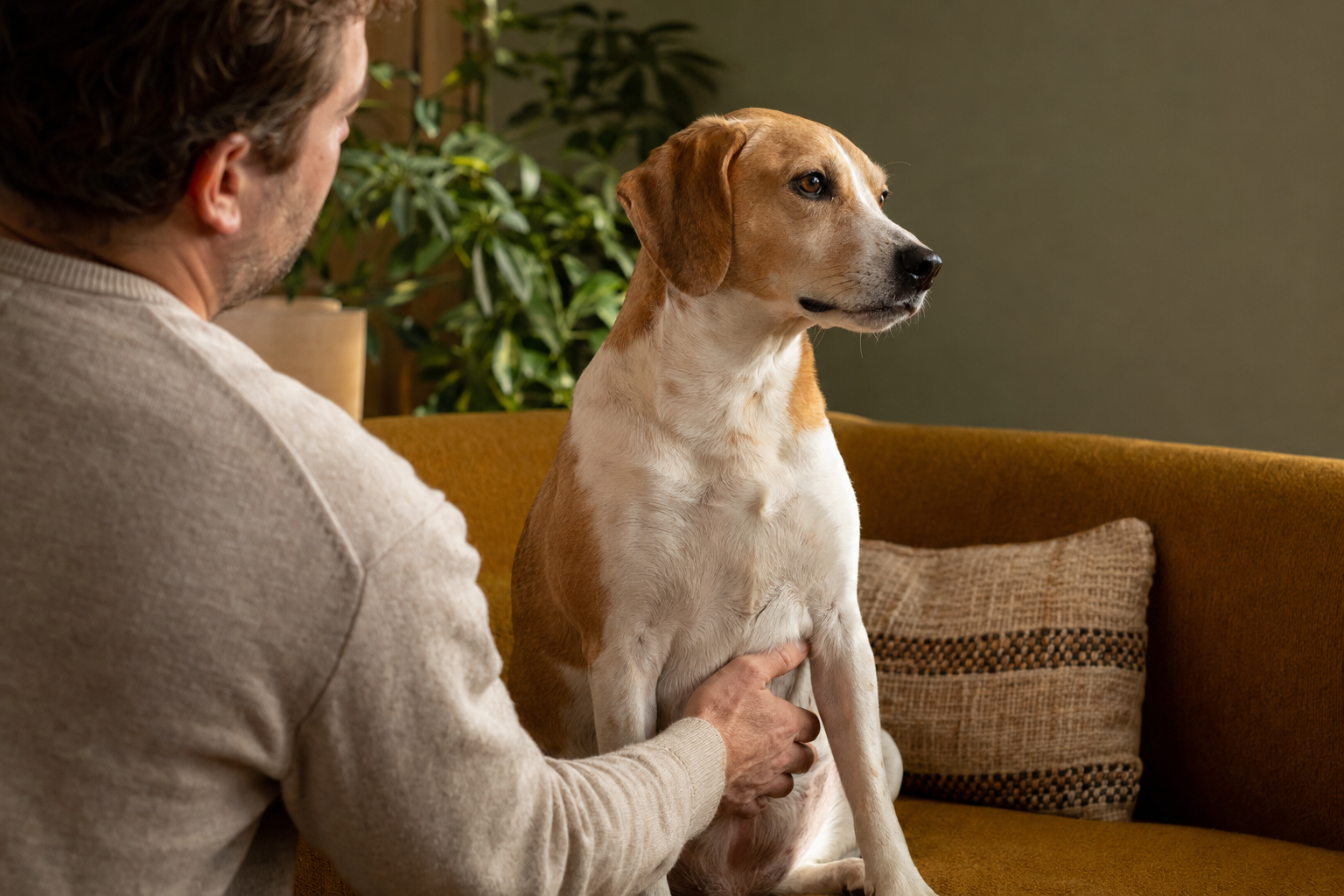
Most owners can tell you their dog’s favorite toy but have never once run their hands deliberately over their dog’s belly. That’s a missed opportunity, because the single best early-warning system for a lot of serious problems isn’t a device or a test. It’s you, knowing what your own dog normally feels like, so that the day something changes, you notice.
This is a screening check, not a diagnosis. You’re not trying to name the problem. You’re building a baseline and learning the short list of findings that mean “call the vet” or “go now.” Sixty seconds, no equipment, and it can genuinely save a life.
Part one: the belly
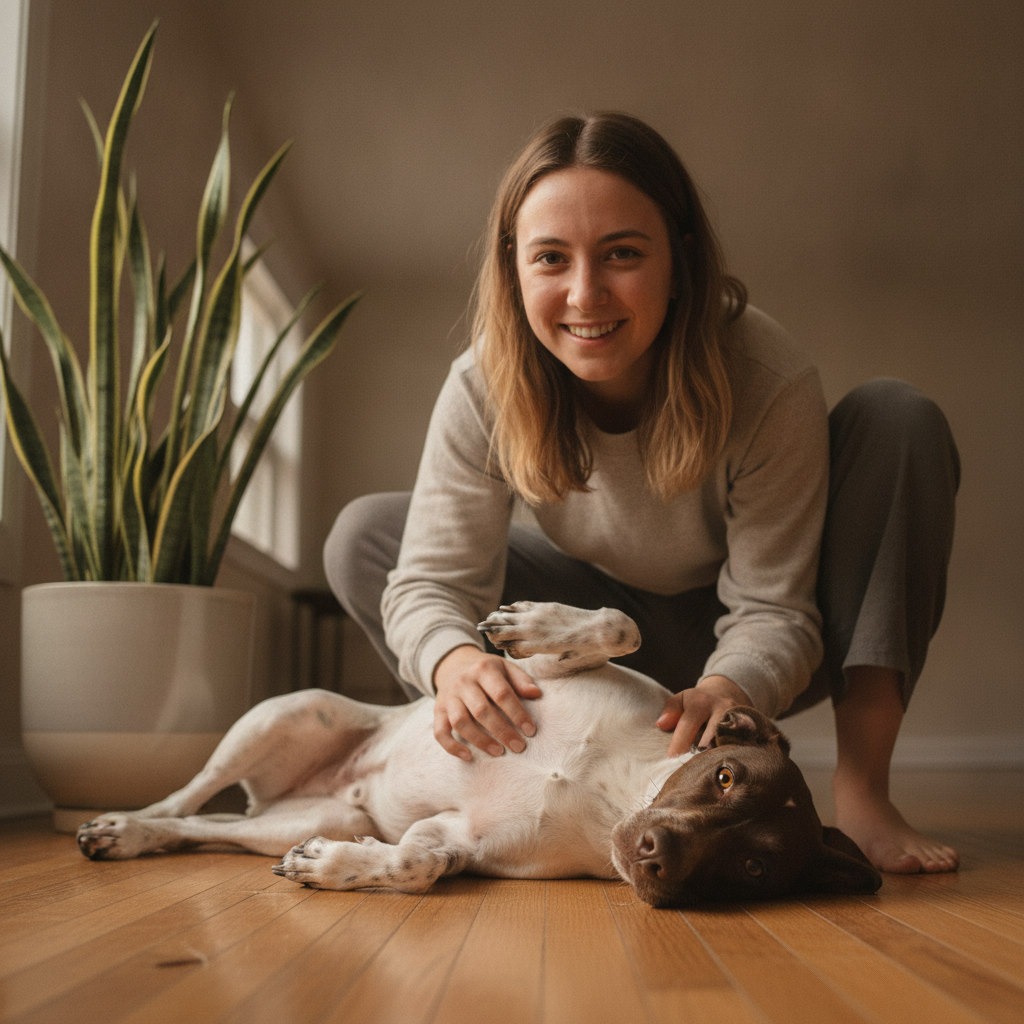
Pick a calm moment when your dog is relaxed. The technique is simple: begin right where the ribcage ends, sink your fingertips softly into the belly there, and glide back toward the hips, covering the whole underside as you go. You’re feeling for texture and reaction, and above all you’re logging what “normal” is for this dog so future changes stand out.
One thing that can surprise you: if your dog has just eaten, you might feel a soft fullness high on the left, tucked below the rib margin where the stomach actually lives. Right after eating, that’s nothing to worry about. Beyond that, a healthy belly should feel soft and un-swollen.
What normal feels like
- No lumps, bumps, or masses anywhere
- No discomfort when you press
- No swelling or distension
What’s not normal, and what it can mean
- Any lump, bump, or mass. Not something to diagnose at home; something to get looked at.
- Groaning, flinching, or trouble breathing when you press. Pain on gentle palpation is a serious finding. Sudden, marked belly pain, what vets call an “acute abdomen,” can come from pancreatitis, an internal infection (from a ruptured bowel or a swallowed foreign object like a foxtail), internal bleeding (from a ruptured spleen or rat-bait poisoning), trauma, tumors, or abscesses. This needs immediate attention.
- A hard, tense, distended belly. This is one of the hallmark signs of bloat, or GDV, and it is a true emergency. Do not wait and watch. Go now.
- Nausea, burping, or repeated gagging. Call your vet right away, especially paired with a swelling belly.
If there’s one line to memorize from this whole piece, it’s that a hard, swollen belly plus retching is a same-minute emergency, not a wait-until-morning problem. Bloat can kill a dog in hours.
Part two: the legs and tail
Plenty of things that look like a “basic limp” are anything but, so the second half of the check is watching how your dog moves. You’re screening the musculoskeletal system, and a few specific patterns deserve a vet’s eyes.
- Lameness in one leg. The pain can come from bone, soft tissue, a joint, or a tendon or ligament. Mild and brief may resolve with rest; anything more earns a look.
- A limp that won’t quit despite rest and medication. This one matters because persistent, non-resolving lameness can be a sign of osteosarcoma, a bone cancer. A related red flag: a sudden, severe lameness right after something ordinary, like hopping off the porch, which can signal a bone weakened by cancer.
- Weakness or paralysis in the hind legs. Causes range from a herniated disc to spinal narrowing, infection, cancer, or degenerative myelopathy. When a dog can no longer walk, treat it as an emergency: the sooner they’re seen, the better their chances of regaining mobility.
- Shifting, recurring lameness with fever in a young dog. In young, growing large-breed dogs, especially male German Shepherds, this pattern points toward panosteitis, a painful inflammation of the long bones.
- A suddenly limp tail. Known as “limber tail” or “cold tail,” it often hits working dogs and usually resolves on its own in days to weeks. Still worth a vet visit, because a fracture, spinal problem, impacted anal glands, or prostate trouble can masquerade as the same floppy tail.
Why bother doing this at home
Because early recognition is where lives get saved. Running these checks in your own living room, on a dog who’s calm and being themselves, is the surest way to catch a subtle change before it becomes a crisis. You become fluent in your dog’s normal, and fluency is what lets you flag the abnormal early.
“The owners who catch things early aren’t the ones with medical training. They’re the ones who touch their dog regularly enough to know when something has changed. That familiarity is worth more than any single test,” says Dr. Mara Chen.
None of this replaces your veterinarian, and it isn’t meant to. Think of the home check as a tripwire: its whole job is to tell you when it’s time to pick up the phone. If anything you feel or see worries you, or seems off from your dog’s usual, call. You will never regret having a vet confirm that a lump is nothing. You might deeply regret waiting on one that wasn’t.