People fall for the coat. The Instagram Afghan with the runway hair, the doodle who looks like a living teddy bear, the Maltese draped in white silk. What they don’t always clock is that the coat is a commitment, one that shows up every few weeks for the life of the dog. And it isn’t only about looking good. Left alone, a long or dense coat mats, and matting traps moisture against the skin, which is a fast track to irritation, yeast, and fungal problems, plus a tidy hiding spot for fleas and ticks.
“The coat is the easy part to admire and the hard part to live with,” says Leila Torres, a Pet Times grooming contributor. “I tell people to choose a dog that fits their calendar and their budget, not just their camera roll. The most beautiful coats are the ones on a schedule.”
Here are eight breeds that ask the most of you, grouped by the kind of hair you’ll be managing.
The big statement coats
Old English Sheepdog. The shaggy showstopper is a double-coated dog: a soft insulating layer underneath, a long weather-resistant layer on top. That glorious mane is also a debris magnet, and it needs near-daily brushing right down to the skin to stay free of knots and packed-in mats. Skip it for a couple of weeks and you can end up at a full shave-down. Budget real time, or a standing pro appointment, for this one.
Afghan Hound. Picture regal, floor-length, impossibly glossy hair, and then picture keeping it that way. Afghans need daily brushing to stay tangle-free and frequent baths to keep the coat sleek, and there’s essentially no ceiling on how elaborate their styling can get. This is a breed for someone who genuinely enjoys grooming as a hobby, not a chore.
The curly crowd
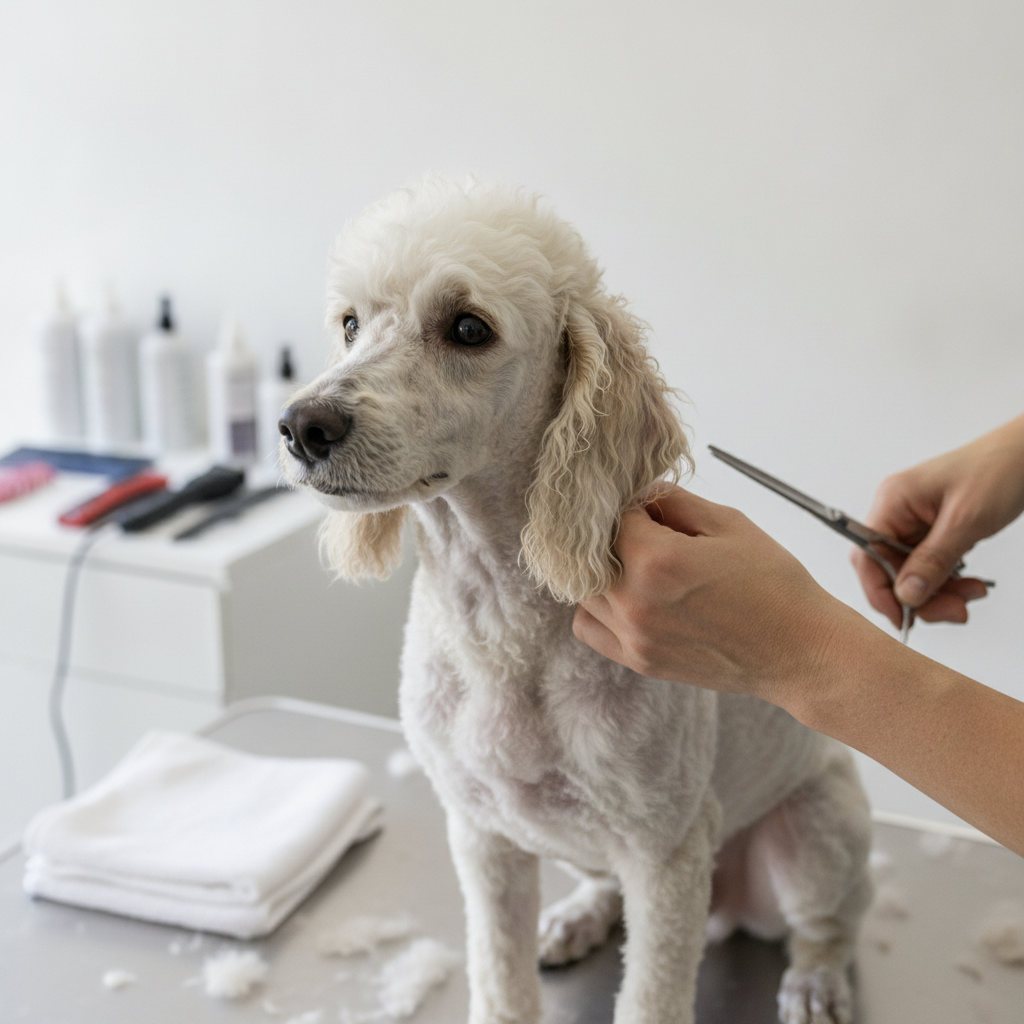
Poodle. A Poodle’s coat can look sculpted and camera-ready, but that finish takes regular work, typically a professional visit every two to three weeks. A short “kennel cut,” essentially an all-over clip, makes daily life far easier; keeping the coat long can turn a groom into an all-day project. Poodle hair keeps growing rather than shedding out, so there’s no coasting.
Goldendoodle (and the other -oodles). Here’s the honest truth groomers keep repeating: a Goldendoodle is, for grooming purposes, a Poodle in a friendlier package. The curly, growing coat mats readily, and these dogs are famously happy to hurl themselves into mud the moment it looks fun. If you bought a doodle expecting low effort, the coat did not get that memo. Same clip-or-commit math as the Poodle.
The silky small dogs
Don’t let the size fool you. Several toy and small breeds carry high-maintenance coats that need daily attention:
- Maltese. Bred for centuries as an ornamental lapdog, the Maltese wears a long, single, snow-white coat that tangles easily and stains around the eyes and mouth. Daily brushing, gentle tear-stain cleaning, and a brightening dog shampoo keep it from yellowing. It is a lot of upkeep for a very small dog.
- Shih Tzu. Those luscious locks and big eyes disappear fast behind mats and eye gunk if you let them. Whether you keep the top-knot or go short, plan on daily brushing of both face and coat. Many owners keep a Shih Tzu in a “puppy cut” precisely to make life manageable.
- Lhasa Apso. The center-parted, floor-skimming look hides a heavy double coat that’s coarse, doesn’t shed on a season, and grows quickly. Lhasas are also famously independent, so start handling and brushing early and make it a routine they tolerate rather than a wrestling match.
- Cocker Spaniel. The silky, wavy coat and feathered ears and legs tangle if they’re ignored, especially around the ears where moisture collects. Cockers can be sensitive about being handled, so a patient, familiar groomer matters more with this breed than most.
What you’re really signing up for
Two things worth knowing before the fluff wins you over:
A tool kit, not just a brush. For these coats, a slicker brush plus a metal comb is the minimum. The comb is the honesty check: if it doesn’t glide all the way to the skin, you have a mat forming, no matter how good the surface looks. Detangling spray and a proper dog dryer (matted, air-dried coats trap moisture) round it out.
A standing budget. Professional grooming for a high-maintenance breed is a recurring cost, and it’s climbed in recent years as demand for skilled groomers has outpaced supply. If you can’t commit to either regular pro visits or serious at-home time, one of these breeds will end up matted and uncomfortable, which is the outcome nobody wanted. Choosing a lower-maintenance coat isn’t settling; it’s matching the dog to the life you actually have.
None of this is a knock on these breeds. They’re gorgeous, and plenty of owners love the ritual of keeping them that way. Just go in with your eyes open: you’re not adopting a look, you’re adopting a schedule.