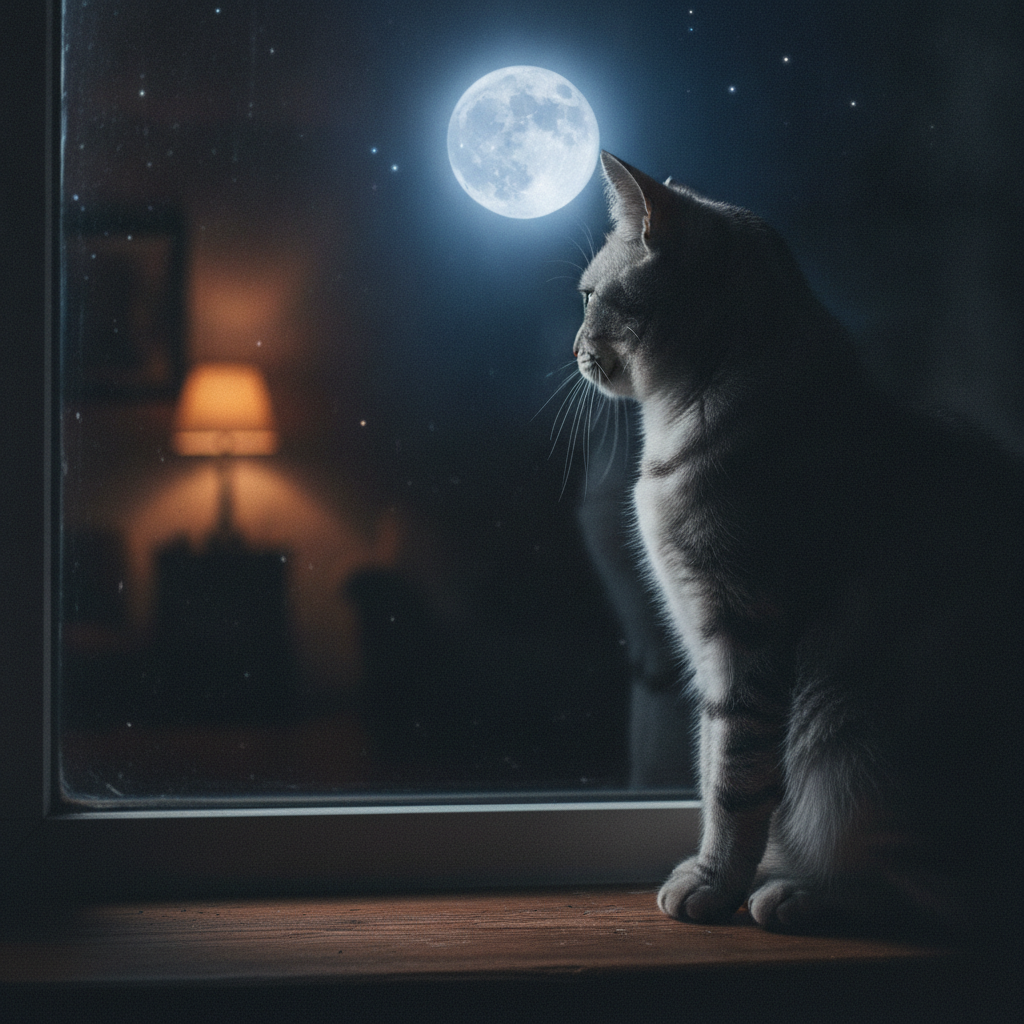
Ask around and you will find plenty of pet owners who swear their dog gets weird around the full moon, or that their cat turns into a gremlin for a few nights each month. Astrology gives that hunch a whole framework. There is also, it turns out, a real veterinary study that keeps this from being pure moonshine. Let us walk through both, and then talk about the part that actually helps your pet.
The astrological version
The moon takes roughly four weeks to run its full cycle, new to full and back again, and lunar-minded folks map that arc onto energy and emotion, for people and pets alike. The idea is that whatever phase the moon is in offers a rough read on how wound up or mellow your animal might be, and that syncing your plans to the cycle can make things like training feel like they flow more naturally.
Here is how the four phases shake out in that view.
New moon. The start of a fresh cycle, framed as a low-energy, reflective stretch. A good time, the theory goes, to set intentions, like a trick you want to teach this month, and a fine time to accept that your pet, like you, may just want to nap and do very little. No guilt required.
Waxing moon. The roughly two weeks of building energy that follow. Supposedly the sweet spot for acting on those training goals while your dog has the drive to keep up and new lessons are more likely to stick, and a nice window to bring your pet along on errands and outings for fresh scents and stimulation.
Full moon. The high-drama peak. This is when believers expect a jumpy, restless, hard-to-settle animal with energy to burn, best met with real exercise, a long hike, a run, a trip to the dog park, or even a supervised outdoor walk for an adventurous cat. Coop them up, the thinking goes, and you get a cranky pet.
Waning moon. The wind-down. Energy tapers, schedules slow, and the guidance is to stop introducing new training material and instead reinforce what you already taught, favoring calm, low-key activities like puzzle toys or a mellow session of “doga.”
The part with actual data
Now the grounding note, because it is more interesting than dismissing the whole thing. There is a real, often-cited veterinary study out of Colorado State University that looked at emergency-room visits for pets and found dogs were meaningfully more likely to land in the ER around the full moon, on the order of 28 percent, with cats up too. That is a genuine finding.
But correlation is slippery, and the likeliest explanation has nothing to do with lunar energy fields. Brighter full-moon nights simply mean more people are outside later with their dogs, more late-evening walks, more time in the yard, more opportunity for the scrapes, tumbles, and encounters that send an animal to the vet. The moon may be nudging human behavior, not rewriting your dog’s inner weather.
“I’d gently steer owners away from reading their pet’s mood off a lunar calendar, because the real signals are right in front of you,” says Dr. Nina Kohl. “Restlessness, clinginess, or a bad night’s sleep usually trace to something concrete, a skipped walk, a change in routine, pain, or noise. Watch the animal, not the sky, and you’ll almost always find the actual cause faster.”
So how should you read all this?
Enjoy the astrology if it is fun for you. Where the lunar framework accidentally gives great advice is the plainest part: a pet with pent-up energy needs an outlet, and a tired, over-stimulated pet needs calm and consistency. That is true every single night of the month, moon or no moon.
The genuinely reliable way to know what your animal needs today is not the phase of the moon. It is paying attention to the animal, their body language, their sleep, their appetite, and whether they have had enough real exercise and stimulation. Do that, and you will meet a restless pet with a good long walk whether the moon is full, new, or nowhere in sight.