Snoopy has them. So do Scooby-Doo, Slinky Dog, and very possibly the dog lying next to you right now. Floppy ears are one of the most instantly endearing things a dog can wear, and they turn up across every size of dog, from a Great Dane down to a Dachshund. But here’s the part that rarely makes the cute lists: those droopy ears are also a clue to one of the deepest questions in animal science, the mystery of how wolves ever became dogs at all.
The strange science behind the droop
Wild canines don’t have floppy ears. They have sharp, upright, radar-dish ears, because in the wild, hearing is survival. Floppy ears are a hallmark of domestication, and they show up alongside a curious cluster of other traits, shorter muzzles, patchy coat colors, curly tails, smaller size, that scientists call domestication syndrome.
The most famous evidence comes from a Russian experiment begun in 1959, when the geneticist Dmitri Belyaev started breeding silver foxes for one thing only: tameness. He never selected for appearance. Yet as generation after generation grew friendlier, floppy ears, spotted coats, and curled tails appeared anyway, seemingly as a package deal that rode along with docility. One leading explanation, the neural crest hypothesis, proposes that selecting for tame behavior subtly reduces a population of embryonic cells that also shape ear cartilage, coloring, and facial structure, which is why softness of temperament and softness of ears might travel together.
It’s worth being honest that the science isn’t fully settled. Researchers in 2019 challenged how neatly “domestication syndrome” really holds up, and others pushed back in 2020 defending the idea. But the through-line is remarkable all the same: the flop in your dog’s ears may be a physical echo of the very trait, friendliness, that made dogs our companions in the first place.
8 breeds that wear floppy ears best
Floppy ears cross every category, so this list spans lap dogs to giants. For each, a note on who they suit, and what those ears will ask of you.
1. Dachshund. The smallest dog here, unmistakable for its long body, short legs, and, on the miniature version, ears that can look nearly as big as the dog. Bred to hunt burrowing animals, Dachshunds today are companions with outsized personalities, loving, loyal, and famously stubborn. A great pick for someone who wants a big character in a small package, with the usual drop-ear cleaning thrown in.
2. Beagle. The dog Snoopy was based on, instantly recognizable by those soft, hanging ears. Beagles were bred to hunt and are still used as detection dogs worldwide, thanks to a first-rate nose. Friendly and sociable, they make popular pets, but that same hunting drive means they need plenty of stimulation, games, and training, or they’ll invent their own entertainment. Their ears need routine checks like any drop-eared breed.
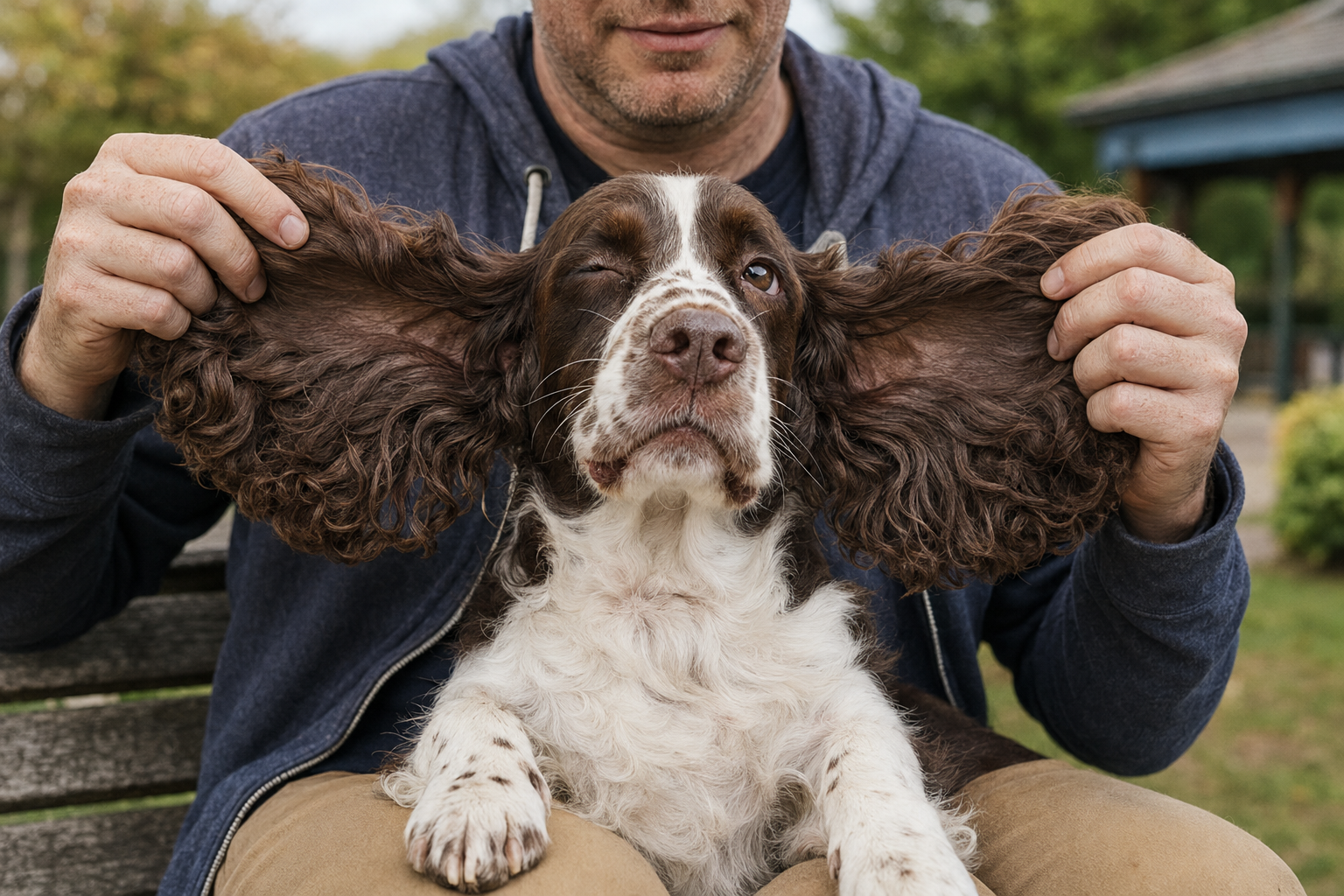
3. Cocker Spaniel. Both the English and American varieties carry the signature feathered, floppy ears. Originally gun dogs, they’ve long since become popular, affectionate family companions. The tradeoff is grooming: Cockers are notably prone to ear and skin infections, so their long ears need regular cleaning and drying to stay healthy. A good fit for someone willing to commit to a grooming routine.
4. Basset Hound. The patron saint of floppy ears, with ears so long they nearly sweep the floor. Bred to trail scent on foot, the Basset has a nose bested only by the Bloodhound and a calm, loyal, sweet temperament to match the droopy look. They suit a patient owner with a relaxed home, but don’t be fooled by the lazy expression, they still need real exercise, and those low, heavy ears trap moisture and demand frequent cleaning.
5. Golden Retriever. One of the most popular dogs in the world, and a floppy-eared one, though its ears sit shorter and higher than a hound’s. Historically hunting dogs, Goldens are now fixtures of family living rooms: intelligent, gentle, loyal, and famously even-tempered. A bonus for busy households, their ears are lower-maintenance than most on this list and don’t need cleaning quite as often.
6. Afghan Hound. The showstopper of the group. Hounds carry floppy ears more often than most groups, and the Afghan pairs them with a long, silky coat and a regal, aloof stance. That glamour is high-maintenance, they need frequent bathing and serious coat care, but beneath the standoffish look is a dog that can be genuinely silly and sweet on its own terms. Suited to an owner who enjoys the grooming as much as the dog.
7. Bloodhound. The undisputed champion of the canine nose, capable of following a trail that’s miles long and days old, which is exactly why they’re prized as working trackers. They can make wonderful pets too, but they come with baggage: those enormous ears and loose skin make them prone to ear and skin problems, so they need diligent cleaning and drying. Best for an experienced, active owner with time to spare.
8. Great Dane. Proof that floppy ears scale up. Made famous by Scooby-Doo, the Great Dane is among the largest breeds alive, with surprisingly big, soft ears for such an imposing dog. They’re affectionate and loyal, but they demand serious input, well over two hours of exercise a day, plus a little extra ear care to keep those big flaps clean and dry. A dog for people with space, time, and a tolerance for a giant who thinks he’s a lapdog.
The catch: those ears are a job
The reason floppy ears keep showing up on care lists is simple physics. A drop ear covers the ear canal, trapping warmth and moisture in a way an upright ear never does, which creates a friendly environment for infection. That’s the tradeoff for the cuteness. Across nearly every breed here, the same rules apply: clean the ears regularly, and, most importantly, dry them thoroughly after swimming, bathing, or a walk in the rain. Any redness, odor, head-shaking, or scratching is worth a vet’s attention, because caught early an ear issue is minor and left alone it becomes miserable.
“The ear I worry about is the wet one,” says Dr. Amara Solis. “With a Basset or a Cocker, moisture sits in that canal with nowhere to go, and that’s exactly what yeast and bacteria want. Owners think ear cleaning is optional grooming, but for a floppy-eared breed it’s genuine preventive medicine. A quick dry after every bath or swim prevents most of the infections I end up treating.”
Bottom line
Floppy ears come attached to an astonishing range of dogs, each with its own personality, so if you’re set on the look, you can find one to match almost any lifestyle. Just go in clear-eyed on two counts: pick the breed whose energy and grooming needs actually fit your life, and be ready to keep those beautiful ears clean and dry, because they can’t do it themselves.
References
- The “Domestication Syndrome” in Mammals: A Unified Explanation Based on Neural Crest Cell Behavior and Genetics (Genetics)
- The Silver Fox Domestication Experiment (Evolution: Education and Outreach)
- The History of Farm Foxes Undermines the Animal Domestication Syndrome (Trends in Ecology & Evolution)