Move to a new neighborhood and you notice the little things: the good bodega, the loud upstairs neighbor, the tree that drops sticky pods on your car. Will Zweigart noticed cats. Not one or two, but dozens, everywhere, on nearly every block of Flatbush, the central Brooklyn neighborhood he’d just moved to. He’d lived in other parts of the borough and in Manhattan without ever seeing more than the occasional lone cat on a sidewalk. Here they were a fixture, and the longtime residents he chatted with shrugged: this was just how it had always been.
That gap, between his outsider’s shock and everyone else’s resignation, is where a nonprofit was born. Zweigart, an ad agency strategist by trade, started reading. He learned the number that reframes the whole issue: an estimated half a million feral cats live on the streets of New York City. And he learned that the tidy solution most cat lovers reach for, rescue and adopt, cannot possibly scale to meet that. So in 2018 he founded Flatbush Cats, built not around saving cats one at a time, but around stopping the supply of new ones. The engine of that mission is three letters most New Yorkers have never heard: TNR.
The math nobody wants to do
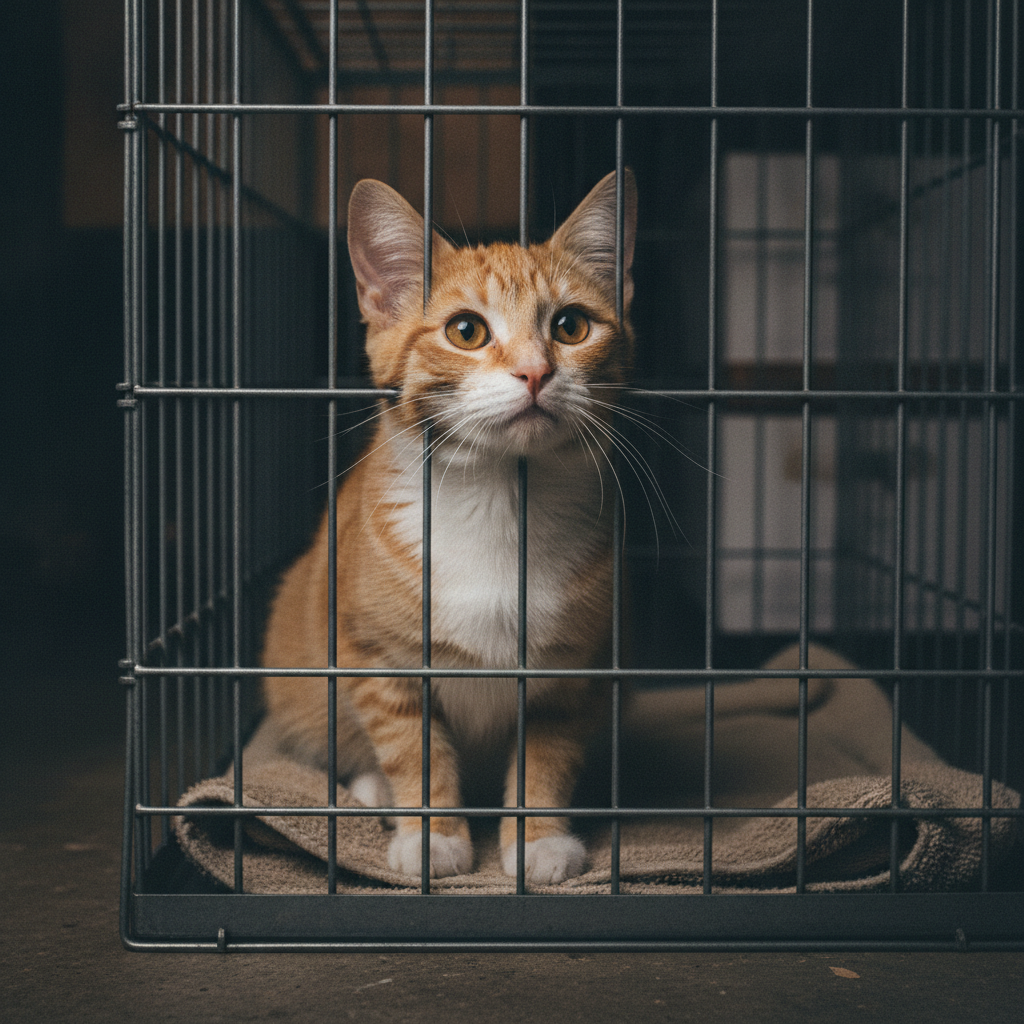
TNR stands for trap, neuter, return. You humanely trap a free-roaming cat, get it spayed or neutered and vaccinated, and return it to the spot it came from, where it lives out its life without producing a single litter. It is not as emotionally satisfying as pulling a kitten out of a storm drain. It is, however, the only thing that actually works, and the reason why is pure arithmetic.
A female cat can get pregnant as young as six months old, while she is still practically a kitten herself. She can have two or three litters a year, averaging around four kittens each. Run that forward through a few unsterilized cats and a couple of breeding seasons and you don’t have a cat problem, you have a cat explosion. Every kitten adopted out of that pipeline is wonderful and also, on its own, meaningless to the total, because the pipeline keeps producing faster than any shelter system can place them.
This is the reframe Flatbush Cats exists to spread. Adoption treats the symptom. Sterilization treats the disease. Zweigart is blunt that rescuing and fostering “spicy” kittens is the fun, heartwarming part of the work, but if it’s the only part, you never get ahead. The goal isn’t to find homes for the cats already being born outside. It’s to make sure fewer are born outside at all, so that every one that is can actually get a home.
Teaching a neighborhood to fix itself
Here’s the part that makes the model durable: Flatbush Cats doesn’t try to trap all of Brooklyn by itself. It trains residents to do it. Zweigart took a free TNR course himself back in 2016, jumped in, and now his organization teaches that same curriculum to hundreds of New Yorkers, turning ordinary neighbors into a distributed volunteer trapping network.
TNR isn’t fringe, even if it sounds it. Various municipalities around the country have officially endorsed the practice for two or three decades. But endorsement and awareness are different things. Zweigart figures that if you stopped ten cat lovers on a New York street, eight or nine wouldn’t recognize the term, and he keeps that in mind, because as a lifelong cat person and longtime city resident, he didn’t know about the problem or its solution either until he went looking. You can’t recruit people to fix something they don’t know is broken, so a huge share of the work is simply changing how people think about what “rescue” even means.
The pandemic nearly undid everything
The years around COVID-19 tested the whole system. Spay and neuter appointments for community cats were scarce even in normal times; when clinics shut down entirely, sterilization ground to a halt and the outdoor cat population surged. That surge slammed into city shelters already stretched past capacity, some of which had to pause intake altogether. More cats were born outside, suffered outside, and died outside.
The human toll compounded it. The pandemic hit lower-income communities of color hardest, and homeless shelters generally don’t accept families with pets, so friendly, adoptable adult cats ended up abandoned on sidewalks and inside emptied apartments. Flatbush Cats went into survival mode and refused to slow down, partnering with the ASPCA to move its trapping course online so training could continue when in-person classes couldn’t. The lesson Zweigart took from it was that access to affordable veterinary care isn’t a nice-to-have layered on top of rescue. It’s the foundation the whole thing stands on.
What’s new since this profile
The clearest sign of where Flatbush Cats was headed arrived in the form of a building. In August 2023, the organization opened its own high-volume, low-cost veterinary clinic, Flatbush Vet, at 1460 Flatbush Avenue, funded by roughly $2 million raised from more than 5,000 donors around the world. It was built to do exactly what Zweigart identified as the missing piece: make spay and neuter surgery cheap and available at scale, with spay/neuter procedures running around $225 for a cat, a fraction of the going city rate.
The clinic didn’t stay small. It now performs on the order of 7,500 spay and neuter surgeries a year, serving both TNR volunteers and low-income pet owners who’d otherwise have nowhere affordable to turn. The nonprofit that started with one guy noticing too many cats on his block has become, in practical terms, a piece of the city’s animal-welfare infrastructure. The math still says you can’t adopt your way out of a cat crisis. Flatbush Cats just built the tool that lets a neighborhood do the thing you can.