Do the arithmetic on a dog walk and it stops being cute.
A walk costs $15. The walker gets $10. The company takes $5, and for that $5 it emails clients and assigns routes. Now put a real caseload against it: 25 dogs a day, five days a week. That middle layer is pulling as much as $600 a week out of the walker’s pay for work that is, functionally, a scheduling spreadsheet.
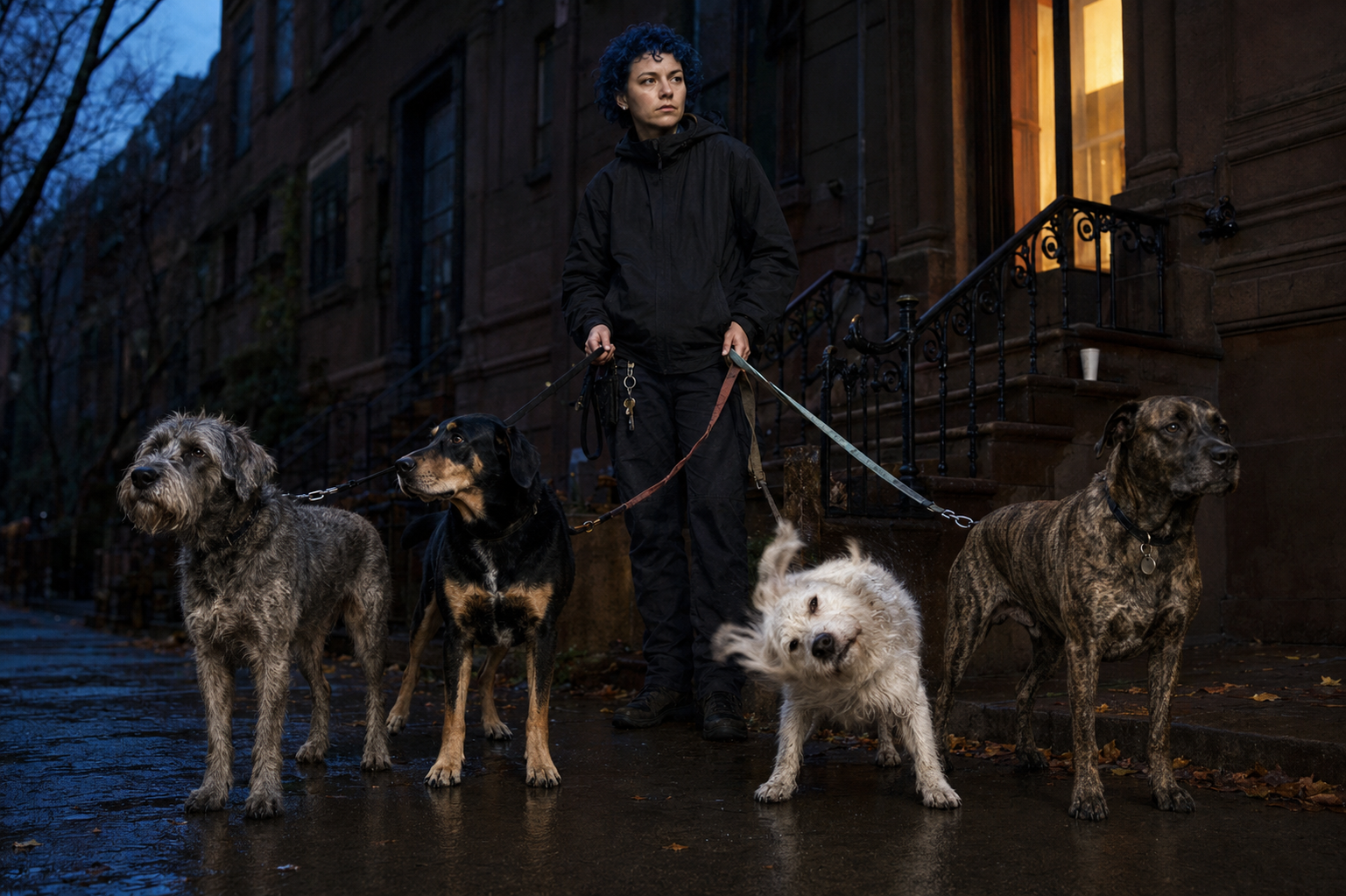
Spike Einbinder ran that math from the inside. The Brooklyn-based comedian and actor, known for HBO’s Los Espookys, spent six years walking dogs for private companies before starting something else: The Rainbow Pack, an independent, queer-run collective of walkers organized around fair pay and mutual coverage.
The story is worth your attention even if you never hire a walker, because the economics of that $5 determine who is holding your dog’s leash, and how long they last.
The job is not a fallback
The cliché is that dog walking is what you do when nothing else worked out. Einbinder’s account is the opposite of that, and it is not sentimental.
Time with dogs, Einbinder says, feeds something in them that nothing else reaches, and they say it while keeping their eyes locked on the two dogs on the afternoon route. They can tell you where each animal is in its progress: which pandemic-era rescue is finally coping with which trigger, which one has made peace with the construction on the block. Their standard description of a walking mate is affectionate and diagnostic at once, a formula they apply as readily to themselves: totally nice, totally insane.
They came to it sideways. Einbinder grew up in Los Angeles with severe animal allergies, a cruel arrangement for a child who adored animals: dogs, cats, horses, rodents of every description, and feathers were all off limits. Hypoallergenic breeds and modern allergy medication eventually opened the door that biology had shut.
Before dogs, there were the service jobs. Barista work, retail, customer service, until the thing broke. Einbinder describes those years as corrosive, a slow erosion of the mind by the endless management of other people’s moods, and the question that ended them was simple: if labor is unavoidable, could it at least be spent among creatures they actually loved?
They picked up a route covering for a friend and never gave it back.
Dogs, they point out, do not misgender them. Einbinder, who is trans and known around Brooklyn’s alt-comedy scene for a set of post-gender, post-human drag cabaret creations, frames the appeal as something other than escape. Meeting a creature exactly where it stands, without demanding it perform for you first, is, in their view, a courtesy most humans withhold even from people they claim to know well.
That is not a low bar being cleared by dogs. It is a high bar being missed by us.
What the middle layer costs
A corporate dog-walking route asks one person to do several impossible things at once: cover a large territory, meet the individual needs of multiple dogs simultaneously, absorb whatever holes in training and whatever histories each animal carries, and do all of it under surveillance, with every interaction logged, timed, and converted into a number the company can price.
The physical cost is not abstract. Einbinder went whole workdays without eating, from morning until late afternoon, simply to stay on schedule, and describes the toll on both their body and their ability to think clearly.
This is the part clients almost never see, and it lands directly on the dog. A rushed, hungry, underpaid walker with too many stops cannot give your reactive rescue the extra four minutes at the corner. They do not have four minutes. They are being timed.
What they built instead
During the 2020 shutdown, Einbinder started comparing notes with fellow employees about how the work was structured. When their employer folded, they built Rainbow Pack instead: a socialist, queer collective in which walkers take each other’s walks, share clients, and provide the kind of backup that lives on the margins tend to require. The functions a boss claims to perform, they note, get performed anyway. The walkers simply do them for one another.
The insight is precise. The pitfall of going fully independent is that you have no backup, and no backup is why walkers get trapped in exploitative companies in the first place. A collective supplies the one genuinely useful thing an employer provides, coverage, without the $5.
Recruitment is delightfully informal. Einbinder describes covering a route for a walker they had met on the sidewalk minutes earlier, having established, in the space of one conversation, that they shared a job, a set of pronouns, and a history of bad employers. Numbers were exchanged. That was the entire vetting process, and it worked.
The result, for the dogs, is structural. Einbinder now walks fewer dogs per day at their own rates, which buys longer, more considerate sessions with room for actual bonding and training. For the enormous cohort of rescue dogs adopted during the pandemic, that time is exactly what socialization requires: repeated, unhurried exposure to the animals, people, and triggers of their own neighborhood.
And the walkers stay. At a company, a walker often cannot afford to hold a route for more than a few months before the math forces them out. Einbinder’s network is full of long-timers: people who have done this for years, who want to be doing it, and who answer to nobody. Which is, as they point out, exactly what you should want from whoever is alone with your animal. A person who is not stressed. A person whose life is sustainable.
How to find one, and why not to Google it
Einbinder’s advice on searching online is blunt. The results at the top of the page are advertisements, and the money that bought those advertisements was extracted from underpaid walkers.
The ad budget that buys the first result comes from somewhere, and it comes from the $5.
Their method instead: go to a local park early in the morning, during off-leash hours, and talk to the pet parents there. Ask who walks their dog. Ask friends. Ask strangers. It is slower, and it is worth it, because the right walker is not a transaction you repeat, it is a relationship you keep.
The accountability, Einbinder argues, is of a different kind than customer service ever produced. Making a bad coffee earns you a bad review online. Doing this job badly, in their framing, is answerable to something considerably higher than a star rating, because the work is not a service they perform. It is who they are.
“Ask a walker how many dogs they take a day and what cut their company keeps,” says James Okafor. “The answers tell you everything you need to know about how much attention your dog is actually going to get.”
The part that is on you
Einbinder, who also works as an experience-based trainer, has a warning for anyone hoping to outsource the hard part.
Clients from early in the pandemic come back a year later, having done none of the separation and anxiety work they were told to do. A walker attends to a dog’s needs on the walk. A walker cannot substitute for the relationship.
What Einbinder asks of clients is that they find the point of contact with their own dog and then keep working on it, so that the animal is dealing with something consistent. Ownership is not a feeding schedule and a roof. It is engaging the dog’s mind and interpreting a confusing world on their behalf, which matters most for rescues, and most of these dogs are rescues. The training, in their view, does not have an end date.
Working with a separate trainer helps. Consistency at home is what actually moves it.
By the end of the route, the two dogs who started in scattered mania are walking with focus and ease. So, more or less, is the reporter following them. Einbinder says helping dogs grow has grown them as a person, and is precise about the terms: dogs are not possessions and they are not children. They are dogs, owed respect and support in the same measure they give it. And so, they add, are the people you pay to handle them.
What’s new since this was written
The economics Einbinder describes have since become a live legal question rather than a private grievance.
The core issue is worker classification. Most dog walkers on app platforms and at many agencies are treated as independent contractors, which means no minimum wage floor, no overtime, no workers’ compensation if a dog pulls them into traffic, and no unemployment if the routes dry up. The platform takes its percentage regardless. Independent-contractor classification in gig work has been contested in courts and state legislatures across the country, and dog walking sits squarely inside that fight even though it rarely gets named in it.
Meanwhile, worker-owned and cooperative models in pet care have kept spreading, for the reason Einbinder identified: the middle layer’s actual product is coverage, and coverage is something a group of walkers can provide each other at cost.
The consumer version of all this is simple. When you book the cheapest walk on an app, the discount is not coming out of the company’s margin. It is coming out of the time your dog gets on the corner, and out of whether the person holding the leash ate lunch.
References
- U.S. Department of Labor. “Misclassification of Employees as Independent Contractors.” dol.gov/agencies/whd/flsa/misclassification
- National Employment Law Project. “Independent Contractor Misclassification Imposes Huge Costs on Workers and Federal and State Treasuries.” nelp.org
- U.S. Federation of Worker Cooperatives. “What Is a Worker Cooperative?” usworker.coop
- The Rainbow Pack. instagram.com/the.rainbow.pack