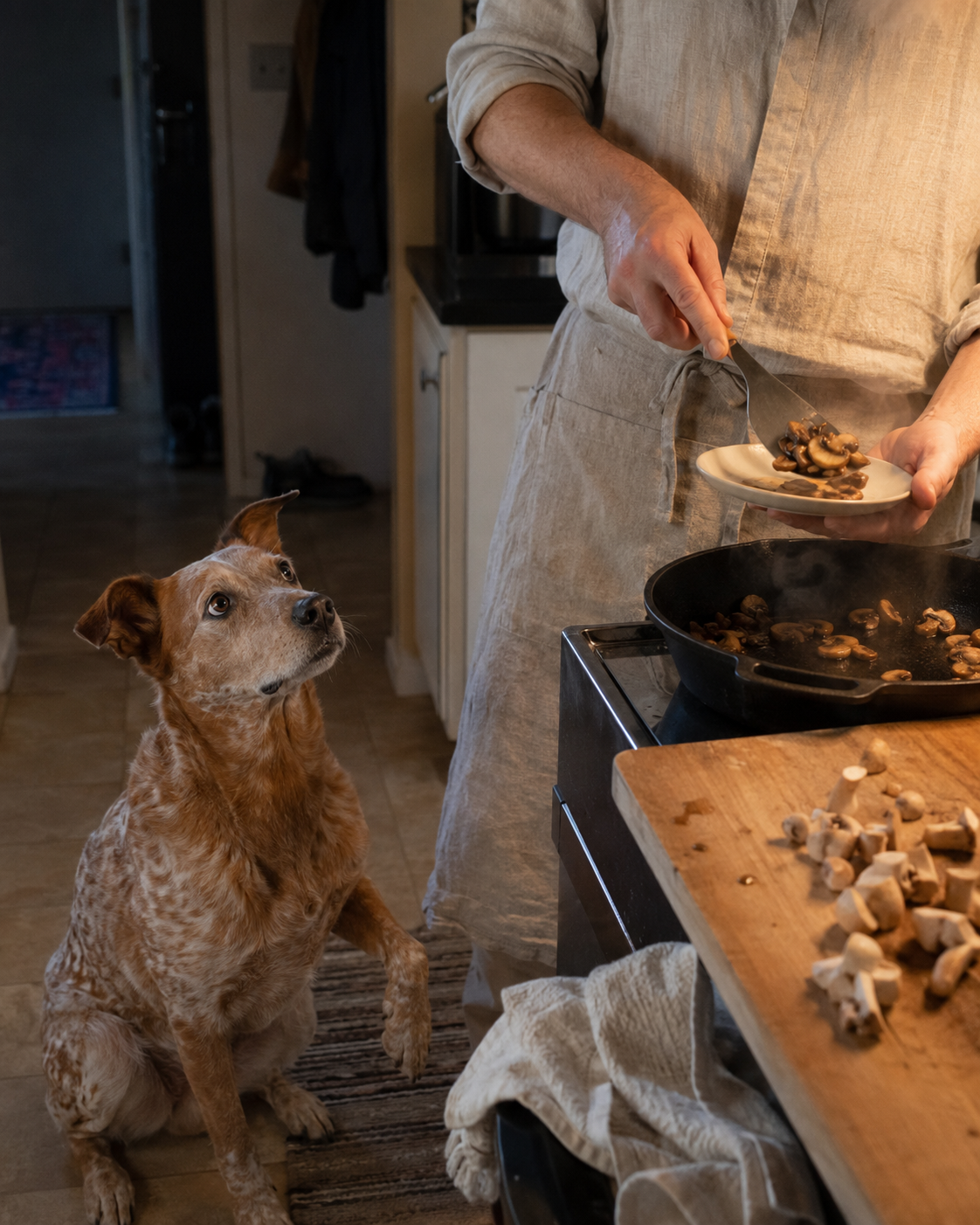
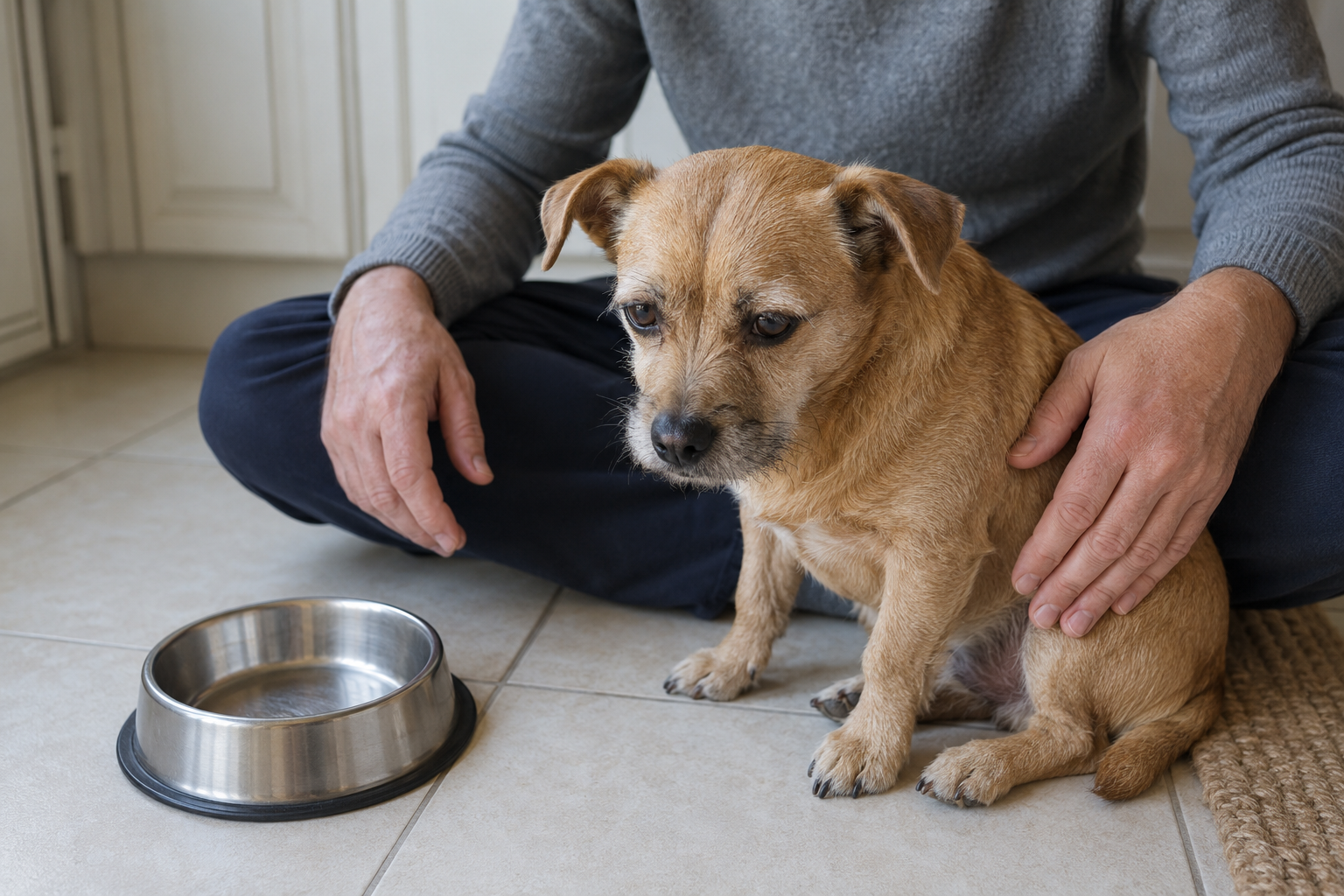
If your alarm clock has quietly been replaced by the sound of your dog retching in the hallway, you are dealing with one of the most common, and most fixable, complaints in dog ownership. The good news arrives early: morning vomiting is usually a scheduling problem, not a sickness. The stomach ran empty overnight, and it protested.
The catch is that a small number of morning-vomiting dogs are telling you something more serious, and the fix for the common version does nothing for the dangerous one. So the real skill here is not stopping the vomiting, it is sorting which kind you have. Let’s do that first, then fix it.
The single most common culprit: an empty stomach
Dogs love a schedule, and their stomachs keep one whether we cooperate or not. When many hours pass between meals, overnight being the obvious gap, the stomach keeps producing acid and bile in anticipation of food that hasn’t arrived. With nothing to digest, that bile just sits there and irritates the lining until the dog brings it up. The result is the classic scene: a puddle of yellow, foamy liquid, usually first thing in the morning.
This is bilious vomiting syndrome, sometimes called empty-stomach syndrome, and it disproportionately hits dogs fed only once a day or given an early dinner. It is uncomfortable but not dangerous, and the fix, which we’ll get to, is almost embarrassingly simple.
Here is the important part, though. Several other things can produce the same morning puddle, and a few of them matter. So before you write it off, run through the rest.
The mechanical causes (usually easy to fix)
These are the everyday, low-drama reasons, closely related to the empty-stomach problem and solved with small routine changes:
Eating too fast. A dog who inhales breakfast, especially on an empty stomach, doesn’t give the stomach time to adjust, and swallows a lot of air in the bargain. Both can trigger a bring-up.
Exercise too soon after eating. Just as you wouldn’t sprint right after a big meal, a dog running hard on a full stomach can get enough discomfort that the body’s tidy solution is to empty it.
Stress and anxiety. A noisy morning street, or the tension of watching you get ready to leave for work, can turn into nausea in a sensitive dog. If the timing tracks the stress, that is your clue.
Diet sensitivities. Some dogs react to a protein, a grain, or dairy in their food, or simply to an abrupt food change. This can show up as vomiting and sometimes loose stool, not just the skin issues people expect.
The medical causes (why you don’t just ignore it)
This is the group that earns morning vomiting a spot on the “get it checked” list rather than the “adjust the routine” list:
Parasites. Worms in the digestive tract irritate the lining and can cause vomiting, though they more often bring diarrhea, alongside weight loss, low energy, and a dull coat.
A foreign body. Dogs eat things they shouldn’t. An indigestible object can lodge in the tract and cause irritation or a full blockage, usually with belly pain, weight loss, and changes in stool. This one can become an emergency.
Infections. Bacterial or viral gut infections bring vomiting with diarrhea, poor appetite, lethargy, and sometimes fever. Contaminated or spoiled food, including Salmonella, belongs here too.
Underlying disease. Inflammatory bowel disease, pancreatitis, and uncontrolled diabetes can all drive frequent vomiting. Watch for the company they keep: diarrhea, appetite loss, increased drinking, belly pain. In an intact female, pregnancy is worth ruling out. And a newly started medication can be the quiet cause, so mention any recent additions to your vet.
The line between “fix the routine” and “call the vet”
Here is the rule worth memorizing. A single vomiting episode here and there, with a bright, normal dog, is rarely a crisis. But if vomiting becomes a morning ritual, happens more than once in a 24-hour window, or arrives with any of the medical company above, weight loss, diarrhea, lethargy, appetite changes, increased thirst, it has crossed the line. Stop tweaking the feeding schedule and get a professional look.
“The pattern that reassures me is empty-stomach bile that vanishes the moment we add a bedtime meal,” says Dr. Lena Park. “The pattern that gets my attention is vomiting that keeps its schedule even after we’ve fixed the routine, or that shows up with weight coming off. That second dog needs a workup, not a snack.”
Fixing the common version
If your vet has ruled out the worrying causes, or your dog fits the classic bile picture, the solutions are refreshingly practical. Start with a small meal right before bed so the stomach isn’t running on empty all night; this alone resolves most bilious vomiting. Add a slow-feeder bowl for the gulpers. Build in at least a 30-minute buffer between eating and hard exercise. Keep up with vaccines and parasite prevention, and teach “leave it” and “drop it” to head off the foreign-body problem before it starts. For the anxious dogs, a steady routine plus real physical and mental exercise takes the edge off.
When you do go to the vet, come prepared
The most useful thing you can bring to that appointment is data. Note when the vomiting happens: before or after eating, after exercise, out of nowhere. When did it start? Any recent diet or lifestyle changes? Any other signs, diarrhea, low energy, weight loss? Your vet will start with a thorough exam looking for pain or dehydration, and may add bloodwork, a fecal test, or imaging to rule out parasites, organ issues, or a swallowed object. From there, treatment follows the cause: a diet change, medication, supportive care, or, for a stubborn foreign body, surgery.
What newer research reinforces
The old advice to simply “feed more often” has held up well, and veterinary behavior and nutrition guidance now leans harder into it: for empty-stomach vomiting, when a dog eats often matters as much as what it eats. A late-evening portion, or splitting the same daily food into more frequent smaller meals, keeps the stomach from ever sitting empty long enough for bile to pool. It is a rare case where the cheapest possible intervention, moving a snack, is also the most effective one. If it doesn’t work within a week or two, that failure is itself useful information, and a reason to let your vet look deeper.
References
- Batchelor, D. J., et al. “Bilious Vomiting Syndrome in Dogs.” Veterinary Partner / VIN.
- VCA Animal Hospitals. “Why Do Dogs Eat Grass?”