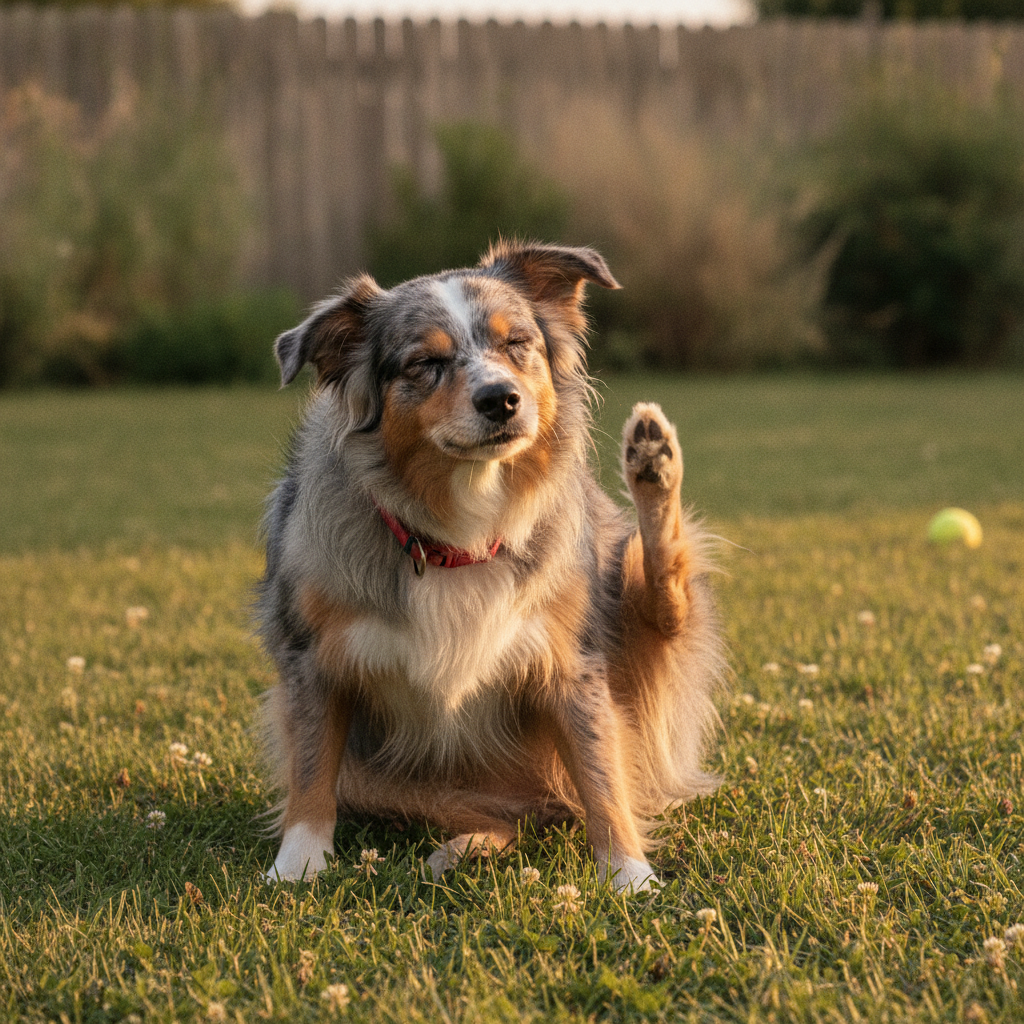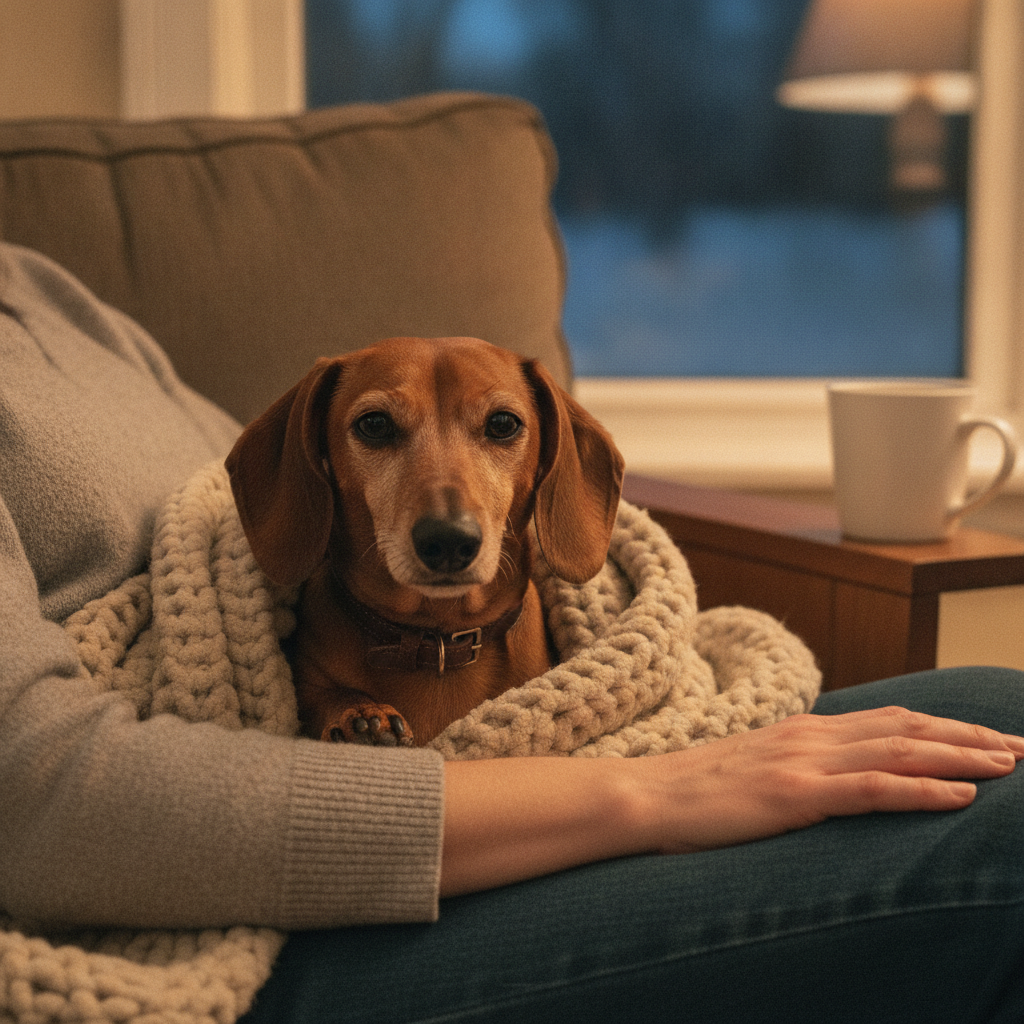
Picture the dog you’ve had for years. The one who pulled you down the block on every walk, retrieved the ball until your arm gave out, and won every game of tug. Then one day you notice it: they don’t want to go as far anymore, or they look stiff easing into their bed. It’s one of the quietly heartbreaking moments of loving a dog, and the instinct is to either panic or do nothing.
There’s a third option, and it’s more useful than it sounds. Gentle stretching and massage, a few minutes a day, can help keep an aging or stiffening dog mobile and comfortable for far longer. This isn’t spa-day indulgence or mystical energy work; it’s basic mobility maintenance, the same reason physical therapists have humans do gentle range-of-motion work. The catch is that it only helps if you do it right: cleared by your vet, gently, and while reading your dog closely. Done that way, the payoff is real and the effort is tiny.
“The mistake I see is people thinking they need to do something big and dramatic to help a stiff dog, or that it’s woo and skip it entirely,” says Dr. Amara Solis. “It’s neither. It’s five quiet minutes of keeping joints moving and muscles loose, most days. The dogs who get that consistently tend to hold onto their mobility years longer than the ones who don’t.”
First, the ground rules (this part is not optional)
Before any of the techniques, a hard prerequisite: talk to your vet. A dog who is slowing down or looks stiff should be evaluated to rule out problems that need actual treatment, because “stiff” can mean arthritis, but it can also mean an injury, neurological issue, or pain that stretching would aggravate. Show your vet the specific exercises you’re planning, wherever you got them, so they can confirm none are contraindicated by an existing condition. Then follow the plan your vet recommends, since they know your dog’s medical history. The goal is to help a sore dog feel better, not to run them through boot camp. If a movement seems to hurt, stop.
With that clearance in hand, the six-step approach is simple: start slow and keep early sessions brief; reward relaxation with treats and praise; use gentle circular massage on the big joints and tight muscles; ease off on sensitive areas; support mobility between sessions with good beds and footing; and keep watching your dog’s reactions to calibrate pressure. Those steps are the whole safety framework, and they matter more than any specific technique.
Why it works, in plain terms
Gentle massage and stretching genuinely support joint health, and the benefits aren’t mysterious:
- Keeps the muscles loose and pliable
- Improves blood flow
- Delivers more oxygen and fluid to the tissues
- Deepens the bond between you and your dog
- Leaves your dog calmer and more content
Movement is a big part of how a dog’s body maintains itself. A few gentle minutes most days is enough for many dogs to hold onto, and sometimes regain, the range of motion in their joints. Stretching wakes up the nerves and muscles and warms tissue before activity, which can help prevent strain during exercise. And the single most important principle for results is that consistency beats intensity: a little, often, is what works.
The stretches worth doing
Once your vet has given the green light, work these gentle moves into your dog’s routine. All of them can be done with your dog either standing or lying down. Move slowly, hold each stretch only a few seconds, and stop at any sign of resistance.
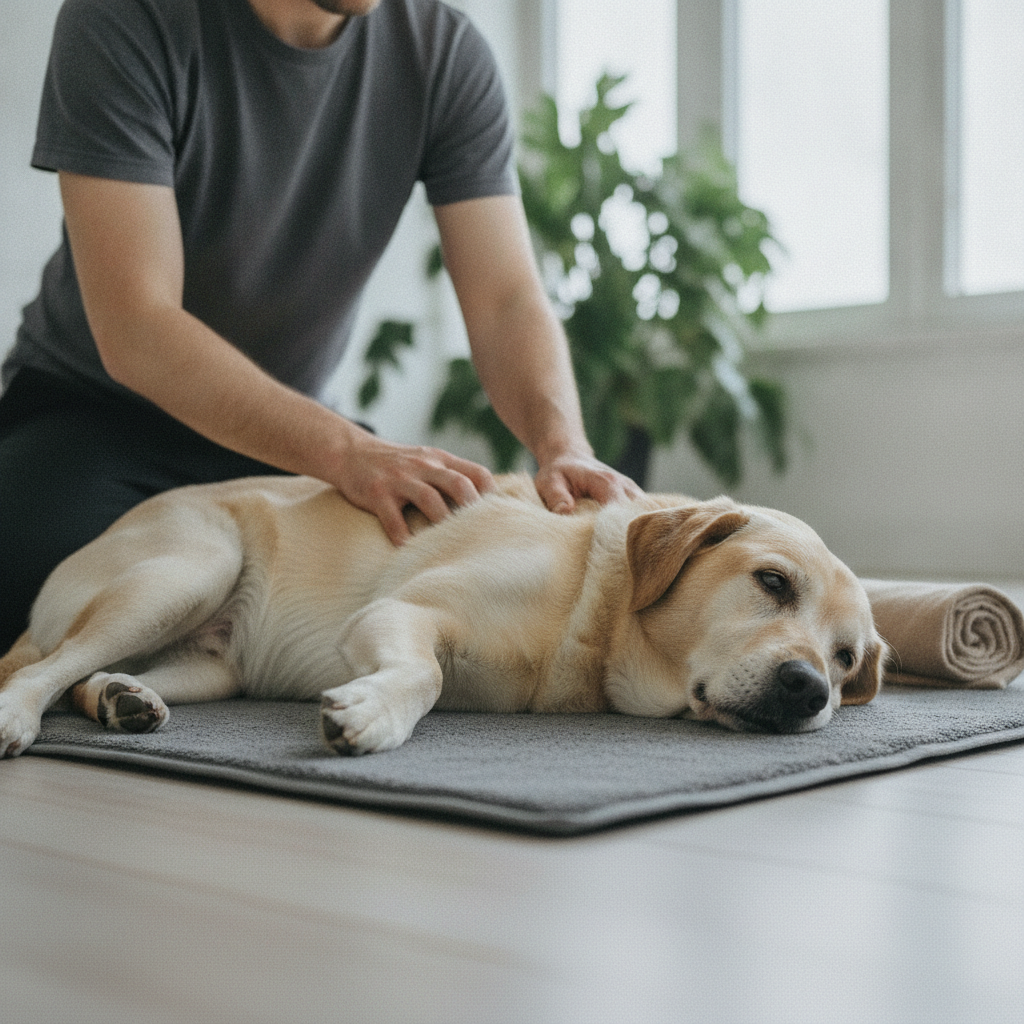
Back and hip massage. Support the lower spine and ease pressure on the nerves there with light massage over the sacrum, the flat bony plate that sits between the hip bones near where the tail begins. Use light pressure and small circles, then work up the length of the spine with gentle strokes, using very little pressure directly over the vertebrae. What it helps: looser hips and lower back, easier movement, and a calmer dog.
Back-leg stretch. Hip stiffness and knee wear are major issues for older dogs. To free up the muscles around the hip, lower spine, and hind leg, cradle a rear leg near the knee and ease it backward into a gentle extension, moving with slow confidence. Hold briefly, let go, and repeat. What it helps: hip mobility, spinal flexibility, and relief from arthritis-related stiffness in the lower back, hips, and legs.
Shoulder stretch. A dog’s shoulders absorb more than 60 percent of their body weight, so shoulder range of motion translates directly into overall mobility. Ease a front leg forward into an extension (steady it at the elbow for a deeper stretch), hold briefly, then release and repeat. To finish, swing the leg gently forward and back like a pendulum to release the shoulder, chest, and back. What it helps: a healthier shoulder, wrist, and elbow, looser chest and upper-back muscles, and easier breathing.
Chest opener. The chest muscles take a lot of strain. Offer relief with a gentle opening stretch: hold both front legs near the wrists and slowly draw them out to the sides. Hold for a moment, release, repeat, and finish with a light chest massage. What it helps: looser chest and shoulder muscles, more breathing capacity, and a calmer dog.
Belly rub. The belly is sensitive, so be especially gentle. Rest your hand on it, wait a moment, then release and repeat, moving in slow circles. What it helps: relaxed abdominal and lower-spine muscles, easier movement through the hips and lower back, and reduced anxiety.
Cookie stretches: let the dog do the work
A clever, low-risk way to build flexibility is the “cookie stretch,” where your dog stretches themselves toward a treat. Because your dog decides how far to reach, they never overextend, which keeps strain off every joint and muscle. Reach for whatever food your dog can’t resist, a nub of cheese, a scrap of lunchmeat, a piece of hot dog; it’s the aroma in your closed hand, not the size of the morsel, that does the luring.
Lure your dog’s nose gently toward each of these spots and let them hold the reach for a moment:
- Hip (toward their hip and lower back)
- Mid-thigh
- Shoulder
- Each front elbow
Here’s why you stretch the whole dog, not just the sore spot: wherever a dog hurts, they compensate by twisting, leaning, and shifting weight, which puts extra wear on the “good” limbs too. So the entire body, not only the problem area, benefits from these gentle stretches.
Keeping it safe and pleasant
A few reminders that keep sessions positive:
- Be gentle, patient, and attentive.
- Provide a calm, quiet environment for any hands-on work.
- Note any bumps, warm or sensitive areas, or changes in the skin and coat, and mention them to your vet.
- Watch for discomfort and adjust as you go.
- Follow your dog’s lead, always.
What newer research adds
The idea of stretching a dog can sound fringe, but it sits inside a legitimate and growing field: canine rehabilitation. Certified canine rehabilitation practitioners (you’ll see the credentials CCRT or CCRP) use passive range-of-motion work, massage, and therapeutic exercise to manage arthritis, recover from surgery, and maintain mobility in aging dogs, and the approach is increasingly integrated with mainstream veterinary care. If your dog has significant arthritis or is recovering from an injury, a rehab professional can build a plan far more targeted than a general routine.
The research consensus also keeps landing on the same practical point: for maintaining joint range of motion, frequency matters more than force. Brief, gentle, regular sessions preserve mobility better than occasional intense ones, which is genuinely good news, because it means the most effective version of this is also the easiest and safest one to actually keep up. Just remember the non-negotiable first step, your vet’s sign-off, so a stretch that soothes one dog doesn’t strain another with a hidden condition.
References
- Petty, Michael. Dr. Petty’s Pain Relief for Dogs. Countryman Press, 2016.
- American Association of Rehabilitation Veterinarians. “What Is Canine Rehabilitation?” rehabvets.org.
- Millis, Darryl, and David Levine. Canine Rehabilitation and Physical Therapy. 2nd ed., Elsevier, 2014.
This article is for general education and is not a substitute for veterinary care. Always consult your veterinarian before starting stretching or exercise with a dog who is stiff, aging, injured, or in pain.