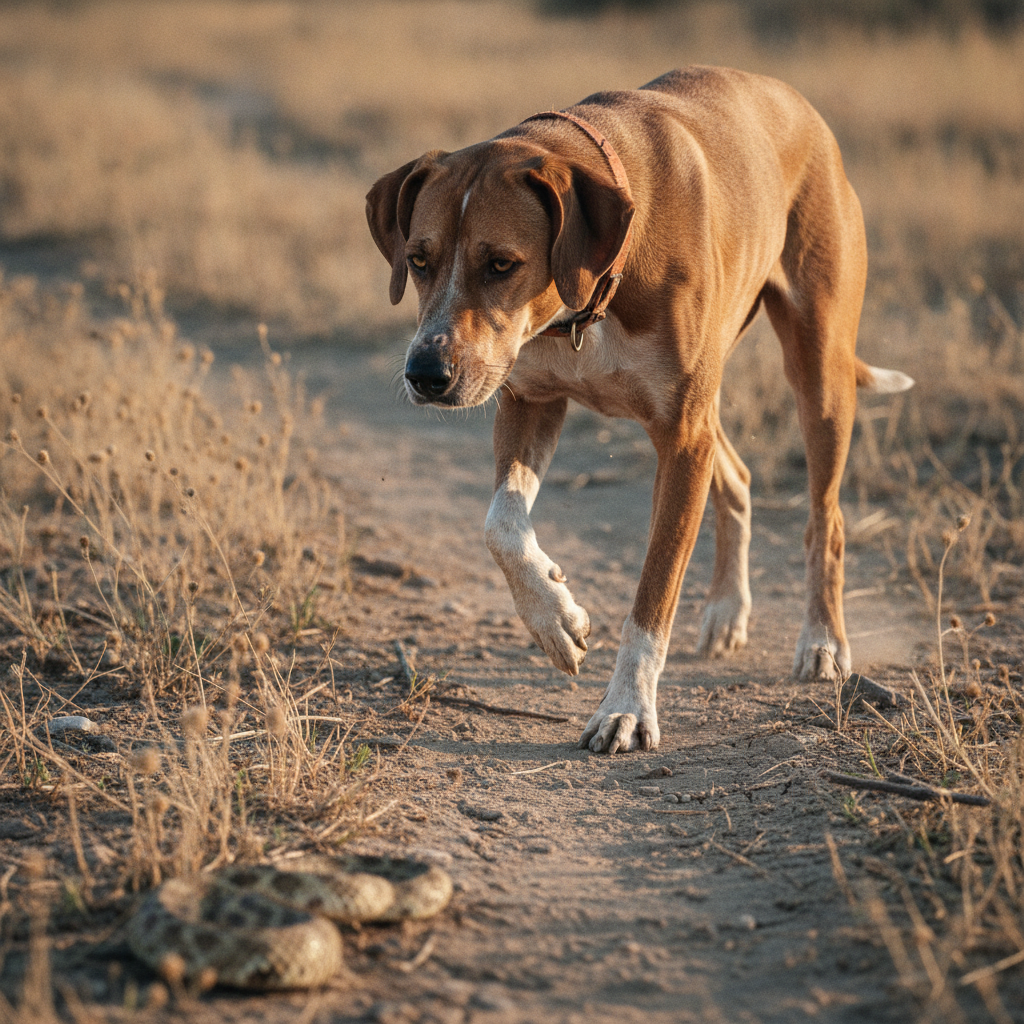
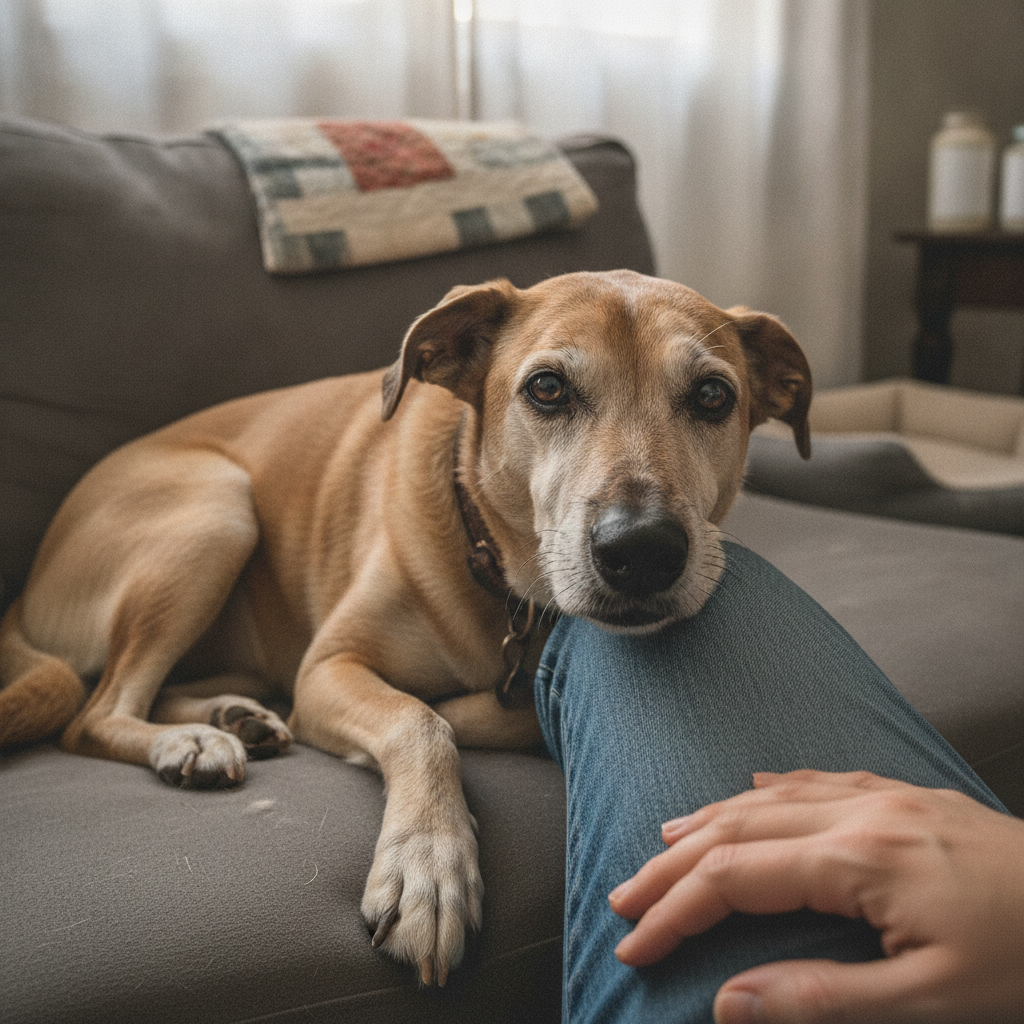
Your dog cannot tell you their hip aches. They can beg for a second dinner with those unbeatable eyes, and they can warn you off their food bowl, but the one thing they cannot do is say, “I’m hurting.” So when a once-bouncy dog starts hanging back on walks or taking the stairs one careful step at a time, it is far too easy to file it under “getting old” and move on.
That instinct is usually wrong, and it is worth naming clearly: dogs rarely stop doing the things they love because of age. They stop because something is wrong, and that something is very often pain, commonly from degenerative joint disease. The good news is that managing a dog’s pain has never been more doable, or more affordable, than it is now. Here is the full toolkit, from the boring-but-powerful basics to a genuinely new option most owners have not heard of.
Start with the scale (yes, really)
The single most underrated pain treatment is a lean body. Overweight dogs live shorter lives than dogs at a healthy weight, and carrying extra pounds stacks the deck toward orthopedic issues, diabetes, cardiac disease, arthritis, and sore joints. The flip side is the encouraging part: studies show that even a small drop in body weight measurably reduces mobility problems and pain.
If your vet has gently suggested your dog could stand to lose a little, try not to take it personally. It is one of the few interventions that costs nothing and helps almost every painful condition at once.
Supplements that earn their place
A few supplements have real evidence behind them. Omega-3 fatty acids help tamp down the prostaglandins that drive pain, and the source matters: fish-based omega-3s are far more usable by a dog’s body than plant sources like flaxseed, which dogs simply cannot convert. If your dog’s food already lists salmon or sardines high on the label, you likely do not need to add much, because it takes very little to hit a useful dose.
Beyond fish oil, a handful of botanicals show promise, including ashwagandha and boswellia serrata for inflammation, and turmeric, which can both ease pain and help limit ongoing joint damage. The catch is quality control: herbs are not regulated by the FDA the way medications are, so consistency varies wildly between products. One well-regarded option that bundles several pain-modifying ingredients, herbs included, is Dasuquin Advanced from Nutramax. As always, run any supplement past your vet first, since “natural” does not automatically mean “safe with your dog’s other meds.”
CBD, cautiously
Interest in CBD for canine pain has grown for a reason. In a widely cited 2018 study from Cornell University, dogs given a full-spectrum CBD oil showed fewer visible signs of pain and better mobility. It is not a miracle, and product quality in this space is all over the map, but it is a legitimate conversation to have with your vet rather than something to write off.
Acupuncture has grown up
“Ten years ago I’d have gotten a raised eyebrow for suggesting acupuncture. Now it’s one of the first things I reach for with my older patients,” says Dr. Ravi Mehta. “For a senior dog who can’t tolerate a lot of medication, a few needles can buy back a real quality of life, and you usually know within a couple of sessions whether it’s helping.”
The shift Dr. Mehta describes is real. Veterinary opinion on acupuncture has warmed considerably as research has piled up, and it now carries support for pain management from the National Institutes of Health. It is especially valuable for geriatric dogs, whose aging bodies are more sensitive to the side effects of drugs. Most candidates who respond do so quickly, within one to three treatments; if there is no improvement by then, it may be dropped.
Some dogs, understandably, are not fans of needles, and a few are simply too anxious at the clinic to sit still. A mild sedative for the first few sessions often gets them over the hump, and many eventually accept treatment calmly without it.
What you should never do
Reach for the human medicine cabinet in a pinch, and you can do real harm. To be blunt: no over-the-counter human pain reliever is licensed or safe for dogs, and ibuprofen and aspirin are both genuinely dangerous. If your dog is hurt and you cannot get to a vet immediately, the safest things you can do are keep them still, apply ice, and stabilize an injured limb. Then call.
How a vet actually finds the source
Good pain care starts with a thorough exam, not a guess. A vet weighs your dog’s history, breed, and prior conditions, and starts observing from the moment your dog walks into the room. A complete pain work-up usually includes a full physical, a look at the dog’s gait, a basic neurological exam (since nerve issues can mimic pain), and hands-on palpation of joints, muscles, and bones. Depending on what turns up, X-rays, bloodwork, and urinalysis often follow, partly to prepare for any procedures that need sedation.
No single specialty “owns” pain, which is why a generalist is often your best first stop. If your dog needs deeper help, look for a certified veterinary pain practitioner credentialed through the International Veterinary Academy of Pain Management. That certification takes years to earn, and the vets who hold it are genuine experts in the field.
What’s new: a once-a-month shot
Here is the development that has quietly changed the conversation since this advice was first written. In May 2023, the FDA approved Librela (bedinvetmab), the first monoclonal antibody it has ever cleared for use in dogs, to control the pain of osteoarthritis. It works differently from a pill: given as an injection about once a month, it binds to nerve growth factor, a key messenger that tells the brain “this hurts,” and blocks that signal. For owners juggling daily medications with a stubborn senior, a monthly visit can be a real relief, and more than a million dogs in the U.S. have been treated since launch.
It is not risk-free, and honesty matters here. The FDA has been tracking reports of adverse events in some treated dogs, including neurological signs such as wobbliness, weakness, and seizures. That does not make it a bad option, it makes it a real medication with real tradeoffs, exactly the kind of thing to weigh carefully with your vet rather than assume is either miracle or menace. For the right dog, it has been life-changing; for others, an older approach fits better.
The through-line across all of this is simple. A slowing dog is usually a hurting dog, and hurting is treatable. The most important step is refusing to accept pain as an inevitable part of growing old.
This article shares general information and is not a substitute for veterinary advice. Every dog is different, so talk any pain plan over with your vet.
References
- U.S. Food and Drug Administration. FDA Approves First Monoclonal Antibody for Dogs with Osteoarthritis Pain
- U.S. Food and Drug Administration. Dear Veterinarian Letter: adverse events reported in dogs treated with Librela
- Gamble LJ, et al. Pharmacokinetics, Safety, and Clinical Efficacy of Cannabidiol Treatment in Osteoarthritic Dogs. Frontiers in Veterinary Science, 2018.
- National Center for Complementary and Integrative Health. Acupuncture: Effectiveness and Safety.