When your dog starts taking the stairs one at a time, or grunts getting off the couch, the instinct is to ask your vet for “the arthritis medicine,” as if there’s one bottle with your dog’s name on it. There isn’t. Arthritis pain relief in 2026 is a menu, not a prescription, and a good plan usually pulls from several parts of it at once.
That’s actually good news. It means a dog who can’t tolerate one drug has real alternatives, and it means the most powerful thing you can do might not be a drug at all. Here’s the whole menu, from the pills your vet has used for decades to the once-a-month injection that didn’t exist a few years ago, plus the two free interventions that quietly beat most of them.
First, catch it early
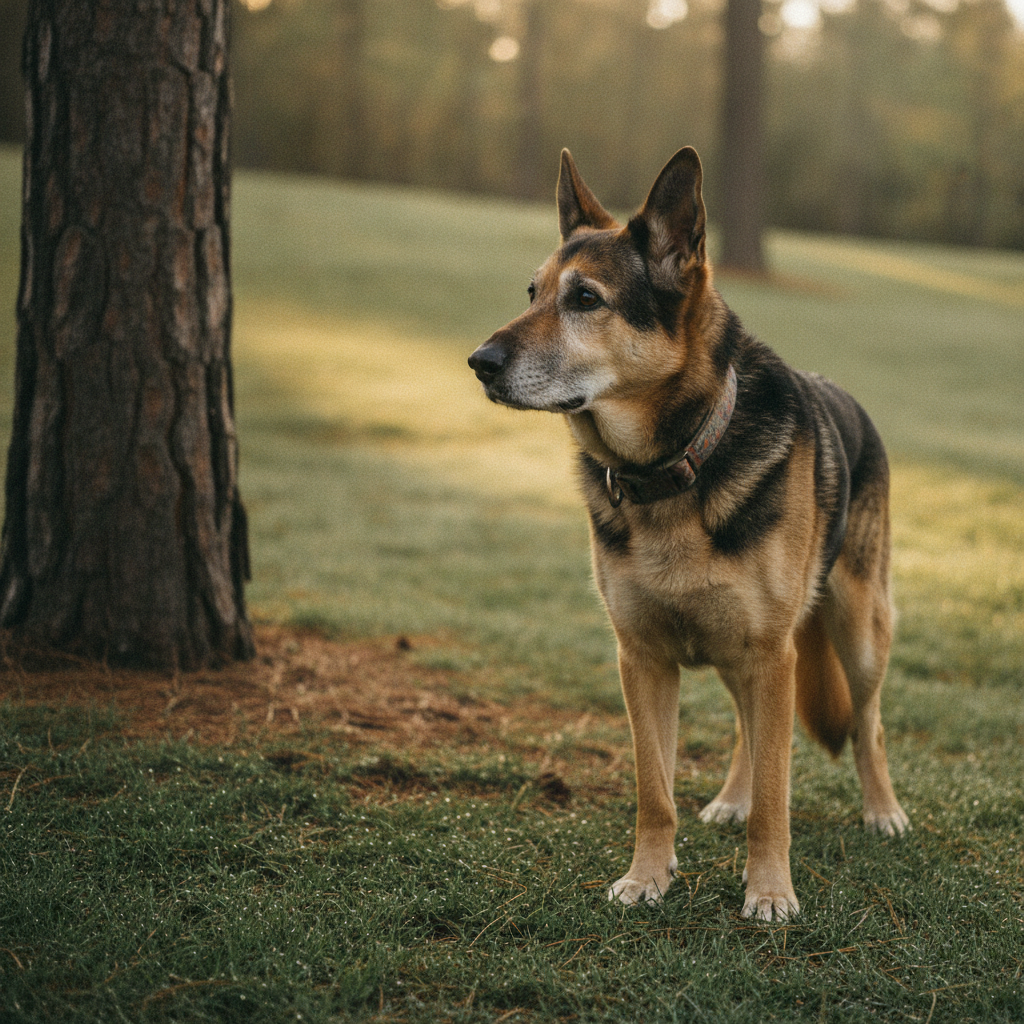
Arthritis creeps. The changes come on so gradually that most owners chalk them up to a dog “just getting older.” A dog in chronic discomfort slows down, gets reluctant to run as far or jump as high, takes longer to rise after a nap, stiffens up in cold or damp weather, sleeps more, gets a little grumpier, and quietly bows out of games they used to love.
If you’re not sure, the simplest test is a conversation with your vet. Based on your dog’s history and exam, they might prescribe a short trial of an anti-inflammatory and ask you to keep a diary of what changes. Owners are regularly stunned by how much younger their old dog acts once the pain lifts, which is both a relief and a clue about how much they were hurting.
“The line I hear constantly is ‘he’s just slowing down because he’s old,’” says Dr. Ravi Mehta. “Slowing down isn’t a disease, but pain is treatable, and old age isn’t a reason to leave a dog in it. When we do a short medication trial and the dog starts acting like a puppy again, that tells you the stiffness was never really about the calendar.”
The medication menu
NSAIDs: still the backbone
Non-steroidal anti-inflammatory drugs remain the mainstay of arthritis treatment, and for good reason: they work, they’re relatively safe, and generics keep them affordable. Dogs on them long term need periodic bloodwork to keep an eye on liver and kidney function.
There’s no one-size dose. Your vet may start at the label dose and then trim the amount or frequency to find the lowest dose that still helps, minimizing the risk of side effects. Those side effects are usually mild, an upset stomach or loose stool, but NSAIDs can occasionally cause GI ulcers, kidney injury, or liver trouble, which is why the monitoring matters. Common ones in the U.S. include:
- Carprofen (Novox or Rimadyl)
- Deracoxib (Deramaxx)
- Firocoxib (Previcox)
- Meloxicam (Metacam)
Grapiprant (Galliprant): the targeted option
Approved by the FDA in 2017, grapiprant is a newer anti-inflammatory that works more surgically than a traditional NSAID. It’s a prostaglandin receptor antagonist that blocks the EP4 receptor specifically, the main receptor driving arthritis pain, without leaning on the other body systems older NSAIDs affect. That precision is why it’s often considered gentler.
It’s labeled for dogs as young as nine months, which makes it a nice fit for dogs whose arthritis shows up early because of hip or elbow dysplasia, but it shouldn’t be used in dogs under eight pounds because accurate dosing gets tricky. Dogs carrying the MDR1 gene mutation, which leaves them less able to clear certain drugs, may need the dose adjusted. Collies are the textbook case; the mutation also turns up in a number of herding breeds, plus Long-haired Whippets and Silken Windhounds.
One honest caveat: two studies done after grapiprant’s launch found it eased visible pain less well than carprofen or firocoxib did. Both trials, though, tested it against short-term pain, whereas the drug is meant for the chronic kind, so its long-haul standing versus other NSAIDs is genuinely unsettled. It still earns its place for dogs who can’t take other NSAIDs.
The monthly injection
The newest tool is a completely different kind of drug, and it’s covered in its own section below because it’s the biggest change to this menu in years.
The two free things that beat most drugs
A lean body
If you do nothing else, keep your dog thin. Maintaining a healthy weight is one of the cheapest and most effective ways to cut arthritis pain, full stop. Every extra pound is load on joints that already hurt. Weight loss alone has, in real cases, taken dogs off the surgical schedule: a heavy dog headed for a hip operation drops the weight, improves so much that the procedure comes off the table. No pill does that for free.
Rehab and movement
Once pain is under control, the goal flips to keeping the dog strong. Rehabilitation exercises maintain the muscle that supports the joint, and even one coaching session at a canine rehab center can pay off. Swimming and underwater treadmill work build strength with the joint unloaded, done under controlled conditions with a safety vest, warm water, and monitoring. If a full rehab course isn’t in the budget, there are simple exercises you can do at home with minimal equipment. Traction on slick floors and ramps for the car and couch round it out.
Supplements: real, but slow and supporting
Supplements can help, but manage your expectations: they work slowly, and they support a plan rather than carry it. A good fish oil is one of the better-supported picks; ask your vet for the right dose. Others in common use:
- Glucosamine and chondroitin sulfate provide building blocks for the long-chain molecules that give cartilage its cushion.
- Injectable PSGAGs (a four-week course of weekly shots) help slow joint breakdown and boost joint-lubricating hyaluronic acid.
- MSM appears to act as a mild analgesic and often rides along in joint blends, though it hasn’t been well studied alone in dogs.
- DLPA, a synthetic amino acid marketed for pain, has not been studied in dogs.
- Avocado/soybean unsaponifiables (ASUs) act as anti-inflammatories and may slow cartilage breakdown.
- Green-lipped mussel (Perna canaliculus) extract has research behind it for easing sore, swollen joints, but only when it’s given consistently over time.
One buyer-beware note: supplements aren’t FDA-regulated, and testing has repeatedly found that what’s actually in the bottle doesn’t always match what’s printed on it. Read up before you buy, and assume price tracks quality more often than not. Check with your vet before adding anything, so nothing interacts with your dog’s other medications.
What’s new since this was written: the monthly antibody injection
The single biggest change to dog arthritis care is a drug that works nothing like the pills above. In May 2023, the FDA approved Librela (bedinvetmab), the first monoclonal antibody treatment for canine osteoarthritis pain, and it launched in the U.S. that October. Instead of an anti-inflammatory taken daily, it’s a once-monthly injection given at the vet. It works by binding and neutralizing nerve growth factor (NGF), a key messenger in the arthritis pain pathway, so the pain signal never really reaches the brain. For dogs who can’t tolerate NSAIDs or whose pain isn’t controlled by pills, it opened a genuinely new door, and the monthly cadence means no daily pilling battle.
It’s not a free lunch. After widespread use, the FDA and the manufacturer flagged reports of adverse events, and in 2025 the U.S. label was updated to give vets and owners fuller safety information. It’s a real advance and a real conversation to have with your vet, weighing your individual dog’s history, not an automatic upgrade.
The horizon has more coming. Researchers are actively exploring cartilage resurfacing, partial joint replacements, transplanted ligaments, and ways to improve blood supply to cartilage, much of it flowing out of “translational” studies, because an arthritic dog is a remarkably good model for an arthritic human, so both species benefit from the same research. One striking experimental compound is resiniferatoxin (RTX), a chemical from a Moroccan relative of the chili pepper roughly a thousand times more potent than the capsaicin that makes peppers hot. Injected into the spinal fluid under anesthesia, it selectively destroys pain-transmitting nerve cells while sparing the ones that handle movement and normal sensation, an approach nicknamed “molecular neurosurgery.” In studies it even eased the debilitating pain of canine bone cancer, letting nearly immobile dogs run again. RTX isn’t available outside research yet, but it’s a glimpse of where pain control is headed.
The takeaway
Don’t think in terms of one arthritis drug. Think in terms of a plan: catch it early, get the weight off, build strength with rehab, and let your vet match the medication, an NSAID, grapiprant, or the monthly antibody injection, to your specific dog. The best results almost always come from stacking several modest tools, not from finding one magic bottle.
References
- U.S. Food and Drug Administration. “FDA Approves First Monoclonal Antibody for Dogs with Osteoarthritis Pain.” 2023. fda.gov
- U.S. Food and Drug Administration. “Dear Veterinarian Letter: Adverse Events Reported in Dogs Treated with Librela (bedinvetmab injection).” 2024. fda.gov
- Rausch-Derra, L., et al. “A Prospective, Randomized, Masked, Placebo-Controlled Multisite Clinical Study of Grapiprant for Osteoarthritis Pain in Dogs.” Journal of Veterinary Internal Medicine, 2016. onlinelibrary.wiley.com
- Iadarola, M. J., et al. “Long-term pain relief in canine osteoarthritis by a single intra-articular injection of resiniferatoxin, a potent TRPV1 agonist.” Pain, 2018. pubmed.ncbi.nlm.nih.gov