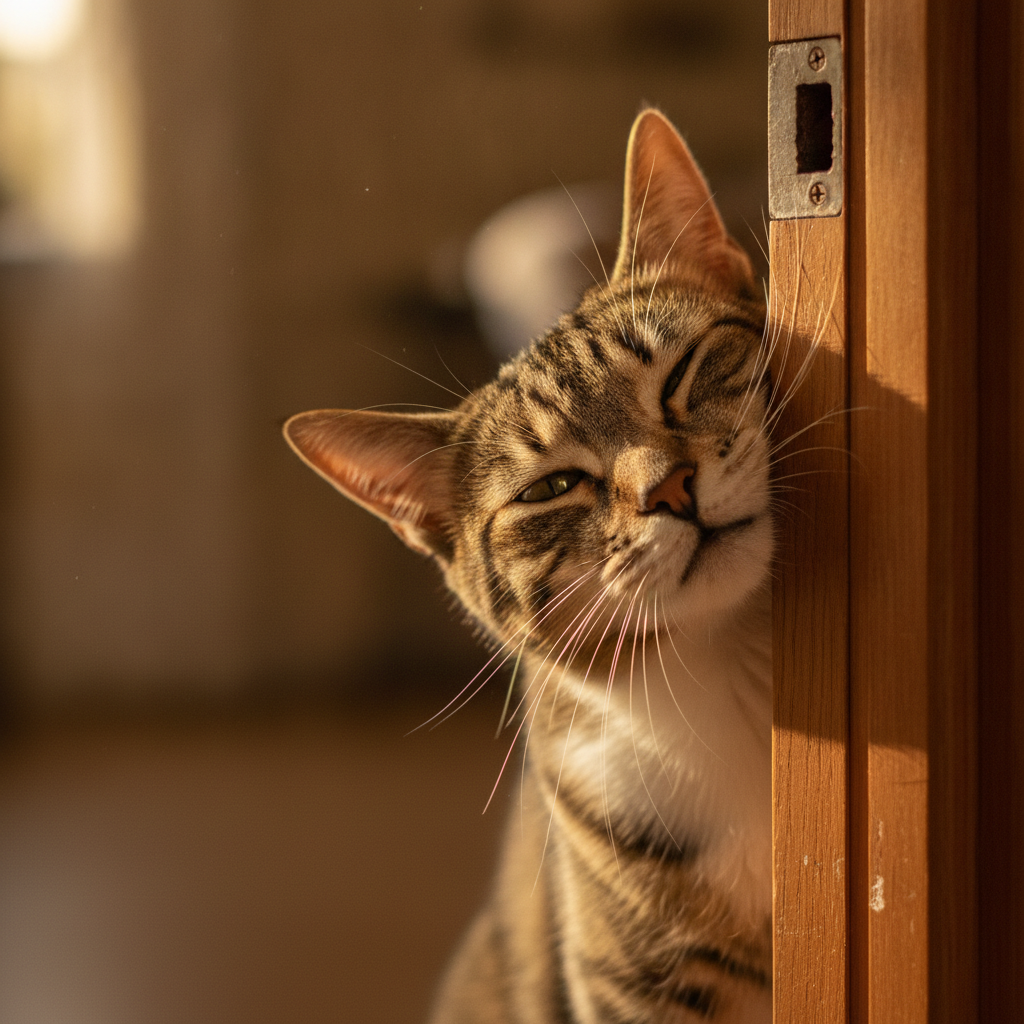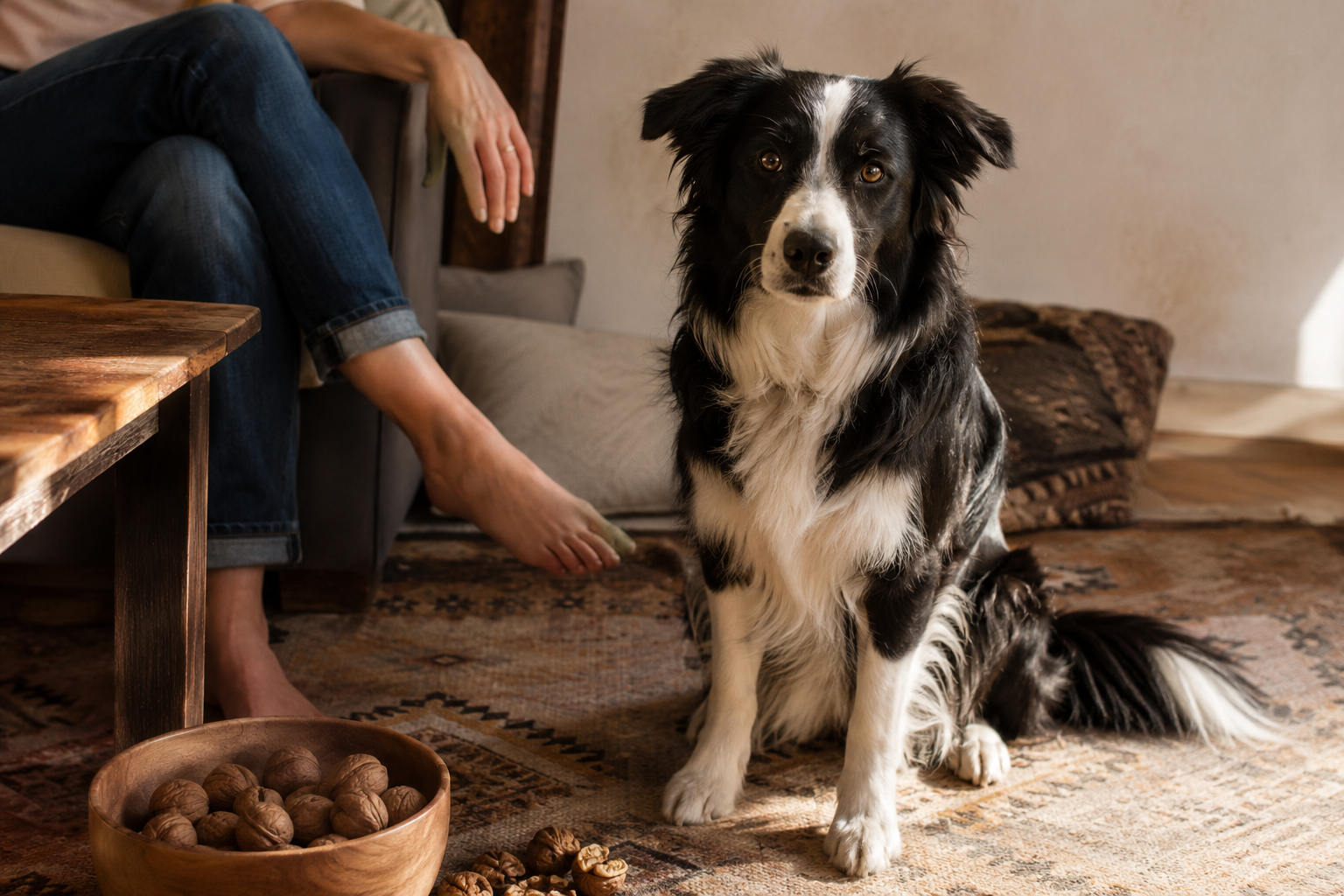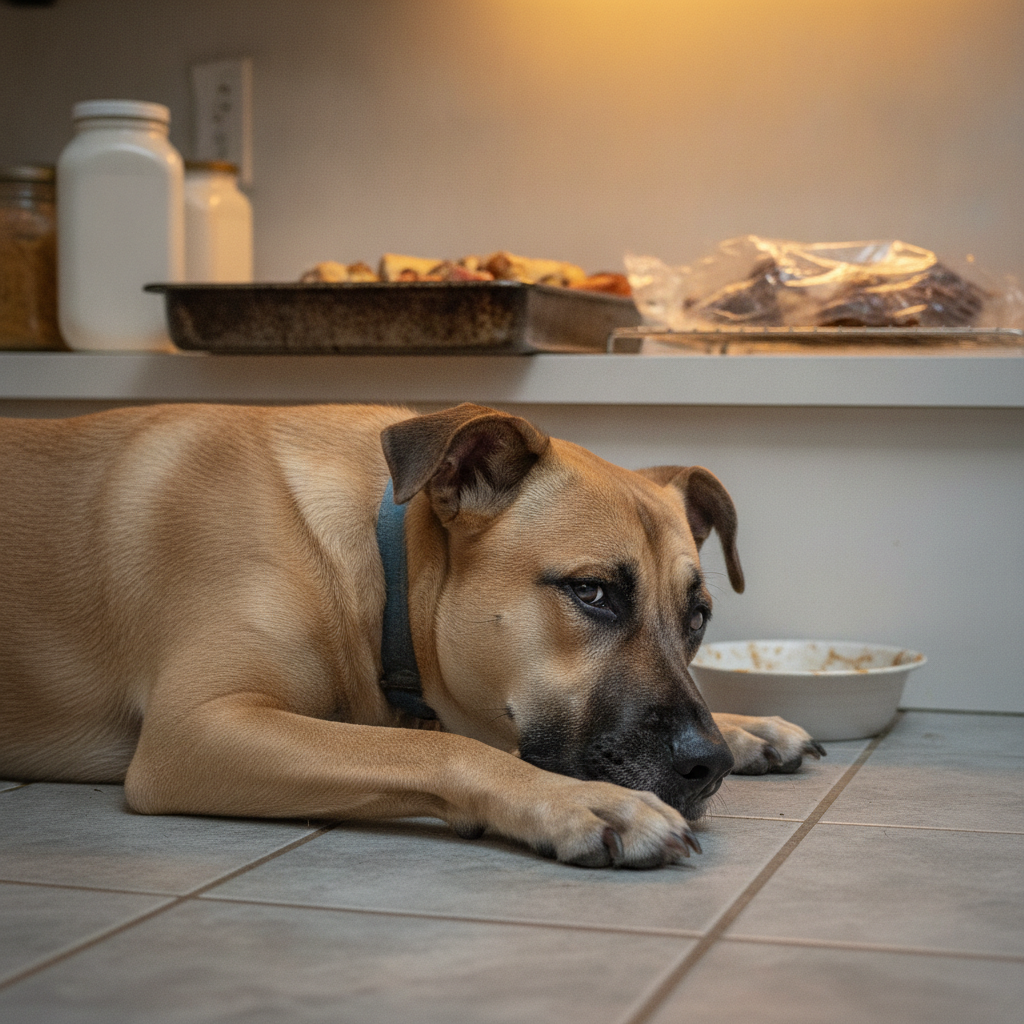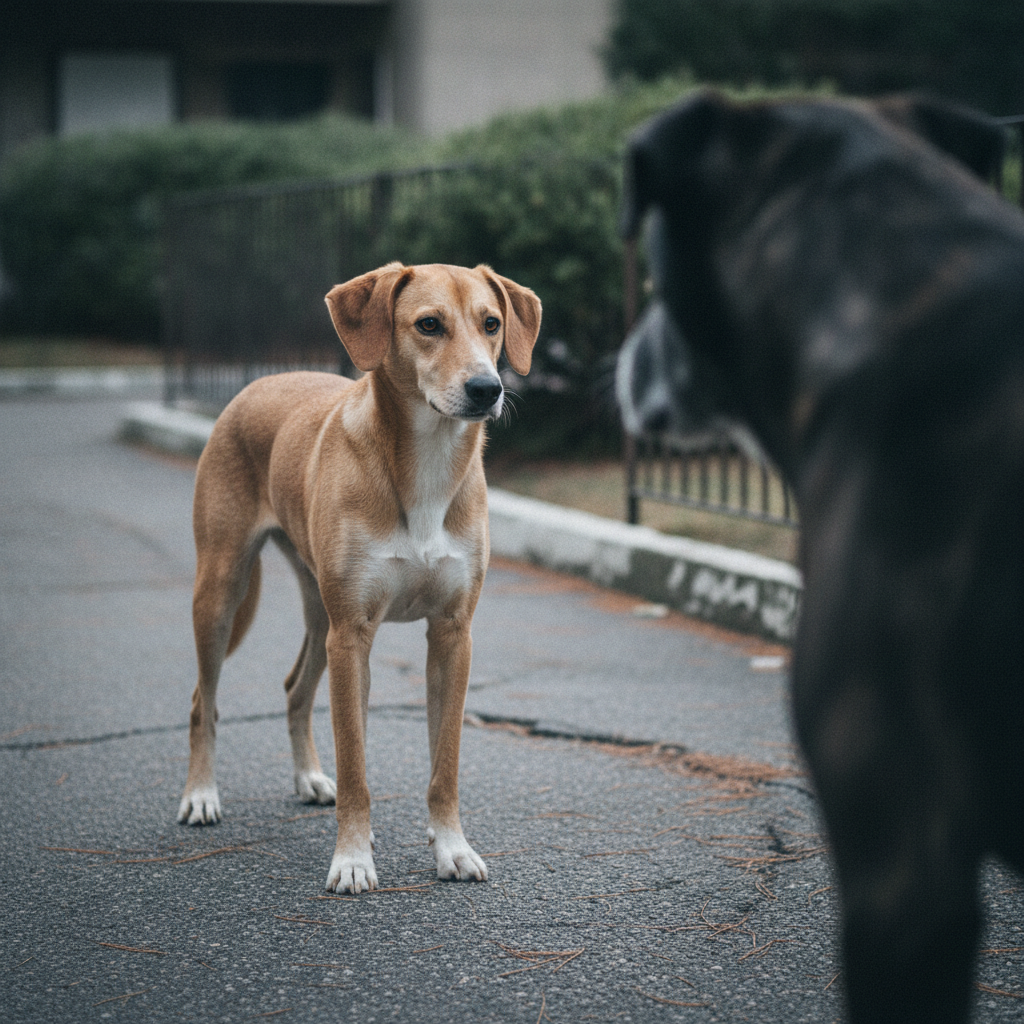
The single most useful sentence in dog behavior is this: aggression is a request for distance.
Not a bid for status. Not a coup. The dominance theory that produced a generation of alpha rolls and neck jabs has been discarded by behavior professionals, and it deserves to be, because it pointed people toward exactly the wrong intervention. A dog who is asking to be left alone, and is punished for asking, learns only that asking is dangerous.
So the useful question is never “how do I dominate this dog.” It is: what is my dog trying to get away from, and how did I miss them asking nicely?
Because they did ask. They almost always do.
The ladder, and why you want to catch it early
Aggression rarely arrives out of nowhere. It climbs.
Long before teeth, there is a sequence, and the point of learning it is that every rung is a chance to end the conversation without a bite:
- Ears pinned back
- A stiff, frozen body
- A hard stare
- Lip licking, or a whale eye showing white
- A growl
- Bared teeth
- A snap
- A tucked tail throughout
Most people only notice the last two, which is why so many owners describe a bite as coming from nowhere. It came from four rungs down and nobody was reading.
Growling is the most misunderstood item on that list. A growl means your dog objects to what is going on right now, and wants room. Punish the growl and you do not remove the feeling. You remove the warning. What you are left with is a dog who has learned that growling gets them yelled at, and who therefore proceeds directly to the part that works.
“The dogs who scare me most are the ones who have been corrected for growling,” says Dr. Mara Chen. “Their owners tell me proudly that the dog does not growl anymore. What they have actually done is delete the smoke alarm and keep the fire.”
Where it comes from
Fear. The biggest single cause. A frightened dog wants to leave. If they cannot leave, cornered, leashed, blocked, or physically held, the only option left is to make the scary thing back off. Fear aggression is a last resort, and it looks like an attack.
Pain and illness. A hurting dog is a different dog. A trainer’s own account makes the point better than any theory: a calm, cuddly family dog tore a toenail chasing a squirrel, and when his people reached for the bleeding paw, he snapped at them. He was not a changed animal. He was in agony and terrified of being touched. Because he was already muzzle-trained, they could bandage him and get him to the vet safely.
That is the entire case for muzzle training a dog who has never shown a shred of aggression: you are not preparing for a bad dog, you are preparing for a bad day.
Resource guarding. Guarding is normal dog behavior, not a character flaw. Dogs guard beds, food, toys, and people, and a growl at a passing dog during dinner is simply a dog saying not now. It becomes a problem when the dog will not stand down, and when the pressure escalates to a bite because they believe the resource is about to be taken.
Lack of socialization. A dog who never learned to read other dogs cannot interpret the signals coming at them, and cannot send clear ones back. The confusion produces conflict, and the conflict produces fear.
Prior attacks. A friendly dog who is attacked can become a defensive one. This is how a single bad dog-park afternoon changes a dog for years.
Punishment. Worth listing as a cause in its own right, because it is one. Training with force teaches a fearful or anxious dog that their human is unpredictable and frightening, and fear is the engine of most aggression.
Predatory behavior. Different from the rest, and it does not follow the ladder. Stalking, a locked stare, pouncing, and chasing are not anger, they are hunting. It is usually aimed at squirrels and rabbits, but small dogs can end up as targets. Interrupt it early, and give the drive somewhere legitimate to go, like a flirt pole.
The dog park problem
A dog park is not a place to socialize an unsocialized dog. It is a place for dogs who are already good at being dogs.
Bringing a dog who cannot read canine social cues into a crowd of over-stimulated strangers is a recipe for the exact incident that creates a reactive dog. And it is not only the newcomer who pays: it takes one bad encounter to turn a confident dog cautious.
If you have a puppy, the right move is not a dog park. It is exposure to stable, well-mannered adult dogs, who will teach your puppy the rules with far more precision than you can. Puppies are impressionable and pass through genuine fear periods, and an adult dog with poor manners can do lasting damage during one. Choose the teachers deliberately.
If your dog is attacked, get them around calm, well-mannered dogs soon afterward, before the incident becomes the whole story.
What to actually do, in order
1. See a veterinarian first
Not the trainer. The vet.
Pain and illness are common, under-diagnosed causes of aggression, and no amount of counter-conditioning fixes a dog whose hips hurt. Your vet can also prescribe medication for anxiety or pain, and can refer you to trainers who specialize in aggression.
2. Hire someone who specializes in aggression
Not every trainer works with aggressive dogs, and you do not want to be someone’s first. Ask directly. A specialist keeps everyone safe, including your dog.
3. Find the pattern with ABCs
Keep a log, and record three things every time: antecedent (what happened immediately before), behavior (what your dog did), and consequence (what happened next).
Do this for a few weeks and a shape appears that is invisible from inside the moment. It is the most valuable thing you can hand a vet and a trainer, and it costs nothing but a notebook.
4. Manage relentlessly while you work
This is the part people underrate, and it is not optional. Every time your dog rehearses aggression and it works, the behavior gets stronger. Management is how you stop the rehearsals while the real training happens slowly underneath.
- Baby gates. Separate dogs who are in conflict, separate a dog from a new baby, separate everyone at feeding time. Gates buy space, and space is the currency of this entire problem.
- Leashes, indoors and out. Follow leash laws, always. People with reactive dogs have every right to walk them in leashed areas, and the “don’t worry, he’s friendly!” dog barreling across a park is how their careful months of work get undone. A house line also gives you a safe way to interrupt without grabbing a collar.
- Empty space. Your difficult dog still deserves a full life. Find fields, industrial parks, quiet trails at odd hours, anywhere they can move and sniff without meeting their trigger.
- Muzzles. A muzzle is not a confession. It is a seatbelt.
5. Desensitize and counter-condition
Desensitization means exposing your dog to their trigger at an intensity low enough that they do not react, and inching closer over time.
Counter-conditioning pairs that trigger with something wonderful, so the emotional meaning of the trigger changes from threat to this predicts chicken.
They work together, and they work slowly, and they require a professional’s eye to set the starting distance correctly. Get that wrong, go too close too fast, and you are not desensitizing your dog. You are practicing panic.
6. Meet the needs underneath
A dog with no outlet has more fuel for reactivity. Let them dig in a sandbox. Use a flirt pole to satisfy the chase drive safely. Stash food around the house so foraging has somewhere to go. Bones and frozen chews let them gnaw and pull things apart.
These are not enrichment extras. They are pressure release.
How to muzzle-train, properly
Do this with any dog, ideally as a puppy, long before you need it.
- Pay your dog for looking at the muzzle at all. Then pay any deliberate contact, a nose bump or a paw.
- Smear peanut butter inside, starting at the rim, and let them lick it out. Move the smear deeper over sessions.
- Have them put their nose in, and reward through the front of the muzzle.
- Build duration: a second, two seconds, five, ten.
- Introduce the buckle sound on its own if your dog is noise-sensitive.
- Fasten it, briefly, and reward.
- Then do fun things while it is on. Short walks first, then longer.
A basket muzzle a dog is happy to wear means they can pant, drink, and take treats, and it means an injury or an emergency does not turn into a bite. It also means a dog who might otherwise never leave the house safely gets to go for a walk.
What’s new since this was written
The professional consensus has hardened rather than shifted. The American Veterinary Society of Animal Behavior’s position on humane training is explicit that aversive methods, shock, prong, alpha rolls, and physical corrections, carry a documented risk of increasing fear and aggression, and it recommends against them. The dominance framing that once justified those tools has no serious support left in the behavior literature.
What has grown is the medical half of the picture. Pain is now understood to be a much more common contributor to sudden or worsening aggression than owners assume, particularly orthopedic pain in dogs who “just got grumpy.” That is the single strongest argument for the rule at the top of this list: a veterinary exam is not step two.
Muzzle training has also, thankfully, lost some of its stigma. It is increasingly taught as a life skill for all dogs, in the same category as crate training or nail handling, which is exactly what it should have been all along.
References
- American Veterinary Society of Animal Behavior. “Position Statement on Humane Dog Training.” 2021. https://avsab.org/wp-content/uploads/2021/08/AVSAB-Humane-Dog-Training-Position-Statement-2021.pdf
- American Veterinary Society of Animal Behavior. “Position Statement on the Use of Dominance Theory in Behavior Modification of Animals.” https://avsab.org/wp-content/uploads/2019/01/Dominance-Position-Statement-download.pdf
- American Veterinary Medical Association. “Dog Bite Prevention.” https://www.avma.org/resources-tools/pet-owners/dog-bite-prevention
- Mills, Daniel S., et al. “Pain and Problem Behavior in Cats and Dogs.” Animals, vol. 10, no. 2, 2020, p. 318. https://doi.org/10.3390/ani10020318
- American Animal Hospital Association. “AAHA Canine and Feline Behavior Management Guidelines.” https://www.aaha.org/resources/2015-aaha-canine-and-feline-behavior-management-guidelines/