Gift guides for cat people tend to collapse into the same pile of catnip mice and novelty socks. This one has a point of view, because the person behind the picks has one. Remy Morimoto Park, better known online as @veggiekins, built a large and devoted audience on vegan, gluten-free recipes and a broader philosophy of non-toxic, intentional living. When she brought home a rescue kitten named Sesame, that same filter got pointed at the cat aisle: does this thing actually earn its place in the home, or is it just more stuff?
The result is a short, opinionated list where nearly everything does double duty, looks like it belongs in a grown-up apartment, and avoids the disposable-plastic churn most cat gear falls into. Here are the standouts, with the thinking behind each.
The toy that cleans teeth while it distracts
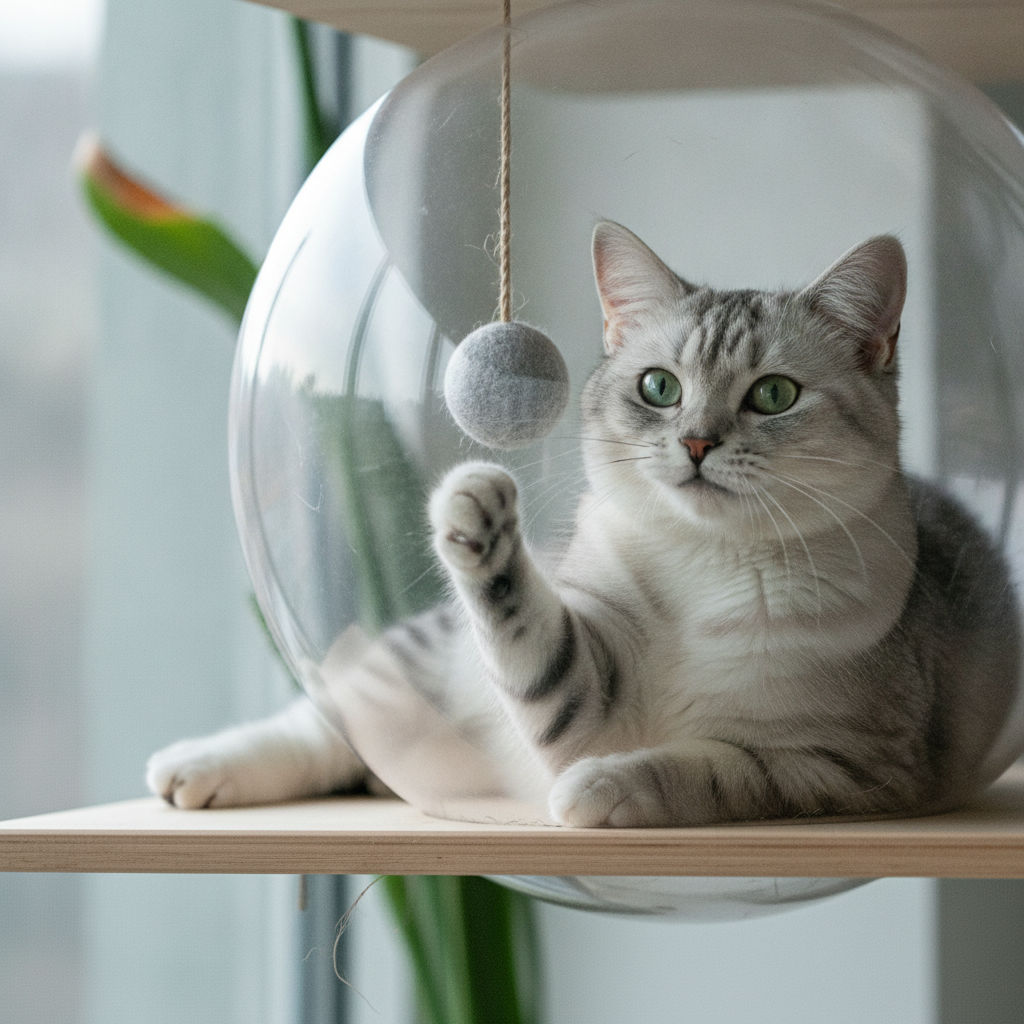
The Catit Raffia Mouse on a Stick is the kind of small, cheap object that punches above its price. Park’s angle on it is practical: the natural raffia gives cats something satisfying to gnaw, which does a little passive dental work, and the wand format turns it into interactive play rather than a toy your cat ignores after an hour. At around $5, it is the low-risk, high-reward pick of the bunch. (About $5 at Chewy.)
The placemat that saves your floor
Cats are, charitably, enthusiastic eaters, and a messy one turns every meal into a cleanup. The Ore Pet Silicone Placemat is Park’s fix for a cat who wears half his dinner. Silicone means you can roll it up, shake the crumbs off, and drop it in the dishwasher alongside the bowls, and it corrals water spills before they reach the floor. Unglamorous, genuinely useful, roughly $10. (About $10 at Chewy.)
The scratcher that doesn’t look like a scratcher
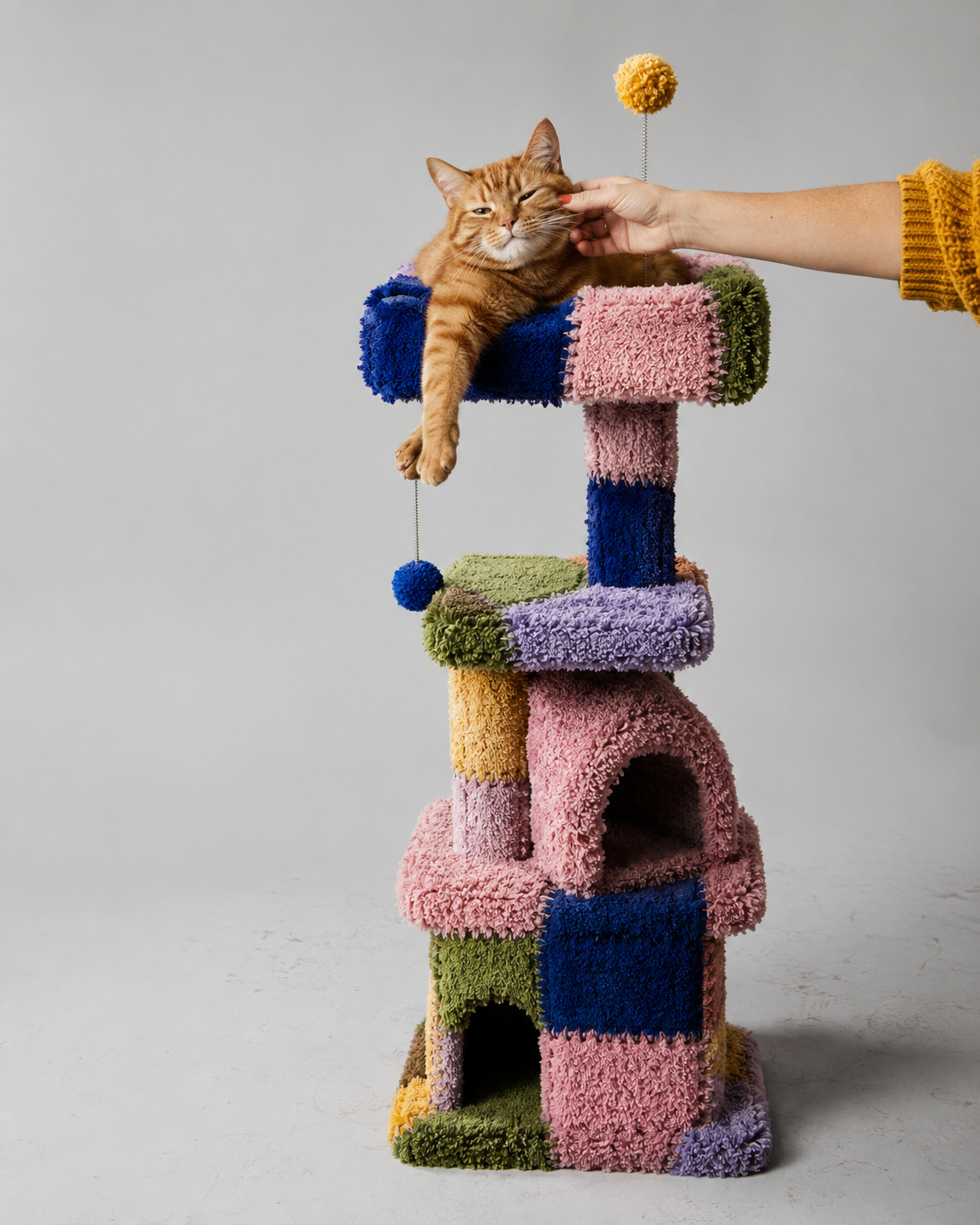
Furniture-saving is the eternal cat-parent project, and most scratching posts are an eyesore you tolerate for the sake of your couch. The Frisco Cat Scratcher Lounge in its curved ModCurve shape is Park’s answer to that trade-off, a piece that reads as modern furniture while quietly redirecting claws away from the chair. Cats tend to use it as both a scratching surface and a perch for window-watching, which is exactly the behavior you want to encourage. Around $50, and worth it if it spares one upholstered thing. (About $50 at Chewy.)
The elevated bowl that stays put
Cats that bat their dishes around the kitchen are a special kind of maddening. Park’s pick here is the Lionwei Ceramic Elevated Raised Cat Bowl with Wood Stand, a Scandi-leaning feeder whose height and stable stand make it much harder for a cat to tip or shove across the floor. The raised design also suits cats who eat more comfortably without craning down to ground level, and it comes in bright colorways if you’d rather the feeding station not be beige. About $17. (About $17 at Amazon.)
A note on the rest of her setup
Park also leans on two categories worth flagging even without a single-product endorsement: a sturdy, airline-approved carrier that fits under a plane seat and pulls double duty for vet trips, and a high-walled litter box that keeps scattered litter contained and hides the scoop and dustpan in a clean, minimal design. If you’re building a gift for a new cat parent, those two categories are where the real quality-of-life upgrades hide, so they’re worth the extra research even though the specific models are a matter of taste and apartment size.
The through-line across everything Park reaches for is the same one that runs through the rest of her life online: buy the version that is a little better made, a little less toxic, and a little easier to live with, and you end up with less clutter and a happier animal. It is a good rule for gifts, and an even better one for cats.