A cat’s heart is a small, hardworking thing. At rest it beats roughly 140 to 200 times a minute, and a newborn kitten’s races along at 200 to 300. For scale, a resting human heart manages about 60 to 100 beats a minute and a dog’s around 70 to 120. All those beats are not a problem to be fixed, they are simply what it takes to run a cat.
What is worth your attention is that heart disease is fairly common in cats, and it is often invisible until it is advanced. Which brings us to the question that keeps circulating in pet-store aisles: does grain-free food put a cat’s heart at risk? The worry got borrowed wholesale from dog food, where the FDA has spent years examining a possible link between certain grain-free and boutique diets and heart disease. For cats, though, the honest answer reframes the whole question.
The grain-free question is really a taurine question
Cats are obligate carnivores. They need meat, they need very little in the way of carbohydrates, and they cannot make certain compounds themselves. The most important of those, for this conversation, is taurine, an amino acid that is essential for heart function. Cats have to get it from their diet, and it occurs naturally in animal tissue.
So the grain in “grain-free” was never the villain. The thing to watch is whether a recipe delivers enough high-quality animal protein.
“When people ask me whether grain-free food will hurt their cat’s heart, I tell them to stop reading the front of the bag and start reading the ingredient list,” says Dr. Mara Chen. “The risk isn’t the absence of grain. It’s when pulses, the peas and lentils and chickpeas, take up so much of the recipe that animal protein and its taurine get pushed down the list. Meat first, and most of that worry evaporates.”
The practical rule: whether you feed grain-free or not, make sure a named animal protein is among the first ingredients, and that the food is labeled complete and balanced.
What heart disease in cats actually looks like
Cardiomyopathy is the umbrella term for any disease of the heart muscle. It is the most common form of feline heart disease and the leading cause of heart failure. Some cats are born with it and some develop it later, and it can appear at any age. Different sources land on different numbers, with many veterinary references citing something on the order of one in ten cats affected, but everyone agrees it is a serious and widespread issue.
Has the number of affected cats actually gone up? Not necessarily. What has changed is our ability to see it. As Dr. Chen puts it:
“It can look like heart disease is on the rise in cats, but a lot of that is us getting better at finding it,” she says. “We understand the different types far better than we used to, we know which show up in which breeds, and our diagnostic tools are sharper. Better detection isn’t the same as a rising tide of disease.”
The catch is that cats are very good at hiding illness. Many show no obvious signs until the disease is advanced, which is exactly why catching it early matters so much. Things worth mentioning to your vet include faster or labored breathing at rest, sudden hind-leg weakness, lethargy, or fainting. A heart murmur picked up at a routine exam is often the first clue.
The risk factors, and which ones you can’t change
Because some forms of cardiomyopathy pass down through genetic mutation, a handful of breeds run an elevated inherited risk of hypertrophic cardiomyopathy. Ragdolls, Maine Coons, Persians, the Sphynx, and both the British and American Shorthair sit near the top of that list. If you own one of them, a genetics or DNA test can flag whether your cat carries a known mutation.
Plenty of heart disease has nothing to do with genes, though. Beyond inheritance, an overactive thyroid, elevated blood pressure, a structural defect in the heart, and some infections can each raise a cat’s odds. Having one of those conditions is not a guarantee of heart disease, and even a diagnosed cat can often live a long, happy life on a treatment plan. It’s a reason to loop in your vet, not a reason to panic.
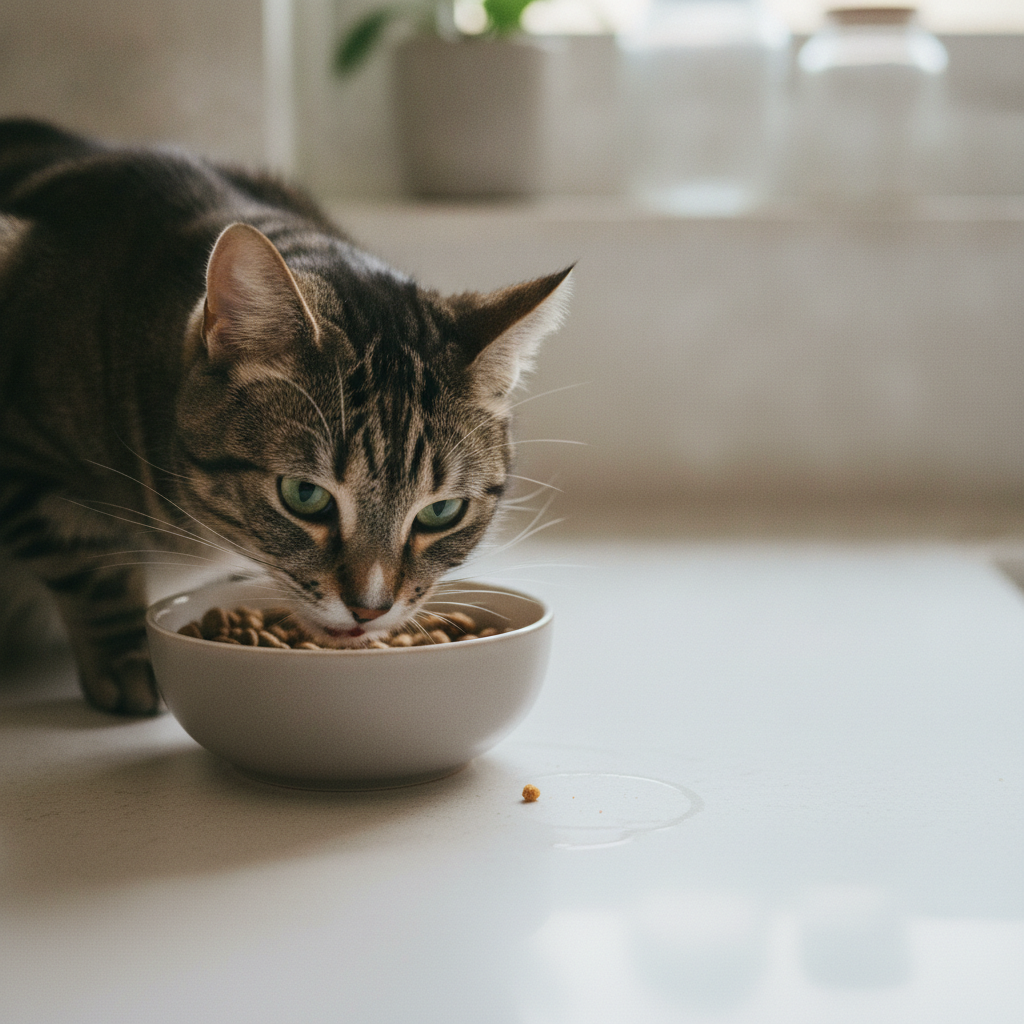
Diet sits on both sides of the ledger. It can be a risk when it shortchanges taurine, and it can be protective when it is done well. The best defense is a genuinely complete food, formulated to cover all of a cat’s nutritional needs, forming the bulk of what they eat. For cats already diagnosed with or at risk of heart disease, a vet may prescribe a therapeutic diet, and many will steer toward food that is lower in sodium and richer in omega-3 fatty acids while still hitting a cat’s full calorie and taurine requirements. Because the right move depends heavily on the individual cat and the specific type of heart disease, this is a conversation to have with your own vet rather than a rule to apply blindly.
What newer research adds
The reason taurine keeps coming up is one of the great success stories in pet nutrition. In the late 1980s, researchers established that taurine deficiency was causing dilated cardiomyopathy in cats, a form in which the heart enlarges and weakens. Manufacturers responded by adding taurine to cat food, and that specific disease became dramatically less common. Dilated cardiomyopathy still exists, but as a widespread diet-driven epidemic in cats, it was largely solved once the deficiency was understood.
The frontier now is genetics. Specific mutations in a gene called MYBPC3 have been identified in Maine Coons and Ragdolls and are linked to hypertrophic cardiomyopathy, and DNA tests for them are commercially available. A positive result does not mean a cat will definitely develop disease, and a negative result does not fully rule it out, but for at-risk breeds the information can help you and your vet decide how closely to monitor a cat’s heart over its life. If you have one of the breeds above, it is worth asking your vet whether screening, by DNA test or a periodic heart scan, makes sense.
This article covers a medical topic. It is general information, not a diagnosis. If you are worried about your cat’s heart, please see your veterinarian.
References
- Pion, P.D. et al., Myocardial Failure in Cats Associated with Low Plasma Taurine: A Reversible Cardiomyopathy, Science
- Cornell University College of Veterinary Medicine, Feline Cardiomyopathy
- U.S. Food and Drug Administration, FDA Investigation into Potential Link between Certain Diets and Canine Dilated Cardiomyopathy
- American Veterinary Medical Association, Taurine and Heart Health in Pets