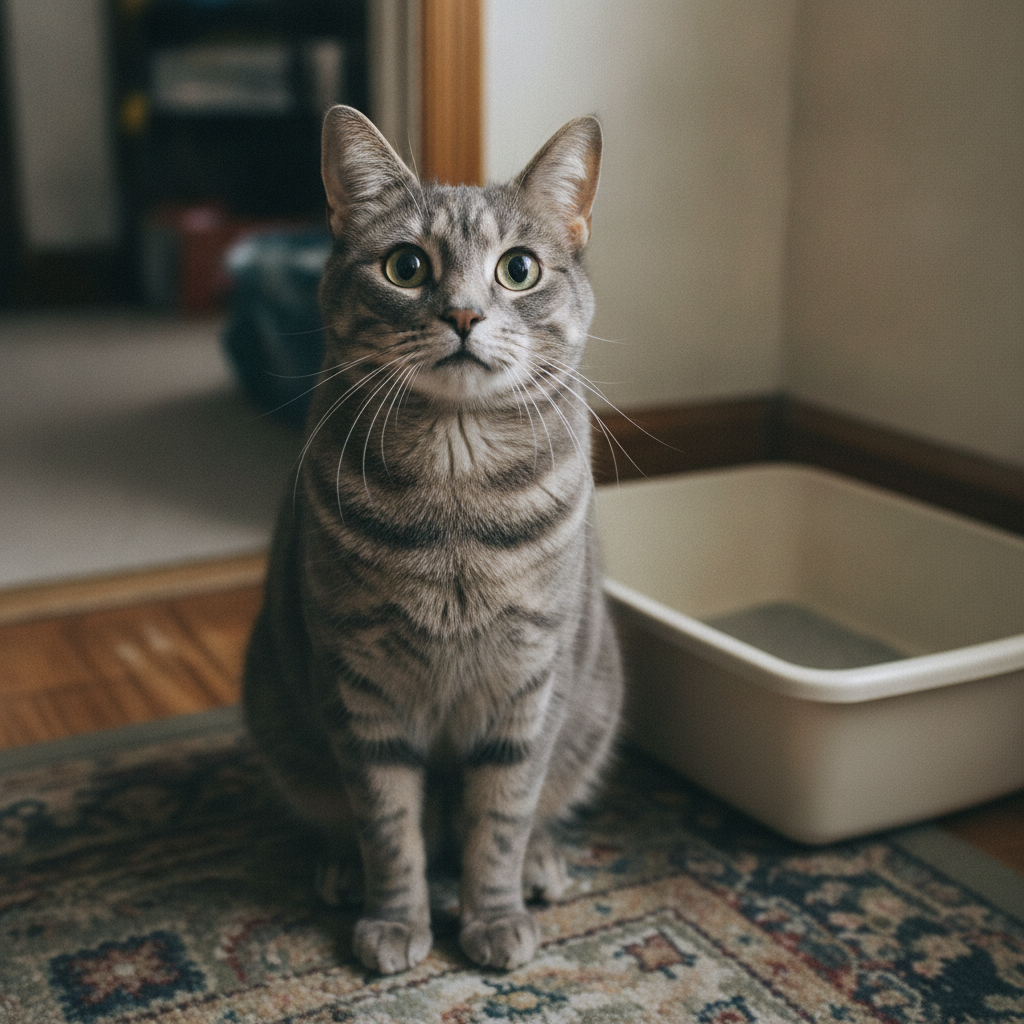
Here is what happens when you order a cat DNA test because you want to know what your cat is.
You swab. You wait. You get an email that makes your stomach drop, because it turns out you are far more emotionally invested in this than you were prepared to admit. You open the portal. And your magnificent, cream-colored, faintly aristocratic cat, the one you have privately suspected of being some kind of undocumented Maine Coon, comes back as: domestic medium hair.
That is not a defect in the test. That is the correct answer, for most cats, most of the time. And it is exactly why the breed page is the least useful thing in the report, and why people who buy the kit for that page come away vaguely deflated.
The health screen is a different story. That one can change what you do.
What is actually in the box
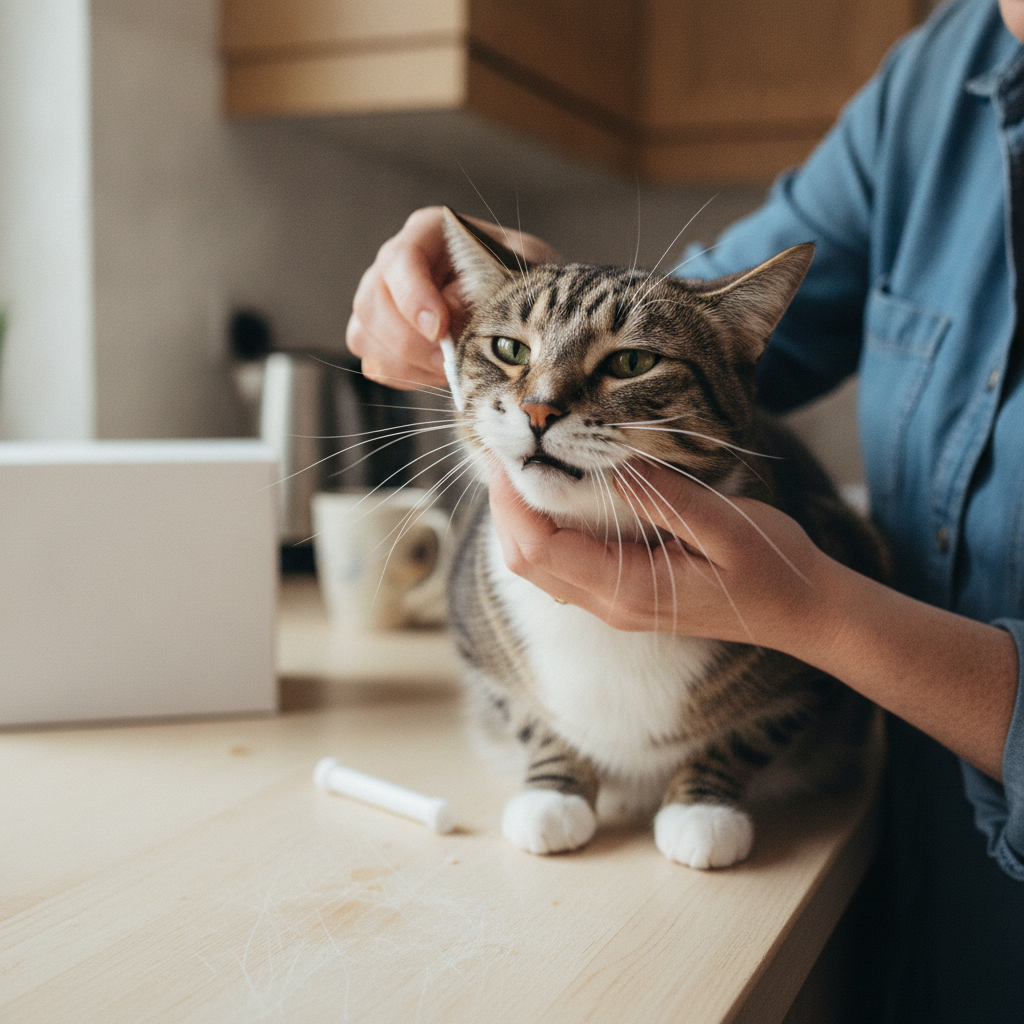
A cat DNA test is a cheek swab. You collect saliva and cheek cells, mail them to a lab, and two to three weeks later you get a report. Wisdom Panel’s cat test screens for breeds and populations, genetic health conditions, physical traits, and, importantly, your cat’s blood type. If your cat comes back with an at-risk finding, the company offers a free call with a veterinarian to walk through it.
Doing the swab:
- Time it for several hours after a meal. Food residue in the mouth contaminates the sample.
- Check that her mouth is empty, keep your fingers off the swab head, and collect for a full 15 seconds. Shorter than that and you risk a failed sample and a repeat performance.
- Work the swab against the inside of the cheek with a rolling motion, steadying it with light pressure from outside her face.
- Air-dry the swabs, five minutes minimum, before they go back in the tube.
- Mail it back in the prepaid packaging.
Your cat will object. She will produce a warning meow of surprising editorial force. It lasts 15 seconds.
At the lab, the sample is genotyped and screened against the company’s breed database. The size of that database is essentially the entire ballgame for the breed portion of the report, which brings us to the honest part.
The breed report is entertainment
For a pedigreed cat with papers, breed results confirm something you already knew. For a random-bred cat, which is most cats in most homes, the report will tell you your cat is a domestic shorthair, medium hair, or long hair, with a regional population signal attached.
That is not nothing. It is not $130 of information either.
The traits page is more fun than useful in the same way: coat-length predictions, color genetics, and the occasional contradiction that makes you laugh out loud, because the report hedges between two coat types and the cat in front of you has quietly split the difference. It is a good time. Set your expectations accordingly.
The health screen is the actual product
Here is the case for buying one anyway, and it rests on a single piece of research.
In the largest DNA-based study of domestic cats to date, researchers genotyped 11,036 cats, both pedigreed and non-pedigreed, and looked at how known disease variants, blood type variants, and trait variants are actually distributed. The finding that matters to you: thirteen disease-associated variants turned up in more breeds than anyone previously thought they were present in. Genetic risk does not respect the boundaries of a breed registry, and it does not check whether your cat came from a breeder or a dumpster.
That is what shifts a cat DNA test from novelty to something closer to preventive care. It is not that your cat is likely to be sick. It is that if she carries something, you would rather find out at three years old than at nine, in an emergency room, at 2 a.m.
The blood type result deserves its own sentence, because almost nobody buys the kit for it and it may be the most quietly valuable line in the report. Cats have blood types, feline transfusion reactions can be severe, and knowing your cat’s type before you ever need a transfusion is genuinely useful information to hand an emergency vet.
What a positive result does and does not mean
This is where owners get hurt, so read it twice: a variant is a risk factor, not a diagnosis.
Whether a cat with an associated gene ever develops the disorder depends on several things. It depends on the mode of inheritance, meaning whether the disorder is expressed dominantly or recessively. With a dominant condition, a single inherited copy is enough to express it. With a recessive one, nothing happens unless she inherited two. So the copy count on her report is not a detail, it is the whole answer. And it depends on the specific risk factors for that disease, including whether the condition is known in the breeds that show up in her ancestry.
Which is a technical way of saying: do not read your cat’s genetic report alone, at night, on the internet. Read it with your vet, who will tell you which findings change her care plan and which ones are trivia.
“The report I want owners to bring me is not the breed page, it is the health page and the blood type,” says Dr. Mara Chen. “A variant does not mean your cat is sick. It means I know what to watch for, and I would much rather know at three than find out at nine in an emergency.”
What it costs right now
- Wisdom Panel Complete for Cats: lists around $129.99 and frequently sells for closer to $104. It covers breeds and populations, 45+ genetic health conditions, 25+ traits, and blood type. Available on Amazon.
- Basepaws Breed + Health: around $149, with a whole-genome option at roughly $299, and a standalone oral health test at about $99.99. Basepaws leans harder into dental and oral health markers, which is a real point of difference if periodontal disease is your cat’s known weak spot.
If you are buying one test and want the health screen and the blood type, the Wisdom Panel kit is the straightforward pick. If you specifically want dental risk data, Basepaws is worth the extra.
What’s new since this was written
The regulatory picture has not changed, and that is worth stating plainly. Pet genetic testing is still not independently regulated the way human clinical genetics is, so a company’s accuracy claims are its own claims. The larger and better-curated the reference database, the better the results, and there is no external body checking the homework.
What has changed is the evidence base underneath these tests. The 11,000-cat study did not just validate the panels; it redrew the map of which cats are at risk for what, and it did it using data generated by commercial testing. Veterinary geneticists are increasingly treating the results of large-scale consumer testing as a real research input, and the practical effect for you is that the health panel your cat gets today is grounded in far more feline data than the version sold a few years ago.
The breed page, meanwhile, is still going to tell you your cat is a domestic medium hair. Buy the kit for the other pages.
References
- Anderson, H., et al. “Genetic epidemiology of blood type, disease and trait variants, and genome-wide genetic diversity in over 11,000 domestic cats.” PLOS Genetics, vol. 18, no. 6, 2022, e1009804.
- Lyons, L.A. “Genetic testing in domestic cats.” Molecular and Cellular Probes, vol. 26, no. 6, 2012, pp. 224-230.
- Menotti-Raymond, M., et al. “The MeowPlex: a new DNA test using tetranucleotide STR markers for the domestic cat.” Profiles in DNA, 2003.
- Wisdom Panel. “Complete for Cats: health tests.” wisdompanel.com, accessed July 2026.