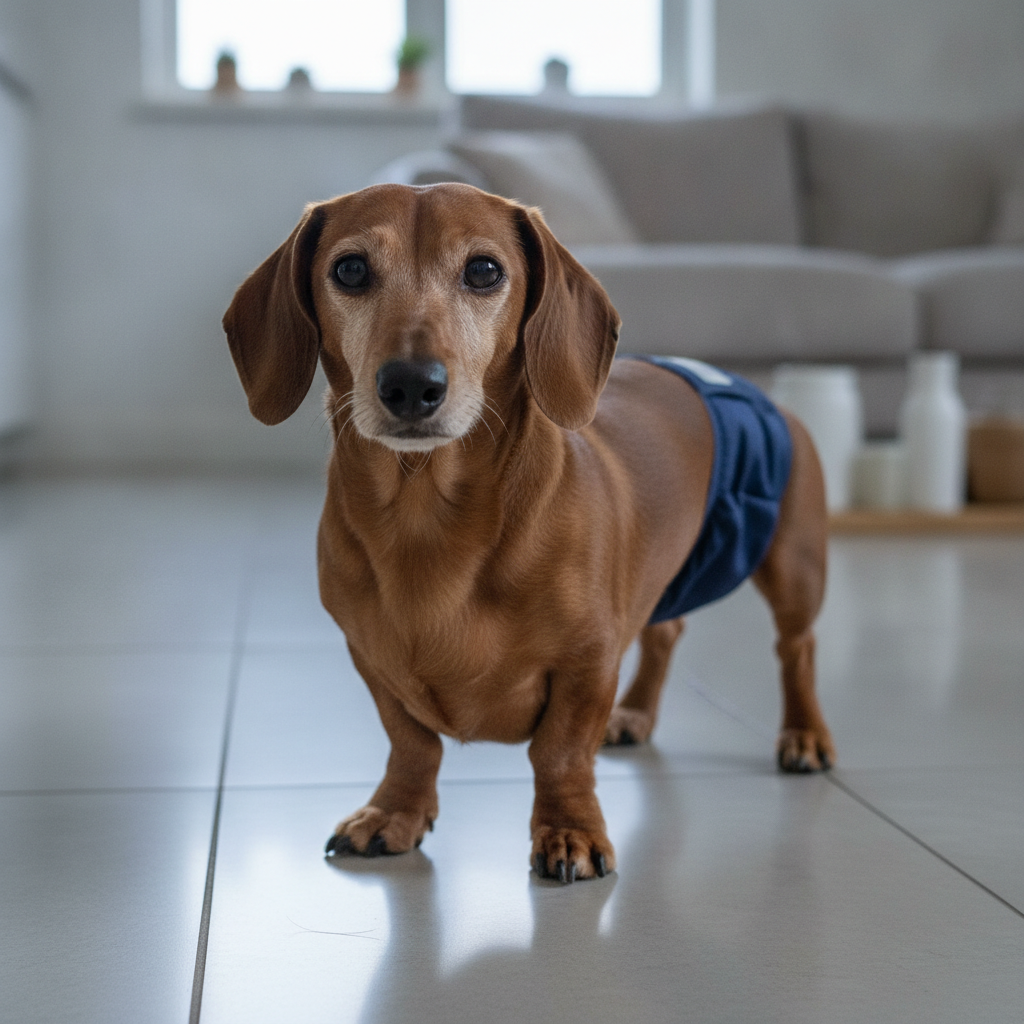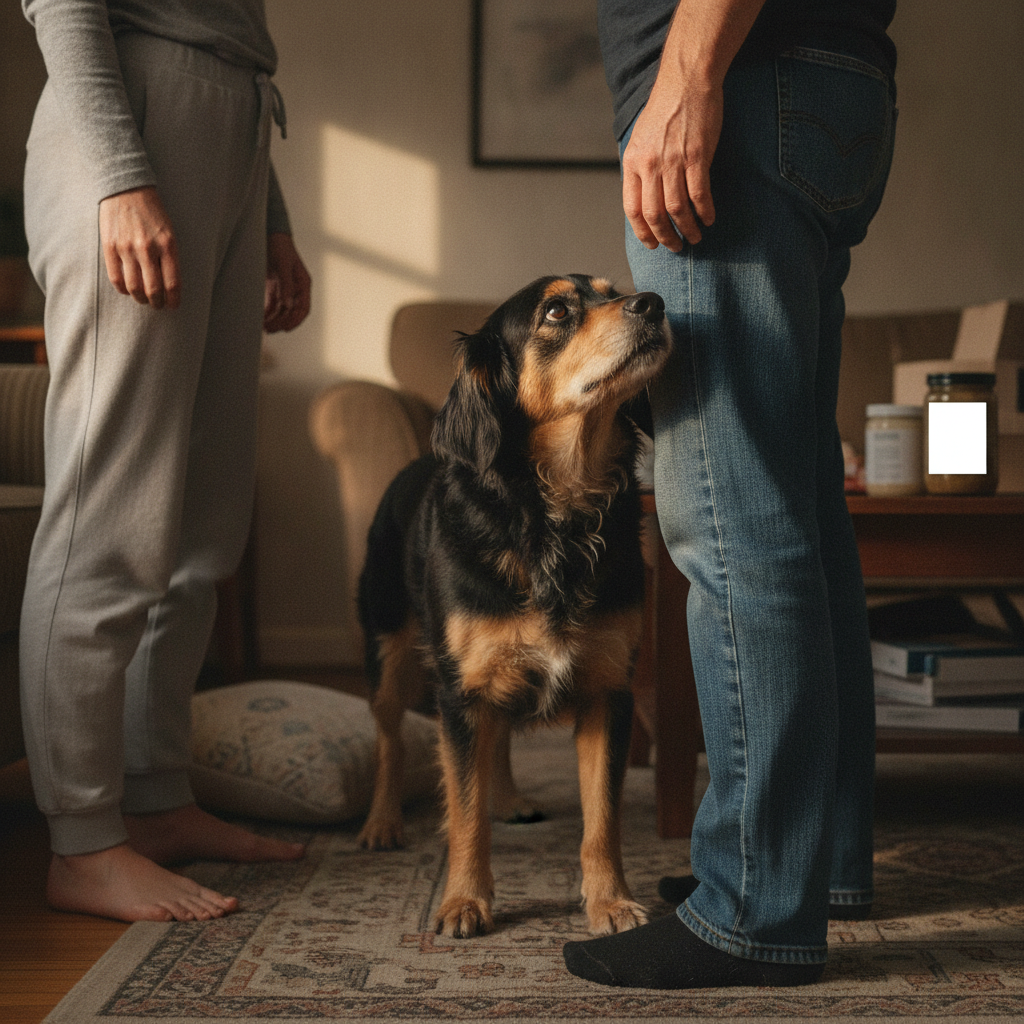
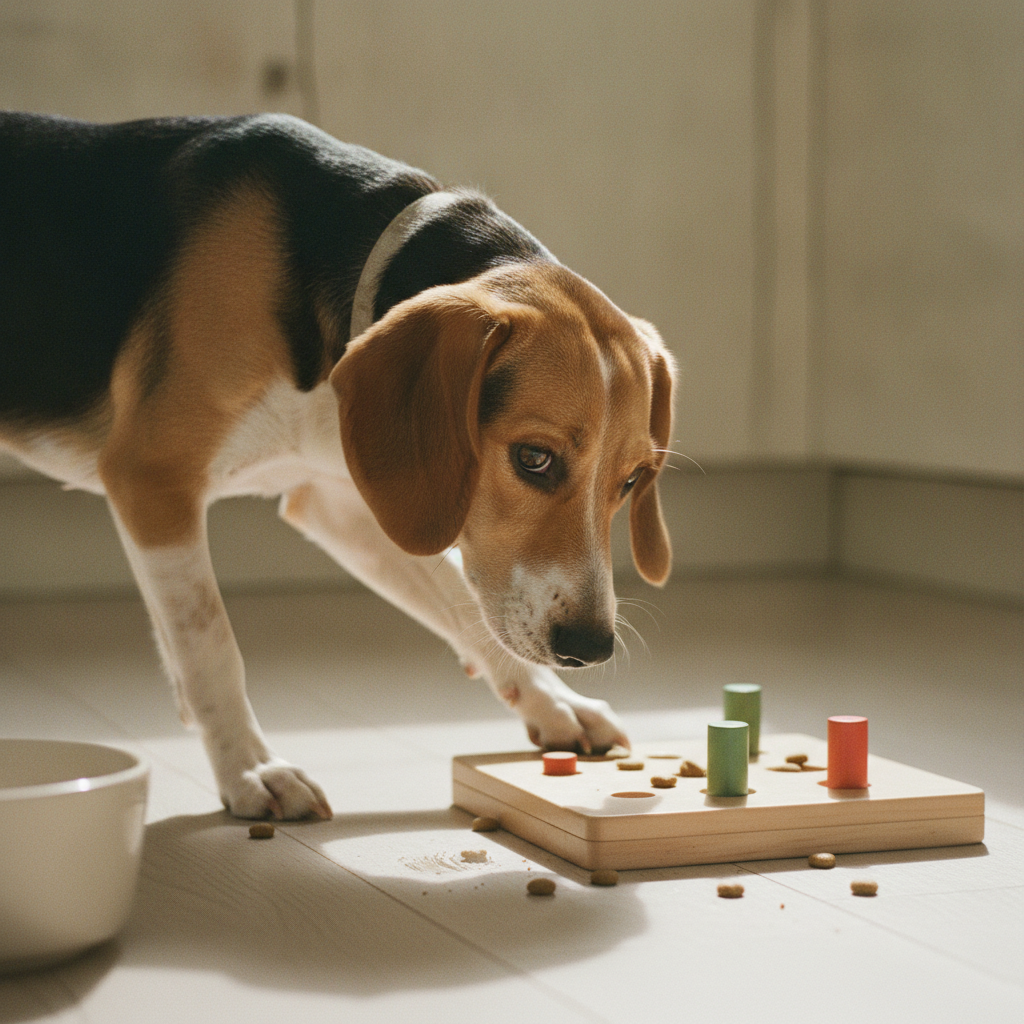
Here is a reframe that will change how you shop for your dog: the shredded couch cushion, the counter-surfing, the barking at nothing, the dog who body-slams you the second you sit down to work are usually not signs of a bad dog. They are signs of a smart animal with nothing to do. Dogs did not evolve to lie on a rug for nine hours while we stare at screens. They have no phone to scroll, no show to half-watch, no group chat. When we give them no outlet, they invent one, and we rarely like their choices.
That is the real case for a puzzle toy. It is not a cute accessory; it is a job. A good one turns dinner or a handful of treats into a problem the dog has to solve with their nose, paws, and brain, and a dog who has worked for their food is a calmer, more satisfied roommate. So instead of ranking toys by how they photograph, we have sorted them by the specific way your dog drives you up the wall. Find your dog below, then buy the tool that solves your actual problem.
“Nine times out of ten, when someone tells me their dog is ‘hyper’ or ‘destructive,’ the dog is just bored out of their mind,” says Sasha Ford, a Pet Times contributor who works with rescue dogs. “Give that same dog fifteen minutes of real problem-solving before you leave the house and half the so-called behavior issues quietly disappear.”
First, a rule that makes every toy work better
Puzzle toys can backfire. Start a dog on the hardest setting and they get frustrated, give up, and decide the whole thing is not worth it, which is the opposite of enrichment. So begin easy. On day one, make the food almost fall out on its own. Once your dog is winning consistently, ratchet up the difficulty. If your dog is skeptical, smear a little peanut butter (xylitol-free) or spray something tasty on the toy to get the first success. And remember that whatever comes out of the toy is food: keep puzzle treats under about ten percent of daily calories and shave a little off dinner so the mental workout does not become a weight problem.
Puzzles are also not just a puppy thing. Adult and senior dogs get bored too, and the older dog who has “seen it all” often benefits most from a fresh challenge.
If your dog inhales dinner in nine seconds
Fast eaters gulp air, sometimes bring the meal right back up, and get zero satisfaction from a bowl. Slow them down and make them think.
AWOOF Snuffle Feeding Mat — about $12
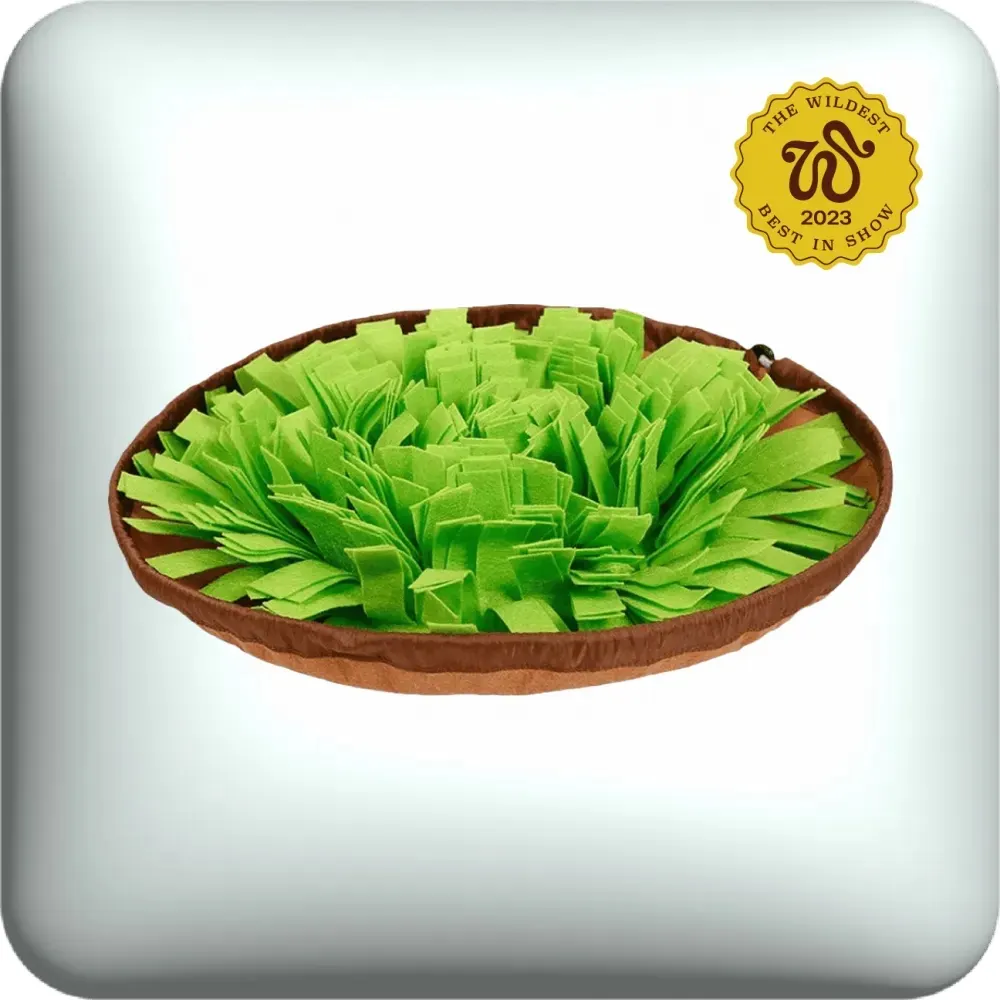
Scatter kibble deep into the felt fronds and your dog has to hunt for every piece with their nose. Sniffing is genuinely calming for dogs, so this one does double duty: it stretches a thirty-second meal into a ten-minute foraging session and leaves most dogs mellower afterward. It is our top pick for anxious scarfers because the work is nose-first, not teeth-first. Buy on Amazon
PetDreamHouse Spin Interactive Slow Feeder — about $30
A prettier, sturdier take on the slow feeder, with spinning windmill arms your dog has to nudge to release each bite. It looks like decor and works like a brake pedal for gulpers, adding real mental exercise and a healthy dose of “learn to be patient.” Buy on Amazon
Fable Pets The Game — about $55
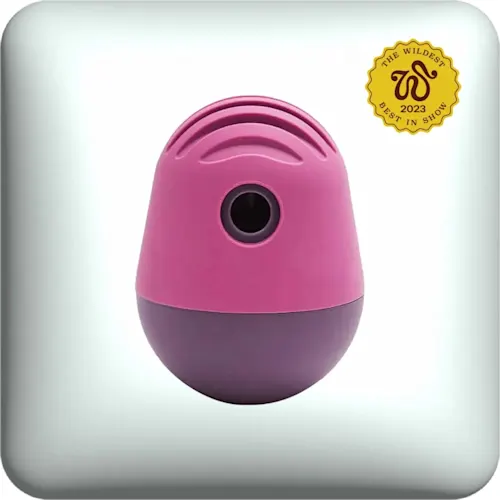
The design-forward splurge. It holds about a cup and a half of food and combines mental and physical work, so a fast eater who also has energy to burn gets both needs met at once. It is the priciest pick here, and worth it mainly if you want something that will not look like a chew toy in your living room. (This one is a Fable exclusive rather than an Amazon item.) Shop at Fable Pets
If your dog is a demolition-crew chewer
Some dogs need to gnaw, and if you do not give them something legal they will pick the couch leg. These channel the jaw.
West Paw Toppl — about $26
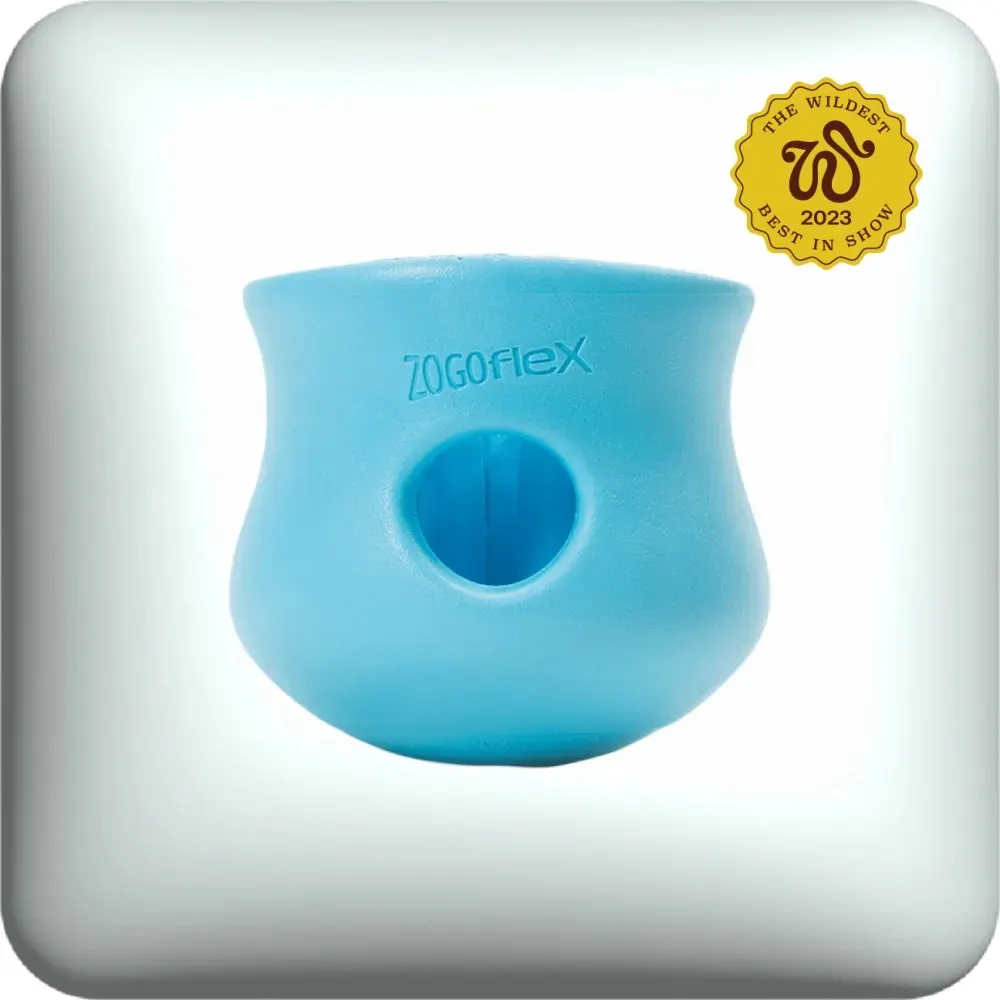
Deceptively simple. Inner ridges hold food hostage so your dog has to work angles to free it, and it tires them out through concentration rather than brute force. Made from a tough, recyclable material, it also freezes well for a longer-lasting challenge. Buy on Amazon
West Paw Qwizl — about $22
A treat-dispensing chew shaped to trap a long biscuit so your dog has to nose and gnaw to inch it out. It also doubles as a harder fetch toy thanks to its odd shape. Best for methodical chewers who like a slow reward. Buy on Amazon
Ruffwear Gnawt-a-Rock — about $25
Built for big dogs who treat everything as chewable. Its irregular shape means it never rolls or sits the same way twice, so your dog can nose it around for ages, and you can stuff the center to keep them at it. Buy on Amazon
If your dog needs a real puzzle to feel satisfied
These are the flip-the-lid, slide-the-door brain games. Great for clever dogs who get bored by anything too easy.
Nina Ottosson by Outward Hound Tornado — about $13
Twelve hidden compartments across stacked spinning layers, with bone-shaped covers you can add to crank the difficulty. It grows with your dog, which is why it stays a genre favorite. Nina Ottosson built her whole catalog around the idea that these should be games you and your dog play together, and this is the one to start with. Buy on Amazon
Nina Ottosson by Outward Hound Brick — about $8
A level-two board with sliding blocks and lift-out bricks hiding treats underneath. It is the natural graduation step after your dog masters a beginner puzzle, and it is cheap enough to justify as a stepping stone. Buy on Amazon
Outward Hound Hide-A-Squirrel — about $22
A plush tree stuffed with squeaky squirrels your dog has to dig out one by one, then you reload and repeat. It hits two obsessions at once, squeaks and “prey,” and it is soft enough for gentler dogs who find hard puzzles intimidating. Supervise enthusiastic shredders. Buy on Amazon
If your dog digs, bounces, or just never stops moving
High-motor dogs need to move while they think. These reward the body as much as the brain.
iDig Stay — about $100
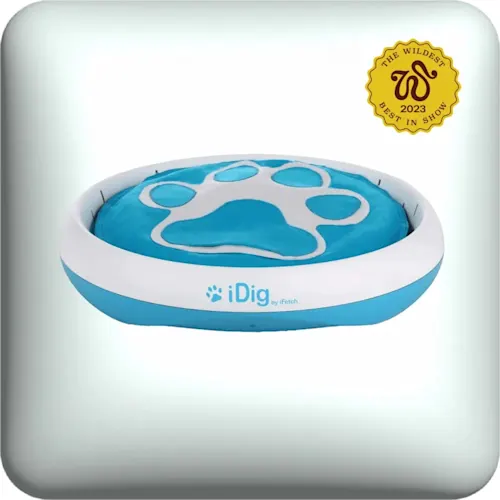
Digging is a hardwired urge, not misbehavior, and punishing it never works because the dog still needs to dig. The iDig gives them a legal place to do it: hide food under the layered flaps and let your dog burrow to the prize. It is the fix for the yard-wrecker and the couch-excavator, and yes, plenty of cats love it too. Pricey, but it solves a problem nothing else does. Buy on Amazon
Kong Wobbler — about $20
Less a puzzle than a busy-machine. Fill it, and your dog bats and chases it around the floor to knock treats loose, burning energy while they play. Because licking and chewing help dogs self-soothe, a stuffed and frozen Wobbler is also a solid tool for a dog who struggles when you leave. Buy on Amazon
Omega Paw Tricky Treat Ball — about $17
The simplest, cheapest entry point. Drop treats in and your dog rolls, paws, and nudges the ball until food tumbles from the single hole. No learning curve, endless payoff, and a great first puzzle for a dog who has never had one. Buy on Amazon
What newer research adds
The case for enrichment has gotten stronger, not softer. Work coming out of the Dog Aging Project and other groups keeps pointing the same direction: dogs with richer daily lives, more to do, more to sniff, more social contact, tend to be healthier and calmer than dogs left understimulated. Scent work in particular has become the darling of behavior specialists, because letting a dog use their nose appears to lower arousal and leave them more relaxed afterward, which is exactly what a snuffle mat or a scatter-fed puzzle delivers at home.
The practical takeaway is simple. You do not need the most expensive toy on this list. You need to give your dog a job most days, match it to how their brain and body want to work, and rotate it so it stays novel. A tired brain, it turns out, does more for behavior than a tired body ever could.
References
- Dog Aging Project. “Social determinants of health and disease in companion dogs: a cohort study from the Dog Aging Project.” Evolution, Medicine, and Public Health, 2023.
- American Kennel Club. “Why Mental Stimulation and Enrichment Matter for Dogs.” AKC Expert Advice.
- U.S. Food and Drug Administration. “Xylitol and Your Dog: Danger, Paws Off.” FDA Consumer Updates.