Your vet learns an enormous amount in the first thirty seconds of an exam, before any equipment comes out, just by looking at and touching a dog’s head. The good news is that most of what they’re checking, you can check too. A quick, regular head scan won’t replace a vet, but it turns you into an early-warning system, and early is where a lot of problems are cheapest and easiest to fix.
This is the head portion of a full at-home exam: nose, eyes, ears, and mouth. The organizing idea to hold in your head as you go is simple, know what normal looks and feels like on your dog, so that when something drifts off normal, you notice it fast. Later parts of this series move down to the chest and belly. For now, start at the front.
The nose
Normal. A healthy nose is smooth, soft, and clean, ideally like supple leather. Here’s a myth worth killing: a dry, warm nose does not mean a sick dog. A perfectly healthy nose can be a little dry and warm depending on the moment. It is not always required to be cool and wet. Scant, clear, watery discharge can be normal too.
Worth a call. A nose that’s excessively dry, cracked, or crusty is not normal. Neither is colored discharge, green, yellow, or white generally points to a bacterial infection, so report it to your vet. And nosebleeds aren’t typical for dogs; treat one as a reason to check in.
The eyes
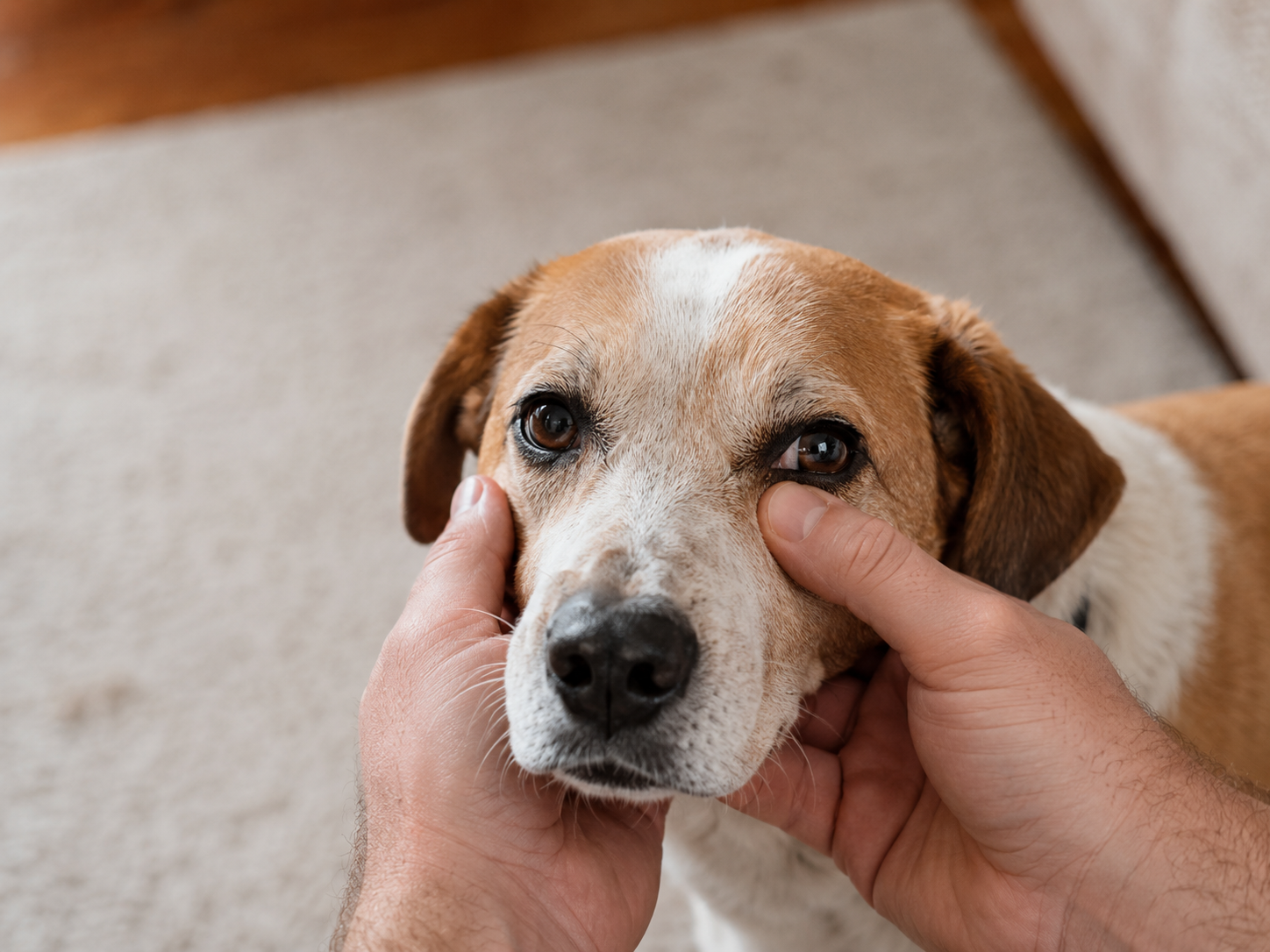
Normal. Bright, moist, clear. Pupils equal in size. The whites shouldn’t look colored and should show only a few small blood vessels. If you want to test the pupillary light reflex, both pupils should shrink equally when you shine a bright light into either eye and widen equally in the dark. Waking up with a bit of grey crust in the corner is no more sinister in a dog than it is in you.
Worth a call. There’s a long list here because eyes tell you a lot, so learn the big ones:
- Dull, sunken eyes can signal serious dehydration.
- Red, dry, “bloodshot” eyes can point to conditions like uveitis, dry eye (KCS), dehydration, or other systemic illness.
- Red or swollen eyelids, sometimes with discharge, can mean conjunctivitis.
- A swollen eyelid that leaves the eye half-closed can mean an allergy, a foreign body, or an injury.
- Thick discharge, especially green or yellow, suggests an eye infection.
- An eye that isn’t centered can indicate a mass or infection behind it.
- Unequal pupils can flag head trauma, a possible tumor, or another neurological issue.
- Squinting or tearing can mean a corneal scratch or ulcer.
- Yellow whites (jaundice) or blood inside the eye (hyphema) are urgent, hyphema in particular can point to rat-bait exposure or another clotting problem.
- Pupils that don’t respond, or respond unequally, to light.
You don’t need to diagnose which is which. You just need to notice “that eye looks wrong today” and act on it.
The ears
Ears are one of the most common trouble spots in dogs, often because narrow ear canals or allergies (think canine hay fever) set the stage, and then bacteria or yeast move in. Ear infections hurt, and the head-shaking they cause can burst a blood vessel in the ear flap, creating a swollen aural hematoma. Dogs with especially hairy ear canals tend to suffer more, because trapped hair blocks the airflow that keeps ears healthy, so regular checks matter.
Normal. Skin smooth and unbroken. Clean and dry inside. Almost odor-free. No pain when you gently massage the base of the ear. No head-shaking.
Worth a call. Wounds, scabs, bleeding, or rash; crust, moisture, or discharge in the canal; any strong smell (if your dog’s ears stink, that’s a real sign); a normally erect ear suddenly held droopy; pain or swelling; reluctance to have the head touched; head-shaking; or a head held tilted to one side. Common symptoms of an ear infection cluster together, head-shaking, scratching or rubbing at the ear, discharge, odor, redness, canal swelling, pain, itch, and crusts or scabs, so if you’re seeing several at once, get it checked.
The mouth
Normal. Teeth clean and white. Gums a uniform pink, moist to the touch, not dry or sticky. You can also check capillary refill time (CRT): press a finger on the gum, release, and watch the spot you blanched turn from white back to pink. Normal is about 1 to 1.5 seconds. It’s a rough gauge of circulation and hydration, and it’s genuinely hard to read on dogs with dark or pigmented gums, so don’t treat it as a verdict on its own.
Worth a call. Gum color is the headline here, and it’s worth memorizing because it can signal an emergency:
- Red gums can mean severe dehydration, shock, heatstroke, or sepsis.
- Bluish or purple gums mean the body isn’t getting enough oxygen, seen with lung disease, heart disease, or anything impairing oxygen delivery. This is urgent.
- Pale gums point to blood loss or shock, from internal bleeding (a ruptured splenic mass is a classic in older dogs), trauma, or immune-mediated disease.
- Tiny bruise-like spots on the gums (petechiae) can indicate rat-bait toxicity or another clotting problem.
Also flag tartar buildup at the gumline; inflamed, spongy, or sore gums; a sluggish CRT or dry, sticky gums; bad breath; any growth or lump; broken or loose teeth; and bleeding or swollen gums.
Putting it together
That’s the whole head: nose, eyes, ears, mouth. Run it as a calm, treat-rewarded once-over and your dog gets attention while you get a baseline. The next installment moves to the thorax, the neck, chest, and breathing. As always, this scan is a screening tool, not a diagnosis. Its real value is catching the moment something changes from your dog’s normal, because with a lot of these findings, early recognition is what saves the day, and sometimes the dog. If anything here looks off, don’t sit on it, call your vet.